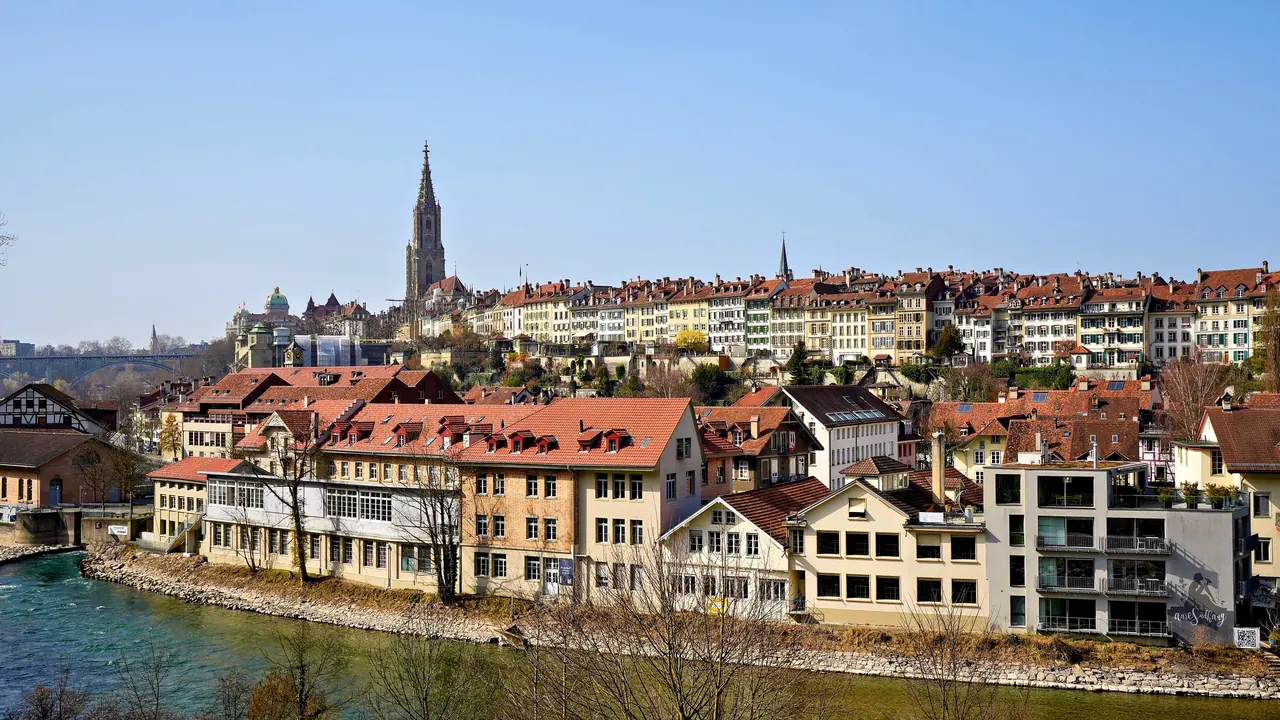
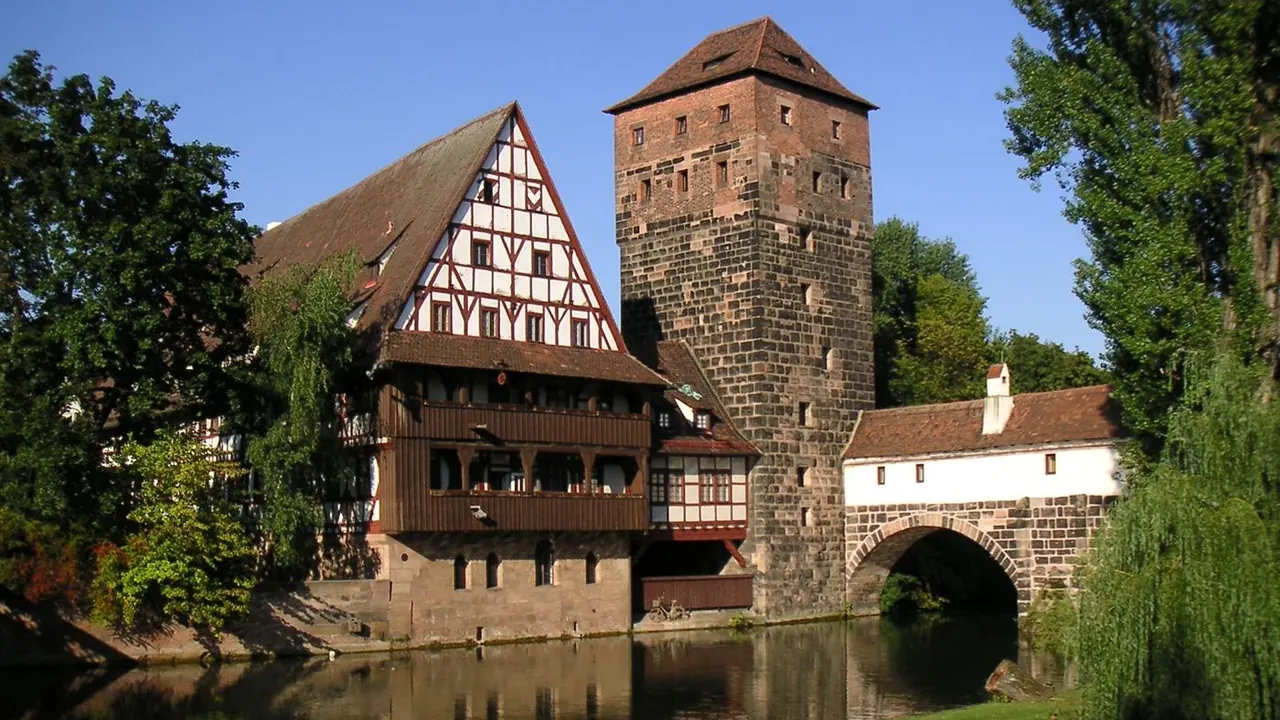
Photos: Bern by Beat Bieri, Pexels License; Nuremberg by Horst Gutmann, CC BY 2.0, cropped.
Bern or Nuremberg?
Our verdict in twelve categories, each scored against the same fixed benchmark cities, and the climate month by month, so you can choose for your trip.
Choose Bern for
- beaches
- nature and the outdoors
- getting around
Bern suits travellers who want the Alps within reach and a calm, beautiful base to return to each evening. The Eiger and Jungfrau are an hour away by train, Lucerne and Lake Thun are easy hops, and summer afternoons drifting down the Aare are hard to match. Its walkable arcaded old town makes a short stay effortless. Plan for high costs, though, because almost nothing here is cheap.
Choose Nuremberg for
- prices
- food and drink
- culture and sights
Nuremberg is the better choice for anyone more interested in taverns, beer gardens and German history than in mountains. It pairs a walled medieval centre and a great national museum with the sobering sites of the Nazi era and the war crimes trials, and Bamberg and Rothenburg make fine day trips. Meals, beer and getting about cost far less, so a longer stay is affordable if you avoid trade-fair weeks.
Scoreboard
Twelve categories on one fixed scale from 0 to 100. The shaded stretch is the gap between the two.
Your match
Pick a travel style or drag the sliders, and both match scores follow your weighting.
Too close to call, 1 point apart
Wins on beaches and nature and the outdoors with your weighting.
Wins on prices and food and drink with your weighting.
What matters to you?
Category by category
What the scores mean for a trip.
Beaches & swimming
Neither city has a coast, but Bern has the real swimming culture. On summer afternoons people walk up the Aare from the Marzili, jump in and let the cold, fast current carry them back past the Federal Palace, and the riverside lidos have lawns and pools. Lake Thun, twenty minutes away by train, has calmer bathing under the mountains.
Nuremberg has nothing like this in the city, just outdoor pools and leisure baths. The Franconian lakes such as the Brombachsee are about an hour away and warmer, and their shallow, gentle shores suit children better than the Aare. Still, they take a half-day outing to reach.
Food & drink
Nuremberg is the more rewarding place to eat, largely because of its beer. Franconia's many small breweries supply the old town taverns and the beer gardens along the Pegnitz, and the classic dishes are hearty and distinctive: finger-sized bratwurst grilled over beechwood, crackling Schäufele on Sundays and Lebkuchen all year round.
Bern's food is solid but limited: the Berner Platte, rösti and fondue in vaulted cellars, good Emmental cheese at the markets and excellent chocolate. The range is small, and every meal costs a lot.
Culture & sights
The two are well matched, but in different ways. Bern's UNESCO-listed old town survives intact, with its arcades, painted fountains, the Zytglogge and the Minster, and its museums are focused and personal: the Paul Klee collection and Einstein's flat on Kramgasse. Two days covers it.
Nuremberg's walled centre and Kaiserburg were rebuilt after wartime bombing, but the city has more depth. The Germanisches Nationalmuseum alone fills a day, and the Rally Grounds and Courtroom 600 give a serious look at the twentieth century.
Nightlife
Neither is a clubbing city, and evenings in both revolve around bars. Bern goes out in vaulted cellars under the arcades and on Aarbergergasse, the Reitschule hosts late alternative nights, and the city is very quiet on weeknights.
Nuremberg has a slight edge in energy. Students from Erlangen fill the squares and riverbanks at weekends, and Gostenhof's small bars beyond the walls give the city a livelier, less polished quarter than anything in Bern.
Nature & outdoors
This is where Bern is far ahead. The Eiger, Mönch and Jungfrau are visible from the old town and about an hour away by train, with high trails, cable cars and winter skiing. Closer in are lakeside paths around Thun, the Gurten funicular and woodland trails along the Aare.
Nuremberg's outdoors are pleasant but low-key: the Reichswald forest on the edge of town and Franconian Switzerland's limestone towers, caves and climbing crags about an hour away. They are good for walkers and cyclists, but there are no mountains.
Day trips
Both are excellent bases for day trips, and Bern has a small edge. Sitting at the centre of the Swiss rail network, it puts Lucerne, Basel and Zurich about an hour away, and Fribourg, Murten and Thun closer still. From Fribourg it is a short trip on to Gruyères and its cheese dairies, and connections are so frequent that you hardly need to plan.
Nuremberg's day trips are a tour of old Germany: Bamberg's cathedral hill and smoked-beer taverns, Regensburg on the Danube, baroque Würzburg and the walled Romantic Road towns of Rothenburg and Dinkelsbühl. The rides are a little longer, but the towns are just as rewarding.
Good for families
The two are about equal for children, but the days look different. Bern is mostly outdoors: the bear park, the woodland Dählhölzli zoo, the playground on top of the Gurten, shallow pools at the Marzili and days out in the mountains. The river itself is too strong for young swimmers.
Nuremberg has more for rainy days, building on its toy-making past with the Toy Museum, full-size locomotives at the railway museum and a zoo with a dolphin and manatee house. A big play park sits just outside town in Zirndorf.
Getting around
Bern is the easier city to get around. The station sits at the top of the old town, the centre takes about twenty minutes to walk end to end under covered arcades, and funiculars and a public lift handle the climb from the river.
Nuremberg's walled core is just as walkable, apart from the cobbled climb to the castle. However, some of its key sights, the Rally Grounds and the Palace of Justice, are outside the walls, so you will use its U-Bahn and trams more than you would Bern's.
Shopping & style
Neither is a shopping destination, but they sell different things. Bern's arcaded streets offer Swiss watches and chocolate, and the cellar shops down steep steps on Gerechtigkeitsgasse have antiques, design and books.
Nuremberg's main streets are mostly chains. What visitors take home is Lebkuchen in decorated tins, wooden toys and crafts from the Handwerkerhof, and in Advent the Christkindlesmarkt makes the city a real shopping trip.
Affordability
The cost gap is large. Bern is among the priciest cities in Europe: even plain hotels are expensive, a terrace beer comes as a shock, and budget travellers live on supermarket counters and the city's free pleasures such as the river paths and the bear park.
Nuremberg is mid-priced, with cheap local beer, filling tavern meals and inexpensive transport. Its one trap is hotel rates during the big trade fairs and the Advent market season. Outside those times, your money goes much further here.
Live music & performing arts
The two are evenly matched as regional cultural cities. Bern's Stadttheater and its symphony orchestra at the Casino cover the classics, the Dampfzentrale adds contemporary dance and new music, and its spring jazz festival is the standout event.
Nuremberg leans towards big open-air summer events: its orchestras' concert in the Luitpoldhain park, the free Bardentreffen folk weekend in the old town squares and a rock festival at the Zeppelinfeld, plus opera in its Art Nouveau Staatstheater.
Wellness & relaxation
Spa time in both cities means modern complexes rather than historic baths. Bern has a thermal complex on its western edge and a hammam-style spa in the old town, and serious spa-goers head to mountain hotels in the Bernese Oberland.
Nuremberg follows the German sauna habit, with the thermal sauna gardens in Fürth and mixed nude saunas, plus saline floating pools at Bad Windsheim. Bern's quiet Sundays fit a slow stay, while in Nuremberg the local way to unwind is a long afternoon in a beer garden.
When should you go?
Pick your month. The climate figures are measured averages, not a forecast.
Bern in July
Nuremberg in July
Daytime high, °C
Rainfall in the month, mm
Where the figures come from
Bern has no rain gauge within 25 km of the centre, so its rainfall comes from a gridded climate dataset read at the city rather than from a gauge further away.
Bern's sunshine is measured 71 km from the centre, at Herten.
Temperature and rainfall are climate normals, averaged over the years shown. Bern: 2010-2020 (sunshine 1991-2020, rainfall 1991-2020) normals, Bern / Bern - Belp Airport (5.5 km from centre). Nuremberg: 1991-2020 normals, Nuernberg (5.5 km from centre).
Both cities are at their best from late May to September, when days are warm enough for long walks and evenings outdoors. July and August are the warmest months, peaking around 26°C in Bern and a degree lower in Nuremberg. That is when the Aare is warm enough for Bern's river swim and Nuremberg's lakes to the south are worth the trip. Neither summer gets too hot for walking round town.
The big difference is rain. Bern is wetter all year, and its early summer is the wettest stretch, with about 118mm in May against 61mm in Nuremberg, though Bern's arcades keep you dry in the old town. Sunshine is much the same in both, a little higher in Bern at the height of summer. From December to February both are cold and grey, with highs of only about 4°C to 6°C and short days, and November is not much better at around 9°C. Winter visits are about indoor sights and, in Bern, sunnier days up in the mountains.
Which traveller are you?
For an outdoors trip, Bern wins clearly. The Jungfrau region's cable cars and high trails are about an hour away, Lake Thun is closer still, and the Gurten and the Aare paths start in town. Nuremberg's forests and limestone valleys are gentler.
On a trip on a tight budget, Nuremberg is the sensible choice. Tavern meals, local beer and transport cost little, and an ordinary hotel stay is fairly priced. Bern is very expensive, and even with free sights and supermarket lunches it adds up fast.
For a food and nightlife trip, Nuremberg has more to offer. You can spend evenings on grilled bratwurst, Schäufele and smoky Kellerbier in beer gardens, then go on to Gostenhof's small bars. Bern's cellar bars are pleasant, but its kitchens are pricier and its evenings quieter.
Before you go
| Measure | Bern | Nuremberg |
|---|---|---|
| Official language | French, German, Italian, Romansh | German |
| Currency | Swiss Franc (CHF) | Euro (EUR) |
| Sockets | CJ230 V, 50 Hz | CF230 V, 50 Hz |
| Driving side | Right | Right |
| Time zone | UTC+1, UTC+2 in summer | UTC+1, UTC+2 in summer |
| Emergency number | 112 | 112 |
| Elevation | 542 m | 209 m |
| Main airport | Zürich Airport (ZRH)101 km from centre226 non-stop destinations | Nuremberg Airport (NUE)5 km from centre56 non-stop destinations |
| Public holidays this year | 10 days | 12 days |
By the numbers
| Measure | Bern | Nuremberg |
|---|---|---|
| City population | 136,988 | 531,159 |
| People per km² | 2,655 | 2,848 |
| Museums within 10 km | 30 | 50 |
| UNESCO World Heritage sites within 50 km | 2 | 1 |
Where else could you go?
Every comparison below shares a destination with this one, so you can follow Bern or Nuremberg somewhere new.