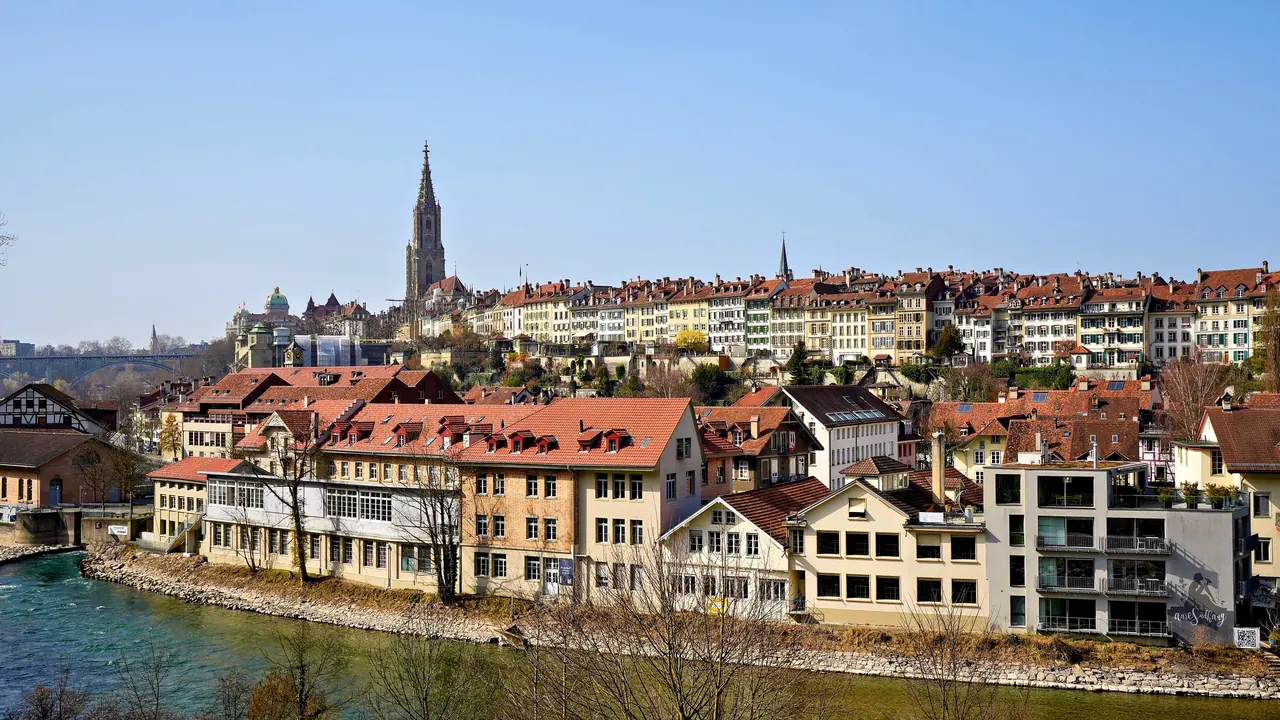
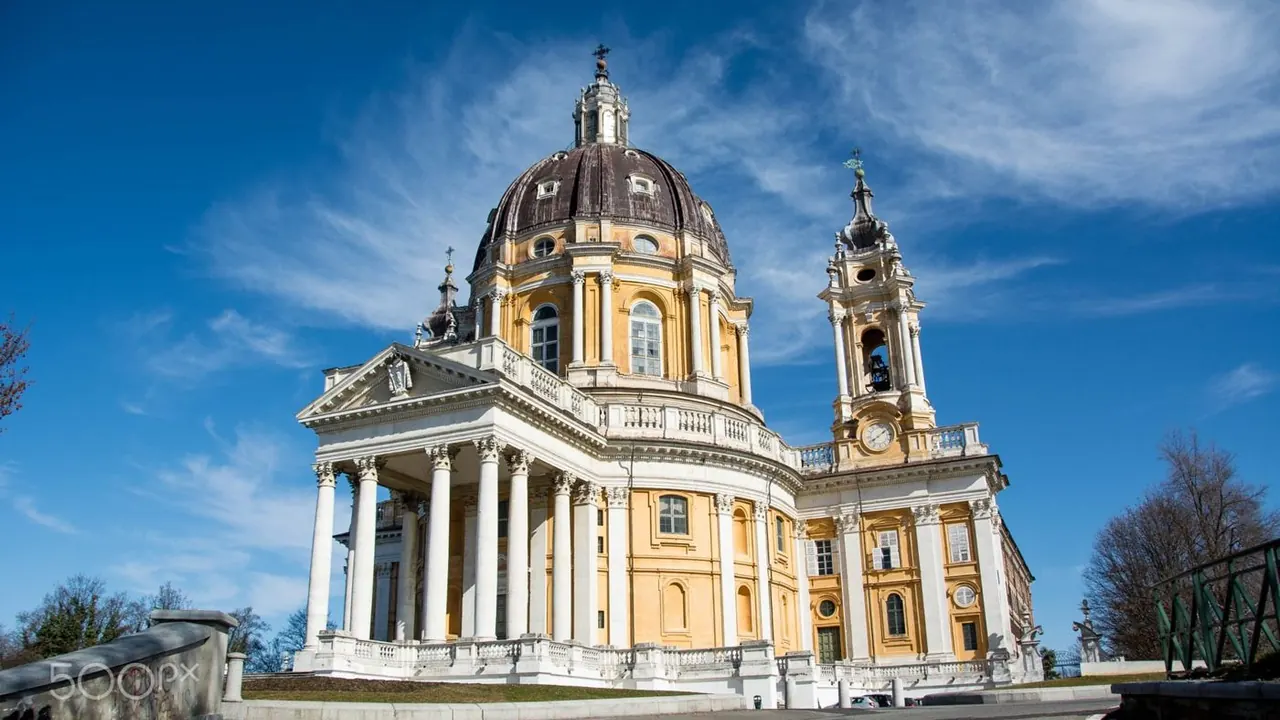
Photos: Bern by Beat Bieri, Pexels License; Turin by Konstantin Dacosta, CC BY 3.0, cropped.
Bern or Turin?
Our verdict in twelve categories, each scored against the same fixed benchmark cities, and the climate month by month, so you can choose for your trip.
Choose Bern for
- beaches
- getting around
- families
Bern suits travellers who want a compact, orderly base for seeing Switzerland. Its UNESCO old town takes twenty minutes to cross on foot, trains reach the Alps and the lakes within an hour, and it is calm and easy with children. It is also the one of the two where you can swim in summer without leaving town, in the Aare. In return you pay heavily for everything and the evenings are quiet.
Choose Turin for
- prices
- food and drink
- live music and the arts
Anyone who travels to eat, drink and look at great collections should pick Turin. Piedmontese cooking, Barolo and the aperitivo, the Museo Egizio and the Savoy palaces, and a fuller opera and concert calendar give it far more depth for a stay of several days. It costs a good deal less than Bern and has livelier evenings. You give up the swimming, and getting around beyond the centre takes more effort.
Scoreboard
Twelve categories on one fixed scale from 0 to 100. The shaded stretch is the gap between the two.
Your match
Pick a travel style or drag the sliders, and both match scores follow your weighting.
Wins on beaches and getting around with your weighting.
Wins on prices and food and drink with your weighting.
What matters to you?
Category by category
What the scores mean for a trip.
Beaches & swimming
Neither city has a beach, but Bern has real summer swimming and Turin largely does not. In Bern the Aare is the centre of summer life. Locals float downstream from the Marzili past the Federal Palace, and Lake Thun's calmer bathing spots are a short train ride away. The river is cold and fast, so it is only for confident swimmers.
Turin has no water in the city to swim in. The Ligurian coast is close to two hours away, and in summer people who stay in town go to small lakes such as Avigliana instead. Here, swimming means a separate outing, not an afternoon off.
Food & drink
On food, Turin is far ahead. It has one of Italy's most refined regional cuisines: agnolotti del plin, vitello tonnato and white truffles from the Langhe in autumn, with Barolo and Barbaresco to drink. Vermouth and the aperitivo began here, and the arcade cafés still serve bicerin.
Bern eats plainly and well enough. It has the Berner Platte, and cellar restaurants serve rösti and fondue, but there is a smaller choice of other cuisines and prices are high. The two cities meet on chocolate. Bern takes it seriously in its shops, and Turin is the home of gianduja.
Culture & sights
In Bern the old town is the main sight: a UNESCO-listed loop of arcades, painted fountains and the Zytglogge. The Zentrum Paul Klee and Einstein's flat on Kramgasse add more than you would expect, but two days covers it.
Turin can fill a longer stay. The Museo Egizio alone is worth the journey, and around it are the Royal Palace, the ring of Savoy residences, the Mole with its cinema museum, Fiat's old Lingotto factory and strong contemporary art at Rivoli. Bern is a beautiful small town for strolling, while Turin is a former royal capital with a long list of museums to work through.
Nightlife
Turin has the livelier evenings, though neither city is known for clubbing. Its night starts with the aperitivo and moves on to the wine bars of the Quadrilatero Romano and the busy pavements of San Salvario, and in summer to the Murazzi on the Po.
Bern goes quiet early on weeknights. Going out there mostly means vaulted cellar bars under the arcades and the bars around Aarbergergasse, with the Reitschule for rougher late parties and terraces along the Aare in summer.
Nature & outdoors
Both cities have the Alps on the horizon and close enough for a day in the mountains, so the difference is in the kind of outdoors. From Bern the train does the work: the Jungfrau region is about an hour away and Lake Thun is nearer. In town, the Gurten funicular and the wooded Aare paths start almost from the centre.
Turin's mountains are wilder and more spread out. There are the ibex and high trails of the Gran Paradiso, the ski slopes around Sestriere and climbing in the Susa valley. Reaching them often means a car, and the city itself sits on a flat plain, with Valentino park and the Superga hill as its nearby green spaces.
Day trips
Both make excellent bases, and the difference lies in the kind of day out. Bern sits at the heart of the Swiss rail network, so the train does everything. Fribourg is about twenty minutes away, and Murten, Thun and Solothurn are similarly close. Lucerne, Basel and Zurich are about an hour off, and Gruyères with its cheese dairies is a short onward trip from Fribourg. Trains run often enough that you never have to plan around them.
Turin's days out are mostly about wine and food. The Langhe hills, Alba and the village of Barolo are about an hour to the south, and Milan is an hour away by fast train. Aosta and Genoa are closer to two hours. The smaller wine villages are much easier to reach with a car.
Good for families
With children, Bern is the easier of the two. The bear park, the Dählhölzli zoo along the Aare, the animal dioramas at the Natural History Museum and the playground on the Gurten are all in or next to town, and the city is calm and safe. The river is for strong swimmers only, but the Marzili lido has shallow pools.
Turin works well too. Its flat, arcaded streets are good for pushchairs, and the glass lift in the Mole, the car museum and the Egyptian mummies go down well with older children. Its main animal day out, Zoom Torino, needs a car, though, and summers are hot.
Getting around
Bern is the simpler city to get around. You can walk across the centre in about twenty minutes, the station is at the top of the old town, and punctual trams, buses and short funiculars cover the rest, though some streets climbing up from the river are steep. Turin's centre is also flat and easy to walk, but it covers more ground, and beyond it the single metro line and the slower trams and buses take some working out.
Shopping & style
Turin has the wider choice. It has luxury labels under the arcades of Via Roma, mainstream shops along the pedestrian Via Garibaldi, antique dealers on Via Maria Vittoria and the Balon flea market on Saturdays. Its most distinctive buys are things to eat and drink: truffles, gianduiotti and Piedmontese wine.
Bern's arcaded line of Spitalgasse, Marktgasse and Kramgasse is pleasant for watches and chocolate, and the cellar shops of Gerechtigkeitsgasse sell antiques and crafts. Fashion is the weak spot in both cities, but it is thinner still in Bern.
Affordability
Turin costs much less from day to day, and you notice it first in where you sleep. In Bern even a plain business hotel is expensive. In Turin a central room is fairly priced for most of the year, except when a large trade fair fills the city.
The gap is widest at the table. In Bern a sit-down dinner with wine is a real outlay. In Turin the bill only climbs for fine dining or autumn truffles. The difference shrinks when it comes to getting about and sightseeing. Bern's hotels usually include a tram and bus pass, and its old town, bear park and river paths cost nothing. Turin's transport is cheap, but its major museums charge for entry.
Live music & performing arts
Turin has the deeper programme. The Teatro Regio runs a full opera and ballet season, the RAI National Symphony Orchestra plays in its own auditorium, the Lingotto hall holds concerts, and festivals of classical, jazz and electronic music run through the year.
Bern's offer is that of a small capital. There is opera and German-language drama at the Stadttheater, the Bern Symphony Orchestra in the Casino, new dance at the Dampfzentrale, the spring jazz festival and the Gurtenfestival in July. That is enough for a good evening out, but not a reason to plan a trip around.
Wellness & relaxation
Neither city has a bathing tradition. Bern has a slight edge, with a large thermal bath and sauna complex on its western edge, a hammam-style spa in the old town, and mountain spa hotels in the Bernese Oberland within easy reach. Turin's spas are mostly in hotels, and real thermal waters at Acqui Terme or in the Aosta valley are close to two hours away.
Both cities are restful in their own way. In Turin that means afternoons in historic cafés and evening walks along the Po. In Bern it means long lunches by the river and quiet Sundays.
When should you go?
Pick your month. The climate figures are measured averages, not a forecast.
Bern in July
Turin in July
Daytime high, °C
Rainfall in the month, mm
Where the figures come from
Bern has no rain gauge within 25 km of the centre, so its rainfall comes from a gridded climate dataset read at the city rather than from a gauge further away.
Bern's sunshine is measured 71 km from the centre, at Herten.
Turin has no rain gauge within 25 km of the centre, so its rainfall comes from a gridded climate dataset read at the city rather than from a gauge further away.
Temperature and rainfall are climate normals, averaged over the years shown. Bern: 2010-2020 (sunshine 1991-2020, rainfall 1991-2020) normals, Bern / Bern - Belp Airport (5.5 km from centre). Turin: 1991-2020 normals, Torino / Caselle (15.4 km from centre).
Both cities are most comfortable from May to September, but they differ at either end of that stretch. Bern stays mild in high summer, at around 26°C in July and August, which is good walking weather and suits the Aare swimming season from June to early September. The catch is rain. Late spring and summer are its wettest months, with about 118mm in May, though July is also when it gets the most sunshine. Winters are cold and grey, with highs near 5°C, so that season suits the mountains better than the streets.
Turin is hotter, reaching 29°C in July, and the flat streets can feel sticky, though the arcades give shade. May is wet in both cities. September and October are mild and pleasant for walking and for the wine hills. Turin's winter is a little milder than Bern's and much drier, with about 34mm of rain in January, so for a cold-season city break it is the more comfortable choice.
Which traveller are you?
For a food and nightlife trip, Turin is the clear choice. Piedmontese cooking, Barolo on the wine lists and the long aperitivo lead into evenings in the Quadrilatero Romano and San Salvario. Bern offers heavy traditional dishes and goes quiet early on weeknights.
On a trip on a tight budget, your money goes much further in Turin. Generous aperitivo spreads, neighbourhood trattorie and Porta Palazzo market keep costs moderate. In Bern even simple guesthouses are expensive, and visitors often live on supermarket lunches to cope.
On a family trip with young children, Bern is the easier city. The bear park, the Dählhölzli zoo, the Gurten playground and the shallow lido pools are all close by, the city is calm and safe, and the mountains are an hour away by train.
Before you go
| Measure | Bern | Turin |
|---|---|---|
| Official language | French, German, Italian, Romansh | Italian |
| Currency | Swiss Franc (CHF) | Euro (EUR) |
| Sockets | CJ230 V, 50 Hz | CFL230 V, 50 Hz |
| Driving side | Right | Right |
| Time zone | UTC+1, UTC+2 in summer | UTC+1, UTC+2 in summer |
| Emergency number | 112 | 112 |
| Elevation | 542 m | 239 m |
| Main airport | Zürich Airport (ZRH)101 km from centre226 non-stop destinations | Turin Airport (TRN)14 km from centre65 non-stop destinations |
| Public holidays this year | 10 days | 13 days |
By the numbers
| Measure | Bern | Turin |
|---|---|---|
| City population | 136,988 | 841,600 |
| People per km² | 2,655 | 6,474 |
| Museums within 10 km | 30 | 72 |
| UNESCO World Heritage sites within 50 km | 2 | 4 |
Where else could you go?
Every comparison below shares a destination with this one, so you can follow Bern or Turin somewhere new.