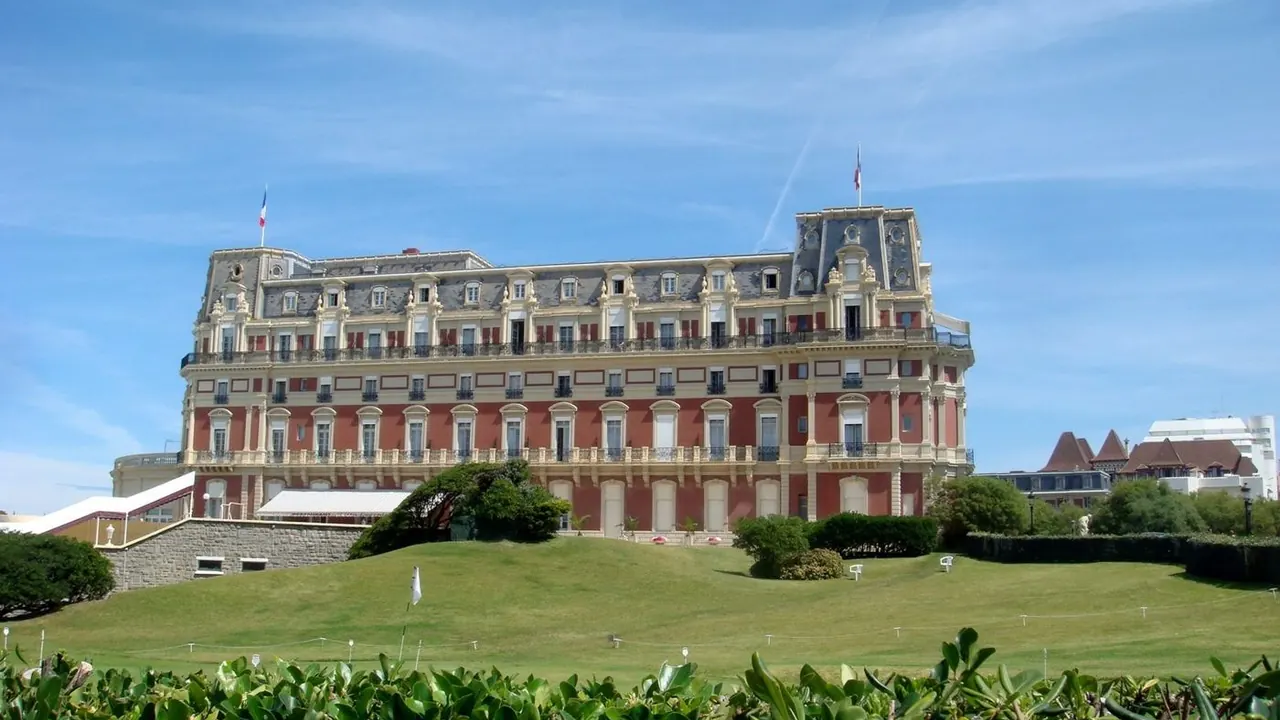
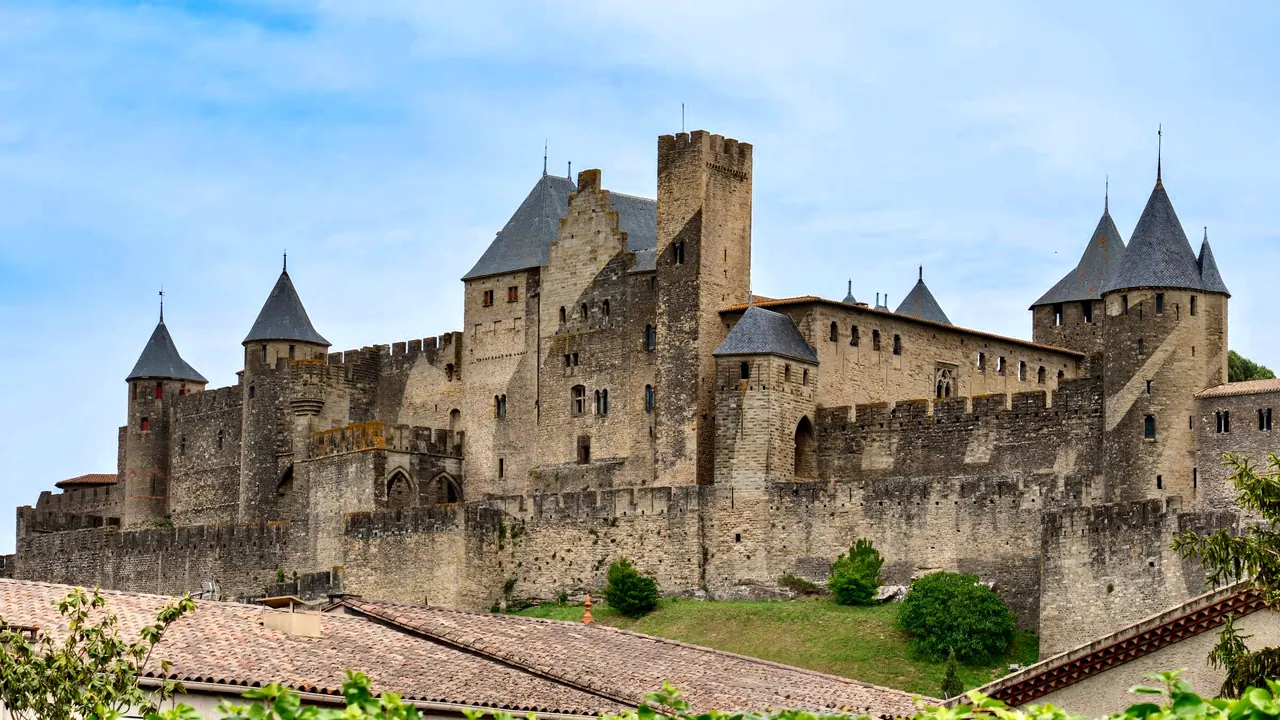
Photos: Biarritz by Lilipiapia, CC BY-SA 3.0, cropped; Carcassonne by Susanne Jutzeler, suju-foto, Pexels License.
Biarritz or Carcassonne?
Our verdict in twelve categories, each scored against the same fixed benchmark cities, and the climate month by month, so you can choose for your trip.
Choose Biarritz for
- beaches
- wellness
- shopping
Biarritz suits travellers who want the sea at the heart of the trip: surf lessons, long sandy beaches, seawater spas and Basque food at the market bars, with San Sebastián and the Pyrenean foothills close by. It costs more and it rains often, but it gives a longer stay more variety and more life after dark.
Choose Carcassonne for
- culture and sights
- prices
For history first, Carcassonne is the stronger pick. The walled Cité and the Cathar castles in the hills make it a natural base for sightseeing, wine and cassoulet. It is easier on the wallet and much drier, but its evenings are quiet, and a swim means the lake or a drive to the Mediterranean.
Scoreboard
Twelve categories on one fixed scale from 0 to 100. The shaded stretch is the gap between the two.
Your match
Pick a travel style or drag the sliders, and both match scores follow your weighting.
Wins on beaches and wellness with your weighting.
Wins on culture and sights and prices with your weighting.
What matters to you?
Category by category
What the scores mean for a trip.
Beaches & swimming
Here the gap is wide. Biarritz is built around its beaches: the Grande Plage under the casino, the Côte des Basques below the cliffs, the sheltered Port Vieux cove and kilometres of Anglet sand to the north. This is the open Atlantic, though, with big surf, strong currents and lifeguard flags to stay between.
Carcassonne has no sea of its own. The Lac de la Cavayère gives you a supervised lake swim close to town. The shallow, sandy Mediterranean beaches at Gruissan and Narbonne-Plage are a little warmer than Biarritz's water, but they are about an hour away, so they make a day out rather than a base.
Food & drink
Both towns eat regionally, but Biarritz has more to work with. Its covered market, Les Halles, sells Biscay fish, Bayonne ham and sheep's cheese, and the pintxo bars around it open from mid-morning. On top of that come seafood terraces and a good set of modern bistros.
Carcassonne's table rests on cassoulet and excellent local wine: Corbières, Minervois and the sparkling blanquette of Limoux. The better meals are down in the Bastide, not inside the Cité walls. Neither town offers much beyond its own region's cooking.
Culture & sights
Carcassonne wins clearly. La Cité, with its double walls and fifty-two towers, the walk along the ramparts of the Château Comtal and the stained glass of Saint-Nazaire make a sight of European rank. The thirteenth-century Bastide Saint-Louis and the Canal du Midi add a second layer below the hill.
Biarritz's heritage is the resort itself: the imperial villa, the Art Deco casino, Belle Époque villas and the Rocher de la Vierge, plus the aquarium. It is a pleasant town to walk around, but it fills fewer days, and for serious old towns you go to Bayonne or San Sebastián.
Nightlife
Neither town is a nightlife destination, but Biarritz has more going on in summer. There is wine and pintxos around Les Halles until late, sundowners above the Côte des Basques, a few clubs and the casino.
Carcassonne's evenings mean a stroll on the floodlit walls and a drink on Place Carnot, with almost nothing late. Biarritz also has San Sebastián's bar streets within reach. From Carcassonne, the nearest big nights out are in Toulouse or Montpellier.
Nature & outdoors
In Biarritz the outdoors means the ocean. There are surf schools along the seafront, beginner waves at the Côte des Basques and Anglet, paddleboarding when the swell drops, and a cliff path south towards Spain. The green Pyrenean foothills and La Rhune are within half an hour.
Carcassonne's country is drier and more spread out: the forests of the Montagne Noire, the garrigue and Cathar ridges of the Corbières, rafting in the Aude gorges, and the flat, plane-shaded towpath of the Canal du Midi for cycling. It is good walking country in spring and autumn, but almost everything beyond the canal needs a car.
Day trips
Both are excellent bases, and the difference is in the kind of day out. From Biarritz the trips cross a border: San Sebastián is under an hour away, Bayonne is next door, Saint-Jean-de-Luz is a short train ride, the Basque villages of Espelette and Ainhoa are inland, and Bilbao's Guggenheim makes a long day.
From Carcassonne the pull is history and wine. There are the Cathar castles of Peyrepertuse and Quéribus on their limestone ridges, Lagrasse and Minerve, Roman Narbonne, and Toulouse by train, with Corbières and Minervois wine estates in between. In both places a car opens up most of the list.
Good for families
Biarritz has the edge for a summer with children. They can learn to surf, see the seals and sharks at the aquarium, spend wet days at the ocean science centre and swim safely in the calm Port Vieux cove, though the main beaches need care.
Carcassonne's draw is the castle itself, with ramparts, drawbridges and summer jousting, backed by the lake beach and water park at La Cavayère. It holds children's interest for fewer days, and the hot, crowded Cité is hard going in high summer. Both towns have steep streets that test a pushchair.
Getting around
Biarritz is easier without a car. The centre, beaches and market are all walkable, if hilly. Buses run to Anglet and Bayonne, the airport is on the edge of town, and coastal trains reach Saint-Jean-de-Luz and the Spanish border.
Carcassonne's flat Bastide and its station are easy to manage, the Cité is a steady climb across the Pont Vieux, and trains serve Toulouse and Narbonne well. The castles and wine villages are poorly served by public transport, though, so a car matters more here.
Shopping & style
Biarritz is the better place for an afternoon in the shops. The streets between Place Clemenceau and Les Halles hold fashion boutiques and surf shops, and the local crafts, striped Basque linen and handmade espadrilles, make good presents, as do the chocolatiers. There are no department stores, though, and for more choice you go to Bayonne next door.
Carcassonne's Cité lanes are mostly plastic swords, knight costumes and Cathar trinkets, and the Bastide has a plain provincial high street of French chains. The things worth taking home are edible: tinned cassoulet, Limoux blanquette, Corbières wine and produce from the market on Place Carnot.
Affordability
Carcassonne is the easier town on a budget. Rooms in the Bastide are moderately priced outside summer, local wine is cheap and set lunches are good value, as long as you avoid the hotels and restaurants inside the Cité walls.
Biarritz charges resort prices, especially for summer rooms and seafront meals. Eating pintxos at the market bars and staying in Anglet or Bayonne both help, but it stays the dearer place. In both towns, July and August cost the most.
Live music & performing arts
Biarritz has the stronger stage, and that is down to dance. A national choreographic centre with its own resident ballet company performs at the Gare du Midi, a former railway station, and an autumn dance festival keeps the theatres busy after the summer has gone. There is no opera house, and other live music is modest.
Carcassonne relies on one July festival. The Festival de Carcassonne brings concerts, theatre and dance to the open-air theatre inside the Cité walls, a setting that makes the evening, and Bastille Day adds fireworks over the ramparts. The rest of the year there is only a modest programme at the municipal theatre in the Bastide, and for opera you go to Toulouse.
Wellness & relaxation
This is one of Biarritz's real strengths. Its seafront thalassotherapy centres, with heated seawater pools, algae wraps and cures lasting several days, are a reason to come in their own right, and the town slows to a gentle pace outside July and August.
Carcassonne has no spa tradition beyond a few hotel spas and the modest thermal villages of the upper Aude. Its calm comes from walks along the canal and quiet evenings on the walls, which is good for unwinding but is not a wellness vacation.
When should you go?
Pick your month. The climate figures are measured averages, not a forecast.
Biarritz in July
Carcassonne in July
Daytime high, °C
Rainfall in the month, mm
Where the figures come from
Carcassonne has no rain gauge within 25 km of the centre, so its rainfall comes from a gridded climate dataset read at the city rather than from a gauge further away.
Carcassonne's sunshine is measured 68 km from the centre, at Perpignan.
Temperature and rainfall are climate normals, averaged over the years shown. Biarritz: 1999-2020 (sunshine 1991-2020, rainfall 1991-2020) normals, Biarritz (2.5 km from centre). Carcassonne: 1999-2020 (sunshine 1991-2020, rainfall 1991-2020) normals, Carcassonne (2.8 km from centre).
Biarritz is mild rather than hot. Summer highs sit in the low to mid-twenties, and the Atlantic is pleasant for swimming from July to September, when it reaches about 22°C. This is a wet coast all year. The heaviest rain comes in late autumn and winter, with around 224mm in November, and even summer brings regular showers and fewer sunny hours than inland. Late spring and September suit walking and surfing best.
Carcassonne is drier, sunnier and hotter. July and August reach 29°C, which makes the climb to the Cité and the ramparts tiring at midday, and July sees only about 22mm of rain. Spring and early autumn, roughly April to June and September into October, are the best times for sightseeing and walking. Winter is a little cooler than on the Basque coast but far drier.
Which traveller are you?
On a beach and sun trip, Biarritz is the clear choice. It has real sandy beaches right in town, from the Grande Plage to Anglet, along with surf schools and a sheltered cove. Carcassonne offers a lake, and Mediterranean beaches an hour's drive away.
For a culture and arts trip, Carcassonne wins. The walls and towers of La Cité, the Château Comtal, the stained glass of Saint-Nazaire and the streets of the Bastide offer history that Biarritz cannot match, though dance lovers may still prefer Biarritz's ballet company.
On a tight budget, Carcassonne goes further. Outside summer, rooms in the Bastide, cheap local wine and set lunches keep costs moderate, as long as you avoid eating inside the Cité. Biarritz is a fashionable resort and charges seafront prices.
Before you go
| Measure | Biarritz | Carcassonne |
|---|---|---|
| Official language | French | French |
| Currency | Euro (EUR) | Euro (EUR) |
| Sockets | CE230 V, 50 Hz | CE230 V, 50 Hz |
| Driving side | Right | Right |
| Time zone | UTC+1, UTC+2 in summer | UTC+1, UTC+2 in summer |
| Emergency number | 112 | 112 |
| Elevation | 0 m | 81 m |
| Main airport | Biarritz Pays Basque airport (BIQ)3 km from centre25 non-stop destinations | Carcassonne Salvaza Airport (CCF)4 km from centre10 non-stop destinations |
| Public holidays this year | 11 days | 11 days |
By the numbers
| Measure | Biarritz | Carcassonne |
|---|---|---|
| City population | 26,206 | 46,080 |
| People per km² | 2,240 | 708 |
| Museums within 10 km | 8 | 6 |
| UNESCO World Heritage sites within 50 km | 2 | 2 |
| Swim season, months above 21 °C | 2 months | - |
Where else could you go?
Every comparison below shares a destination with this one, so you can follow Biarritz or Carcassonne somewhere new.
- San Sebastianvs Biarritz
- Toulousevs Carcassonne
- Bilbaovs Biarritz
- Montpelliervs Carcassonne
- Gironavs Carcassonne
- Bordeauxvs Biarritz