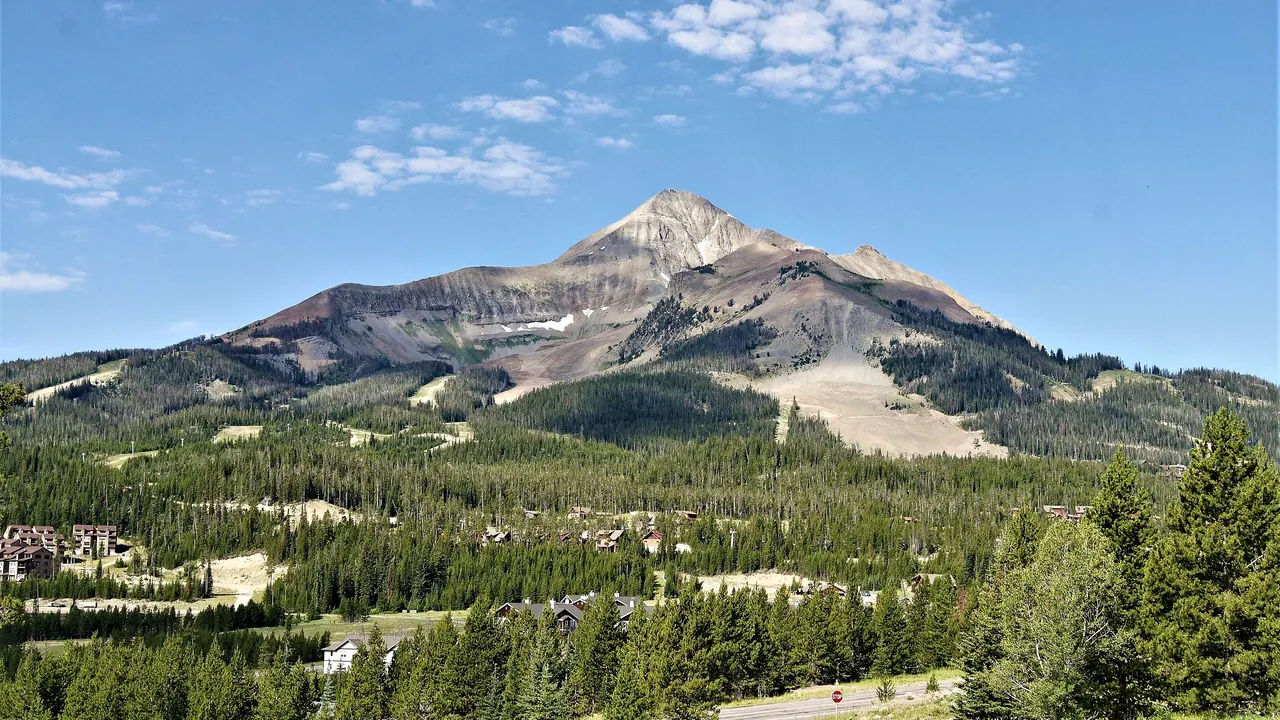
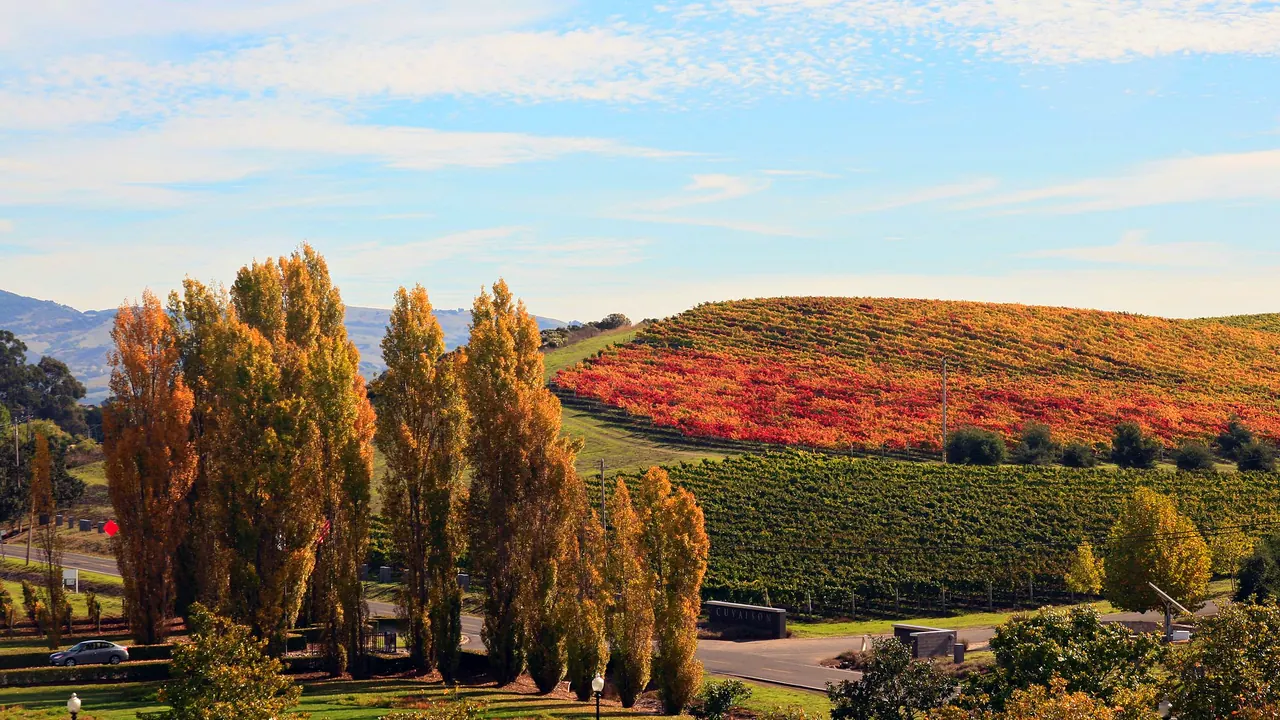
Photos: Big Sky by Greg Gjerdingen, CC BY 2.0, cropped; Napa by Brocken Inaglory, CC BY-SA 3.0, cropped.
Big Sky or Napa?
Our verdict in twelve categories, each scored against the same fixed benchmark cities, and the climate month by month, so you can choose for your trip.
Choose Big Sky for
- nature and the outdoors
- families
- getting around
Pick Big Sky if the trip is about the mountain itself. Lone Peak's long ski season, summer trails into the Spanish Peaks and Yellowstone an hour away make it the far stronger base for active days. It also works better with children, thanks to the ski school and the summer adventure park. Expect hearty, simple food, quiet evenings and a large bill.
Choose Napa for
- food and drink
- day trips
- wellness
Napa is the better choice for a slower trip built around the table. Tasting along Highway 29 and the Silverado Trail, the restaurants of Yountville and St Helena and the mud baths of Calistoga suit couples and friends who want long lunches and spa afternoons. Sonoma and San Francisco are close enough to give the trip some variety. It is mostly a place for adults, and it is no cheaper than Big Sky.
Scoreboard
Twelve categories on one fixed scale from 0 to 100. The shaded stretch is the gap between the two.
Your match
Pick a travel style or drag the sliders, and both match scores follow your weighting.
Wins on nature and the outdoors and families with your weighting.
Wins on food and drink and day trips with your weighting.
What matters to you?
Category by category
What the scores mean for a trip.
Beaches & swimming
Neither place is a swimming destination, and in both the realistic option is a hotel pool. The difference is the water nearby. Big Sky has the cold, rocky Gallatin River and a few small ponds for a quick paddle. Napa has Lake Berryessa in the eastern hills for a proper summer swim or a day on a boat, and a Pacific coast more than an hour away that is for looking at rather than swimming in.
Food & drink
Food is where Napa pulls furthest ahead. Its wine runs from Cabernet up the valley to Pinot Noir and sparkling wine in Carneros, and it comes with a run of serious restaurants in Yountville and St Helena and the market hall in town. Eating well is the point of the trip.
Big Sky feeds skiers and hikers: bison, elk, trout, wood-fired pizza, big breakfasts and local beer. It is solid but narrow, some kitchens close between seasons, and for more variety you have to drive to Bozeman.
Culture & sights
Neither is a sightseeing destination, but Napa has a little more to look at. There is the 1880 Opera House and the Victorian buildings along First Street, the stone winery buildings and old main streets up the valley, and contemporary art at di Rosa in Carneros. Big Sky was built from the 1970s on, and apart from the log cabins of the Crail Ranch homestead, its history is a drive away, starting with the Museum of the Rockies in Bozeman.
Nightlife
Both go quiet early, and neither has clubs, but the evenings run on different clocks. In Big Sky the social hour is late afternoon, when skiers in boots fill the decks at the foot of the lifts. A few canyon saloons keep pool tables and a ranch crowd, and outside the ski season the resort is almost silent.
In Napa the evening is a long dinner followed by a wine bar or cocktail bar near the river. For a real night out you drive about an hour to San Francisco.
Nature & outdoors
Big Sky is mountain country on a far grander scale. It has Lone Peak and its huge ski area, the Spanish Peaks and the Lee Metcalf Wilderness, and fly fishing and rafting on the Gallatin. With Yellowstone an hour south, it has a range Napa cannot match.
Napa's outdoors is gentler and more cultivated: balloon flights over the vineyards at dawn, flat cycling on the valley trail, redwoods at Bothe-Napa Valley and the climb up Mount St Helena. It is pleasant rather than wild, and the summer heat pushes walks into the early morning.
Day trips
Napa has far more within reach. Yountville, St Helena, Calistoga and Sonoma are short drives, and Healdsburg and the Russian River offer a second wine country. San Francisco, Sausalito and Sacramento make full days in a city.
From Big Sky, most outings go into the landscape. Bozeman and the dinosaur fossils of the Museum of the Rockies are an hour away, and the gold-rush boardwalks of Virginia City and Nevada City are about two hours away. There is no large city or wine region nearby.
Good for families
Big Sky is the easier choice with children, as long as they like being outside. Ski school, summer zip lines, climbing walls and ropes courses, horse riding and Yellowstone's bison make real days out. The altitude at Mountain Village tires young children at first, though, and there is little to do on a rainy day.
Napa is built around tasting and long dinners, which children put up with rather than enjoy. The animal park in Vallejo, the geyser near Calistoga and hotel pools help, but summer heat and the drives between wineries make it hard going.
Getting around
Both need a car beyond the centre, for different reasons. Big Sky strings its villages along about 15km of road, linked by a free bus, and with ski-in lodgings many winter visitors hardly need a car until they head for Yellowstone, on canyon roads that call for winter tyres.
Napa's downtown is the more walkable core, but the wineries are spread over 50km and the buses run too rarely to rely on. Because tasting and driving do not mix, many visitors book a driver or join a tour.
Shopping & style
Napa offers more, though mostly around wine. Visitors have cases shipped home from the cellars, buy food gifts at the market hall, browse the cookware and design shops in St Helena, and find familiar brands at the outlet mall. Big Sky's shops cover ski and fishing gear, Western clothing and wildlife art, and anything beyond that means a drive to Bozeman.
Affordability
Both are very expensive, and neither suits a tight budget. In Big Sky the costs pile up in winter with slopeside lodging, lift passes and ski school, and summer is the cheaper season.
In Napa the money goes on luxury hotels, estate tastings and a driver for the day, and costs are highest at weekends and at harvest. In both places, saving money means staying further out: in the canyon or in Bozeman for Big Sky, or in a chain hotel south of Napa and eating at the taquerias.
Live music & performing arts
Napa has a somewhat fuller calendar. The 1880 Opera House puts on concerts and comedy, an Art Deco theatre books touring bands, a summer classical festival uses winery venues and a large rock and pop festival comes each late spring.
Big Sky has chamber music and theatre at its small Meadow Village arts centre in winter and free concerts on the lawn in summer. Between seasons, both send you to a bigger city: Bozeman from Big Sky, San Francisco from Napa.
Wellness & relaxation
Napa is the more restful place by design. Calistoga's mud baths and mineral pools have drawn bathers since the nineteenth century, and the resorts in Carneros and the hills have large spas. A day of tastings and lunch on a terrace is slow anyway.
In Big Sky, relaxing comes after exercise: a hot tub on the deck, a massage for sore ski legs and quiet, starry nights. The nearest hot springs are about an hour away, towards Bozeman.
When should you go?
Pick your month. The climate figures are measured averages, not a forecast.
Big Sky in July
Napa in July
Daytime high, °C
Rainfall in the month, mm
Where the figures come from
Big Sky has no weather station within reach, so its figures come from a gridded climate model rather than a measured record, and read a broad area rather than the city itself.
Napa has no rain gauge within 25 km of the centre, so its rainfall comes from a gridded climate dataset read at the city rather than from a gauge further away.
Napa's sunshine is measured 73 km from the centre, at Sacramento Executive Airport.
Temperature and rainfall are climate normals, averaged over the years shown. Big Sky: 2001-2020 normals, NASA POWER reanalysis grid, no weather station within 90 km. Napa: 1991-2020 (sunshine 1981-2010) normals, Napa / Middleton (9.8 km from centre).
Big Sky is two different places through the year. From late autumn to April it is snow country, with January highs around -4°C, which is ideal for skiing and harsh for anything else. Spring is wet as the snow melts, and May is the rainiest month. The hiking season runs from late June to September, when July days reach 26°C, the nights stay cool and the rain eases off.
Napa never gets properly cold, but nearly all its rain falls in winter, with around 138mm in January, and that turns the hills green. From May to October it is dry, very sunny and warm, with highs near 26°C all summer and the most sunshine in June and July. Swimming means a pool, because the Pacific off the Sonoma coast barely reaches 14°C. Spring and autumn are the most comfortable seasons for walking around the towns.
Which traveller are you?
On an outdoors trip, Big Sky wins easily. It is wild, high country with something to do in every season, while Napa's landscape is mostly a pleasant backdrop to the wine. The cost is real winters and long drives, so pack and plan for both.
For a food and nightlife trip, choose Napa, but know the strength lies almost entirely at the table. Eating and drinking well is what the valley exists for, whereas Big Sky's cooking is fuel for the mountain. Neither keeps you out late.
On a family trip with children, Big Sky is the safer bet, as long as they are happy outdoors. The resort is set up for active days with young skiers and climbers, whereas Napa's rhythm suits adults. Either way, budget generously, since neither comes cheap.
Before you go
| Measure | Big Sky | Napa |
|---|---|---|
| Currency | US Dollar (USD) | US Dollar (USD) |
| Sockets | AB120 V, 60 Hz | AB120 V, 60 Hz |
| Driving side | Right | Right |
| Time zone | UTC-7, UTC-6 in summer | UTC-8, UTC-7 in summer |
| Emergency number | 911 | 911 |
| Elevation | 2,200 m | 6 m |
| Main airport | Bozeman Yellowstone International Airport (BZN)59 km from centre27 non-stop destinations | San Francisco International Airport (SFO)76 km from centre143 non-stop destinations |
| Public holidays this year | 12 days | 13 days |
By the numbers
| Measure | Big Sky | Napa |
|---|---|---|
| City population | 3,591 | 79,246 |
| People per km² | 12 | 1,686 |
| Museums within 10 km | 0 | 3 |
| UNESCO World Heritage sites within 50 km | 0 | 0 |
| Swim season, months above 21 °C | - | None |
Where else could you go?
Every comparison below shares a destination with this one, so you can follow Big Sky or Napa somewhere new.
- Sonomavs Napa
- San Franciscovs Napa
- San Josevs Napa
- Montereyvs Napa
- Carmel-by-the-Seavs Napa
- Jackson Holevs Big Sky