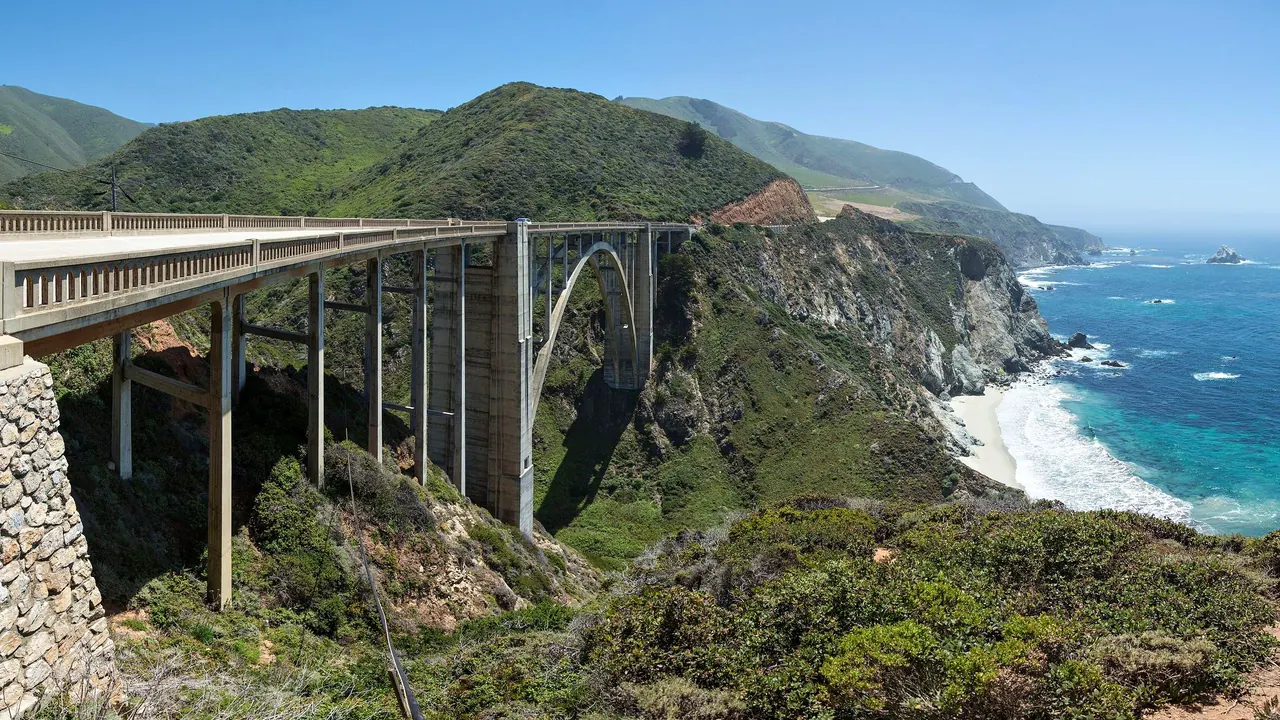
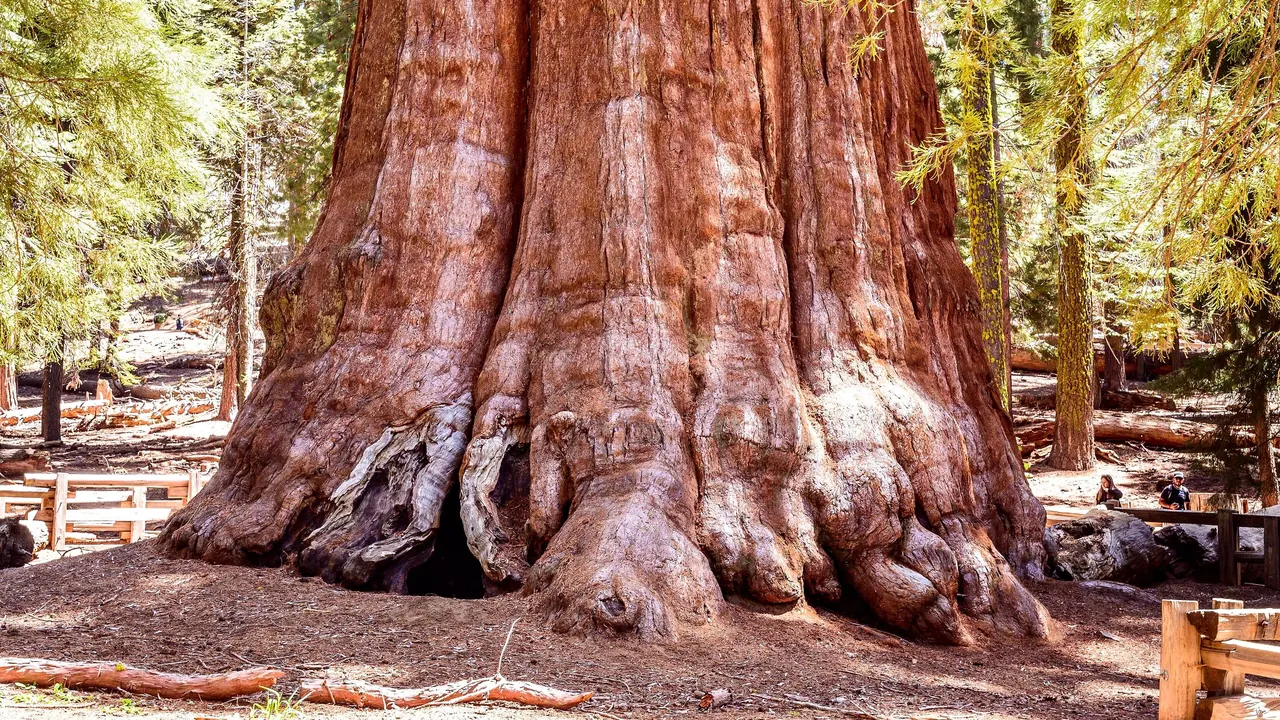
Photos: Big Sur by Diliff, CC BY-SA 3.0, cropped; Sequoia by Domenico Convertini from Zurich, Schweiz, CC BY-SA 2.0, cropped.
Big Sur or Sequoia?
Our verdict in twelve categories, each scored against the same fixed benchmark cities, and the climate month by month, so you can choose for your trip.
Choose Big Sur for
- wellness
- day trips
- beaches
Big Sur suits a slow, scenic trip where the drive and the views are the point. You get cliffs dropping into the Pacific, a retreat culture built around hot springs and cliff-top spas, and Carmel, Monterey and Hearst Castle within reach at either end of the coast. It works best for couples who want a few quiet days and don't mind paying for them, and who are happy to treat the coast road as the main event.
Choose Sequoia for
- prices
- families
- getting around
Sequoia is the better pick for travellers who want to be on foot in big mountain country. Here you walk among the largest trees on earth, look down into Kings Canyon and can go deeper into the High Sierra on longer routes. It is also much kinder to a family budget, because cheap campgrounds and free trails make a week possible without the coast's luxury prices, and children get more out of the easy grove walks and ranger programmes.
Scoreboard
Twelve categories on one fixed scale from 0 to 100. The shaded stretch is the gap between the two.
Your match
Pick a travel style or drag the sliders, and both match scores follow your weighting.
Wins on wellness and day trips with your weighting.
Wins on prices and families with your weighting.
What matters to you?
Category by category
What the scores mean for a trip.
Beaches & swimming
Neither is a place for a beach vacation, though the water is very different. Big Sur has the scenery: Pfeiffer Beach's arch and purple sand, the Garrapata coves, Plaskett Creek. But the Pacific is cold, the surf is heavy and rip currents are common, so these beaches are for walking, not swimming.
In Sequoia you swim in fresh water rather than the sea. Late-summer granite pools on the Kaweah near Three Rivers and the calm sandy shore at Hume Lake are good for a cooling dip after a hike, but the rivers are dangerous while they run high with snowmelt.
Food & drink
Food is ordinary in both places, so choose on what kind of meal you want. Big Sur is about a long, expensive lunch at a cliff-top lodge or a Californian dinner room where the ocean view matters as much as the cooking. Many visitors eat their main meals in Carmel or Monterey.
Sequoia is plainer and cheaper. Inside the parks you have lodge dining rooms and camp cooking, Three Rivers has burgers and barbecue, and down in the valley there are fruit stands in summer, taquerias and Fresno's Armenian and Hmong cooking.
Culture & sights
Neither has much in the way of museums or historic towns, and in both the heritage is tied to the landscape. Big Sur's sights are along the road: Bixby Bridge, the Point Sur Lightstation and the Henry Miller Memorial Library. The library keeps alive the coast's history as a refuge for writers and Beat poets.
Sequoia's sights explain the land and its earliest people. The Giant Forest Museum tells the story of the sequoias and how they were saved, Hospital Rock has Western Mono rock paintings, and the guided tours of Crystal Cave are the closest thing to a classic sightseeing visit.
Nightlife
There is no nightlife in either. Evenings are for a drink with dinner and then dark skies. At Big Sur, the unlit, winding road is a good reason not to drive after a glass of wine, while Sequoia's evenings centre on ranger talks and campfires before an early start on the trails.
Nature & outdoors
Both are among California's great landscapes, but very different ones. Big Sur is about mountains meeting the sea: about 140km of cliff road above the surf, redwood canyons and waterfalls. Its wildlife is coastal, with sea otters in the kelp, grey whales offshore and condors over the ridges.
Sequoia is entirely about the mountains. The General Sherman and the Giant Forest, the view from Moro Rock and the deep walls of Kings Canyon set the scale. The hiking goes further too, from short grove loops to multi-day routes over high passes from Mineral King.
Day trips
Big Sur has much better outings nearby. Carmel's mission and galleries, Monterey's Cannery Row and aquarium, and the Carmel Valley wineries lie at the northern end, with Hearst Castle and Cambria to the south. The winding road means most people pick the end nearest where they are staying.
From Sequoia there is far less to choose from. Visalia's old downtown, Fresno's Forestiere Underground Gardens and Colonel Allensworth State Historic Park are interesting enough, but the flat farmland in between gives little reason to leave the parks.
Good for families
Sequoia is the easier choice for children. The giant trees make an immediate impression, the Big Trees Trail is paved and flat, and Junior Ranger booklets, Crystal Cave and Hume Lake give children things to do. The winding drives and Moro Rock's drops still need care.
Big Sur works mainly for families who camp along the Big Sur River. Elephant seals and sea otters will please children, but the cold sea and unfenced cliffs limit what they can do, and many families stay in Monterey and visit for the day.
Getting around
You need a car in both, and Sequoia is slightly the easier of the two. In summer a free shuttle loops through the Giant Forest groves and a seasonal bus runs up from Visalia. Staying near the groves also cuts out much of the daily driving, though snow chains and winter road closures still affect plans.
Big Sur has only Highway 1. It is slow and full of hairpins, busy in summer, with few petrol stations and patchy phone signal. When landslides close a section, a short trip can become a detour of several hours inland.
Shopping & style
Big Sur's roadside stops sell crafts, jewellery and local art from a couple of galleries, while in Sequoia the best thing to buy is summer stone fruit, citrus or nuts from the valley stands. Carmel, at the northern end of Big Sur, is close enough for a proper afternoon of browsing. Sequoia has nothing like it, only lodge gift stores, park bookshops and a few small galleries in Three Rivers.
Affordability
Sequoia costs far less. Its campgrounds among the pines are some of the cheapest places to sleep in California, the trails and viewpoints cost nothing beyond park entry, and staying in Visalia cuts the cost of a room further.
Big Sur is among the most expensive places to stay in the country. Even simple cabins charge what a good city hotel would, and food and petrol cost more because everything comes in along one road. Camping or staying in Monterey are the only real ways to save, and summer campsites book up months ahead.
Live music & performing arts
Big Sur's evenings out centre on the Henry Miller Memorial Library, which holds outdoor concerts, readings and film screenings under the redwoods in the warmer months. Monterey's jazz festival and Carmel's Bach festival are an hour or more north.
In Sequoia the parks offer ranger campfire programmes, with talks and the odd song. Visalia's restored Fox Theatre and Fresno's orchestra put on proper concerts and shows, but they mean a long drive down the mountain, so they rarely fit into a stay among the trees.
Wellness & relaxation
Big Sur is far stronger for wellness. Esalen's hot springs in stone baths above the surf have drawn retreat-goers for decades, and the cliff-top resorts run proper spas with massage, yoga and tubs facing the ocean. These stays need booking well ahead and are not cheap.
Sequoia offers rest rather than treatments. A cabin near the Giant Forest or a cottage by the river in Three Rivers, slow mornings in the groves and quiet nights are the main appeal, but anyone wanting a spa will find almost nothing.
When should you go?
Pick your month. The climate figures are measured averages, not a forecast.
Big Sur in July
Sequoia in July
Daytime high, °C
Rainfall in the month, mm
Where the figures come from
Big Sur's temperatures are measured 42 km from the centre, at Monterey / Pacific Grove Acres.
Big Sur has no rain gauge within 25 km of the centre, so its rainfall comes from a gridded climate dataset read at the destination rather than from a gauge further away.
Sequoia has no weather station within reach, so its figures come from a gridded climate model rather than a measured record, and read a broad area rather than one spot.
Temperature and rainfall are climate normals, averaged over the years shown. Big Sur: 1991-2020 normals, Monterey / Pacific Grove Acres (41.9 km from centre). Sequoia: 2001-2020 normals, NASA POWER reanalysis grid, no weather station within 90 km.
Big Sur's weather barely changes through the year. Daytime highs stay in the high teens and low twenties, peaking around 23°C in early autumn. The real divide is rain. From November to March the coast is wet, with about 205mm in December, and winter storms can close the road. May to September is almost completely dry. The Pacific stays around 13°C to 15°C all year, so it is never warm enough for swimming. Autumn tends to be the clearest season, while summer days often start in coastal fog.
Sequoia swings far more widely. At the point where the figures are measured, July reaches about 30°C, which makes for hot afternoons on low trails, while December and January sit near 8°C and the high country lies under snow. Rain and snow fall mainly from November to March, and summer is dry. Late spring and September are the comfortable middle ground for walking. For a winter trip Big Sur is the milder of the two, and for high trails summer is the only real window in Sequoia.
Which traveller are you?
On a relaxing and wellness trip, pick Big Sur and settle into one cliff-top resort or an Esalen workshop for several nights instead of touring the coast. Book months ahead and aim for early autumn, when the coast is dry and at its clearest.
For a trip on a tight budget, go to Sequoia, reserve a campsite near the groves as early as you can and plan to cook most meals yourself. If the campgrounds are full, sleep in Visalia. Big Sur only fits a small budget as a single scenic drive.
On a family trip with children, Sequoia is the better bet. Stay in a cabin or campsite near the Giant Forest so you only drive the switchbacks once, and go in July or August, when the rivers have calmed. Keep Big Sur for a single day on the coast.
Before you go
| Measure | Big Sur | Sequoia |
|---|---|---|
| Currency | US Dollar (USD) | US Dollar (USD) |
| Sockets | AB120 V, 60 Hz | AB120 V, 60 Hz |
| Driving side | Right | Right |
| Time zone | UTC-8, UTC-7 in summer | UTC-8, UTC-7 in summer |
| Emergency number | 911 | 911 |
| Main airport | Monterey Regional Airport (MRY)11 non-stop destinations | Fresno Yosemite International Airport (FAT)15 non-stop destinations |
| Public holidays this year | 13 days | 13 days |
By the numbers
| Measure | Big Sur | Sequoia |
|---|---|---|
| Swim season, months above 21 °C | None | - |
Where else could you go?
Every comparison below shares a destination with this one, so you can follow Big Sur or Sequoia somewhere new.
- Kings Canyonvs Sequoia
- Carmel-by-the-Seavs Big Sur
- Montereyvs Big Sur
- Yosemitevs Sequoia
- Death Valleyvs Sequoia
- Napa Valleyvs Big Sur