United States
Big Sur
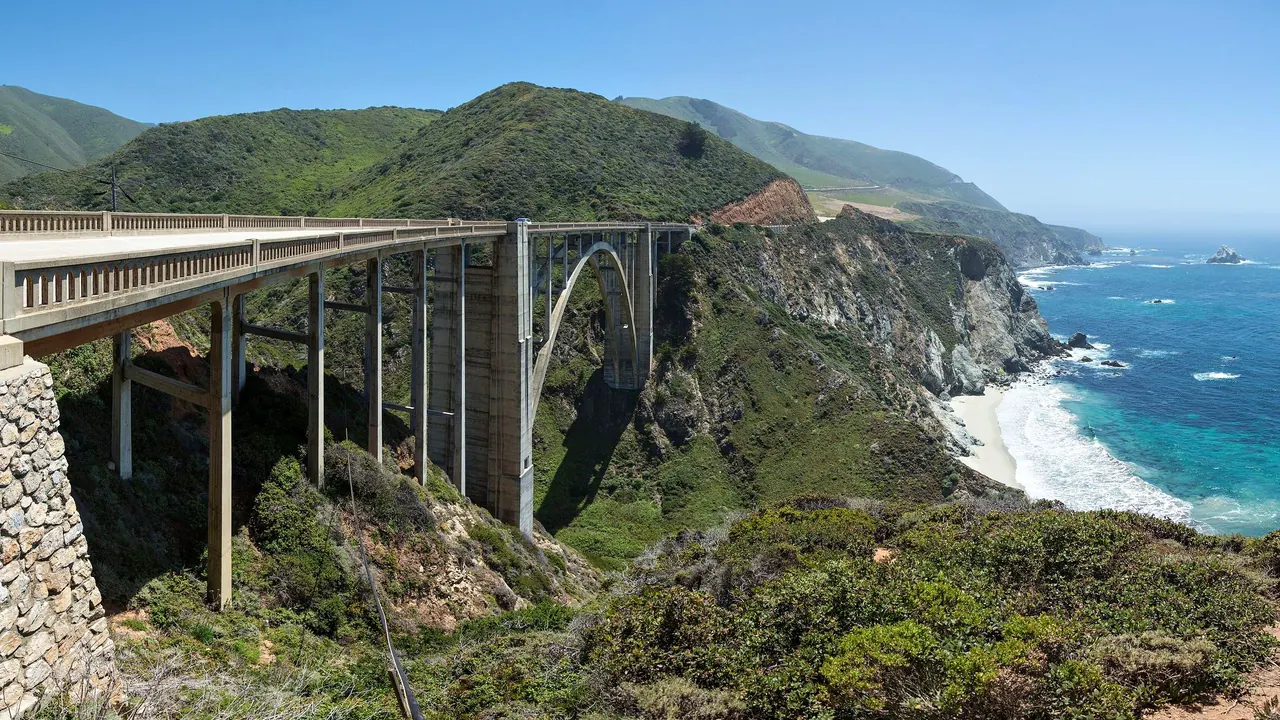
Bixby Creek Bridge and the Big Sur coast
- Nature & outdoors90
- Wellness & relaxation76
- Day trips55
Photo: Diliff, CC BY-SA 3.0, cropped
Big Sur lies in California, which has its own page.
Match
30
Every category weighted equally
- Beach & sun33
- Culture & arts25
- Food & nightlife21
- Family trip32
- Outdoors42
- Relax & unwind39
- Shopping & style24
- On a budget27
Big Sur in twelve categories
Our verdict on each, scored 0 to 100 against the same fixed benchmark cities, so a score means the same thing on every page.
Beaches & swimming. Scores 18 out of 100.
Food & drink. Scores 25 out of 100.
Culture & sights. Scores 18 out of 100.
Nightlife. Scores 5 out of 100.
Nature & outdoors. Scores 90 out of 100.
Day trips. Scores 55 out of 100.
Good for families. Scores 30 out of 100.
Getting around. Scores 15 out of 100.
Shopping & style. Scores 7 out of 100.
Affordability. Scores 8 out of 100.
Live music & performing arts. Scores 12 out of 100.
Wellness & relaxation. Scores 76 out of 100.
Big Sur category by category
Beaches & swimming
18Big Sur has some of the most photographed beaches in California, but they are for looking at, not swimming in. The Pacific here stays at about 13°C even in late summer. The surf is heavy, and rip currents and sneaker waves make wading out unwise on most days.
Pfeiffer Beach, with its rock arch and streaks of purple sand, is worth an hour of walking and sitting. So are the coves at Garrapata and the wide sandy cove beside Plaskett Creek near the southern end. Many famous shores, such as the cove below McWay Falls, can't be reached at all. Bring a jacket, not a swimsuit. Anyone who wants to swim uses a lodge pool.
Food & drink
25Eating in Big Sur means a small number of places strung out along the highway, most of them attached to lodges or perched on cliffs where the view does as much work as the kitchen. There is a respected bakery, a couple of serious dinner rooms with Californian menus built on Central Coast produce and wine, and roadhouse cafés serving burgers and sandwiches. Choice is thin, distances between options are long and prices are high. Visitors who care about food tend to eat their big meals in Carmel or Monterey and treat Big Sur as a place for one long lunch with the ocean below.
Culture & sights
18Big Sur's heritage is thin on buildings and rich in stories. Bixby Bridge, the concrete arch of 1932 that carries the coast road across a canyon, is the landmark everyone stops for, and the Point Sur Lightstation, on a volcanic rock above the surf, can be visited on guided walks. The Henry Miller Memorial Library, a small wooden house under the redwoods, keeps alive the coast's reputation as a refuge for writers, artists and the Beat generation.
Beyond those there are homesteaders' cabins in the state parks and little else. There are no museums of note and no town centre to wander; the culture here is mostly the mood the landscape gave to the people who settled it.
Nightlife
5There is essentially no nightlife. A few lodge bars and a roadside tavern serve drinks with dinner, and then the coast goes dark, with no street lights and a winding road nobody wants to drive after a glass of wine. Evenings here are for stargazing, a fire at the campsite or an early night; anyone wanting a bar crawl should stay in Monterey.
Nature & outdoors
90This is the reason to come. For about 140km the Santa Lucia Mountains rise straight out of the Pacific, so the coast road runs along cliffs hundreds of metres above the surf, past headlands, waterfalls and canyons full of coast redwoods. Point Lobos at the northern gateway, Garrapata, Pfeiffer Big Sur and Julia Pfeiffer Burns state parks offer short walks to dramatic viewpoints, while trails such as the Pine Ridge route climb into the steep, roadless Ventana Wilderness and the Silver Peak country in the south.
Wildlife is part of the landscape: California condors soar over the ridges, sea otters float in the kelp, grey whales pass offshore in winter and spring, and elephant seals crowd the beaches near Piedras Blancas at the southern end. Spring brings wildflowers and running waterfalls; summer often means fog on the coast and sun on the ridges; autumn is clearest. Winter storms bring landslides that close sections of the road, so check access before planning a route.
Day trips
55Big Sur sits between two very different outings. At the northern end, Carmel-by-the-Sea, with its cottages, galleries and the Carmel Mission, and Monterey, with Cannery Row, the old adobe quarter and the Monterey Bay Aquarium, are within an hour of the central coast. Inland, the Carmel Valley wineries make an easy afternoon.
To the south, Hearst Castle, the hilltop mansion above San Simeon, is one of California's great set pieces, and the seaside village of Cambria lies just beyond it. From the middle of the coast, either end is a slow drive on a winding road, and landslides sometimes cut the coast in two, so most visitors pick the outings nearest the end where they stay rather than covering both.
Good for families
30Big Sur works for families who camp and hike, and not much beyond that. The redwood campgrounds along the Big Sur River give children a creek to paddle in, flat forest trails and campfire evenings, and short walks such as the one to McWay Falls are manageable for small legs. Elephant seals at the southern end and sea otters at Point Lobos are a hit with children.
The drawbacks are real: there are no attractions made for children, the sea is too cold and rough for safe play, many viewpoints sit on unfenced cliffs, and the twisting road makes car sickness common. Families who want an aquarium or a beach day base themselves in Monterey and visit Big Sur for a day.
Getting around
15There is one road, Highway 1, and you need a car to use it. It is a narrow two-lane route of hairpins and drops, slow at the best of times and clogged with summer traffic and drivers stopping for photographs; covering the whole coast takes most of a day with stops. Petrol stations are few and far apart, phone signal is patchy, and bus service from Monterey is too sparse to plan a stay around.
Landslides close sections of the road for long periods after wet winters, which can turn a short hop into a detour of several hours inland. Once parked, trailheads and viewpoints are close together, but nothing here is walkable from one place to the next.
Shopping & style
7Shopping amounts to a handful of gift and craft shops at roadside stops, a couple of galleries selling local art and jewellery, and general stores for supplies. Nothing here is worth a trip on its own; Carmel to the north is where visitors browse.
Affordability
8Big Sur is one of the most expensive places to stay in the United States. Rooms are few, the cliff-top lodges and inns charge luxury rates, and even modest motels and cabins cost what a good city hotel would elsewhere. Food, petrol and supplies carry a heavy premium because everything is trucked in along one road, and state park parking fees add up across a stay.
The one way to keep costs down is camping in the state park and national forest campgrounds, which are reasonably priced but book up months ahead for summer. Many visitors save by sleeping in Monterey or San Simeon and driving in for the day.
Live music & performing arts
12There is very little to attend. The Henry Miller Memorial Library hosts outdoor concerts, film screenings and readings under the redwoods, mostly in the warmer months, and some lodges put on occasional live music. Otherwise the coast has no theatre or concert venue. Monterey's long-running jazz festival and Carmel's summer Bach festival are the nearest serious programmes, an hour or more up the road.
Wellness & relaxation
76Big Sur has been a retreat coast for decades. The Esalen Institute, founded in the 1960s and central to California's human potential movement, sits on a ledge where natural hot springs feed stone baths above the surf; access comes through its workshops and stays, and a visit is planned well in advance. The cliff-top resorts along the coast run serious spas with massage, yoga and soaking tubs facing the ocean, built for long, slow stays.
The deeper draw is the pace. With no town, poor phone signal and nights of real darkness, the coast forces people to slow down, and many come precisely for a few days of quiet. There is no public bathhouse culture, though, and restorative stays here are almost always booked and costly.
Where to stay in Big Sur
Most first-time visitors base themselves in the Big Sur Valley, the stretch along the Big Sur River around Pfeiffer Big Sur State Park. Most of the coast's cabins, lodges and redwood campgrounds are here, with the bakery and roadhouse cafés close by and plenty of trailheads a short drive away. It suits walkers and families who camp, and puts both Point Lobos and Julia Pfeiffer Burns within easy reach.
South of the valley, cliff-top lodges and retreats stand on their own high above the ocean. A stay here means quiet, spa treatments and properly dark nights, with very little driving about. It suits couples on a slow, restorative stay who are happy to eat where they sleep. Further south, the campgrounds near Plaskett Creek make a remote base for the Silver Peak trails and the elephant seals at Piedras Blancas. They work well on a second visit, combined with Hearst Castle and Cambria.
Many visitors stay outside Big Sur altogether. Carmel and Monterey suit families, people who care about food and anyone who wants an evening out, while San Simeon is a cheaper base at the southern end. Landslides can cut the road in two, so pick the end that matches your plans and stay put. For most trips one base is enough.
When should you go?
Pick a month to see what it is like. The climate figures are measured averages, not a forecast.
Big Sur in July
Daytime high, °C
Rainfall in the month, mm
The whole year
Shaded against this destination’s own year: the deepest cell is its best month for that figure and the palest its weakest.
Where the figures come from
Big Sur's temperatures are measured 42 km from the centre, at Monterey / Pacific Grove Acres.
Big Sur has no rain gauge within 25 km of the centre, so its rainfall comes from a gridded climate dataset read at the destination rather than from a gauge further away.
Temperature and rainfall are climate normals, averaged over the years shown. Big Sur: 1991-2020 normals, Monterey / Pacific Grove Acres (41.9 km from centre).
Before you go
| Measure | Big Sur |
|---|---|
| Currency | US Dollar (USD) |
| Sockets | AB120 V, 60 Hz |
| Driving side | Right |
| Time zone | UTC-8, UTC-7 in summer |
| Emergency number | 911 |
| Main airport | Monterey Regional Airport (MRY)11 non-stop destinations |
| Public holidays this year | 13 days |
By the numbers
| Measure | Big Sur |
|---|---|
| Swim season, months above 21 °C | None |
Compare Big Sur with
Every comparison with a written verdict behind it.
- Arches
- Bryce Canyon
- Canyonlands
- Carmel-by-the-Sea
- Death Valley
- Grand Canyon
- Great Ocean Road
- Joshua Tree
- Kings Canyon
- Lake Tahoe
- Monterey
- Mount Rainier
- Napa Valley
- Redwood National Park
- Sequoia
- Yosemite
- Zion