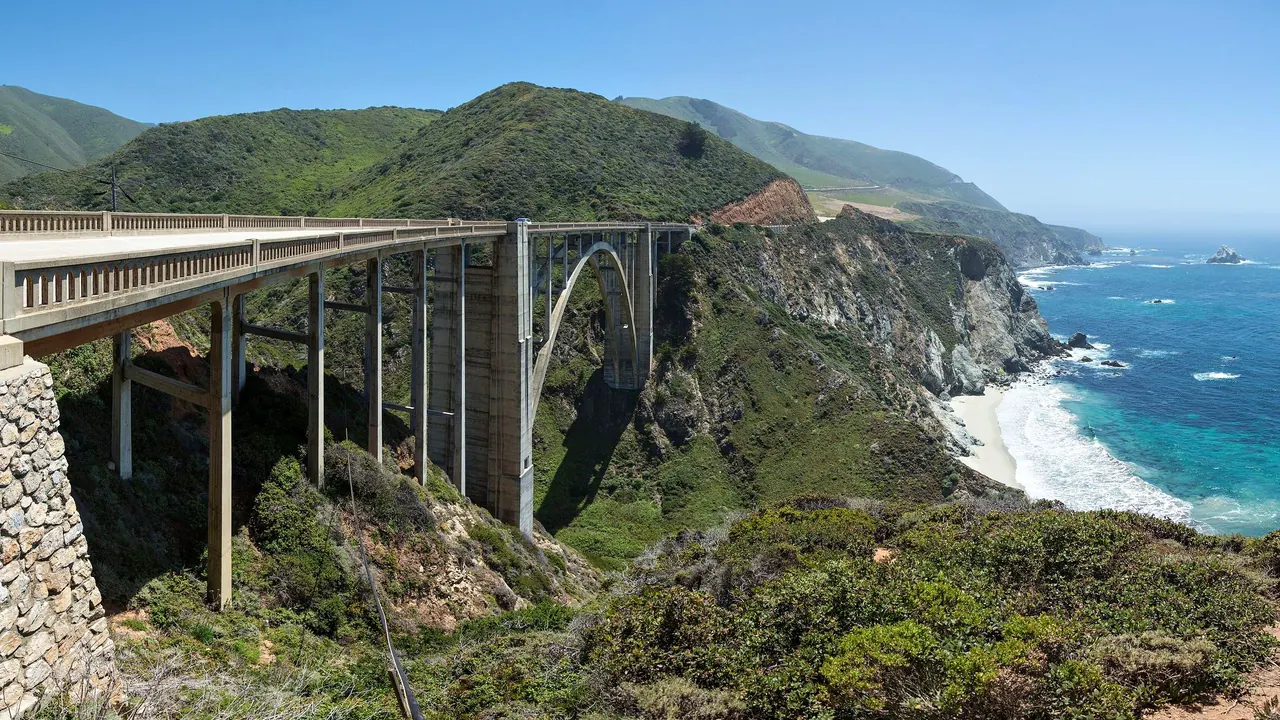
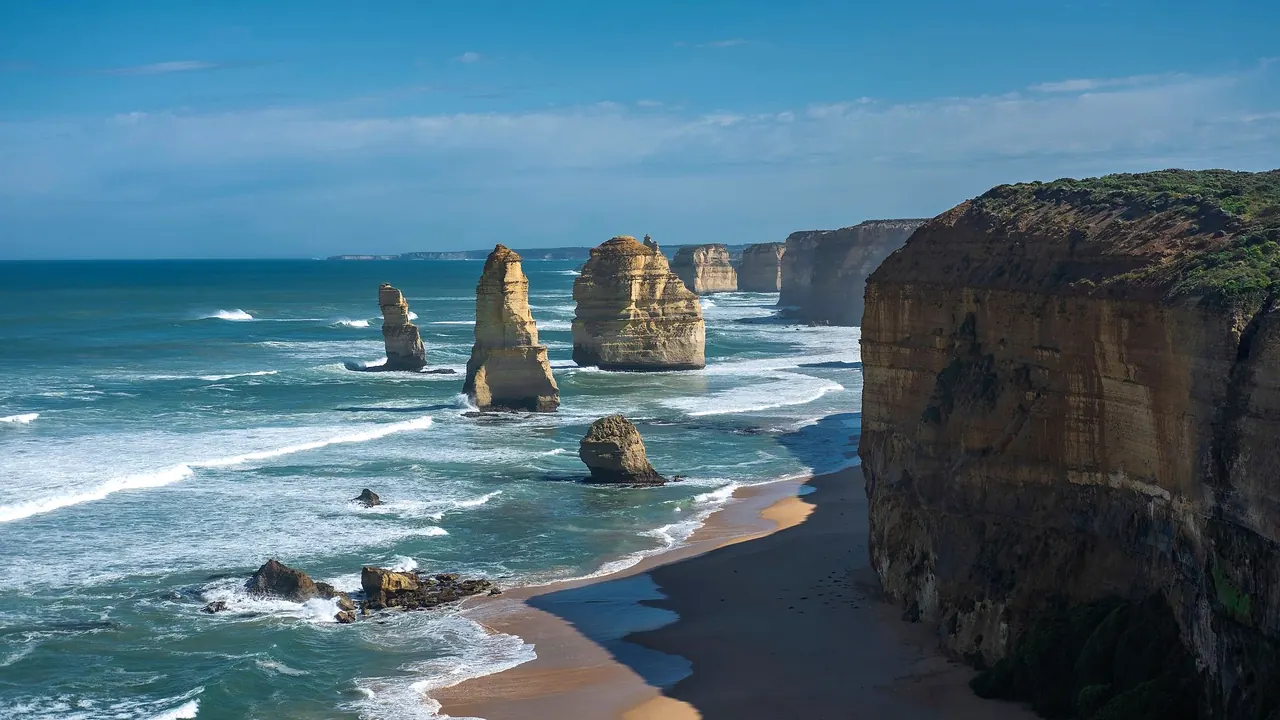
Photos: Big Sur by Diliff, CC BY-SA 3.0, cropped; Great Ocean Road by Joe Kent, Pexels License.
Big Sur or Great Ocean Road?
Our verdict in twelve categories, each scored against the same fixed benchmark cities, and the climate month by month, so you can choose for your trip.
Choose Big Sur for
- wellness
- nature and the outdoors
Big Sur is for travellers who want a coastline at its most extreme and will pay for quiet. Mountains fall straight into the Pacific, redwood canyons cut inland and condors circle overhead. The hot-spring baths at Esalen and the cliff-top spas make it a place to stop for a few slow days. It suits couples and walkers far better than anyone hoping for a beach, a food scene or an evening out, and it works best as a short, costly stay, with Carmel and Monterey to the north for everything else.
Choose Great Ocean Road for
- beaches
- families
- prices
The Great Ocean Road gives you a fuller seaside vacation built around its wild stretches. The Twelve Apostles and the Otway rainforest come close to Big Sur for scenery, and around them you also get patrolled beaches you can swim from in summer, small towns with cafés and pubs, koalas in the gums and caravan parks that keep costs down. Families, surfers and anyone happy to split the drive over a few nights will find it the easier and more complete choice.
Scoreboard
Twelve categories on one fixed scale from 0 to 100. The shaded stretch is the gap between the two.
Your match
Pick a travel style or drag the sliders, and both match scores follow your weighting.
Wins on wellness and nature and the outdoors with your weighting.
Wins on beaches and families with your weighting.
What matters to you?
Category by category
What the scores mean for a trip.
Beaches & swimming
Neither coast offers warm water, but they differ on whether you can swim at all. Big Sur's beaches are scenery. Pfeiffer has its rock arch and purple sand, and Garrapata and Plaskett Creek have coves, but the sea stays near 13°C, the surf is heavy and the cove below McWay Falls can't be reached at all.
The Great Ocean Road has a real summer beach life in its towns. Lorne, Torquay, Anglesea and Apollo Bay have patrolled stretches where families spend the whole day, the water reaches the high teens from January to March, and Bells Beach and Jan Juc draw surfers. Its wild Shipwreck Coast, like Big Sur, is for looking at rather than swimming.
Food & drink
Food plays a supporting role on both coasts, but the Great Ocean Road gives you more to work with. In Big Sur there is a bakery, a couple of serious dinner rooms pouring Central Coast wine and some roadhouse cafés, all spread far apart along the highway, so keen eaters usually have their big meals in Carmel or Monterey.
The Australian towns cover the everyday pleasures well: good coffee and brunch in Lorne and Torquay, fish and chips on the foreshore and crayfish and abalone in season. Inland, Birregurra and Forrest in the Otway hinterland have farm-driven cooking and craft beer. Around the Twelve Apostles, though, the choice shrinks to food for tour coaches.
Culture & sights
Big Sur's past is a literary one, while the Great Ocean Road's is a story of war and shipwreck. On the Californian coast that past lives on in the Henry Miller Memorial Library, a wooden house under the redwoods that recalls the writers and Beat-generation drifters who settled here. Add Bixby Bridge, the concrete arch of 1932, and guided walks up to the Point Sur Lightstation, and you have most of it, with no museums and no town to wander.
The Australian road gives you a little more to visit. Returned soldiers built the road itself as a First World War memorial, and an arch near Eastern View marks it. The Shipwreck Coast has Cape Otway Lightstation and the Flagstaff Hill Maritime Village in Warrnambool. Port Fairy's bluestone cottages make it the one town on either coast worth walking for its own sake.
Nightlife
Evenings are quiet on both, but in Big Sur they end completely: a drink at a lodge bar with dinner, then an unlit road and the stars. The Great Ocean Road at least has pubs and a few bars in Torquay and Lorne that fill up on summer weekends and at New Year, although further west the night ends at the local hotel bar.
Nature & outdoors
Both are among the world's great coastal drives, and nature is the point of each. Big Sur has the edge for sheer scale. The Santa Lucia Mountains climb straight out of the Pacific, so the road hangs hundreds of metres above the surf, with redwood canyons and the roadless Ventana Wilderness behind it, and condors, sea otters and elephant seals along the way.
The Great Ocean Road has less height but more striking rock forms. There are the limestone stacks of the Twelve Apostles and Loch Ard Gorge, tree-fern rainforest and glow worms in the Otways, koalas at Kennett River and southern right whales off Warrnambool. The Great Ocean Walk gives it a multi-day hike to set against Big Sur's wilderness trails.
Day trips
Both coasts have good outings at each end and little in the middle, so where you stay decides what you see. From Big Sur the north offers Carmel's mission and galleries, Monterey's aquarium and Cannery Row, and the Carmel Valley wineries, while the south has Hearst Castle and Cambria. A landslide can cut you off from one end or the other.
The Great Ocean Road's eastern end is within reach of a major city: Melbourne is about an hour and a half from Torquay, and Geelong, Queenscliff and Ballarat are closer still or a long day away. In the west, the Budj Bim Cultural Landscape is an ancient Aboriginal eel-trapping system with no counterpart on the Californian coast.
Good for families
The Great Ocean Road is made for family summers in a way Big Sur is not. Beach-house towns such as Anglesea and Apollo Bay are within easy reach of patrolled sand, surf schools and short Otway forest walks, and the koalas rarely fail to please.
In Big Sur children do best from a campsite, paddling in the Big Sur River, walking to McWay Falls or watching the elephant seals in the south. The water is cold and rough, the cliffs are unfenced and nothing is built for children, so many families stay in Monterey and visit for a day. Both roads twist enough to cause car sickness, so on either one it pays to keep the drives short.
Getting around
On both coasts you need a car and the roads wind along cliffs, but the Great Ocean Road is the easier drive. Big Sur has a single highway with few petrol stations and patchy phone signal. Landslide closures can turn a short hop into an inland detour of several hours, and nowhere is within walking distance of the next place.
The Australian road is slow behind caravans and coaches, but its towns split the drive into sensible stages over two or three nights. Once you have parked in Lorne or Port Fairy, you can walk everywhere. Visitors from countries that drive on the right should remember that traffic here keeps left.
Shopping & style
Neither coast is a place to shop, but the Great Ocean Road gives you more to buy, almost entirely thanks to Torquay. Big Sur has close to nothing: a handful of roadside stops with crafts, souvenirs and work by local artists, plus stores stocking the basics for a campsite or cabin. Any serious browsing means driving north to Carmel.
Torquay is where several of Australia's best-known surf labels started, and its row of outlet stores is worth an hour if you want a wetsuit or boardshorts. Along the rest of the road, Lorne, Apollo Bay and Port Fairy have small galleries and gift shops, and there are makers' markets on summer weekends. That is more than Big Sur offers, but it still fills a wet afternoon rather than a day.
Affordability
Both are expensive, but Big Sur is in another league. Its few rooms, from cliff-top lodges to plain motels, cost far more than they would elsewhere, and food and petrol carry a premium because everything comes in along one road. The main ways to save are a state park campsite booked months ahead or a bed in Monterey or San Simeon.
On the Great Ocean Road, summer and Easter push up room rates in Lorne and Torquay. Caravan parks, roadside motels and cooking for yourself still keep a stay affordable, and the lookouts and national park walks are free.
Live music & performing arts
Big Sur's performances happen outdoors and lean towards the literary. In the warmer months the Henry Miller Memorial Library holds concerts, film screenings and readings under the redwoods, and some lodges put on music now and then. For anything bigger you need Monterey's jazz festival or Carmel's Bach festival, an hour or more to the north.
The Great Ocean Road's main event is the Port Fairy Folk Festival, which has filled the town with acoustic and roots music over a long weekend every March for decades. With pub bands in Torquay and Lorne on summer weekends, it has the fuller calendar of the two, although theatre and concerts still mean a drive to Geelong or Melbourne.
Wellness & relaxation
Big Sur is by far the better place to recharge. The hot-spring baths at Esalen, on a ledge above the surf, are part of California's history, and the cliff-top resorts run full spas with tubs facing the ocean. With no town and little phone signal, rest comes almost by default, though it is expensive and has to be booked well ahead.
The Great Ocean Road has no springs and no bathing tradition, only a few day spas in Lorne and Torquay and yoga stays in the Otway hinterland. Its calm comes from empty beaches out of season and forest cabins with a fire in winter.
When should you go?
Pick your month. The climate figures are measured averages, not a forecast.
Big Sur in July
Great Ocean Road in July
Daytime high, °C
Rainfall in the month, mm
Where the figures come from
Big Sur's temperatures are measured 42 km from the centre, at Monterey / Pacific Grove Acres.
Big Sur has no rain gauge within 25 km of the centre, so its rainfall comes from a gridded climate dataset read at the destination rather than from a gauge further away.
Temperature and rainfall are climate normals, averaged over the years shown. Big Sur: 1991-2020 normals, Monterey / Pacific Grove Acres (41.9 km from centre). Great Ocean Road: 1991-2020 normals, Aireys Inlet (12.2 km from centre).
Big Sur is dry from May to September, when almost no rain falls, though in summer fog often sits on the coast while the ridges above are sunny. September and October are the best months. There is still little rain, highs are around 23°C and the air is at its clearest. From November to March the rain comes in properly, peaking near 205mm in December, and wet winters are when landslides close the road. The sea is too cold for swimming in every month.
The Great Ocean Road runs on the opposite calendar. Its summer, from December to March, brings warm days in the low twenties and the year's warmest sea, around 19°C in February, which is the only real window for beach days. Rain is spread more evenly through the year than in Big Sur, but June to August is cooler and wetter, with highs near 13°C. That season suits forest walks, cabin fires and the whales off Warrnambool rather than the sand. Because the two coasts peak at opposite ends of the year, you can see each at its best on the same calendar.
Which traveller are you?
On a beach and sun trip, the Great Ocean Road is the only real option of the two. Lorne, Anglesea and Apollo Bay have patrolled beaches where people swim between the flags in summer. Big Sur's Pacific stays cold and rough all year, so its famous sands are for walking.
For a relaxing and wellness trip, Big Sur is the clear choice. Esalen's hot-spring baths above the surf, the cliff-top spas with ocean-facing tubs, the patchy phone signal and the dark nights all push you to slow down. The Great Ocean Road has only a few day spas.
On a family trip with children, the Great Ocean Road is much easier. A rented beach house in Anglesea or Apollo Bay puts patrolled sand, surf lessons and koalas close at hand. Big Sur really suits only families who camp, and it has unfenced cliffs and nothing built for children.
Before you go
| Measure | Big Sur | Great Ocean Road |
|---|---|---|
| Official language | - | English |
| Currency | US Dollar (USD) | Australian Dollar (AUD) |
| Sockets | AB120 V, 60 Hz | I230 V, 50 Hz |
| Driving side | Right | Left |
| Time zone | UTC-8, UTC-7 in summer | UTC+10, UTC+11 in summer |
| Emergency number | 911 | 000 |
| Main airport | Monterey Regional Airport (MRY)11 non-stop destinations | Melbourne Airport (MEL)70 non-stop destinations |
| Public holidays this year | 13 days | 13 days |
By the numbers
| Measure | Big Sur | Great Ocean Road |
|---|---|---|
| Swim season, months above 21 °C | None | None |
Where else could you go?
Every comparison below shares a destination with this one, so you can follow Big Sur or Great Ocean Road somewhere new.
- Carmel-by-the-Seavs Big Sur
- Montereyvs Big Sur
- Napa Valleyvs Big Sur
- Yosemitevs Big Sur
- Kings Canyonvs Big Sur
- Sequoiavs Big Sur