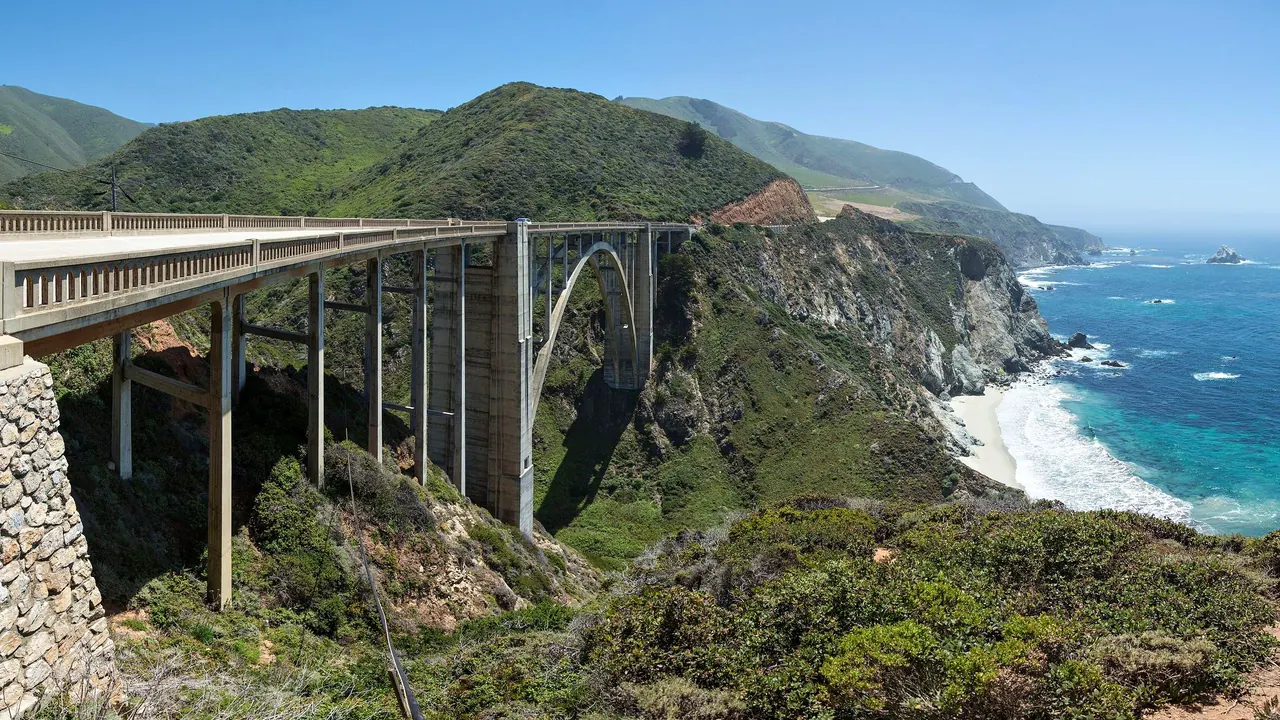
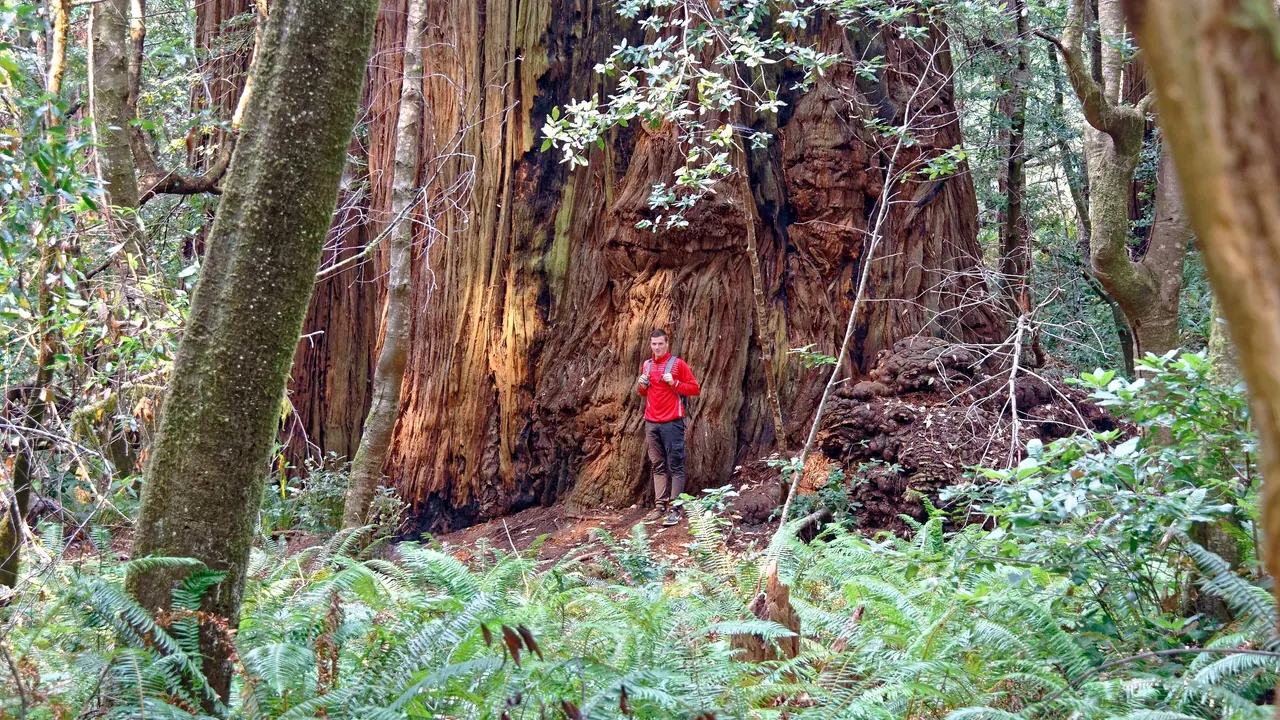
Photos: Big Sur by Diliff, CC BY-SA 3.0, cropped; Redwood National Park by Dirtsc, CC BY-SA 3.0, cropped.
Big Sur or Redwood National Park?
Our verdict in twelve categories, each scored against the same fixed benchmark cities, and the climate month by month, so you can choose for your trip.
Choose Big Sur for
- wellness
- day trips
Big Sur suits travellers who want the coast itself as the event: a slow drive along cliffs where the mountains drop into the Pacific, a night or two in a cliff-top lodge, and time to do very little. It is the stronger choice for a retreat, whether a soak at Esalen or a spa room facing the ocean, and for a trip that also takes in Monterey, Carmel or Hearst Castle. The catch is cost, and a single slow road that landslides can cut.
Choose Redwood National Park for
- prices
- getting around
- families
Redwood National Park is the better trip for families, campers and anyone watching their spending. The draw is walking among the tallest trees on earth, and here the walks are flat, the groves sit close together and the roads are quiet. Entry costs nothing and motels are modest. You give up the polish, the spas and the big-name outings, and get honest towns, elk in the meadows and summer river swimming in return.
Scoreboard
Twelve categories on one fixed scale from 0 to 100. The shaded stretch is the gap between the two.
Your match
Pick a travel style or drag the sliders, and both match scores follow your weighting.
Wins on wellness and day trips with your weighting.
Wins on prices and getting around with your weighting.
What matters to you?
Category by category
What the scores mean for a trip.
Beaches & swimming
Neither coast is for swimming. Both face a cold Pacific with sneaker waves, so the difference is what you do on the sand instead. Big Sur's shore is a series of famous views: the rock arch and purple sand at Pfeiffer, the Garrapata coves, and the cove below McWay Falls, which you can only look down on. Anyone who wants a swim uses a lodge pool.
The Redwood beaches, Gold Bluffs and Enderts, are longer, emptier and better for driftwood walks. Their real advantage is inland. In July and August the Smith River runs clear over gravel bars, and its calm pools give you a proper outdoor swim after a hike, which Big Sur cannot offer.
Food & drink
Neither is a food destination, but the meals are very different. In Big Sur there are only a few places to eat and they are expensive: lodge dining rooms on the cliffs pouring Central Coast wine, a respected bakery and roadhouse burgers. The view often does more than the menu, and serious eaters drive to Carmel or Monterey.
Around the Redwood parks themselves you get diners and smoked-fish shacks. An hour south, though, Arcata and Eureka serve Humboldt Bay oysters, Dungeness crab and local craft beer, and Trinidad has fresh fish by its harbour. The food is plainer and cheaper than in Big Sur, and closer to the people who live there.
Culture & sights
Both are short on sights, and either can be covered in half a day. Big Sur's culture is mostly stories and mood: Bixby Bridge, the lightstation on its volcanic rock, and the Henry Miller Memorial Library, which keeps alive the coast's past as a refuge for writers and the Beats.
Redwood has a bit more to see, of a different kind. The rebuilt Yurok plank-house village at Sue-meg shows a culture that has lived on this coast for thousands of years. Eureka has a Victorian Old Town and the ornate Carson Mansion.
Nightlife
Big Sur goes dark after dinner. A lodge bar or the roadside tavern is all there is, and nobody wants to drive the cliff road after a drink. Around the Redwood parks the evenings are just as quiet, but the student bars and brewpubs on Arcata's plaza and in Eureka's Old Town give you somewhere to go for a drink, an hour's drive south. On both coasts the best thing to do at night is look at the stars.
Nature & outdoors
Both are among the great landscapes of the American West, and they show you nature from opposite angles. Big Sur is mountains meeting the sea: about 140km of cliff road high above the surf, condors over the ridges, sea otters in the kelp, elephant seals at Piedras Blancas and steep trails into the Ventana Wilderness.
In the Redwood parks you are down among the trees rather than looking out over a view. You walk through old-growth groves past 100m tall, along the fern-hung walls of Fern Canyon and through meadows grazed by Roosevelt elk, with the Coastal Trail running above the sea stacks. Grey whales pass both coasts in winter and spring.
Day trips
Big Sur has stronger day trips at each end. To the north are the Monterey Bay Aquarium, Cannery Row, the Carmel Mission and the Carmel Valley wineries. To the south is Hearst Castle above San Simeon. The winding road means most visitors choose one end rather than doing both.
From the Redwood parks the outings are to small towns: the harbour village of Trinidad, Arcata's plaza, Eureka's waterfront and the painted Victorian village of Ferndale. To the north are the harbour towns of southern Oregon. They make pleasant drives, but nothing compares with Hearst Castle or the aquarium.
Good for families
The Redwood parks are much easier with children. Flat loop trails go through the big groves, Fern Canyon has logs to scramble over and a creek to wade, and there are elk to spot, ranger walks, a roadside gondola near Klamath and the canopy walkway at Eureka's zoo. Rain is the main problem, since there is little to do indoors.
Big Sur suits families who camp: the redwood campgrounds by the Big Sur River, the short walk to McWay Falls and the otters at Point Lobos. Beyond that there are unfenced cliffs, a road that brings on car sickness and nothing built for children, so many families stay in Monterey.
Getting around
You need a car in both places, but the Redwood parks are far easier to drive. In Big Sur everything depends on Highway 1, a narrow two-lane road of hairpins and drops that clogs with summer traffic and photo stops. Petrol stations are few and phone signal is patchy, and after a wet winter a landslide can turn a short hop into a detour of several hours inland.
The Redwood parks run for about 70km along a quieter coast, linked by the main coastal highway and the Newton B. Drury Parkway, which is itself a drive through old-growth forest. Traffic is light and the main groves are only a short drive apart. The only slow stretches are the gravel roads to Stout Grove and Fern Canyon, where you may have to cross a shallow creek.
Shopping & style
Neither is worth a trip for shopping. Big Sur has a few gift shops, galleries and general stores, and people who want to browse go to Carmel. The Redwood coast has a bit more character: roadside redwood burl carvings and chainsaw sculptures, bookshops and antique stores in Eureka's Old Town, and Native basketry and jewellery sold in Arcata and Eureka.
Affordability
The difference in cost is large. Big Sur is one of the most expensive places to stay in the United States. Rooms are few, lodges charge luxury rates, and food and fuel cost more because everything comes in along one road. The cheap options are campsites booked months ahead, or sleeping in Monterey or San Simeon and driving in.
Redwood National Park is good value for the West. Entry is free, the state park campgrounds are inexpensive and Crescent City motels cost far less. The hire car and fuel are the costs you can't avoid.
Live music & performing arts
There is little to see on either coast, and what there is differs in kind. Big Sur has one setting you won't forget: outdoor concerts, film screenings and readings under the trees at the Henry Miller Memorial Library in the warmer months. Monterey's jazz festival and Carmel's Bach festival are an hour or more north.
The Redwood coast has a small, steady town scene instead. Arcata's university brings in touring acts during term, and Eureka has a small symphony and community theatre. In the parks themselves there are only summer ranger talks by the campfire.
Wellness & relaxation
Big Sur has a long history as a place to retreat. The hot spring baths at Esalen sit above the surf, though you can only get in through its workshops and stays, which need booking well ahead. The cliff-top resorts run proper spas with ocean-facing tubs, and with no town and little phone signal you end up slowing down. All of it comes at a high price.
The Redwood coast offers rest rather than pampering. There are no springs or spas, only hot tubs to rent by the hour in Arcata and massage at a few lodges. What it does give you is long, quiet walks in the old-growth groves.
When should you go?
Pick your month. The climate figures are measured averages, not a forecast.
Big Sur in July
Redwood National Park in July
Daytime high, °C
Rainfall in the month, mm
Where the figures come from
Big Sur's temperatures are measured 42 km from the centre, at Monterey / Pacific Grove Acres.
Big Sur has no rain gauge within 25 km of the centre, so its rainfall comes from a gridded climate dataset read at the destination rather than from a gauge further away.
Redwood National Park's temperatures are measured 35 km from the centre, at Arcata / Clam Beach.
Redwood National Park has no rain gauge within 25 km of the centre, so its rainfall comes from a gridded climate dataset read at the destination rather than from a gauge further away.
Redwood National Park's sunshine is measured 55 km from the centre, at Eureka.
Temperature and rainfall are climate normals, averaged over the years shown. Big Sur: 1991-2020 normals, Monterey / Pacific Grove Acres (41.9 km from centre). Redwood National Park: 1991-2020 (sunshine 1981-2010) normals, Arcata / Clam Beach (34.6 km from centre).
On the central Big Sur coast the weather stays mild all year. Daytime highs reach about 23°C from August to October, and the months from May to September are almost completely dry. Rain arrives in November and is heaviest in midwinter, with around 205mm in December, and that is when landslides close the road. The sea never gets warmer than about 15°C, so no month is a beach month. Late summer and autumn are the most comfortable time to visit. Summer often brings fog to the shoreline while the ridges stay sunny, and spring gives you waterfalls and wildflowers once the rains ease.
Around the Redwood parks it is several degrees cooler, with highs of about 17°C at most, and the sea is colder still. The rainy season is longer and wetter, running from October to April, so the trails are at their best from June to September. Sunshine peaks from May to July at over 300 hours a month, though fog often lies over the coast. Neither destination ever gets too hot for walking. Big Sur is the warmer and drier of the two, especially in spring and autumn.
Which traveller are you?
On a trip on a tight budget, choose Redwood National Park. Park entry is free, the redwood campgrounds and Crescent City motels cost little, and picnics on the trails are normal. In Big Sur even simple cabins charge city-hotel rates, and every supply is marked up.
For a relaxing and wellness trip, Big Sur is the clear pick. Esalen's hot spring baths sit above the surf, cliff-top resorts offer massage and ocean-facing tubs, and the lack of phone signal makes you slow down. Around the Redwood parks the calm comes from the forest, not from spas.
On a family trip with children, Redwood National Park works better. It has flat loop trails, wading in Fern Canyon, elk to spot and Junior Ranger programmes. Big Sur's unfenced cliffs, twisting road and lack of attractions for children mean most families end up in Monterey.
Before you go
| Measure | Big Sur | Redwood National Park |
|---|---|---|
| Currency | US Dollar (USD) | US Dollar (USD) |
| Sockets | AB120 V, 60 Hz | AB120 V, 60 Hz |
| Driving side | Right | Right |
| Time zone | UTC-8, UTC-7 in summer | UTC-8, UTC-7 in summer |
| Emergency number | 911 | 911 |
| Main airport | Monterey Regional Airport (MRY)11 non-stop destinations | California Redwood Coast-Humboldt County Airport (ACV)6 non-stop destinations |
| Public holidays this year | 13 days | 13 days |
By the numbers
| Measure | Big Sur | Redwood National Park |
|---|---|---|
| Swim season, months above 21 °C | None | None |
Where else could you go?
Every comparison below shares a destination with this one, so you can follow Big Sur or Redwood National Park somewhere new.
- Carmel-by-the-Seavs Big Sur
- Montereyvs Big Sur
- Napa Valleyvs Big Sur
- Yosemitevs Big Sur
- Kings Canyonvs Big Sur
- Sequoiavs Big Sur