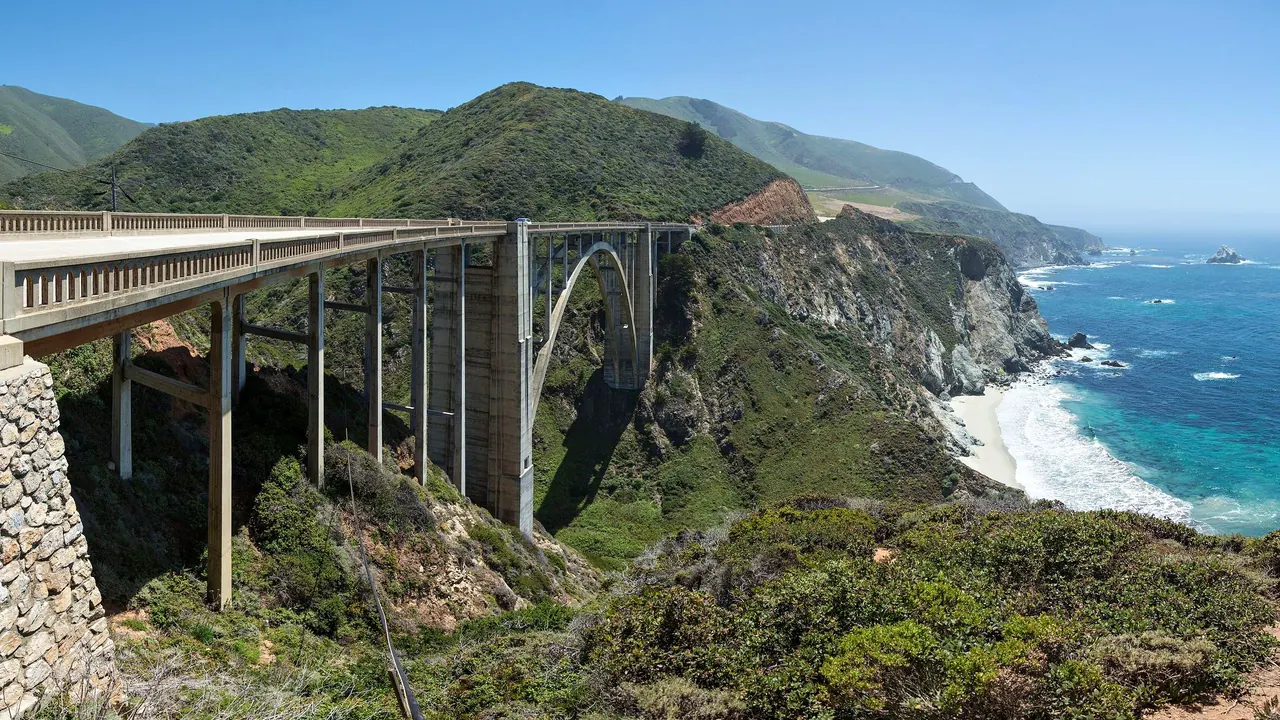
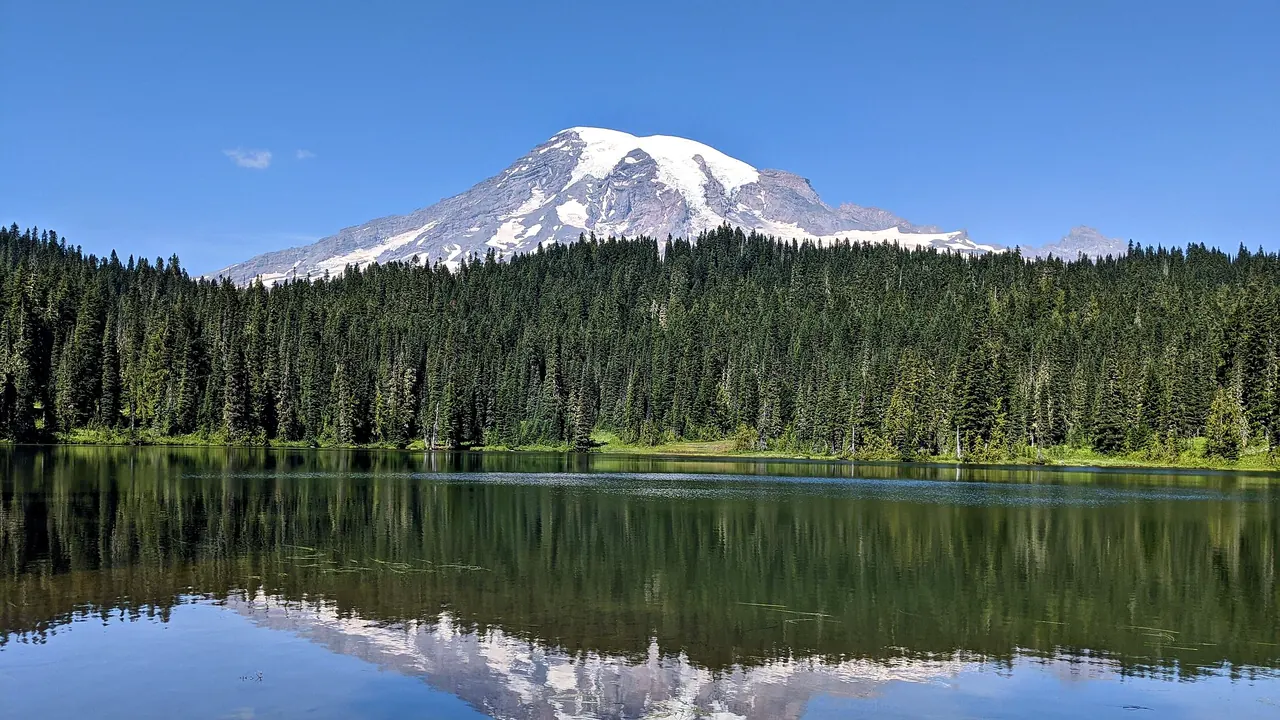
Photos: Big Sur by Diliff, CC BY-SA 3.0, cropped; Mount Rainier by Angelina Suzuki, CC BY-SA 4.0, cropped.
Big Sur or Mount Rainier?
Our verdict in twelve categories, each scored against the same fixed benchmark cities, and the climate month by month, so you can choose for your trip.
Choose Big Sur for
- wellness
- day trips
- beaches
Big Sur suits travellers who want a slow, restorative stay on a dramatic coast and can afford it. The Esalen hot springs, the cliff-top resort spas and a couple of serious dinner rooms make it the better choice for a couple's escape. On days off the trails, Carmel, Monterey and Hearst Castle give you more to do than anything near the mountain.
Choose Mount Rainier for
- prices
- families
- getting around
Families and anyone counting costs will find Mount Rainier the better pick. The trails and viewpoints cost nothing once you are in the park, and campgrounds keep a stay cheap. Short paths at Longmire, Paradise and Box Canyon keep children busy. Go for glaciers, wildflower meadows and long days on foot rather than comfort.
Scoreboard
Twelve categories on one fixed scale from 0 to 100. The shaded stretch is the gap between the two.
Your match
Pick a travel style or drag the sliders, and both match scores follow your weighting.
Wins on wellness and day trips with your weighting.
Wins on prices and families with your weighting.
What matters to you?
Category by category
What the scores mean for a trip.
Beaches & swimming
Neither is a place to swim, but Big Sur at least has shoreline worth the stop. Pfeiffer Beach, with its rock arch and purple sand, the coves at Garrapata and the sandy cove at Plaskett Creek are good for a walk and an hour on the rocks, even though the cold Pacific and its rip currents keep you out of the water.
At Mount Rainier the water is snowmelt. Reflection Lakes and the high tarns are for a quick paddle at most, and the only real swimming is at lowland reservoirs such as Alder Lake, where the shores have no sand.
Food & drink
Neither is a trip for food, but Big Sur gives you the more memorable meal. There is a respected bakery and a couple of dinner rooms cooking with Central Coast produce and wine, often with the ocean below, though the choice is thin and expensive.
Around Mount Rainier eating is plainer. You get diners, pizza and burgers in Ashford, Packwood and Elbe, and hearty meals in the lodge dining rooms at Paradise and Longmire. Often the best meal of the day is a picnic at a trailhead.
Culture & sights
Culture is a sideline in both places, so the difference is in kind. Big Sur's culture is literary and comes from its landscape. Bixby Bridge, the Point Sur Lightstation on its volcanic rock and the Henry Miller Memorial Library recall the writers and Beat-era artists the coast drew.
Mount Rainier's heritage is the national park itself. At Longmire, the stone-and-timber buildings set the style for American park architecture, Paradise Inn has its great beamed lobby, and the visitor centres explain the glaciers and the volcano.
Nightlife
Both places go dark after dinner. In Big Sur a few lodge bars pour a glass with the meal, but the unlit hairpin road puts most people off a second. Around Mount Rainier the evening means a beer at a brewpub in Ashford or Packwood and an early night before a dawn start on the trails.
Nature & outdoors
Both are outstanding, and the choice is between ocean and ice. Big Sur gives you about 140km of mountains dropping straight into the Pacific, with redwood canyons and waterfalls, condors over the ridges, and sea otters and whales offshore. The Ventana Wilderness is there for longer hikes.
Mount Rainier is a heavily glaciated volcano. Paradise has its wildflower meadows, Sunrise looks straight at the Emmons Glacier, the Carbon River valley holds moss-covered rainforest, and the Wonderland Trail circles the whole mountain. In winter it becomes snowshoe and ski country, which Big Sur cannot match.
Day trips
Big Sur has the better outings, at either end of the coast. To the north, Carmel's cottages and mission and Monterey's aquarium and Cannery Row are within an hour. To the south are Hearst Castle and Cambria. The winding road means most visitors choose one end rather than both.
From Mount Rainier the worthwhile trips are longer drives into the lowlands: Tacoma's museum waterfront with its glass hot shop, or the domed capitol in Olympia. Seattle is at the limit of a day out, and the nearby towns are coffee stops.
Good for families
Big Sur works for families who camp. The Big Sur River gives children a creek to paddle in, and there are elephant seals and otters to spot. But the unfenced cliffs, the cold rough sea and the twisting road make it better as a day out from Monterey.
Mount Rainier gives children more. Level trails at Longmire and Paradise, the footbridge over Box Canyon, the junior ranger programme and lingering snow all keep them busy, and outside the park Northwest Trek and the steam railway from Elbe fill a day.
Getting around
You need a car for both, but Big Sur is the harder drive. Everything depends on Highway 1, a narrow cliff road with summer jams, few petrol stations and patchy phone signal, and a landslide can turn a short trip into a detour of hours inland.
Mount Rainier's roads are well kept, though winding and busy at the trailheads on fine weekends. The catch there is the season: the Sunrise road and the east-side passes close outside summer and autumn. Staying in Ashford or Packwood keeps the driving manageable.
Shopping & style
Neither is a place to shop. Big Sur's roadside galleries selling local art and jewellery have a little more character, and Carmel is close by for browsing. Around Mount Rainier there are only park gift shops and general stores, so buy your outdoor gear in Seattle or Tacoma before you arrive.
Affordability
Mount Rainier is by far the cheaper trip. Big Sur is among the dearest places to stay anywhere in the United States: the cliff-top lodges charge luxury rates, a plain motel costs what a good city hotel would, and food and petrol cost more because everything comes in along one road. State park parking fees add up as well. The affordable campsites go months ahead, so many visitors sleep in Monterey or San Simeon and drive in.
At Mount Rainier, one park entry gets you onto the trails and viewpoints, and they cost nothing more after that. Meals in the gateway towns are at ordinary American prices, and the park and national forest campgrounds make a very cheap stay possible. Rooms in Ashford or Packwood are few and charge full rates in July and August, but in June and late September prices come down.
Live music & performing arts
Big Sur has a little more on. The Henry Miller Memorial Library puts on outdoor concerts, film screenings and readings under the redwoods in the warmer months, and Monterey's jazz festival and Carmel's Bach festival are within reach. Mount Rainier offers only campground ranger talks and the occasional musician in a tavern.
Wellness & relaxation
Big Sur is the clear choice for a restful stay. Esalen's hot-spring baths above the surf, which you reach through its workshops, and the cliff-top resort spas with tubs facing the ocean make it a true retreat coast, though an expensive one.
Rest at Mount Rainier is simpler: a cabin under the firs near Ashford or Packwood, a hot tub on the deck and the sound of the river at night. The Ohanapecosh hot springs are for looking at, not soaking in.
When should you go?
Pick your month. The climate figures are measured averages, not a forecast.
Big Sur in July
Mount Rainier in July
Daytime high, °C
Rainfall in the month, mm
Where the figures come from
Big Sur's temperatures are measured 42 km from the centre, at Monterey / Pacific Grove Acres.
Big Sur has no rain gauge within 25 km of the centre, so its rainfall comes from a gridded climate dataset read at the destination rather than from a gauge further away.
Mount Rainier has no weather station within reach, so its figures come from a gridded climate model rather than a measured record, and read a broad area rather than one spot.
Temperature and rainfall are climate normals, averaged over the years shown. Big Sur: 1991-2020 normals, Monterey / Pacific Grove Acres (41.9 km from centre). Mount Rainier: 1991-2020 normals, TerraClimate 4 km grid at the town, no weather station within 90 km.
On the coast, Big Sur is mild all year and is at its best from May to October, when the rain almost stops. September and October are the warmest months, at around 23°C, and autumn is also the clearest season, while summer can bring fog to the shore. Winter is wet, with rain peaking at about 205mm in December, and that is when landslides tend to close the road. The sea never gets above 15°C, so no month is a swimming month.
Mount Rainier has a much shorter window. Around the gateway area, July and August are the warm, dry months, reaching the same warmth as Big Sur in August, and this is when the high trails and meadows are open. From October the rain comes back heavily, at up to 327mm a month, and through the winter daytime highs stay in single figures. That is snowshoe weather, not walking weather.
Which traveller are you?
For a relaxing and wellness trip, Big Sur is worth what it costs. The whole coast is set up for slowing down, with treatments and ocean views to match. Mount Rainier gives you quiet too, but its rest is simpler and comes without the pampering.
On a family trip with children, Big Sur really only suits families happy to camp, and the cliffs and surf mean watching children closely. Mount Rainier is the easier base, because its short walks and ranger activities are planned with young visitors in mind.
On a tight budget, Big Sur strains even a careful plan unless you get a campsite booked months ahead. At Mount Rainier the mountain is the main attraction, and a tent and a packed lunch are enough to enjoy it.
Before you go
| Measure | Big Sur | Mount Rainier |
|---|---|---|
| Currency | US Dollar (USD) | US Dollar (USD) |
| Sockets | AB120 V, 60 Hz | AB120 V, 60 Hz |
| Driving side | Right | Right |
| Time zone | UTC-8, UTC-7 in summer | UTC-8, UTC-7 in summer |
| Emergency number | 911 | 911 |
| Main airport | Monterey Regional Airport (MRY)11 non-stop destinations | Seattle–Tacoma International Airport (SEA)136 non-stop destinations |
| Public holidays this year | 13 days | 11 days |
By the numbers
| Measure | Big Sur | Mount Rainier |
|---|---|---|
| Population | - | 875 |
| Swim season, months above 21 °C | None | - |
Where else could you go?
Every comparison below shares a destination with this one, so you can follow Big Sur or Mount Rainier somewhere new.
- Carmel-by-the-Seavs Big Sur
- Montereyvs Big Sur
- Olympic National Parkvs Mount Rainier
- Vancouver Islandvs Mount Rainier
- Napa Valleyvs Big Sur
- Yosemitevs Big Sur