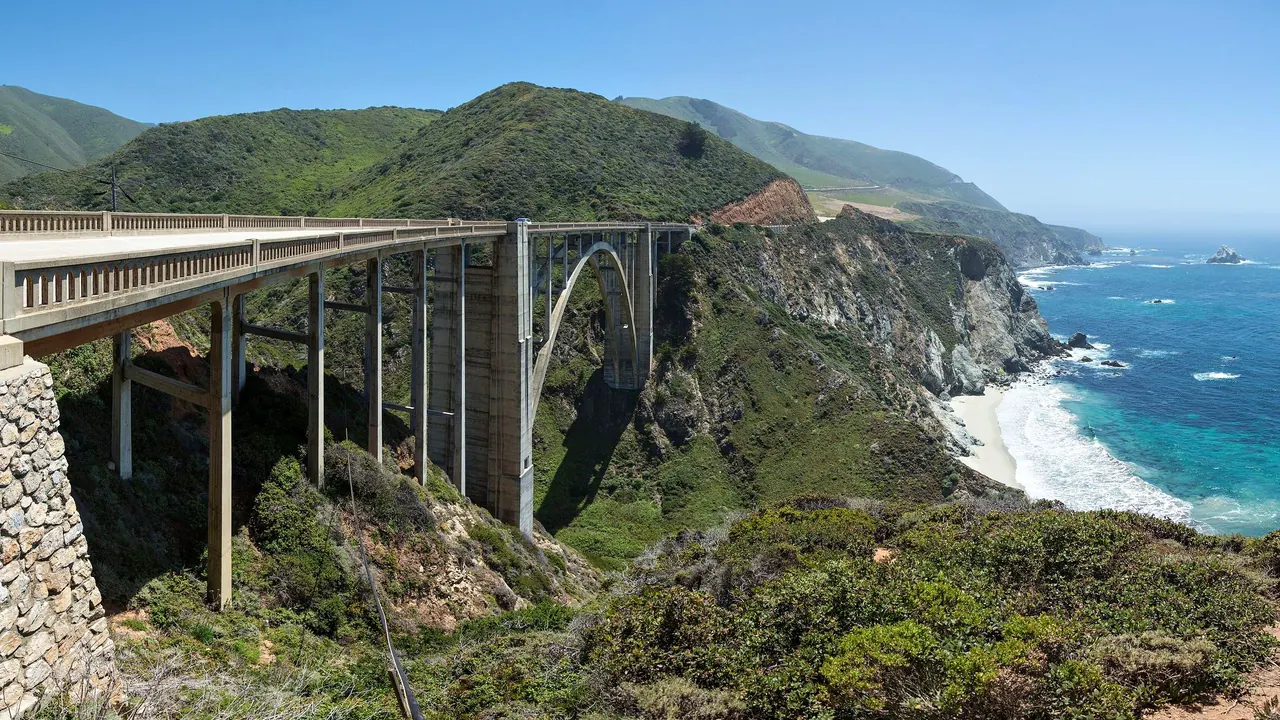
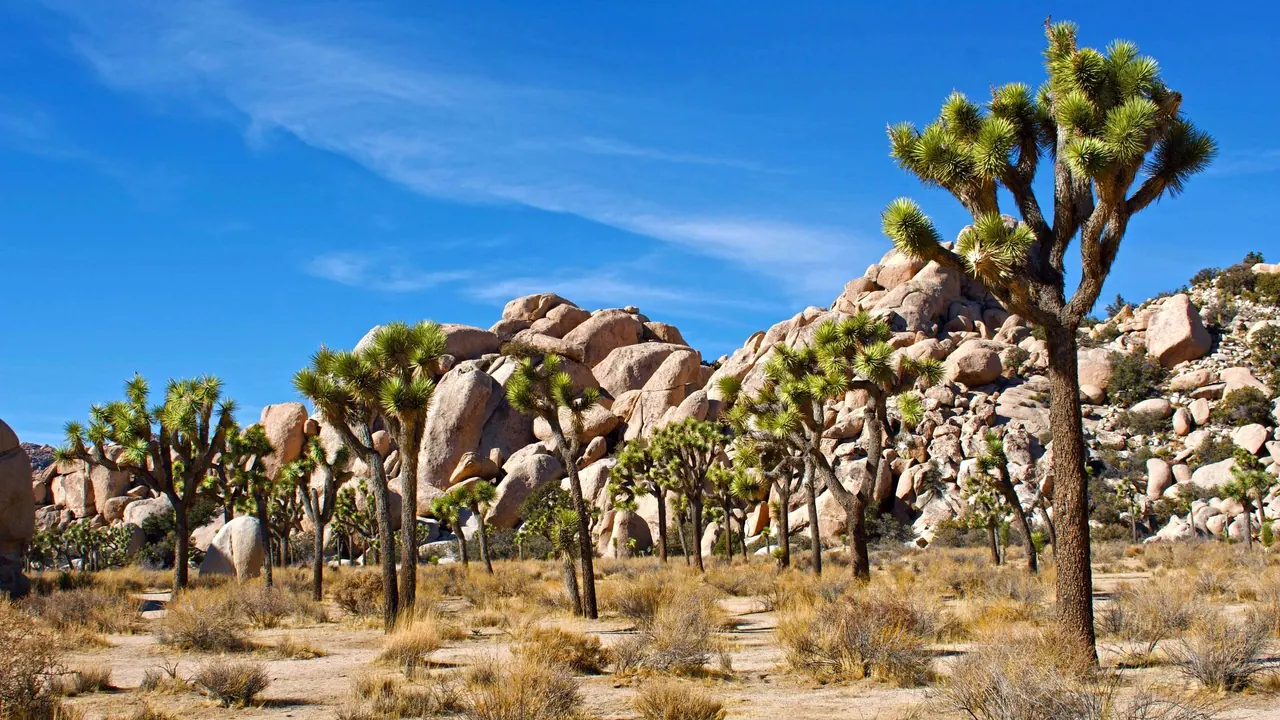
Photos: Big Sur by Diliff, CC BY-SA 3.0, cropped; Joshua Tree by Mr. Location Scout, Pexels License.
Big Sur or Joshua Tree?
Our verdict in twelve categories, each scored against the same fixed benchmark cities, and the climate month by month, so you can choose for your trip.
Choose Big Sur for
- day trips
- wellness
- beaches
Big Sur is the choice for a slow, scenic trip along the ocean: cliff-top walks above the surf, redwood canyons, sea otters and whales, and nights in a lodge or retreat where the main event is doing very little. It suits travellers who want a serious spa or a stay at Esalen, and who are happy to pay heavily for it. Monterey, Carmel and Hearst Castle add easy outings at either end.
Choose Joshua Tree for
- prices
- getting around
- shopping
Travellers on a tighter budget, or who want more to do once the sun goes down, will get on better in Joshua Tree. The driving is far easier, a camp or an older motel keeps costs reasonable, and the desert has climbing among the boulders, a famous roadhouse for live music and vintage shops in Yucca Valley. The catch is the calendar: go between autumn and late spring.
Scoreboard
Twelve categories on one fixed scale from 0 to 100. The shaded stretch is the gap between the two.
Your match
Pick a travel style or drag the sliders, and both match scores follow your weighting.
Wins on day trips and wellness with your weighting.
Wins on prices and getting around with your weighting.
What matters to you?
Category by category
What the scores mean for a trip.
Beaches & swimming
Neither place is for swimming, but Big Sur at least has a shoreline to walk. Pfeiffer Beach with its rock arch and purple-streaked sand, the coves at Garrapata and the sandy stretch by Plaskett Creek make fine stops, as long as you treat them as viewpoints: the water is cold and the surf dangerous.
Joshua Tree is high desert with no shore of any kind. In both places the only real swim is in a pool, at a lodge on the coast or at a rental house in the desert.
Food & drink
Both are thin on choice, but in different ways. Big Sur eating means a few lodge dining rooms and cliff-side terraces with Californian menus, a well-known bakery and some roadhouse burgers, all of it expensive and far apart, so the ocean view at lunch is often the highlight.
Joshua Tree is cheaper and more casual: diners, Mexican kitchens, coffee shops and health-food cafés along Highway 62, plus barbecue in Pioneertown. Many visitors simply cook in their rental. For a proper restaurant night, coast visitors head to Carmel or Monterey and desert visitors to Palm Springs.
Culture & sights
Big Sur's heritage is literary and coastal, while Joshua Tree's is eccentric and homemade. On the coast the stops are the 1932 concrete arch of Bixby Bridge, guided walks up to the lightstation on its volcanic rock at Point Sur, and the Henry Miller Memorial Library under the redwoods, a reminder of the writers, artists and Beats who settled here.
In the desert the sights are stranger: Noah Purifoy's scrap sculptures spread across the sand, the white Integratron dome near Landers, Pioneertown's false-front film-set street and the homestead machinery at Keys Ranch, with petroglyphs along the park trails. Neither place has a museum of note or an old town to wander, so in either one the sights fill a half-day of stops rather than shaping the whole trip.
Nightlife
Joshua Tree has a little more life after dark. A few saloons in Joshua Tree and Twentynine Palms stay open, and the Pioneertown roadhouse draws a weekend crowd. Big Sur effectively shuts down after dinner, with a lodge bar or two and a dark, winding road nobody wants to drive after drinking. In both places most evenings end under the stars.
Nature & outdoors
Big Sur is mountains dropping straight into the Pacific. Joshua Tree is two deserts meeting on high ground. Along the coast the scenery is vertical: the road runs on cliffs hundreds of metres above the surf, past waterfalls and redwood canyons, with the roadless Ventana Wilderness behind and condors, sea otters, grey whales and elephant seals to watch for.
The desert gives forests of Joshua trees among rounded granite boulders, cholla gardens, palm oases and a certified dark sky. The coast is for viewpoints and wildlife spotting through most of the year. The desert is for scrambling, hiking and stargazing, and it only works outside the summer heat.
Day trips
Big Sur has better outings close by. Monterey's aquarium and Cannery Row, Carmel's mission and galleries and the Carmel Valley wineries lie to the north, with Hearst Castle and Cambria to the south. The winding road means most people stick to the end nearest their base.
Joshua Tree's best outing is Palm Springs, with its mid-century houses and walkable downtown, followed by Idyllwild in the pines. Route 66 past Amboy and the Salton Sea are long, strange drives. Beyond those it is open desert.
Good for families
Both suit outdoor families more than anyone wanting attractions. Big Sur works best for camping families: creeks to paddle in at the redwood campgrounds, sea otters and elephant seals, and the Monterey aquarium within reach, but the sea is unsafe, cliffs are unfenced and the road causes car sickness.
Joshua Tree is better for older children who love to climb, with Hidden Valley and Skull Rock as natural playgrounds, a junior ranger programme and pools at rental houses. It is only suitable from autumn to early spring, as the heat and lack of shade are risky for small children.
Getting around
Both need a car, but Joshua Tree is far less work. Highway 62 links its towns, traffic is light, distances are moderate and trailheads have parking near the rocks, with queues mainly at the west entrance on spring weekends.
Big Sur has one narrow road of hairpins, slow even when it is quiet, with summer traffic, sparse petrol stations and landslides that can force hours of detours inland. Phone signal is patchy in both, so download maps before you set off.
Shopping & style
Joshua Tree has the more interesting browsing. Yucca Valley's old town sells vintage Western wear and mid-century furniture, and Joshua Tree village adds galleries, crystal shops, climbing gear and weekend artists' markets. Big Sur offers little beyond roadside gift shops, a couple of art and jewellery galleries and general stores, and anyone wanting to shop heads to Carmel.
Affordability
Joshua Tree is much easier on the wallet, although not cheap in peak season. Camping or an older motel in Twentynine Palms keeps costs low, the park is cheap to enter and food is modest. The stylish rental houses are pricey on spring weekends, so midweek in winter is best.
Big Sur ranks among the costliest places to stay in the country. Even plain cabins charge city-hotel rates, and fuel and food carry a premium. Camping is the one saving, but sites go months ahead, and many visitors sleep in Monterey or San Simeon instead.
Live music & performing arts
Joshua Tree has a real if small music scene. The Pioneertown roadhouse books well-known indie, rock and country acts, the Joshua Tree Music Festival brings camping weekends in spring and autumn, and small shows pop up in local bars and halls.
Big Sur has only outdoor concerts and readings at the Henry Miller Memorial Library and occasional lodge music. For serious programmes you drive to Monterey's jazz festival or Carmel's Bach festival.
Wellness & relaxation
Big Sur is the stronger retreat. Esalen's spring-fed stone baths above the surf and the ocean-facing spas of the cliff-top resorts are built for long, unhurried stays, and the lack of signal and town makes slowing down unavoidable. All of it is booked well ahead and costly.
Joshua Tree is looser and more affordable. There are yoga retreats and sound baths around the village and in the Integratron dome, and spring-fed pools at the small spa motels of Desert Hot Springs, about half an hour away.
When should you go?
Pick your month. The climate figures are measured averages, not a forecast.
Big Sur in July
Joshua Tree in July
Daytime high, °C
Rainfall in the month, mm
Where the figures come from
Big Sur's temperatures are measured 42 km from the centre, at Monterey / Pacific Grove Acres.
Big Sur has no rain gauge within 25 km of the centre, so its rainfall comes from a gridded climate dataset read at the destination rather than from a gauge further away.
Joshua Tree has no rain gauge within 25 km of the centre, so its rainfall comes from a gridded climate dataset read at the destination rather than from a gauge further away.
Temperature and rainfall are climate normals, averaged over the years shown. Big Sur: 1991-2020 normals, Monterey / Pacific Grove Acres (41.9 km from centre). Joshua Tree: 1992-2020 (rainfall 1991-2020) normals, Twentynine Palms / Sunfair Heights (20.4 km from centre).
Big Sur is mild all year, with daytime highs only moving between the high teens and about 23°C, so it is never too hot or too cold for walking. The difference is rain. From November to March storms roll in, December brings around 205mm, and wet winters can close stretches of the coast road. May to September is almost dry, though summer often wraps the shore in fog while the ridges stay sunny, and September and October are the clearest and warmest months. The sea never gets above about 15°C, so there is no beach season at all.
Joshua Tree runs on the opposite clock. It hardly rains at any time of year, but from June to September afternoons reach 39°C, and walking or climbing shrinks to dawn and dusk. The comfortable season is October to May. Winter days around 16°C are pleasant on the trails, and spring brings warmth and wildflowers. Together they make an easy pair: the desert in winter and spring, the coast in late summer and autumn.
Which traveller are you?
On a trip on a tight budget, Joshua Tree is the far kinder choice. Park entry is cheap, camping and the older motels of Twentynine Palms are affordable, and food is modest. Big Sur is one of America's most expensive places to sleep.
For a relaxing and wellness trip, Big Sur has the edge. Esalen's hot spring baths above the surf and the cliff-top resort spas are built for long, quiet stays, while Joshua Tree offers sound baths and Desert Hot Springs soaks on a smaller, more informal scale.
For rock climbers and boulderers, Joshua Tree is in a different league. Its granite piles hold thousands of routes and draw climbers from around the world. Big Sur's steep mountains are for hiking and gazing at the coast, not for a climbing trip.
Before you go
| Measure | Big Sur | Joshua Tree |
|---|---|---|
| Currency | US Dollar (USD) | US Dollar (USD) |
| Sockets | AB120 V, 60 Hz | AB120 V, 60 Hz |
| Driving side | Right | Right |
| Time zone | UTC-8, UTC-7 in summer | UTC-8, UTC-7 in summer |
| Emergency number | 911 | 911 |
| Main airport | Monterey Regional Airport (MRY)11 non-stop destinations | Palm Springs International Airport (PSP)29 non-stop destinations |
| Public holidays this year | 13 days | 13 days |
By the numbers
| Measure | Big Sur | Joshua Tree |
|---|---|---|
| Swim season, months above 21 °C | None | - |
Where else could you go?
Every comparison below shares a destination with this one, so you can follow Big Sur or Joshua Tree somewhere new.
- Carmel-by-the-Seavs Big Sur
- Montereyvs Big Sur
- Napa Valleyvs Big Sur
- Yosemitevs Big Sur
- Kings Canyonvs Big Sur
- Death Valleyvs Joshua Tree