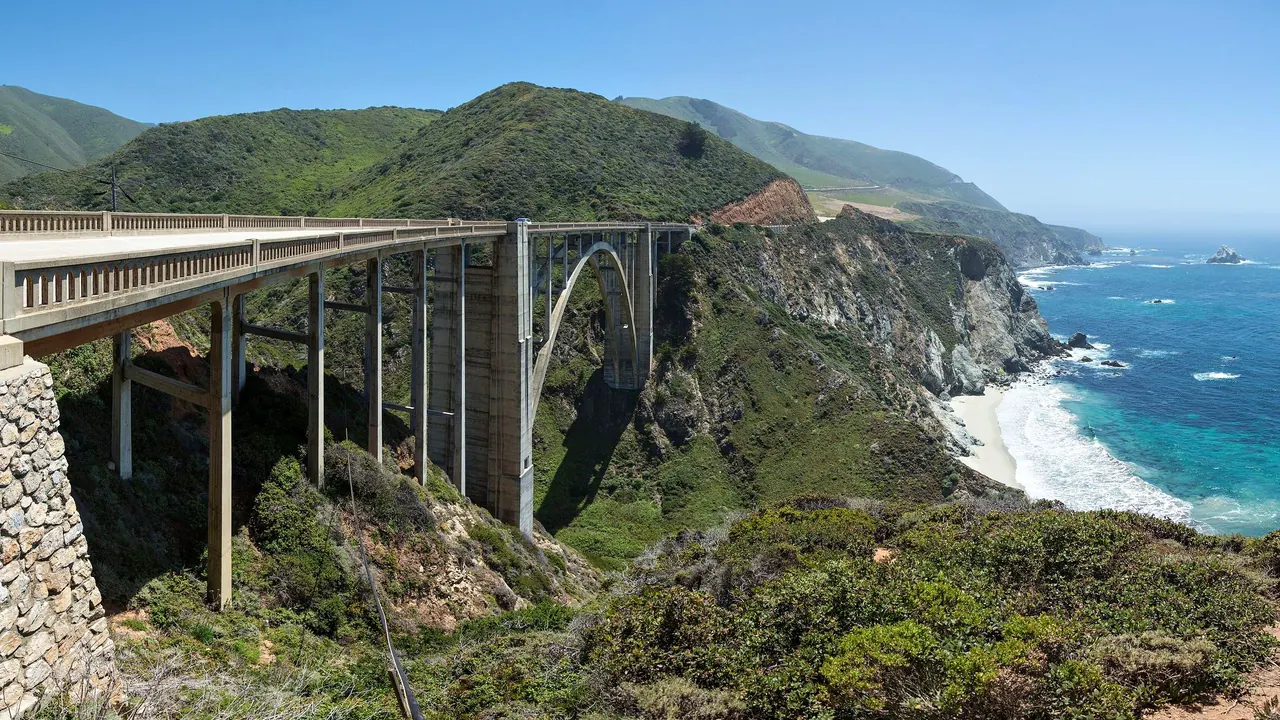
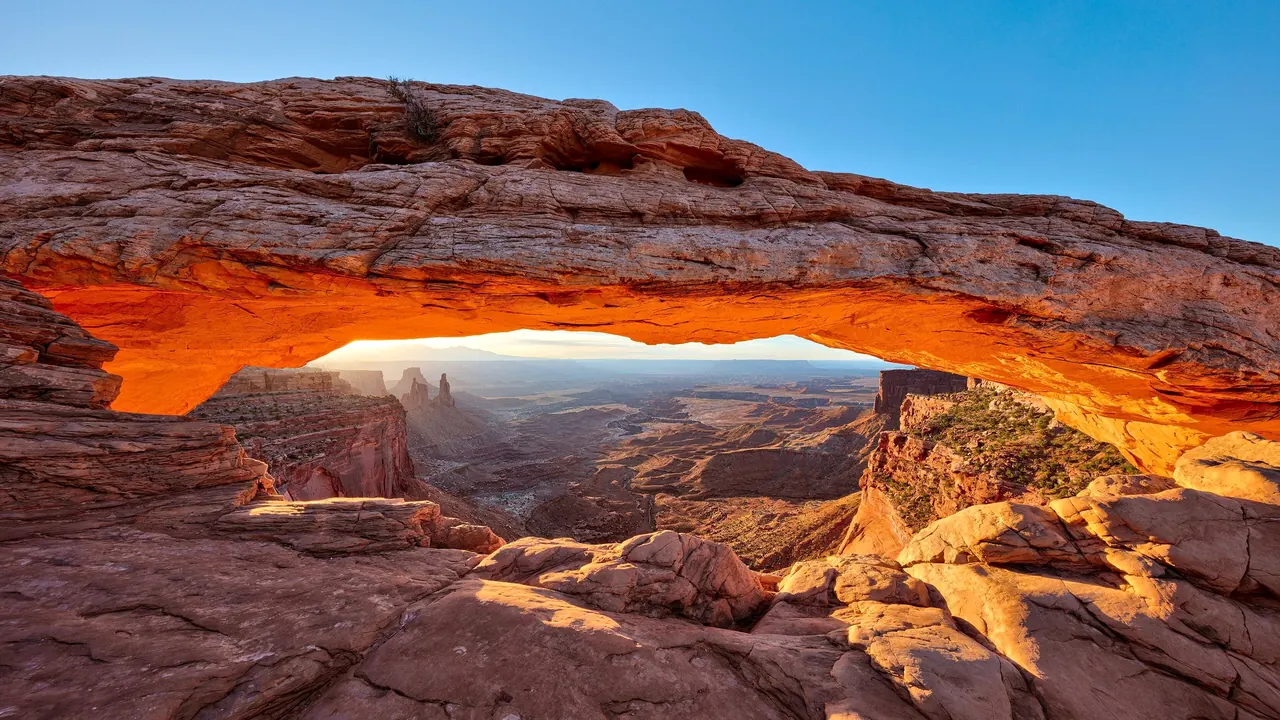
Photos: Big Sur by Diliff, CC BY-SA 3.0, cropped; Canyonlands by Thomas Wolf, www.foto-tw.de, CC BY-SA 3.0, cropped.
Big Sur or Canyonlands?
Our verdict in twelve categories, each scored against the same fixed benchmark cities, and the climate month by month, so you can choose for your trip.
Choose Big Sur for
- wellness
- day trips
- beaches
Big Sur is the choice for a slow, restorative trip along the ocean. Its days are spent on cliff-top walks among the redwoods and its nights in a lodge with a spa, perhaps on a long-planned stay at Esalen's hot springs. It also suits travellers who want to fold the coast into a wider tour, since Carmel, Monterey and Hearst Castle sit at either end. Go knowing that it is very expensive, the one winding road is slow, and there is little to do after dark.
Choose Canyonlands for
- getting around
- prices
- families
Canyonlands rewards people who want to be active and spend less. Moab makes a practical base, with Arches on its doorstep and the Island in the Sky under an hour away, and the region's mountain biking, rafting, canyoneering and rock art give children and adults plenty to do. Camping keeps costs down. The trade-off is heat in summer and very little in the way of spas or nearby towns worth a day out.
Scoreboard
Twelve categories on one fixed scale from 0 to 100. The shaded stretch is the gap between the two.
Your match
Pick a travel style or drag the sliders, and both match scores follow your weighting.
Too close to call, level with your weighting
Wins on wellness and day trips with your weighting.
Wins on getting around and prices with your weighting.
What matters to you?
Category by category
What the scores mean for a trip.
Beaches & swimming
Neither is a swimming destination, but Big Sur at least has beaches worth visiting. Pfeiffer Beach, with its rock arch and purple sand, and the coves at Garrapata are good for an hour of walking and looking, even though the cold Pacific and its rip currents rule out going in.
Canyonlands has no shore at all. The rivers are fast and silty and are for rafting, and on a hot day the only ways to cool off are a reservoir in the hills, a calm eddy or the motel pool.
Food & drink
Both are thin for food, but in different ways. Big Sur has a few expensive lodge dining rooms and a well-known bakery, where the ocean view counts for as much as the cooking. Moab is cheaper and more casual, with burgers, Tex-Mex, taprooms and breakfast places that open before dawn. Food lovers in Big Sur drive up to Carmel or Monterey, while visitors in Canyonlands often cook over a campfire.
Culture & sights
There is little built heritage in either, and what they have is different. Big Sur's culture is in landmarks and stories: Bixby Bridge, the Point Sur Lightstation and the Henry Miller Memorial Library, which recalls the writers and Beats who settled here.
Canyonlands goes much further back in time. Its Fremont and Ancestral Puebloan rock art, from Newspaper Rock to the life-size figures of the Great Gallery, is the main attraction, but the best panels take a dirt-road drive and a hike to reach.
Nightlife
Both go quiet after dinner, and the evening activity in both places is looking at the stars. Moab does have a few brewpubs where river guides and bikers gather, and they can be busy on a spring weekend. Big Sur offers only a lodge bar or a roadside tavern, and then a dark, winding road that nobody wants to drive after a drink.
Nature & outdoors
Both are among the great landscapes of the American West, and they are opposites. Big Sur is mountains falling into the ocean: cliffs above the surf, redwood canyons and waterfalls, with condors, sea otters, migrating whales and elephant seals. Most of its walks are short and lead to viewpoints, and the Ventana Wilderness is there for anyone who wants something longer.
Canyonlands is red-rock desert: the arches, the deep gorges below Island in the Sky and the remote Maze. It is also the more active of the two, with slickrock mountain biking, multi-day rafting through Cataract Canyon, climbing at Indian Creek and four-wheel-drive routes such as the White Rim.
Day trips
Big Sur has the better outings beyond its own landscape. Carmel's galleries and mission, Monterey's aquarium and Cannery Row, and the Carmel Valley wineries lie to the north, with Hearst Castle and Cambria to the south. The drive is slow, though, so most visitors stick to the end nearest where they are staying.
In Canyonlands, a day out usually means more scenery. Bluff, the Edge of the Cedars museum in Blanding and the vineyards of Palisade make good trips, but they are small places a long way apart.
Good for families
Canyonlands is the easier choice with children. Short trails to Double Arch and the Windows, Junior Ranger programmes, dinosaur tracks, calm river floats and motels with pools give a family plenty to do. The midday heat in summer and the sheer drops are the risks to plan around.
Big Sur suits families who camp: there are creeks to paddle in and flat trails among the redwoods by the Big Sur River. Otherwise the cold sea, the unfenced cliffs and the twisting road that makes children carsick limit it, and many families stay in Monterey and visit for a day.
Getting around
You need a car in both, but it does much more for you in Canyonlands. From Moab, Arches is just outside town and the Island in the Sky is under an hour away on good roads. Moab itself can be walked, and a bike path runs along the river. Only the remote districts need high clearance or a guide.
Big Sur depends entirely on Highway 1, a narrow road of hairpins that is crowded with traffic in summer, has few petrol stations and is sometimes cut by landslides, leaving a long detour inland. Nowhere on the coast can you walk from one stop to the next.
Shopping & style
Big Sur's roadside stops sell gifts, crafts and some local art and jewellery, but nothing worth a special trip, and anyone who wants to browse drives up to Carmel. In Canyonlands the trading posts around Bluff and Blanding sell Navajo rugs, silver jewellery and pottery, which make far better things to take home, and Moab's Main Street has rock and fossil shops alongside its bike and camping gear.
Affordability
Canyonlands is noticeably cheaper. Rooms in Moab are overpriced in the busy seasons, but one park pass covers the national parks, and the many campgrounds and free dispersed camping mean that a self-driving, self-catering trip costs little.
Big Sur is one of the most expensive places to stay in the country. Its lodges charge luxury rates, everything trucked in along the one road costs more, and the reasonably priced campsites fill months ahead. Sleeping in Monterey and driving in for the day is the usual way to save.
Live music & performing arts
Big Sur's stage is in the redwoods. Through the warmer months the Henry Miller Memorial Library holds outdoor concerts, film screenings and readings, and some lodges put on live music now and then. For anything bigger you go up the road to Monterey's jazz festival or Carmel's Bach festival.
Canyonlands has less going on most of the year, but it has one event that stands out. The Moab Music Festival is a chamber-music festival that runs from late summer into early autumn, with some concerts held in sandstone grottoes that you reach by jet boat down the Colorado. Classical-music lovers should plan their dates around it.
Wellness & relaxation
Big Sur is one of America's classic places for a retreat. Esalen's hot-spring baths sit on a ledge above the surf, and the cliff-top resorts have serious spas with tubs facing the ocean. The lack of phone signal and town life makes the place restful in its own right, though stays are costly and need booking ahead.
Canyonlands offers no bathing tradition, only a few massage studios in Moab for tired hikers. Its calm comes from desert silence and dark skies at the end of an active day.
When should you go?
Pick your month. The climate figures are measured averages, not a forecast.
Big Sur in July
Canyonlands in July
Daytime high, °C
Rainfall in the month, mm
Where the figures come from
Big Sur's temperatures are measured 42 km from the centre, at Monterey / Pacific Grove Acres.
Big Sur has no rain gauge within 25 km of the centre, so its rainfall comes from a gridded climate dataset read at the destination rather than from a gauge further away.
Canyonlands has no weather station within reach, so its figures come from a gridded climate model rather than a measured record, and read a broad area rather than one spot.
Temperature and rainfall are climate normals, averaged over the years shown. Big Sur: 1991-2020 normals, Monterey / Pacific Grove Acres (41.9 km from centre). Canyonlands: 2001-2020 normals, NASA POWER reanalysis grid, no weather station within 90 km.
Big Sur is mild all year, with daytime highs in the high teens and low twenties, so it is never too hot or too cold for walking. Rain is what divides the year. From November to March storms bring heavy rain, up to 205mm in December, and April is still fairly wet. These are the storms that bring down the landslides that close the road. From May to September the coast is almost dry, though summer fog often sits on the shore, and October, with only a little rain and some of the warmest days of the year, is often the clearest month. The sea reaches only 15°C at its warmest, which is too cold for a swim in any month.
Canyonlands is dry all year, so the temperature decides when to go. July reaches about 36°C, which means hiking at dawn and resting through the middle of the day, and in December highs drop to around 4°C. April, May, September and October are the comfortable months for walking. The two line up best in May and from September to October, when Big Sur is dry and the desert is neither scorching nor cold. In early spring the canyons are already pleasant, but the Pacific coast is still wet.
Which traveller are you?
For a relaxing and wellness trip, Big Sur is the clear pick. A coast long known for retreats, with hot springs, spas looking over the ocean and almost no phone signal, makes slowing down easy, and nothing else nearby competes for your time.
On a family trip with children, Canyonlands is the better fit. Short walks lead to Double Arch and the Windows, Junior Ranger programmes and calm river floats suit younger children, and motels with pools fill hot afternoons. Big Sur's unfenced cliffs and cold surf keep parents on edge.
For a trip on a tight budget, Canyonlands wins easily. The scenery is the main attraction and costs little to see if you drive yourself and cook. Big Sur has only a few rooms on a remote coast, so even a basic night there is expensive.
Before you go
| Measure | Big Sur | Canyonlands |
|---|---|---|
| Currency | US Dollar (USD) | US Dollar (USD) |
| Sockets | AB120 V, 60 Hz | AB120 V, 60 Hz |
| Driving side | Right | Right |
| Time zone | UTC-8, UTC-7 in summer | UTC-7, UTC-6 in summer |
| Emergency number | 911 | 911 |
| Main airport | Monterey Regional Airport (MRY)11 non-stop destinations | Canyonlands Regional Airport (CNY)2 non-stop destinations |
| Public holidays this year | 13 days | 12 days |
By the numbers
| Measure | Big Sur | Canyonlands |
|---|---|---|
| Swim season, months above 21 °C | None | - |
Where else could you go?
Every comparison below shares a destination with this one, so you can follow Big Sur or Canyonlands somewhere new.
- Archesvs Canyonlands
- Carmel-by-the-Seavs Big Sur
- Montereyvs Big Sur
- Bryce Canyonvs Canyonlands
- Napa Valleyvs Big Sur
- Yosemitevs Big Sur