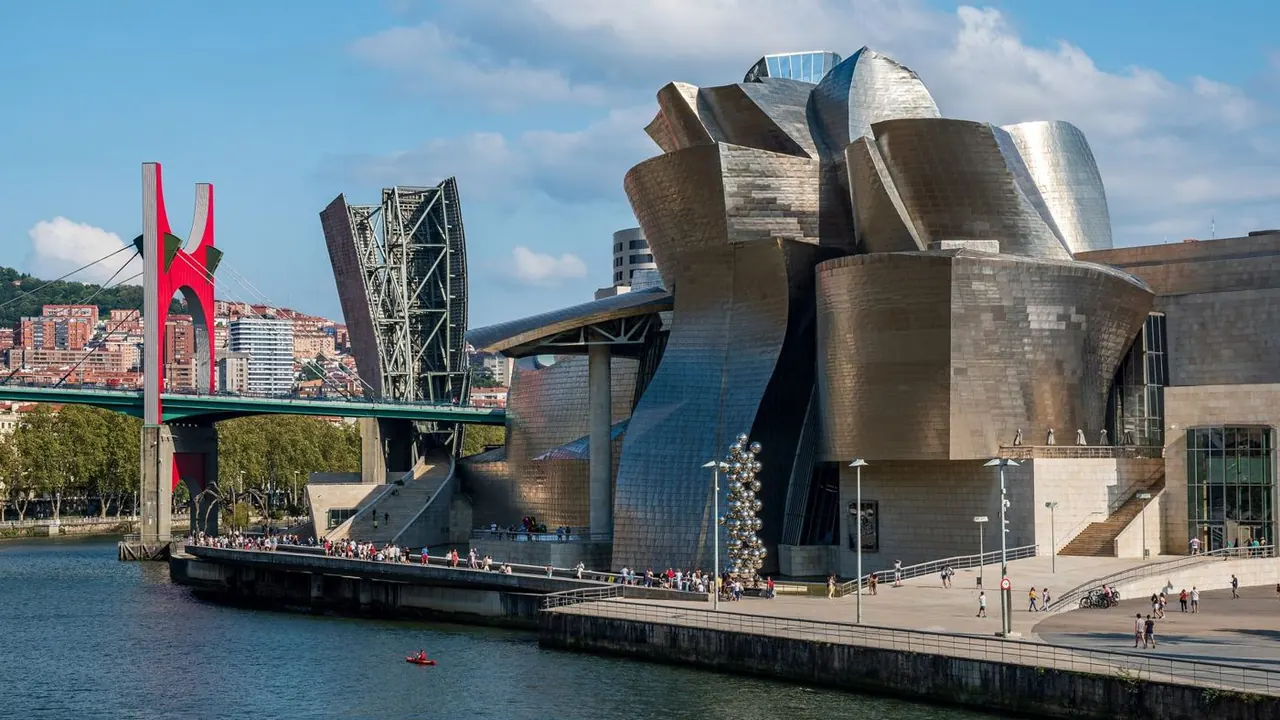
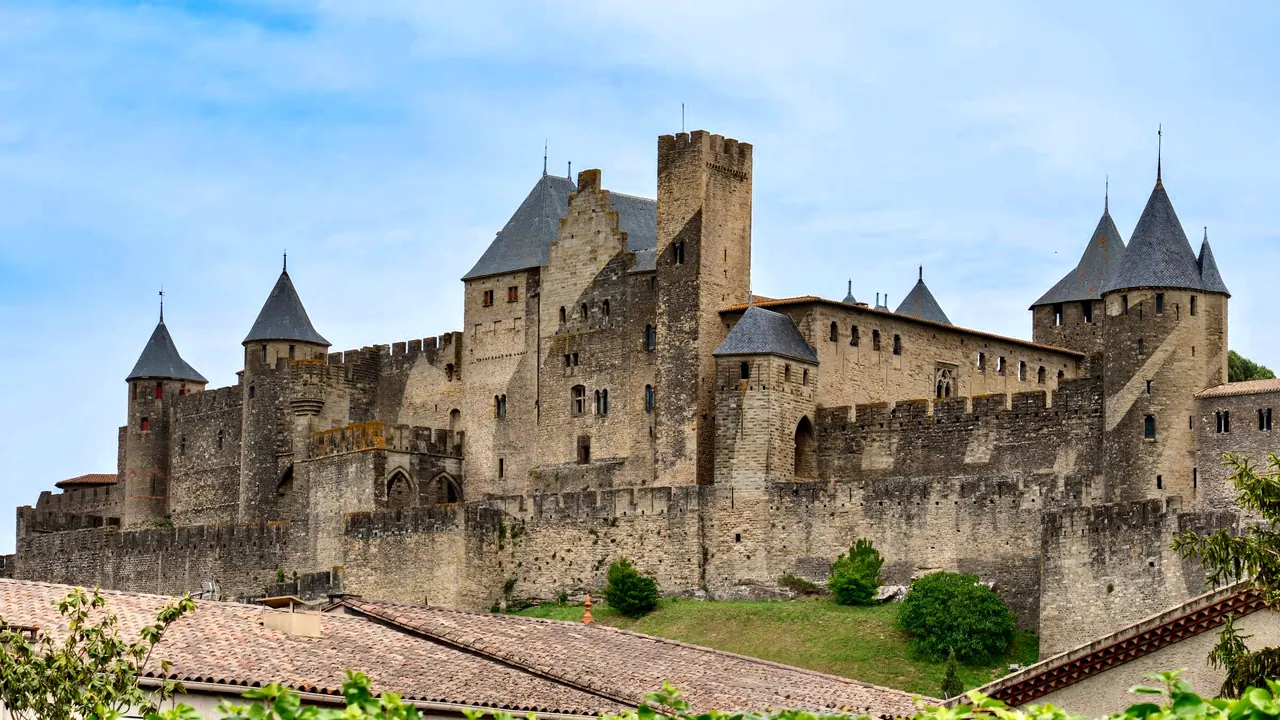
Photos: Bilbao by José Ligero Loarte, CC BY-SA 4.0, cropped; Carcassonne by Susanne Jutzeler, suju-foto, Pexels License.
Bilbao or Carcassonne?
Our verdict in twelve categories, each scored against the same fixed benchmark cities, and the climate month by month, so you can choose for your trip.
Choose Bilbao for
- food and drink
- nightlife
- getting around
Bilbao suits travellers who plan their days around eating and want a real city to come back to each evening. The pintxo bars of the Casco Viejo and the Ensanche, the Guggenheim and the Bellas Artes, an opera season and late weekend nights all sit along a walkable river with a metro running to the coast and the hills. If you want good food and some evening life, and you don't mind rain, it is the stronger choice.
Choose Carcassonne for
- prices
Carcassonne is for the traveller who comes for one extraordinary place and the countryside around it. La Cité's walls and towers, the Cathar castles on their ridges and the Corbières and Minervois vineyards make a slower, sunnier trip, best taken with a hire car. Evenings are quiet and the dining is simpler, but a provincial French town costs less than Bilbao.
Scoreboard
Twelve categories on one fixed scale from 0 to 100. The shaded stretch is the gap between the two.
Your match
Pick a travel style or drag the sliders, and both match scores follow your weighting.
Wins on food and drink and nightlife with your weighting.
Wins on prices with your weighting.
What matters to you?
Category by category
What the scores mean for a trip.
Beaches & swimming
Neither city is a beach destination, but the sea is much easier to reach from Bilbao. The metro runs to Ereaga and Arrigunaga in Getxo, to the surf beaches at Sopelana and to the sheltered bay at Plentzia, all in under an hour. The Biscay water stays cool until late summer, though, and grey days can interrupt.
Carcassonne's own swimming is the Lac de la Cavayère, a lake with lifeguards on the edge of town. The long, shallow Mediterranean beaches at Gruissan and Narbonne-Plage have warmer water, but they are an hour away, so every day at the sea means taking the car.
Food & drink
Food is where the two cities differ most. In Bilbao, eating is a reason to come. You can spend an evening going from bar to bar around Plaza Nueva and the Ensanche, and the Ribera market shows the fish and produce the cooking is built on. Beyond the bars there are asadores grilling txuleta and several Michelin-starred kitchens.
Carcassonne has one famous dish, cassoulet, and excellent local wine from Corbières, Minervois and Limoux. The cooking is otherwise plain southern French. The set menus inside the Cité are uneven, so the better meals are down in the Bastide.
Culture & sights
The two are equally rewarding, but in very different ways. Bilbao's culture is mostly in its museums: Gehry's Guggenheim, an old-master collection at the Bellas Artes, the Basque Museum, and a short metro ride away, the Vizcaya Bridge, an industrial UNESCO site.
Carcassonne is built around one great monument. La Cité has a double ring of walls with towers, the Château Comtal ramparts and the stained glass of Saint-Nazaire, with the Bastide's grid streets and the Canal du Midi below. Choose Bilbao for galleries and modern architecture, and Carcassonne for walking through a medieval fortress. Either takes only two or three days.
Nightlife
Bilbao is far livelier after dark. The pintxo crawl runs straight into late nights in the Casco Viejo and around Licenciado Poza, especially from Thursday to Saturday, and the August Great Week turns the riverbanks into one long party.
In Carcassonne, an evening means a walk along the floodlit walls and a glass on a terrace around Place Carnot. There are almost no clubs, and anyone after a real night out has to go to Toulouse or Montpellier.
Nature & outdoors
Bilbao is the better outdoor base, mainly because so much of it is close. Green hills rise straight from the edge of the city, so a proper walk needs no planning, and the coast adds a second landscape: the Urdaibai biosphere reserve around its estuary and the long stairway out to the islet of San Juan de Gaztelugatxe. You can have mountain days and sea days in the same week, but bring waterproofs in any season.
Carcassonne's country is drier and more austere, with chestnut and beech forest in the Montagne Noire to the north and the Galamus gorge and Pyrenean foothills to the south. It is best for walking in spring and autumn, before or after the summer heat and wind. Apart from the flat towpath of the Canal du Midi, which is good for cycling or a hired boat, nearly every outing starts with a drive.
Day trips
Both are excellent bases for day trips. From Bilbao, San Sebastián is the obvious outing by bus, and Gernika, the fishing ports from Bermeo to Lekeitio, Vitoria and the Rioja wine villages fill out the week, many of them without a car.
Carcassonne's best trips are the Cathar castles of Peyrepertuse, Quéribus and Lastours, along with villages such as Lagrasse and Minerve. Toulouse and Narbonne are easy by train, but most of the countryside depends on driving.
Good for families
Both work well with children, in different ways. Bilbao is the easier city day to day: the riverside is flat for pushchairs and scooters, Puppy and the Artxanda funicular go down well, and the metro reaches the beaches. However, there is no zoo or aquarium for rainy days.
Carcassonne has the bigger draw for children, a castle out of a storybook with jousting and falconry in summer, plus a lake with a water park and an animal park. The catch is steep cobbles, summer crowds and midday heat on the ramparts.
Getting around
Bilbao is far easier without a car. The main sights lie along a flat walk by the river, a tram covers the same stretch, and the metro, with its glass Foster entrances, runs out to the beaches and Portugalete. Regional trains and buses reach Gernika, the coast and San Sebastián.
Carcassonne's Bastide is compact enough to walk, but the Cité is a steady climb across the Pont Vieux. Once you leave town, the castles and wine villages are poorly served by public transport, so most visitors hire a car.
Shopping & style
Bilbao has more for shoppers, with chain stores and a department store on the Gran Vía and old family shops in the Casco Viejo selling berets, espadrilles and linen. Carcassonne's Cité lanes are mostly plastic swords and souvenirs, and the Bastide has only a modest high street. In both places the best things to take home are edible: Idiazabal cheese and tinned anchovies from Bilbao, and cassoulet and blanquette from Carcassonne.
Affordability
Carcassonne is the cheaper of the two, priced like a provincial French town, with cheap local wine and good-value set lunches. Avoid sleeping or eating inside the Cité, where you pay more for less, and budget for car hire.
Bilbao is expensive for Spain, especially for central hotels near the Guggenheim and in August. Its saving grace is the pintxo crawl, which is a cheap way to eat very well, and the city's metro and walkable centre keep transport cheap.
Live music & performing arts
Bilbao has a stage life that runs through the year. Opera from the ABAO season and the Bilbao Symphony Orchestra play at the Euskalduna, theatre and dance fill the Arriaga and the Campos Elíseos, and the BBK Live festival brings international bands in July.
Carcassonne has one memorable month, when the July festival puts headline acts on the open-air stage inside the walls, followed by the Bastille Day fireworks over the Cité. For the rest of the year the programme is thin, and opera means a trip to Toulouse.
Wellness & relaxation
Neither city has a bathing tradition, and spa options in both come down to hotel spas. Carcassonne has modest thermal villages such as Rennes-les-Bains within an hour, while Bilbao's balnearios are a separate trip. For rest, Bilbao offers long lunches and walks by the river, and Carcassonne offers the shaded Canal du Midi and quiet evenings on the walls, provided you avoid the crowds of high summer.
When should you go?
Pick your month. The climate figures are measured averages, not a forecast.
Bilbao in July
Carcassonne in July
Daytime high, °C
Rainfall in the month, mm
Where the figures come from
Carcassonne has no rain gauge within 25 km of the centre, so its rainfall comes from a gridded climate dataset read at the city rather than from a gauge further away.
Carcassonne's sunshine is measured 68 km from the centre, at Perpignan.
Temperature and rainfall are climate normals, averaged over the years shown. Bilbao: 1991-2020 normals, Bilbao / Sondica (4.1 km from centre). Carcassonne: 1999-2020 (sunshine 1991-2020, rainfall 1991-2020) normals, Carcassonne (2.8 km from centre).
Bilbao has a mild, green, Atlantic climate. Summers are warm without being hot, at around 25°C from July to September, and the Bay of Biscay reaches its best swimming warmth in August, at about 22°C. Rain falls in every month, and the summer months are cloudier than in southern France. From October the weather turns wet, and November is the wettest month, at about 170mm. The winters are cool but rarely cold, so the city stays pleasant for walking all year if you bring an umbrella.
Carcassonne is drier and much sunnier. July and August reach about 29°C with very little rain, which is good for the lake and the Mediterranean, but it is hard work on the exposed ramparts at midday. Winters are colder than in Bilbao, at around 10°C. For walking the Cité and the hills, May, June and September are the best months. They are warm and settled, and spring in Carcassonne is clearly brighter than spring in Bilbao.
Which traveller are you?
For a food and nightlife trip, Bilbao is the clear pick. Moving from bar to bar for pintxos and txakoli turns into a late night out in the Casco Viejo and on Licenciado Poza. In Carcassonne, dinner on Place Carnot is about as late as the evening goes.
On a trip on a tight budget, Carcassonne is easier on the wallet. Rooms in the Bastide, cheap local wine and set lunch menus keep costs down, especially in spring and autumn. Bilbao is expensive for Spain, although a pintxo crawl is still good value.
For an outdoors trip, Bilbao offers more, and it is easier to reach. There are hikes on Artxanda and Pagasarri, mountain walking in Urkiola and Gorbea, cliff paths and surf at Mundaka, mostly by public transport. The Corbières and the Aude gorges near Carcassonne are mostly reached by car.
Before you go
| Measure | Bilbao | Carcassonne |
|---|---|---|
| Official language | Spanish | French |
| Currency | Euro (EUR) | Euro (EUR) |
| Sockets | CF230 V, 50 Hz | CE230 V, 50 Hz |
| Driving side | Right | Right |
| Time zone | UTC+1, UTC+2 in summer | UTC+1, UTC+2 in summer |
| Emergency number | 112 | 112 |
| Elevation | 19 m | 81 m |
| Main airport | Bilbao Airport (BIO)5 km from centre73 non-stop destinations | Carcassonne Salvaza Airport (CCF)4 km from centre10 non-stop destinations |
| Public holidays this year | 13 days | 11 days |
By the numbers
| Measure | Bilbao | Carcassonne |
|---|---|---|
| City population | 351,124 | 46,080 |
| People per km² | 8,440 | 708 |
| Museums within 10 km | 17 | 6 |
| UNESCO World Heritage sites within 50 km | 3 | 2 |
| Swim season, months above 21 °C | 1 month | - |
Where else could you go?
Every comparison below shares a destination with this one, so you can follow Bilbao or Carcassonne somewhere new.
- San Sebastianvs Bilbao
- Toulousevs Carcassonne
- Biarritzvs Bilbao
- Montpelliervs Carcassonne
- Gironavs Carcassonne
- Barcelonavs Carcassonne