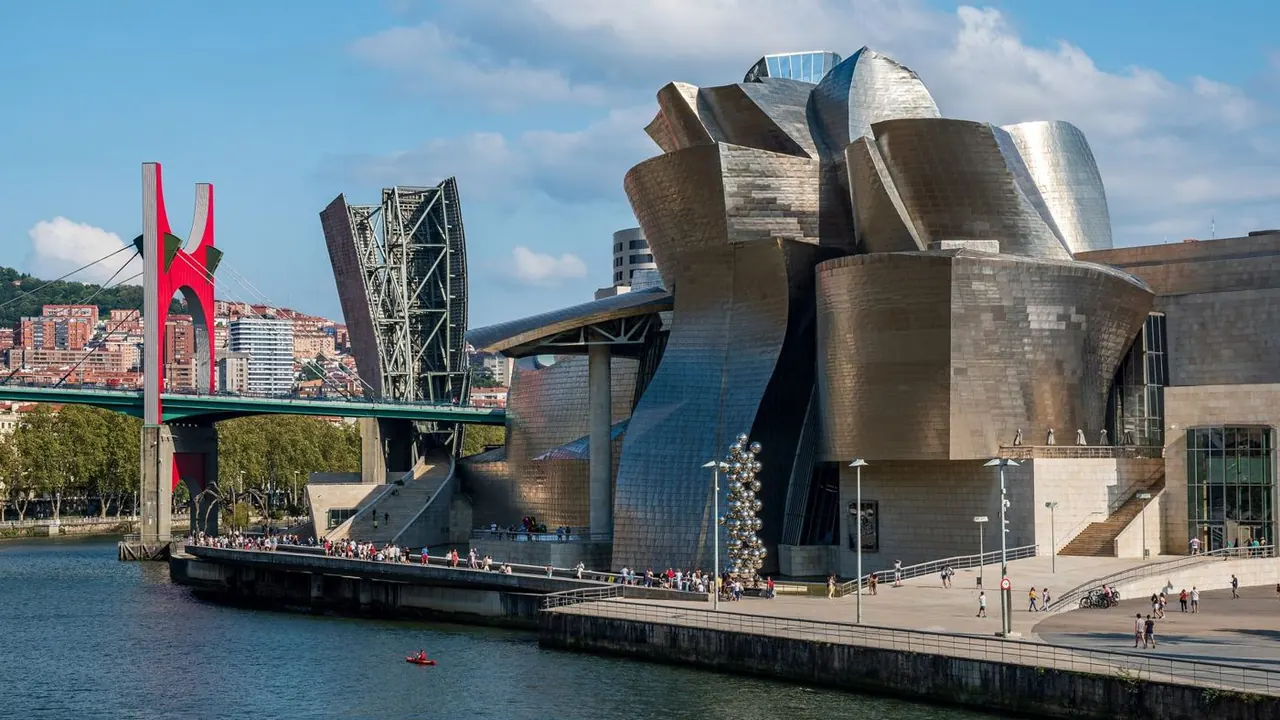
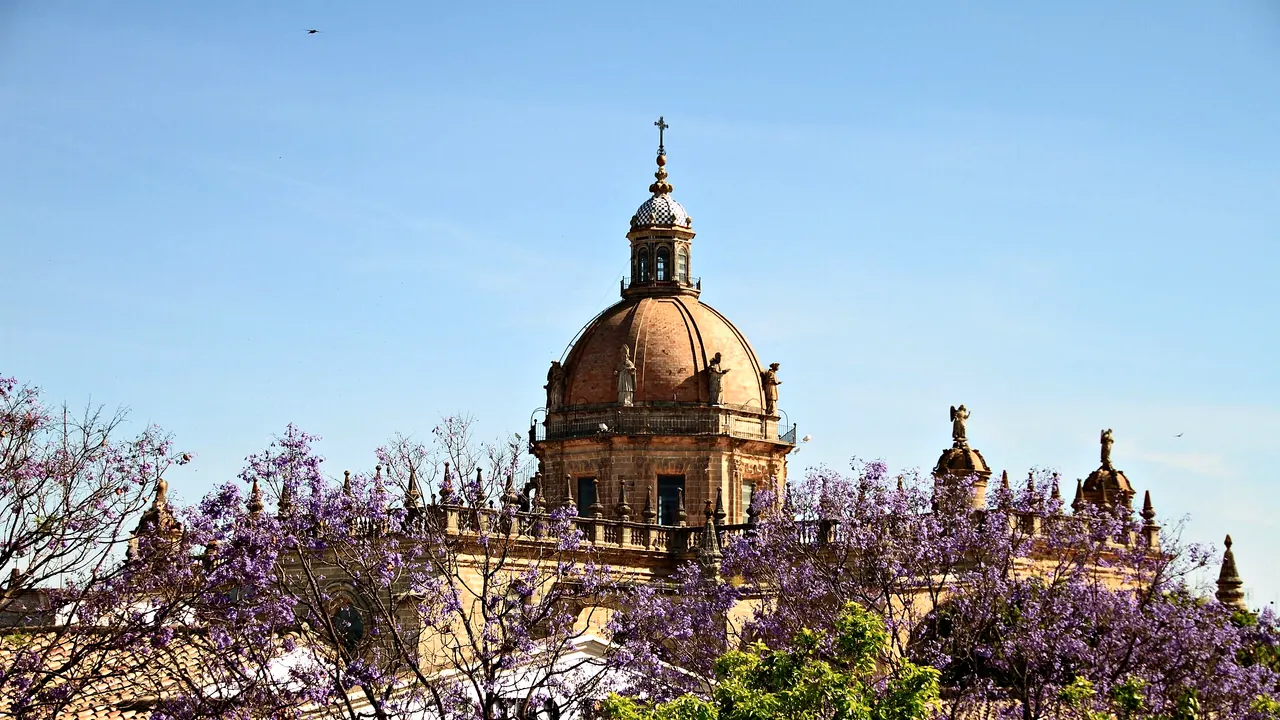
Photos: Bilbao by José Ligero Loarte, CC BY-SA 4.0, cropped; Jerez de la Frontera by PEPE GADEIRAS, CC BY 4.0, cropped.
Bilbao or Jerez de la Frontera?
Our verdict in twelve categories, each scored against the same fixed benchmark cities, and the climate month by month, so you can choose for your trip.
Choose Bilbao for
- food and drink
- getting around
- nightlife
Bilbao suits a traveller who wants to eat very well and get around easily. You get the pintxo bars of the Casco Viejo and the Ensanche, the asadores and starred kitchens, the Guggenheim and the Bellas Artes, and green hills and a surf coast you can reach by metro. That makes it the stronger all-round city stay, as long as you accept rain at any time of year and somewhat higher costs.
Choose Jerez de la Frontera for
- prices
- beaches
- live music and the arts
Choose Jerez for sun, sherry and flamenco on a lighter budget. The tabancos, the peñas of Santiago and San Miguel and the great bodegas give it a character of its own. The sands of the Costa de la Luz are close by train, and Seville and Cádiz make easy outings. Its nights are quieter and its shops thinner, and you will want a car to see the countryside.
Scoreboard
Twelve categories on one fixed scale from 0 to 100. The shaded stretch is the gap between the two.
Your match
Pick a travel style or drag the sliders, and both match scores follow your weighting.
Wins on food and drink and getting around with your weighting.
Wins on prices and beaches with your weighting.
What matters to you?
Category by category
What the scores mean for a trip.
Beaches & swimming
Neither city has a beach of its own, but Jerez is better placed for one. The Costa de la Luz gives long, open stretches of fine golden sand at Valdelagrana, at La Caleta and Playa de la Victoria in Cádiz, and at La Barrosa. Its summers are dry and sunny enough to plan a beach day with confidence.
Bilbao's metro reaches Ereaga, Arrigunaga, Sopelana and the sheltered bay at Plentzia in under an hour, and its coastline is greener and more dramatic. But the Biscay summer is changeable and the swell at Sopelana suits surfers more than paddlers. There, the beach is an outing for a good day rather than a fixed part of the trip.
Food & drink
Both cities eat within one regional tradition, but Bilbao does it at a higher level. Its pintxo bars in the Casco Viejo, Plaza Nueva and the Ensanche keep a high standard even when they look plain, the asadores grill txuleta and turbot, and there are several Michelin-starred kitchens in and around the city.
In Jerez, drinking matters as much as eating: fino and oloroso from the barrel in the tabancos, kidneys and oxtail cooked in sherry, berza jerezana and fried fish from the coast. It is a rewarding tradition, but it has fewer ambitious kitchens and less reason to plan a trip around restaurant bookings.
Culture & sights
Bilbao has the bigger names. The Guggenheim building is worth the journey on its own, the Bellas Artes holds a serious collection of old masters and Basque painting, and the Vizcaya Bridge down the estuary adds a UNESCO site. Its old town is compact rather than grand.
Jerez offers older heritage of a different kind. It has the Almohad Alcázar with its Arab baths, Gothic-Mudéjar parish churches and whitewashed lanes. It also has two things you will not find anywhere else: the cathedral-like sherry bodegas and the Royal Andalusian School of Equestrian Art. It has no art museums to match Bilbao's two, though each city fills two or three days.
Nightlife
Bilbao's nights offer more choice. The pintxo crawl through the Casco Viejo turns into late drinking, Licenciado Poza draws a younger crowd and the old streets near the Ribera have the alternative bars. Weekends run well past 3am even though there are few clubs, and Aste Nagusia takes over the riverbanks for nine days in August.
In Jerez a night out means tabancos, copa bars and the terraces around Plaza del Arenal. They stay open late but feel like a small town. Its big week is the Feria del Caballo in May, and in summer some people go to El Puerto for nights on the coast.
Nature & outdoors
Bilbao has more dramatic scenery close by. The hills start at the edge of town, with Artxanda reached by funicular and the Pagasarri on foot, and there is real mountain walking at Urkiola and Gorbea within an hour. On the coast there are cliff paths, the Urdaibai reserve, San Juan de Gaztelugatxe and the surf at Mundaka.
Around Jerez the chalky vineyards are gentle, and the bigger landscapes take more travel: the gorges of Grazalema, the cork oaks of Los Alcornocales and the Doñana wetlands. Birdwatching, riding and kitesurfing towards Tarifa are its strengths, but the summer heat rules out hiking in the hottest months.
Day trips
Both make excellent bases, but the outings are different in kind. From Bilbao the trips are Basque and green: San Sebastián's pintxo bars, Gernika, the fishing ports of Mundaka and Lekeitio, the medieval quarter of Vitoria-Gasteiz and the Rioja Alavesa wine country around Laguardia. Buses cover the main towns.
From Jerez the big draw is Seville, about an hour away by train. Ancient Cádiz is half an hour away, and Sanlúcar is the place for manzanilla. To see the white towns, such as Arcos, Vejer, Grazalema and Ronda, you really need a car.
Good for families
Neither city is built around children, and they come out about even. Bilbao is flat, clean and easy with a pushchair. It has Doña Casilda Park, the Artxanda funicular and Puppy outside the Guggenheim, but no zoo or aquarium, and you need a plan for rainy days.
Jerez has a good zoo and botanical garden, which Bilbao lacks, as well as the dancing horses, and its wide, gently sloping beaches are easier on small swimmers. The downside is the July and August heat in town, which Bilbao's mild summers avoid.
Getting around
Bilbao is the easier city to see without a car. The walk along the river from the Casco Viejo to the Guggenheim is flat, and a tram runs the same stretch. Foster's metro runs down both banks to the beaches and the Vizcaya Bridge, and Euskotren and Bizkaibus services reach the coast and Gernika.
Jerez's centre is just as walkable, and its trains to Seville, Cádiz and the airport are good. Beyond those routes, though, buses to the white towns, the sierra and many of the beaches are slow and infrequent, so a hired car becomes almost essential.
Shopping & style
Bilbao has more to offer, though neither city is a fashion destination. The Gran Vía has the chains, a department store and some upmarket boutiques. The Casco Viejo mixes old shops selling berets and cookware with independent design stores, and the Ribera market sells cheese, txakoli and tinned anchovies.
Jerez offers less, but what it has is very distinctive: sherry and brandy from the bodegas, riding boots and saddlery from craftsmen who serve the horse world, and flamenco dresses and guitars near the old quarters. Otherwise, Calle Larga is a modest provincial shopping street.
Affordability
Jerez is clearly the cheaper stay. Sherry and tapas in the tabancos, central hotels and bodega tours are all modestly priced, and the sights are within walking distance. Rooms are scarce during the Feria, the flamenco festival and the motorcycle race weekends.
Bilbao is on the expensive side for Spain, and central hotels cost more, especially near the Guggenheim. A pintxo crawl is still good value and the metro is inexpensive, but the asadores and starred restaurants that draw many visitors soon add up.
Live music & performing arts
Jerez has the stronger stage life, and it centres on flamenco as a living local art. The peñas of Santiago and San Miguel open their evenings to visitors, tabancos hold informal sessions where the singers are close up, and the late-winter festival fills the Teatro Villamarta with major dancers.
Bilbao offers a broader range but less character of its own. There is opera from ABAO and the symphony orchestra at the Euskalduna, theatre at the Arriaga and the Campos Elíseos, small rock and indie stages, and BBK Live in July. Outside those seasons there is not much on.
Wellness & relaxation
Neither city is a spa destination, but Jerez has the edge. Its Arab-style bathhouse in the old town has warm pools and massage, and the Andalusian day of long lunches, quiet afternoons and shaded patios slows you down without any effort, especially in spring and autumn.
Bilbao has only hotel spas and a few day spas. Its calm comes from riverside walks and unhurried evenings between bars, and for a proper spa stay you would have to travel to the balnearios inland.
When should you go?
Pick your month. The climate figures are measured averages, not a forecast.
Bilbao in July
Jerez de la Frontera in July
Daytime high, °C
Rainfall in the month, mm
Temperature and rainfall are climate normals, averaged over the years shown. Bilbao: 1991-2020 normals, Bilbao / Sondica (4.1 km from centre). Jerez de la Frontera: 1991-2020 normals, Jerez De La Fronteraaeropuerto (9.9 km from centre).
Bilbao is at its best from June to September. Days are warm, peaking around 26°C in August, and the Bay of Biscay is pleasant for a swim in July and August. Even then, summer is only the least rainy season, not a dry one, and grey days still come. From October the rain builds to its peak in November, around 170mm, and winter is mild but wet and dull, better for museums and bars than for the coast.
Jerez runs the other way. July and August are almost rainless and very sunny, but with highs around 34°C, walking the streets in the middle of the day is hard work. Those months belong to the beach, with the sea at about 23°C. Spring, from March to May, and October are the best months for the city itself, warm and bright for wandering and for walking in the sierra. Winter is mild, around 17°C by day. The rain falls between October and April, and October to December are the wettest months.
Which traveller are you?
On a beach and sun trip, Jerez is the better pick. The long golden sands at Cádiz, El Puerto and La Barrosa are a short train ride or drive away, and summers are reliably dry and bright. Bilbao's beaches come with changeable Biscay weather.
For a food and nightlife trip, Bilbao wins. The poteo from bar to bar through the Casco Viejo and Plaza Nueva sets a higher standard, Basque cooking goes up to starred tables, and Licenciado Poza stays busy late at weekends. Jerez's evenings are sociable but provincial.
On a trip on a tight budget, Jerez gives you more for your money. You can spend an evening on fino from the barrel and close-up singing at a peña in Santiago, then take the train to the sands at Cádiz or to Seville for the day. In Bilbao, a bed for the night takes more of the budget.
Before you go
| Measure | Bilbao | Jerez de la Frontera |
|---|---|---|
| Official language | Spanish | Spanish |
| Currency | Euro (EUR) | Euro (EUR) |
| Sockets | CF230 V, 50 Hz | CF230 V, 50 Hz |
| Driving side | Right | Right |
| Time zone | UTC+1, UTC+2 in summer | UTC+1, UTC+2 in summer |
| Emergency number | 112 | 112 |
| Elevation | 19 m | 58 m |
| Main airport | Bilbao Airport (BIO)5 km from centre73 non-stop destinations | Jerez Airport (XRY)10 km from centre26 non-stop destinations |
| Public holidays this year | 13 days | 12 days |
By the numbers
| Measure | Bilbao | Jerez de la Frontera |
|---|---|---|
| City population | 351,124 | 213,634 |
| People per km² | 8,440 | 180 |
| Museums within 10 km | 17 | 14 |
| UNESCO World Heritage sites within 50 km | 3 | 1 |
| Swim season, months above 21 °C | 1 month | 3 months |
Where else could you go?
Every comparison below shares a destination with this one, so you can follow Bilbao or Jerez de la Frontera somewhere new.
- Cadizvs Jerez de la Frontera
- San Sebastianvs Bilbao
- Sevillevs Jerez de la Frontera
- Rondavs Jerez de la Frontera
- Marbellavs Jerez de la Frontera
- Biarritzvs Bilbao