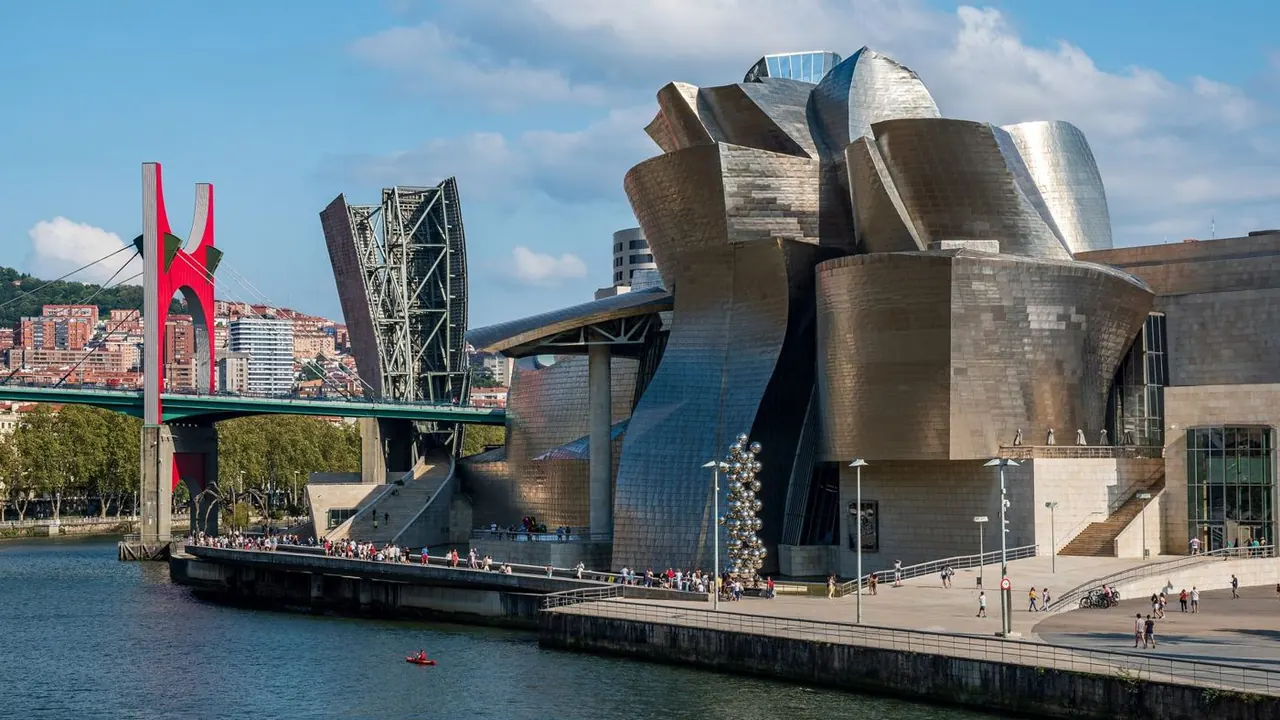
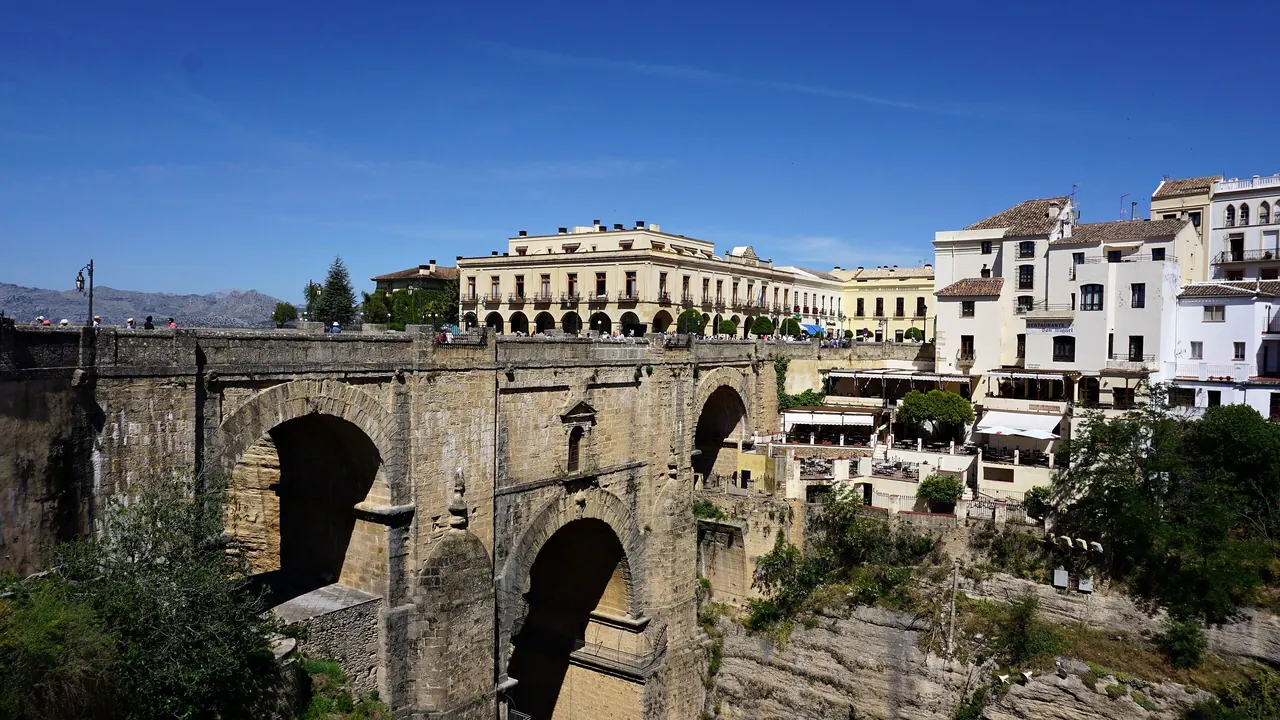
Photos: Bilbao by José Ligero Loarte, CC BY-SA 4.0, cropped; Ronda by Julia Kostecka, CC BY 2.0, cropped.
Bilbao or Ronda?
Our verdict in twelve categories, each scored against the same fixed benchmark cities, and the climate month by month, so you can choose for your trip.
Choose Bilbao for
- food and drink
- nightlife
- live music and the arts
Bilbao is the better pick if you plan your days around eating and your evenings around going out. Pintxo bars run from the Casco Viejo through the Ensanche, starred kitchens sit above them, and there is the Guggenheim, an opera season and a proper late weekend. The metro and tram mean you never need a car, and beaches and San Sebastián are close enough for an afternoon or a day. The cost is rain, which can turn up in any month.
Choose Ronda for
- prices
- nature and the outdoors
Ronda suits a slower, cheaper trip where the landscape matters most: the Tajo gorge, the white villages and the sierras of Grazalema and Las Nieves, ideally seen from a country house with a pool and explored by hire car. Summers are dry and evenings are quiet. Food, shops and evening entertainment are thin next to Bilbao, so a couple of days in town and the rest out in the hills is the right way to do it.
Scoreboard
Twelve categories on one fixed scale from 0 to 100. The shaded stretch is the gap between the two.
Your match
Pick a travel style or drag the sliders, and both match scores follow your weighting.
Wins on food and drink and nightlife with your weighting.
Wins on prices and nature and the outdoors with your weighting.
What matters to you?
Category by category
What the scores mean for a trip.
Beaches & swimming
Neither is a beach destination, but Bilbao makes the sea far easier to reach. The metro runs out to Ereaga and Arrigunaga in Getxo, the open sands of Sopelana and the sheltered bay at Plentzia in well under an hour, so a swim fits into a city afternoon. The water is the cooler Bay of Biscay, though, and summer days can still be grey.
Ronda's coast is around 50km away down a road full of hairpin bends, which in practice means a whole day and a car. The Mediterranean at Estepona is warmer and the sands are long but built up. Most visitors here cool off in a pool instead.
Food & drink
Food is where Bilbao pulls furthest ahead. Moving from counter to counter for pintxos and txakoli is a ritual in its own right. The Ribera market shows off the fish, peppers and cheeses the cooking is built on, and asadores grilling txuleta and several Michelin-starred kitchens give it real depth at the top end.
Ronda eats well but simply. Its menu is the cooking of the Serranía: oxtail stew, lamb, game, mountain hams, and chestnuts and mushrooms in autumn, with local Sierras de Málaga wines alongside. Eat in the Mercadillo's tapas bars rather than on the terraces overlooking the gorge, and expect a few days to cover it. Both towns have little food from other cuisines.
Culture & sights
The two are fairly evenly matched for sightseeing, but in very different ways. Bilbao's draw is its museums: Gehry's Guggenheim with Puppy outside, the old masters at the Bellas Artes and the Basque Museum, plus the UNESCO-listed Vizcaya Bridge a metro ride away.
Ronda's main sight is its setting. The Puente Nuevo spans a gorge more than 100m deep, and around it are the Real Maestranza bullring, Arab baths among the best preserved in Spain and the rock-cut stairway at the Casa del Rey Moro. Both reward two or so unhurried days, Bilbao more for art and Ronda more for views and history.
Nightlife
Bilbao has a real night out. The pintxo bars of the Casco Viejo and Plaza Nueva stay busy late, a younger crowd fills Licenciado Poza, and weekends run past 3am, although clubs are few. In August, Aste Nagusia takes over the riverbanks for nine days.
In Ronda the evening is a late dinner and a drink around the Plaza del Socorro. The town is asleep by the early hours, except during the September fair.
Nature & outdoors
Bilbao gives you green mountains and the Atlantic coast together, while Ronda is all inland limestone sierra. From Bilbao the Pagasarri and Artxanda begin at the edge of town, and Urkiola and Gorbea are within the hour. On the coast there are cliff paths to Sopelana, the Urdaibai reserve, San Juan de Gaztelugatxe and serious surf at Mundaka. It is all green, and you should expect rain in any season.
Ronda has no sea, but its mountains are wilder. Grazalema has crags, vultures and slopes kept unusually green by heavy rain, and the Sierra de las Nieves has its Spanish fir forests. Climbers use the walls of the Tajo, and the Caminito del Rey is an hour's drive away. Here the summer heat, not the rain, sets the walking season, so go in spring or autumn.
Day trips
Both have plenty within reach, and the main difference is how easy it is without a car. From Bilbao, buses take you to San Sebastián in a little over an hour, to Vitoria-Gasteiz, and to Gernika and the fishing ports of Bermeo and Lekeitio. The Rioja Alavesa and Cantabria's Santillana del Mar are a longer day out.
From Ronda the classic outing is the white villages: Setenil de las Bodegas twenty minutes away, then Zahara and Grazalema, along with the Roman ruins at Acinipo and the cave paintings of the Cueva de la Pileta. Seville and Málaga are a long but manageable day, and for the villages a hire car is close to essential.
Good for families
Bilbao is the easier place with children. The centre is flat and compact, the riverside promenade suits scooters and pushchairs, and Doña Casilda Park, the Artxanda funicular and the Guggenheim's family activities fill the days. In summer the metro beaches make up for the lack of a zoo or aquarium.
Ronda has none of those either, and its steep cobbled lanes and high, exposed viewpoints make life hard with small children. Older children enjoy the gorge walk and the caves, and families usually do best in a country house with a pool.
Getting around
Bilbao is far simpler to get around. The main sights line a flat stretch of river you can walk, with a tram alongside, and Foster's metro runs down both banks to the beaches and the Vizcaya Bridge. Regional trains and buses cover the coast, Gernika and the neighbouring cities, so you can leave the car at home.
Ronda is also a walking town, but some of its lanes into La Ciudad are steep. The trains and buses are fine for arriving but slow and infrequent for exploring, so the villages and natural parks really need a car, and parking in the old town is tight.
Shopping & style
Bilbao offers more, though it is no fashion capital. The Gran Vía has the chains, a department store and a few upmarket boutiques, and the Casco Viejo's family shops sell berets, espadrilles and cookware next to independent designers.
Ronda's shopping is Carrera Espinel and souvenir stalls near the bridge selling ceramics and leather. In both, the best buys are things to eat and drink: txakoli and tinned anchovies in Bilbao, local wine, cured meats and convent sweets in Ronda.
Affordability
Ronda is the cheaper stay. Tapas and set lunches in the Mercadillo are good value, entry fees are modest and rural houses are fairly priced, although a hire car adds to the cost and rooms overlooking the gorge are expensive.
Bilbao is on the expensive side for Spain, especially for central hotels near the Guggenheim and during the Great Week. You can still keep costs down with a pintxo crawl, and with cheap metro fares or walking.
Live music & performing arts
Bilbao has a genuine cultural calendar. The ABAO opera season and the Bilbao Symphony Orchestra play at the Euskalduna, the Teatro Arriaga and Campos Elíseos put on theatre and dance, and each July BBK Live brings international bands to Mount Cobetas.
Ronda's evenings offer little beyond small flamenco shows for visitors and an occasional programme at the municipal theatre. Its one great event is the Corrida Goyesca, held in eighteenth-century costume during the September fair.
Wellness & relaxation
Neither town has a spa tradition, so in both cases wellness means a hotel spa. Ronda's Arab baths are a monument to visit, not somewhere to bathe.
What differs is the kind of rest each offers. Bilbao's is urban: long lunches, riverside walks and slow evenings between bars, with historic balnearios inland if you want a proper spa. Ronda's is rural: once the day-trippers leave the town goes quiet, and a country hotel with a pool and views over olive groves suits a few days of doing nothing.
When should you go?
Pick your month. The climate figures are measured averages, not a forecast.
Bilbao in July
Ronda in July
Daytime high, °C
Rainfall in the month, mm
Where the figures come from
Ronda has no weather station within reach, so its figures come from a gridded climate model rather than a measured record, and read a broad area rather than the city itself.
Temperature and rainfall are climate normals, averaged over the years shown. Bilbao: 1991-2020 normals, Bilbao / Sondica (4.1 km from centre). Ronda: 1991-2020 normals, TerraClimate 4 km grid at the town, no weather station within 90 km.
Bilbao stays mild all year but is never reliably dry. Summer highs sit around 26°C, comfortable for walking at any hour, and June to August are the driest and sunniest months. The Bay of Biscay is only warm enough for a proper swim from July to September, when it reaches about 22°C. May and September are pleasant but changeable. From October the rain builds to a peak of about 170mm in November, and winter is grey, wet and cool, though rarely cold.
Ronda's year is more sharply divided. July and August are hot and almost completely dry, with highs around 32°C, so afternoons are too hot for the steep lanes or the trails, though the sea on the coast is warm enough for swimming then. April, May and September are its best months for walking the town and the sierras, and October is still mild, though the rain is back by then. Winter is wet, with about 120mm in December, and nights on the plateau are cold. So in high summer Bilbao is the easier city to be out in, in spring and early autumn either works, and in winter both are damp and cool.
Which traveller are you?
For a food and nightlife trip, choose Bilbao and stay central so the evening's bar crawl ends a short walk from bed. Plan one big meal at an asador or a starred table, and keep a Friday or Saturday for the late night.
On a tight budget, choose Ronda. Skip the rooms with gorge views, avoid Easter and the September fair, and use buses for the bigger towns instead of hiring a car for the whole stay. The same number of nights costs more in Bilbao.
On a family trip with young children, base yourselves in Bilbao near the river so every outing starts on the flat, and keep an indoor plan ready for wet days. Ronda is better left for later, when the children can manage gorge paths and long drives.
Before you go
| Measure | Bilbao | Ronda |
|---|---|---|
| Official language | Spanish | Spanish |
| Currency | Euro (EUR) | Euro (EUR) |
| Sockets | CF230 V, 50 Hz | CF230 V, 50 Hz |
| Driving side | Right | Right |
| Time zone | UTC+1, UTC+2 in summer | UTC+1, UTC+2 in summer |
| Emergency number | 112 | 112 |
| Elevation | 19 m | 724 m |
| Main airport | Bilbao Airport (BIO)5 km from centre73 non-stop destinations | Málaga-Costa del Sol Airport (AGP)60 km from centre166 non-stop destinations |
| Public holidays this year | 13 days | 12 days |
By the numbers
| Measure | Bilbao | Ronda |
|---|---|---|
| City population | 351,124 | 33,671 |
| People per km² | 8,440 | 87 |
| Museums within 10 km | 17 | 5 |
| UNESCO World Heritage sites within 50 km | 3 | 0 |
| Swim season, months above 21 °C | 1 month | 1 month |
Where else could you go?
Every comparison below shares a destination with this one, so you can follow Bilbao or Ronda somewhere new.