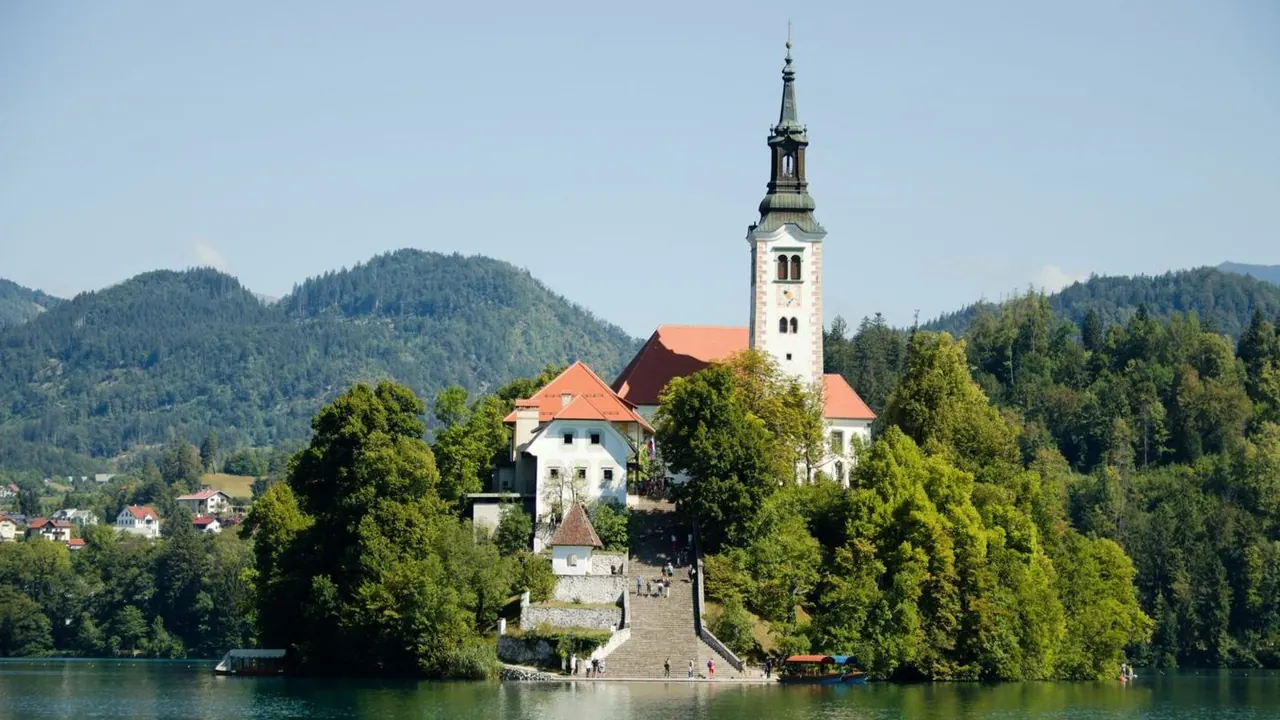
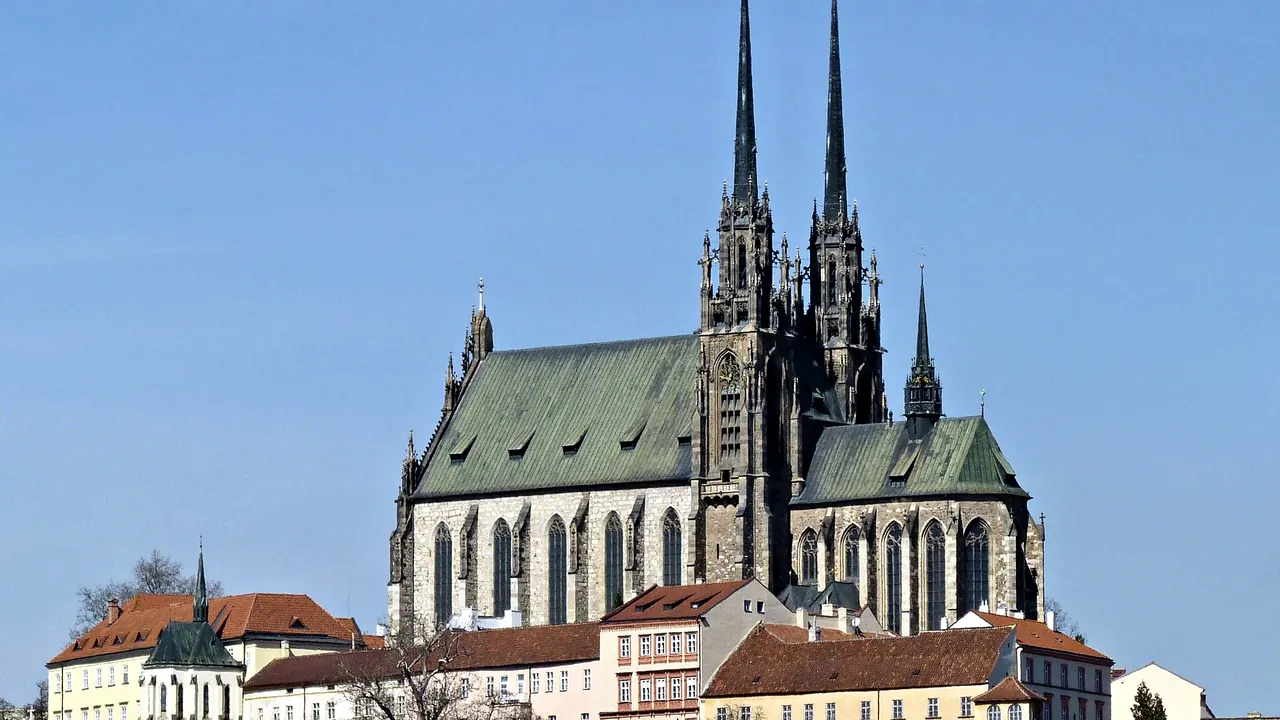
Photos: Bled by Luka Peternel, CC BY-SA 4.0, cropped; Brno by Michal Klajban, CC BY-SA 3.0, cropped.
Bled or Brno?
Our verdict in twelve categories, each scored against the same fixed benchmark cities, and the climate month by month, so you can choose for your trip.
Choose Bled for
- beaches
- nature and the outdoors
- wellness
Bled is the place for a trip built around fresh air and water. You get lake swimming in summer, climbs to viewpoints over the island, the Vintgar Gorge and Triglav National Park close by, and evenings slow enough to count as rest. It suits couples and families who are happy to eat simply, go to bed early and travel to Ljubljana for anything urban.
Choose Brno for
- live music and the arts
- nightlife
- culture and sights
Pick Brno if you want a city that keeps you busy indoors and after dark, and costs less while doing it. The interwar architecture led by Villa Tugendhat, opera and ballet in Janacek's home town, and small cocktail and wine bars give it a depth that a lake village cannot match. Trams and regional trains also make it an easy base for chateaux, wine towns and even Vienna.
Scoreboard
Twelve categories on one fixed scale from 0 to 100. The shaded stretch is the gap between the two.
Your match
Pick a travel style or drag the sliders, and both match scores follow your weighting.
Wins on beaches and nature and the outdoors with your weighting.
Wins on live music and the arts and nightlife with your weighting.
What matters to you?
Category by category
What the scores mean for a trip.
Beaches & swimming
Neither has a sea, but Bled has a real swimming lake. In high summer the water reaches about 24°C, and people swim from grassy lidos, wooden piers and rocks along the shore path, sometimes all the way out to the island. Colder, wilder Bohinj is nearby for a change of scene.
Brno's version is the dammed Svratka reservoir, reached by tram and river boat, or the Nove Mlyny lakes an hour south. Either is fine for a hot afternoon, but algae can spoil the reservoir in a heatwave, and neither is something to plan a trip around.
Food & drink
In Bled, food means kremšnita on a lake terrace, then trout, žlikrofi or sausages in an inn or hotel dining room. Most of it is aimed at day visitors, and the better meals are out in the valley guesthouses or back in Ljubljana.
Brno has more to eat and much more to drink. Hearty Czech cooking comes with excellent lager in the beer halls, and Moravian whites and Frankovka reds from vineyards an hour south are poured by the glass. The specialty coffee is taken seriously and there are a few good modern bistros, although fine dining is thin.
Culture & sights
You can see Bled's sights in a day: the castle on its cliff with a small museum and printing workshop, a pletna boat to the baroque island church and its wishing bell, and the old spa villas along the shore. They are memorable, but there are few of them.
Brno needs two or three days. Villa Tugendhat leads one of Europe's richest collections of interwar functionalist buildings. Around it are the Gothic cathedral, the Habsburg fortress of Spilberk, the Capuchin Crypt, the Moravian Gallery and the Mendel Museum in the abbey where genetics began.
Nightlife
Evenings in Bled mean a drink on a terrace and a walk along the lit shore, with no clubs and nothing open late.
Brno is a university city, and during term the bars around Jakubske namesti stay full well into the night. Its small, hidden cocktail bars are the speciality, and wine bars and student cellars cover the cheaper end. Clubbing is modest and the city goes quiet in July and August, but for a long night of drinks there is no contest.
Nature & outdoors
This is Bled's great strength. The Julian Alps begin at the edge of the village, so the level lake circuit, the climbs to Ojstrica and Osojnica, the Vintgar Gorge, Lake Bohinj and the Pokljuka pastures are all close. You can also go rafting and canyoning on the Sava or paragliding, ski in winter, and drive over the Vršič pass to the Soča valley.
Brno's countryside is gentler. There are caves and wooded trails in the Moravian Karst, including the underground boat ride beneath the Macocha Abyss, and vineyard cycling towards the Palava hills and Podyji. These make good outings, but there are no mountains.
Day trips
Both villages and city make good bases, though Brno has more within reach. From Bled, Ljubljana's castle, riverside old town and Plečnik architecture are under an hour away, and medieval Radovljica with its beekeeping museum is just down the road. The Postojna cave with cliff-built Predjama Castle and Venetian Piran on the Adriatic each fill a full day, and Villach and the Wörthersee are a short drive into Austria.
South Moravia is denser with heritage. The chateaux, follies and parkland of Lednice-Valtice and the Austerlitz battlefield at Slavkov are both under an hour from Brno, and Kromeriz, Trebic, Telc and the star-shaped church at Zelena Hora add four more UNESCO sites within an hour or two. Baroque Olomouc, the wine towns of Mikulov and Znojmo, and Vienna and Bratislava by train all fit into a day as well.
Good for families
Bled is the better choice for children who like being outside. They can row to the island and ring the bell, swim from the shallow lidos, and ride the toboggan run or try the rope park on Straža, while the flat lake path suits pushchairs and small bikes. Rain is the weak spot, because there is nothing indoors to fall back on.
Brno has more for a wet day: the VIDA science centre, the zoo, the mammoths in the Anthropos pavilion and a planetarium, as well as the Punkva Caves boat ride. Cobbles and hills make it harder with a pushchair, though, and children get less of the outdoor freedom that Bled gives them.
Getting around
Bled itself is just a walk around one lake, with buses to Ljubljana, Radovljica and Bohinj and trains from Lesce-Bled. The trailheads and passes of the Julian Alps are thinly served, though, so most visitors who want to explore end up hiring a car.
Brno is simpler. The centre is small and mostly pedestrianised, and dense trams and trolleybuses reach Villa Tugendhat, the zoo and the reservoir. The same ticket also covers regional trains, so a car is hardly needed even for day trips.
Shopping & style
Neither is a shopping destination. In Bled, shopping barely goes beyond lakeside stalls of honey, lace and painted beehive panels. Brno at least has high-street chains on Ceska and Masarykova, malls, a few independent design and vintage shops, and Moravian wine to take home from cellars or the Zelny trh market.
Affordability
Bled charges for its fame and its view, especially in July and August, and the island boats, the castle and the gorge all have entry fees. The lake path and mountain trails are free, and staying in Radovljica, Bohinj or at the campsite brings costs down.
Brno is clearly the cheaper stay. Hotels, weekday pub lunches, beer, local wine, transport and museum entry all cost little, and big trade fairs are the main thing that can fill its rooms.
Live music & performing arts
Bled has no stage of its own, only occasional summer concerts in the castle or churches and folk evenings put on for visitors.
Brno is Janacek's city, and it shows. The National Theatre stages opera and ballet in the Janacek Theatre and drama in the ornate Mahen Theatre, and it also runs the Reduta, where the young Mozart played. Add the Philharmonic's season and a festival devoted to the composer. Opera, ballet and concerts get around the Czech language barrier best.
Wellness & relaxation
Bled grew up as a place for rest. Arnold Rikli ran air and sun cures here in the nineteenth century, mild springs warm the eastern end of the lake, and the large hotels have spas with indoor pools that day guests can sometimes use. Early walks by still water and slow boat rides do the rest.
Brno has no springs or spa tradition, just public pools with saunas, a few day spas and quiet afternoons in Luzanky park or on the Spilberk slopes.
When should you go?
Pick your month. The climate figures are measured averages, not a forecast.
Bled in July
Brno in July
Daytime high, °C
Rainfall in the month, mm
Where the figures come from
Bled's temperatures are measured 36 km from the centre, at Klagenfurt.
Bled has no rain gauge within 25 km of the centre, so its rainfall comes from a gridded climate dataset read at the city rather than from a gauge further away.
Temperature and rainfall are climate normals, averaged over the years shown. Bled: 1991-2020 normals, Klagenfurt (35.5 km from centre). Brno: 1991-2020 normals, Brno / Turany (8.4 km from centre).
Bled's lake is warm enough for swimming from late June to early September, with July highs around 27°C, and late spring and early autumn are pleasant for hiking. It is a wet place all year, though. Rain builds through the autumn to a peak of 211mm in November, and winter days hover near freezing, which brings the cross-country and downhill skiing nearby. Bled also gets noticeably more winter sunshine than Brno.
Brno is almost as warm in summer, at about 26°C, but much drier, with no month much above 70mm of rain. That makes May to September comfortable for walking the streets and taking day trips, and October stays dry just as Bled turns wettest. Winters are cold at about 2°C and dull, with very little sun from November to January.
Which traveller are you?
For an outdoors trip, Bled is the clear choice. Lake swimming, gorge walkways, steep viewpoints over the island and the trails, rivers and ski slopes of the Julian Alps are all within half an hour. Brno's caves and vineyard cycling make good days out, but not a whole trip.
On a culture and arts trip, choose Brno. Villa Tugendhat and the functionalist districts, the Moravian Gallery, the crypt of mummified monks and opera at the Janacek Theatre easily fill several days. Bled's castle and island church take one.
For a food and nightlife trip, Brno is far ahead. It has Moravian wine by the glass, serious coffee, beer halls and hidden cocktail bars that stay full late during term. Bled has kremšnita, simple inns and a village that is asleep before midnight.
Before you go
| Measure | Bled | Brno |
|---|---|---|
| Official language | Slovene | Czech |
| Currency | Euro (EUR) | Czech Koruna (CZK) |
| Sockets | CF230 V, 50 Hz | CE230 V, 50 Hz |
| Driving side | Right | Right |
| Time zone | UTC+1, UTC+2 in summer | UTC+1, UTC+2 in summer |
| Emergency number | 112 | 112 |
| Elevation | 501 m | 237 m |
| Main airport | Ljubljana Jože Pučnik Airport (LJU)31 km from centre32 non-stop destinations | Brno-Tuřany Airport (BRQ)8 km from centre40 non-stop destinations |
| Public holidays this year | 21 days | 13 days |
By the numbers
| Measure | Bled | Brno |
|---|---|---|
| City population | 4,969 | 402,739 |
| People per km² | 26 | 1,750 |
| Museums within 10 km | 4 | 25 |
| UNESCO World Heritage sites within 50 km | 3 | 2 |
Where else could you go?
Every comparison below shares a destination with this one, so you can follow Bled or Brno somewhere new.