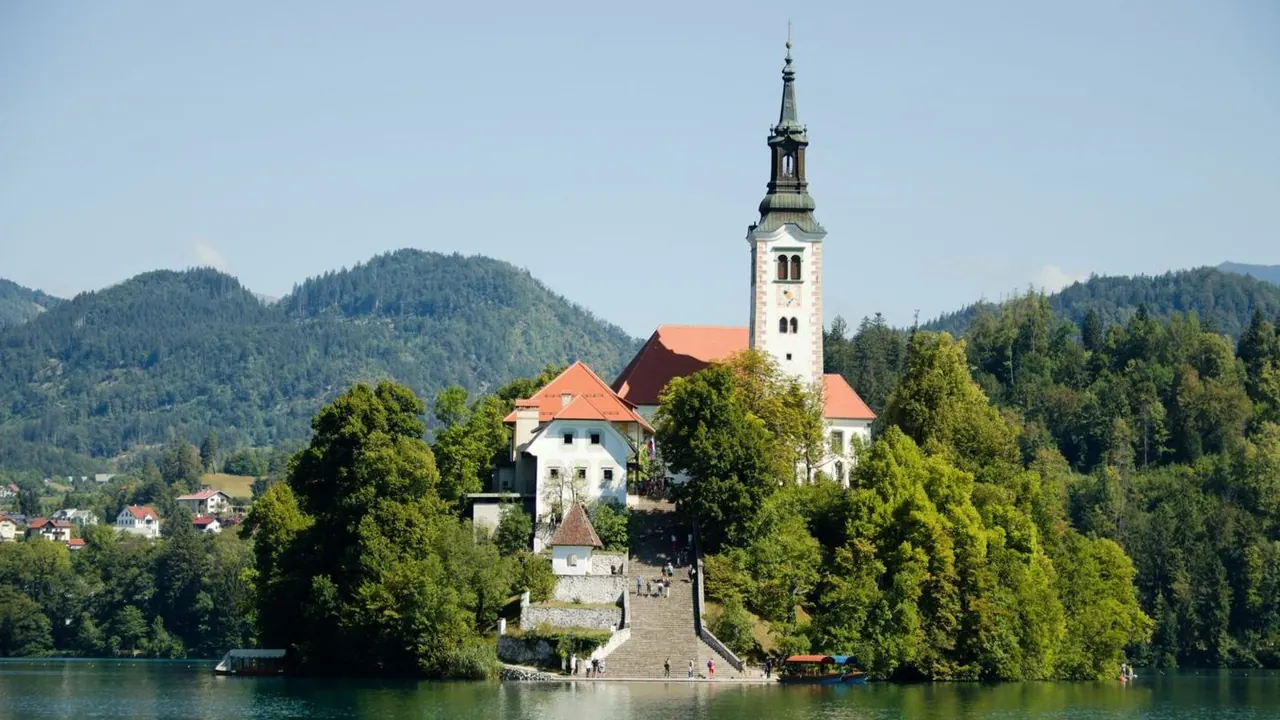
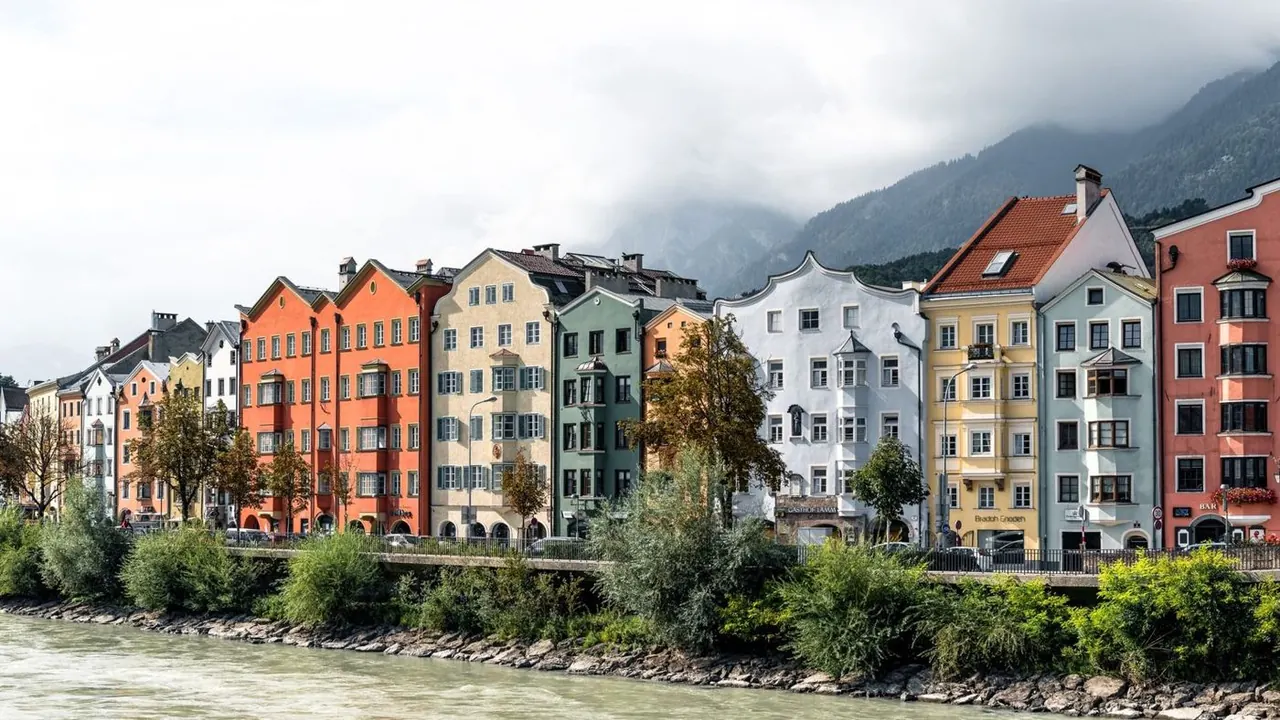
Photos: Bled by Philipp Schwarz, Pexels License; Innsbruck by Wolfgang Weiser, Pexels License.
Bled or Innsbruck?
Our verdict in twelve categories, each scored against the same fixed benchmark cities, and the climate month by month, so you can choose for your trip.
Choose Bled for
- beaches
- wellness
- prices
Bled is the better pick for a slow, scenic stay built around one lake. You swim from the lidos in summer, row out to the island, walk the shore path and use the village as a base for Triglav National Park, Ljubljana and the Slovenian coast. There is almost nothing to do after dark, and for many people who go, that quiet is the point.
Choose Innsbruck for
- live music and the arts
- culture and sights
- nightlife
Choose Innsbruck if you want a proper town with the high mountains attached. The old town, the Hofkirche and Ambras Castle give you a few days of sightseeing. The bars under the railway viaduct and the Landestheater fill the evenings, and the funicular and cable cars take you into serious Alpine terrain from a coffee in the centre, with no car needed.
Scoreboard
Twelve categories on one fixed scale from 0 to 100. The shaded stretch is the gap between the two.
Your match
Pick a travel style or drag the sliders, and both match scores follow your weighting.
Wins on beaches and wellness with your weighting.
Wins on live music and the arts and culture and sights with your weighting.
What matters to you?
Category by category
What the scores mean for a trip.
Beaches & swimming
Neither has a sea, but Bled is much the better place to swim. Lake Bled warms to around 24°C in high summer and is the heart of the place. You can bathe below the castle cliff, paddle in the shallow water near Velika Zaka or swim out to the island, and Bohinj adds wilder pebble shores nearby.
In Innsbruck, swimming is a side trip. The small Lanser See and Natterer See on the plateaus above town are warm enough on a hot afternoon, but the beautiful Achensee stays cool for most swimmers.
Food & drink
Both serve hearty mountain cooking, but Innsbruck gives you more to choose from. On top of Gröstl, Kaspressknödel and Kaiserschmarrn, it has old-town inns, Viennese-style coffee houses, cheaper student places and huts reached by cable car. That is enough for a week of meals, even if none of it is ambitious.
Bled runs out sooner. Beyond a kremšnita on a lakeside terrace and some trout or žlikrofi, the choice is mostly hotel dining rooms and pizzerias. The better cooking is in the farm inns out in the valleys or down in Ljubljana.
Culture & sights
Bled's sights make one very pretty day: the castle on its cliff with the view down to the island, then a pletna boat out to the baroque church and its wishing bell.
Innsbruck has the heritage of a Habsburg seat packed into a small old town. The Golden Roof, the Hofburg and the Hofkirche, with Maximilian I's tomb and its ring of bronze figures, are a few minutes' walk apart. Ambras Castle on the edge of town adds a cabinet of curiosities and an armour collection, enough for two or three full days.
Nightlife
Bled has no night out to speak of, while Innsbruck has a small one. In Bled the evening ends with a drink on a terrace and a walk along the lit shore, and the village is asleep well before midnight.
Innsbruck's university fills the bars and small clubs in the brick arches under the railway viaduct, which stay open late at weekends. In winter, après-ski in the nearby resorts takes over.
Nature & outdoors
For both, the mountains are the main reason to come. Bled has the gentler, more compact version: the level lake circuit, short steep climbs to Ojstrica and Osojnica, the Vintgar Gorge, and Bohinj and Pokljuka within half an hour in Triglav National Park.
Innsbruck goes bigger and higher. From the old town you can be on the Nordkette ridge, at about 2,300m, in under half an hour, and the Karwendel begins behind it. The Stubai Glacier holds snow for most of the year, and the ski areas, via ferratas and hut-to-hut routes are on a larger scale than anything around Bled.
Day trips
Both make good bases, but the trips differ in kind. From Bled you explore a small country: Ljubljana in under an hour, medieval Radovljica, the Postojna cave and Predjama Castle, and Piran on the Adriatic, with Austrian Carinthia and Italian Friuli also within reach.
From Innsbruck the trains do more of the work and the range is wider. Hall in Tirol is ten minutes away, Munich and Salzburg are a little under two hours, and Bolzano and Merano lie over the Brenner Pass. Neuschwanstein is a drive away.
Good for families
Families do about equally well, and in both towns the fun is outdoors rather than at attractions. Bled gives children a rowing boat to the island, the wishing bell to ring, shallow lidos, and the toboggan run and rope park on Straža hill.
Innsbruck has the Alpenzoo with its ibex, bears and lynx, reached by funicular, plus adventure trails by the mountain huts and the play tower at the Swarovski Crystal Worlds. In both, a rainy day with small children takes planning.
Getting around
Both centres are easy to walk, but Innsbruck is far easier without a car. Trams and buses cover the city and reach Igls and the Stubai valley. The funicular to the mountains starts at the edge of the old town, and the central station has trains along the valley.
Bled is simple around the lake, and buses run to Ljubljana and Bohinj. Its train stations are outside the centre, though, and the trailheads, Pokljuka and the Vršič pass are poorly served, so most visitors who want to see the Julian Alps hire a car.
Shopping & style
Shopping is no reason to visit either, but Innsbruck at least fills an afternoon. There are chains on Maria-Theresien-Strasse, loden jackets, dirndls and woodcarvings in the old-town arcades, and excellent outdoor and ski shops if you need gear. Bled has a few stalls by the lake selling honey, lace and painted beehive panels, and little else.
Affordability
Bled comes out slightly cheaper, mostly because there are cheaper beds close by. The village costs more than the rest of Slovenia, but guesthouses in the nearby villages, the campsite at the western end of the lake or a room in Radovljica or Bohinj bring the bill down. The lake path and viewpoints cost nothing.
Innsbruck has Western European prices with an Alpine premium on top, and cable car tickets add up on an active trip, though the city and guest cards help. It is cheapest in spring and autumn, while Bled is most expensive in July and August.
Live music & performing arts
Innsbruck has a real season and Bled does not. The Tiroler Landestheater stages opera, drama and dance, the Tyrolean Symphony Orchestra plays in the congress hall, and the summer Festival of Early Music uses historic settings such as the Spanish Hall at Ambras Castle.
In Bled there are only occasional summer concerts in the castle or the churches, and folk evenings put on for visitors. Anything more means a trip to Ljubljana.
Wellness & relaxation
Bled has the stronger claim here. It began as a nineteenth-century health resort under Arnold Rikli, warm springs feed the eastern end of the lake, and the large lakeside hotels use that water in their pools, which outside guests can sometimes use too. Early walks around still water do the rest.
Innsbruck has no springs or baths of its own. Its version of wellness is a hotel sauna in Igls or the plateau villages after a day on the mountain, with the big thermal spas of the Ötztal and Zillertal about an hour away.
When should you go?
Pick your month. The climate figures are measured averages, not a forecast.
Bled in July
Innsbruck in July
Daytime high, °C
Rainfall in the month, mm
Where the figures come from
Bled's temperatures are measured 36 km from the centre, at Klagenfurt.
Bled has no rain gauge within 25 km of the centre, so its rainfall comes from a gridded climate dataset read at the city rather than from a gauge further away.
Temperature and rainfall are climate normals, averaged over the years shown. Bled: 1991-2020 normals, Klagenfurt (35.5 km from centre). Innsbruck: 1991-2020 normals, Innsbruck-Flughafen (3.3 km from centre).
Through the warm months the two run almost in step. Highs reach about 21°C in May and peak in July, slightly warmer in Bled at 27°C, and July and August are the real window for swimming in the lakes. Summer is also wet in both, with August at around 150mm, so expect wet days along with the warmth. Bled gets more sunshine in midsummer. For walking, May and September are the most comfortable months, warm without the midsummer heat. September stays wet in Bled, though, while Innsbruck is noticeably drier by then.
Late autumn and winter are where they differ. Bled is colder, with January highs around 1°C against 4°C, and in November and December it gets much less sun than Innsbruck. It also stays wet through October and November, while Innsbruck dries out sooner. Bled is driest in January and February, which makes cold, quiet lakeside walks possible, but Innsbruck is the more pleasant choice for a winter town visit.
Which traveller are you?
On a beach and sun trip, Bled is the clear choice. In July and August the lake is warm enough for long swims from lidos and wooden piers, even out to the island. In Innsbruck, swimming means an afternoon at a small plateau lake.
For a culture and arts trip, Innsbruck wins easily. The Hofkirche, the Hofburg and Ambras Castle fill two or three days, and the Landestheater and the summer early music festival cover the evenings. Bled's castle and island church take a single day.
On a relaxing and wellness trip, Bled suits better. Its spa-resort past, hotel pools fed by warm springs and slow walks around still water set an easy pace. In Innsbruck, wellness means hotel saunas, with the big thermal spas an hour away.
Before you go
| Measure | Bled | Innsbruck |
|---|---|---|
| Official language | Slovene | German, Austrian Sign Language |
| Currency | Euro (EUR) | Euro (EUR) |
| Sockets | CF230 V, 50 Hz | CF230 V, 50 Hz |
| Driving side | Right | Right |
| Time zone | UTC+1, UTC+2 in summer | UTC+1, UTC+2 in summer |
| Emergency number | 112 | 112 |
| Elevation | 501 m | 574 m |
| Main airport | Ljubljana Jože Pučnik Airport (LJU)31 km from centre32 non-stop destinations | Innsbruck Airport (INN)4 km from centre40 non-stop destinations |
| Public holidays this year | 21 days | 16 days |
By the numbers
| Measure | Bled | Innsbruck |
|---|---|---|
| City population | 4,969 | 132,499 |
| People per km² | 26 | 1,263 |
| Museums within 10 km | 4 | 28 |
| UNESCO World Heritage sites within 50 km | 3 | 1 |
Where else could you go?
Every comparison below shares a destination with this one, so you can follow Bled or Innsbruck somewhere new.