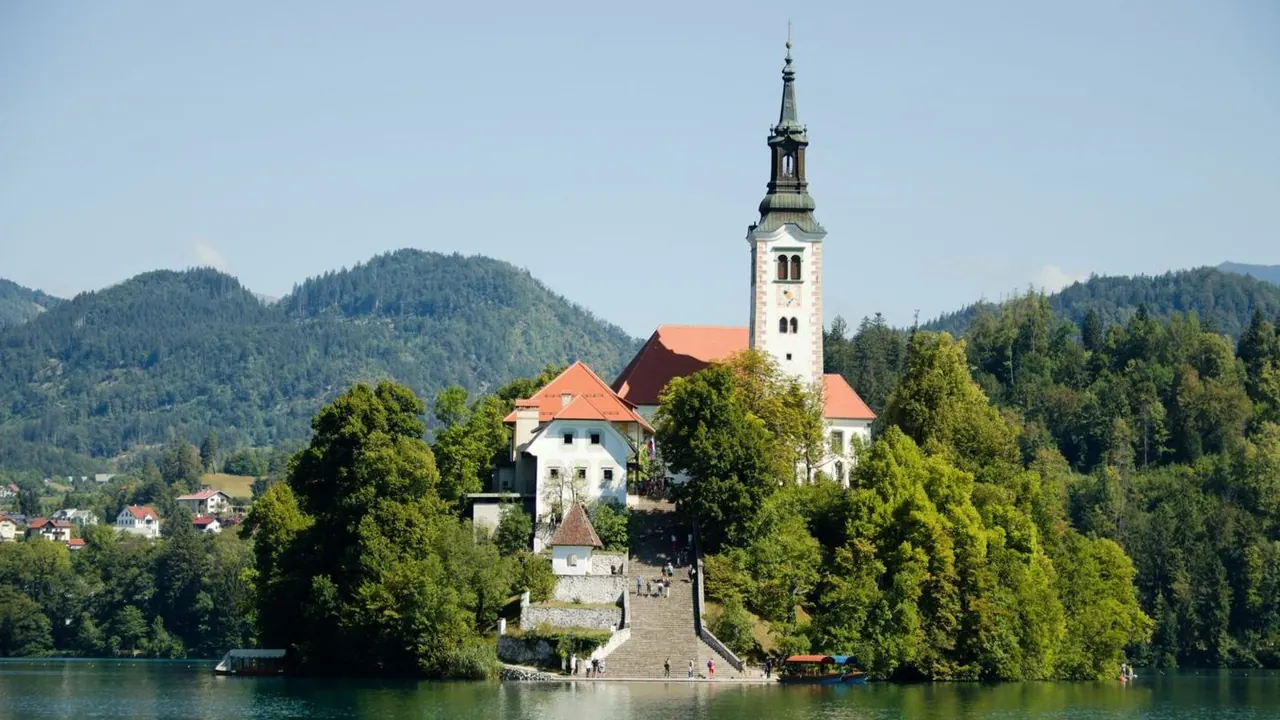
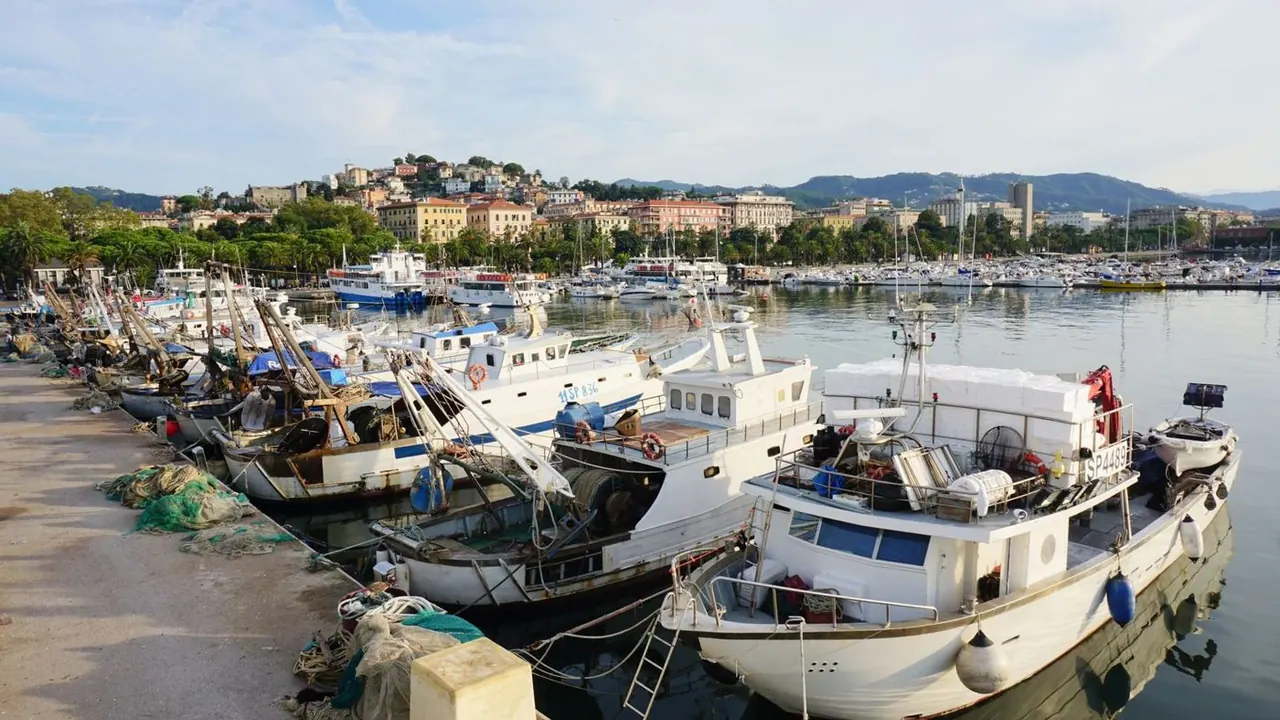
Photos: Bled by Philipp Schwarz, Pexels License; La Spezia by Irina Balashova, Pexels License.
Bled or La Spezia?
Our verdict in twelve categories, each scored against the same fixed benchmark cities, and the climate month by month, so you can choose for your trip.
Choose Bled for
- wellness
- families
- nature and the outdoors
Bled is for travellers who want the mountains right outside the door. Mornings on the lake path, the Vintgar Gorge, and Triglav National Park with Lake Bohinj half an hour away make it a very good base for walkers, active families and anyone who wants a slow, quiet stay. You accept plain food and early nights in return, and Ljubljana covers anything urban.
Choose La Spezia for
- food and drink
- shopping
- nightlife
If your trip is built around the coast and the table, La Spezia makes more sense. The coastal train reaches the Cinque Terre villages in minutes and Pisa and Lucca in about an hour. The sea stays warm enough to swim into autumn, and evenings of farinata, gulf mussels and an aperitivo on Via del Prione give you more to do after dark than Bled can.
Scoreboard
Twelve categories on one fixed scale from 0 to 100. The shaded stretch is the gap between the two.
Your match
Pick a travel style or drag the sliders, and both match scores follow your weighting.
Wins on wellness and families with your weighting.
Wins on food and drink and shopping with your weighting.
What matters to you?
Category by category
What the scores mean for a trip.
Beaches & swimming
La Spezia has the sea, and more variety along it. There are sand and pebble strips at San Terenzo and Lerici, small coves at Fiascherino and Tellaro, very clear rocky water off Portovenere and Palmaria, and Monterosso's long sandy beach a train ride up the coast. Every one of these is an outing, though, and in August the free stretches fill early among the paid bathing establishments.
Bled's swimming is in the lake, from grassy lidos below the castle cliff, from the shallower end at Velika Zaka or straight off the rocks along the path. It is right on the doorstep and pleasantly warm in high summer. The season is shorter than on the Ligurian coast, though, and Bohinj nearby is noticeably colder.
Food & drink
The table is where La Spezia pulls clearly ahead. Its Ligurian cooking has real local character: farinata as the everyday snack, mesciua soup, pesto on trofie and testaroli, rope-grown mussels from the gulf, and Sciacchetrà to finish. The Piazza Cavour market is good for fish and produce. The range is still that of a provincial port, with little fine dining.
Bled has one famous dish, the kremšnita custard slice, eaten on a terrace facing the lake. Beyond that you get hotel dining rooms, pizzerias and inns serving trout and žlikrofi. The better Slovenian meals are out in the valley farm inns or in Ljubljana.
Culture & sights
Neither town is a heritage destination, but La Spezia gives you more to see. The Museo Amedeo Lia's early Italian paintings and ivories, the naval museum by the arsenal and the strange Lunigiana stele statues in Castello San Giorgio fill a day or two. Its Liberty-style arcaded streets tell the story of a nineteenth-century naval city.
Bled's sights are few but very photogenic: the cliff-top castle with its small museum and printing workshop, and the baroque island church reached by pletna boat. Most visitors finish with them in a single day.
Nightlife
La Spezia at least has an evening ritual. Spritz and Vermentino fill Via del Prione, the streets around Piazza Verdi and the promenade, and in summer the crowd moves to the waterfront bars of Lerici and San Terenzo. It still winds down early, with only the occasional club night.
Bled offers less: a drink on a hotel or café terrace, a walk along the lit shore, and a village asleep well before midnight.
Nature & outdoors
Both are outstanding, but in different terrain, and Bled's range gives it the edge. From the village you can walk Vintgar's gorge walkways, climb Ojstrica for the island view, raft or canyon on the Sava, and go deeper into Triglav National Park on hut routes or over the Vršič pass to the Soča. Winter adds skiing on Pokljuka and at Vogel.
La Spezia's draw is sea cliffs rather than peaks. There are the terraced Cinque Terre paths, from the Sentiero Azzurro to the quieter ridge trail, the Palmaria loop past forts and sea caves, and kayaking or diving in the gulf. The marble Apuan Alps are an hour inland, but summer heat and crowds on the coastal paths limit the best seasons to spring and autumn.
Day trips
La Spezia is the stronger base, mainly because of how close everything is. Riomaggiore and Manarola are minutes away by train, and Portovenere is a short boat ride. Sarzana and the Roman ruins of Luni are nearby, and Pisa, Lucca, Carrara and Portofino are all easy days out, with Florence possible if you start early.
Bled has good outings of its own. Ljubljana is under an hour away, medieval Radovljica is just down the road, Postojna's cave and cliff-built Predjama Castle make a full day, and Austria's Wörthersee is through the Karawanks tunnel. Venetian Piran is about two hours away, so the trips are longer, and many of the best ones go easier with a car.
Good for families
Bled is better for families, especially with younger children. They can row a hired boat to the island, ring the wishing bell, paddle at the shallow lidos, and ride the summer toboggan or try the rope park on Straža hill. Older children can manage the Vintgar walkways.
La Spezia is relaxed and safe, with boat trips round Portovenere, the sheltered beaches at San Terenzo and Lerici, and torpedoes at the naval museum. Its main sights, though, are steep villages and long walks reached on crowded summer trains, which suit teenagers better than toddlers. Neither place has a zoo or aquarium to save a rainy day.
Getting around
La Spezia is the easier place to go without a car. Its flat centre puts the station, market and museums within walking distance, trains fan out along the coast and inland, and buses and seasonal ferries cover the gulf. Its weak point is the summer crush on the coastal trains and village platforms.
Bled is just as easy on foot around the lake, and buses and trains from Lesce-Bled or Bled Jezero cover the main valley towns. The mountain trailheads, Pokljuka and the Soča are poorly served, though, so serious exploring usually means hiring a car and fighting for lakeside parking in summer.
Shopping & style
La Spezia's shopping is modest, but it is a real town's shopping. There are chains, shoe shops and some independent boutiques on Via del Prione and Corso Cavour, and edible souvenirs worth carrying home: pesto, olive oil, Sciacchetrà and Monterosso anchovies. Carrara marble pieces are sold in the nearby towns.
Bled has a handful of lakeside stalls selling honey, lace and painted beehive panels, a small supermarket, and not much else. For anything more, people go to Ljubljana.
Affordability
Costs are much the same in both, but the ways to save differ. Bled's view raises the price of lakeside rooms and terraces, so the savings come from staying in Radovljica or Bohinj, renting a village apartment or camping at the western end of the lake. The lake path and trails are free, while the island boat, the castle and the gorge all charge entry.
La Spezia is itself the cheaper option for the Cinque Terre, with rooms well below what the villages ask and inexpensive local trains. Trail passes, boat trips and bathing establishments add up over a stay, and spring and autumn are easier on the budget than summer.
Live music & performing arts
La Spezia has a modest cultural calendar, which is more than Bled has. The Teatro Civico runs a season of theatre and concerts, the small historic Teatro degli Impavidi in nearby Sarzana adds a few more, and summer brings a long-established jazz festival and open-air concerts in piazzas and castle courtyards. For opera you go to Genoa or Pisa.
Bled has no stage of its own. Occasional summer concerts in the castle or churches and folk evenings for visitors are all you can expect, and anything more serious means going to Ljubljana.
Wellness & relaxation
Bled has a real history of rest and cures. Arnold Rikli brought guests here for air and sun cures in the nineteenth century, and warm springs at the eastern end still feed the indoor pools of several lakeside hotel spas, some of which take day guests. Outside the summer peak, the still water and quiet evenings do the rest.
La Spezia has nothing like that in town. You would use a hotel spa or drive an hour to the small baths at Equi Terme. It can still be restful, though, through a long lunch in Tellaro, the quiet of Palmaria or an off-season evening on the seafront.
When should you go?
Pick your month. The climate figures are measured averages, not a forecast.
Bled in July
La Spezia in July
Daytime high, °C
Rainfall in the month, mm
Where the figures come from
Bled's temperatures are measured 36 km from the centre, at Klagenfurt.
Bled has no rain gauge within 25 km of the centre, so its rainfall comes from a gridded climate dataset read at the city rather than from a gauge further away.
La Spezia's temperatures are measured 65 km from the centre, at Pisa / S. Giusto.
La Spezia has no rain gauge within 25 km of the centre, so its rainfall comes from a gridded climate dataset read at the city rather than from a gauge further away.
Temperature and rainfall are climate normals, averaged over the years shown. Bled: 1991-2020 normals, Klagenfurt (35.5 km from centre). La Spezia: 1991-2020 normals, Pisa / S. Giusto (64.8 km from centre).
The two climates are close to opposites. Bled has a real winter, with daytime highs around freezing in December and January. That suits skiers on Pokljuka and Vogel, but it is bitter for strolling the shore. Summer peaks at about 27°C in July, warm enough for lake swimming from late June to early September. It is also a wet time of year, with about 152mm in August, much of it as mountain showers. Late May, June and September are the most comfortable months for hiking.
La Spezia is mild all winter and gets properly hot in summer, at about 30°C in July and August. That heat can make the coastal paths hard going. Summer is also its dry season, and the sea reaches about 25°C in August, so June to early October is the beach window. The rain comes in autumn, peaking at about 151mm in November. For walking the Cinque Terre, April, May and late September are the best balance.
Which traveller are you?
On a family trip with young children, choose Bled. It is a calm, safe village where the day's fun starts at the hotel door, while La Spezia's best outings ask for walking stamina and patience with crowds that toddlers rarely have.
For a relaxing and wellness trip, Bled is the better pick. Rest has been its business since it began as a resort, and the whole place slows down outside summer. La Spezia can be restful, but it has no spa culture of its own.
For a food and nightlife trip, La Spezia wins easily. Bled offers one famous cake and an early night. La Spezia has a regional kitchen worth exploring meal by meal and an aperitivo hour that fills the streets, though not much clubbing.
Before you go
| Measure | Bled | La Spezia |
|---|---|---|
| Official language | Slovene | Italian |
| Currency | Euro (EUR) | Euro (EUR) |
| Sockets | CF230 V, 50 Hz | CFL230 V, 50 Hz |
| Driving side | Right | Right |
| Time zone | UTC+1, UTC+2 in summer | UTC+1, UTC+2 in summer |
| Emergency number | 112 | 112 |
| Elevation | 501 m | 3 m |
| Main airport | Ljubljana Jože Pučnik Airport (LJU)31 km from centre32 non-stop destinations | Pisa International Airport (PSA)65 km from centre82 non-stop destinations |
| Public holidays this year | 21 days | 13 days |
By the numbers
| Measure | Bled | La Spezia |
|---|---|---|
| City population | 4,969 | 92,119 |
| People per km² | 26 | 1,792 |
| Museums within 10 km | 4 | 12 |
| UNESCO World Heritage sites within 50 km | 3 | 2 |
| Swim season, months above 21 °C | - | 4 months |
Where else could you go?
Every comparison below shares a destination with this one, so you can follow Bled or La Spezia somewhere new.