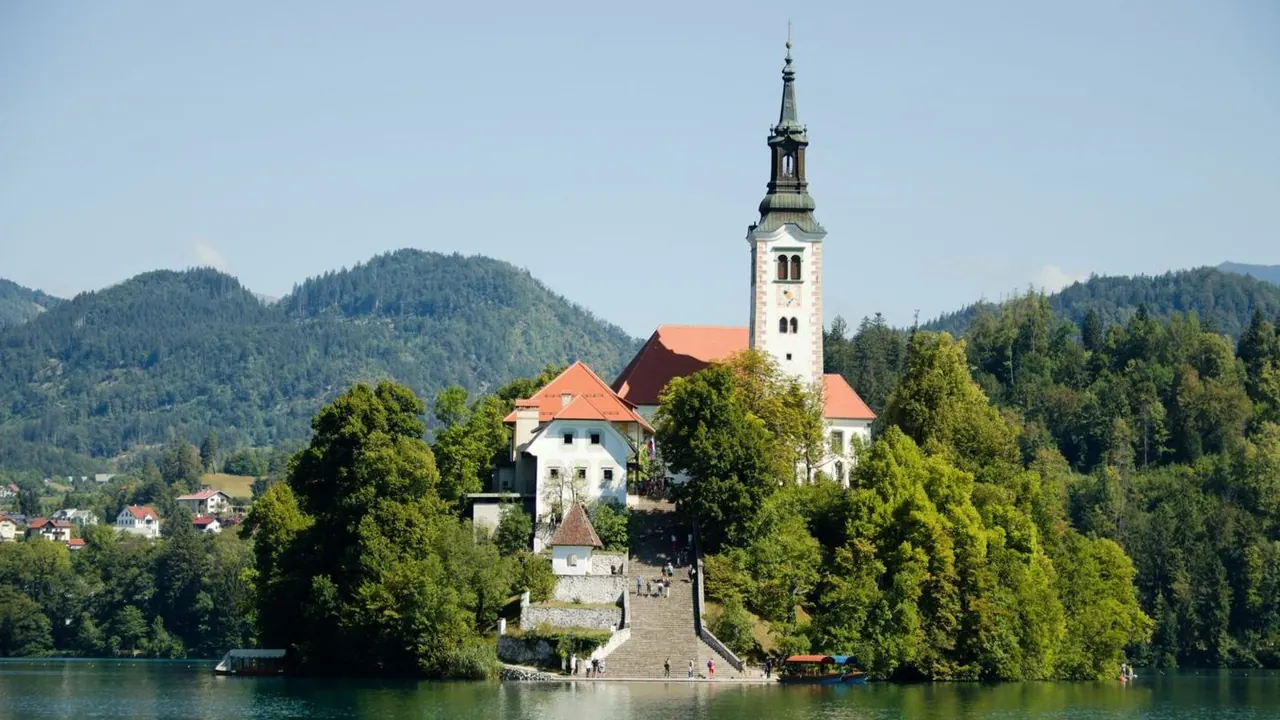
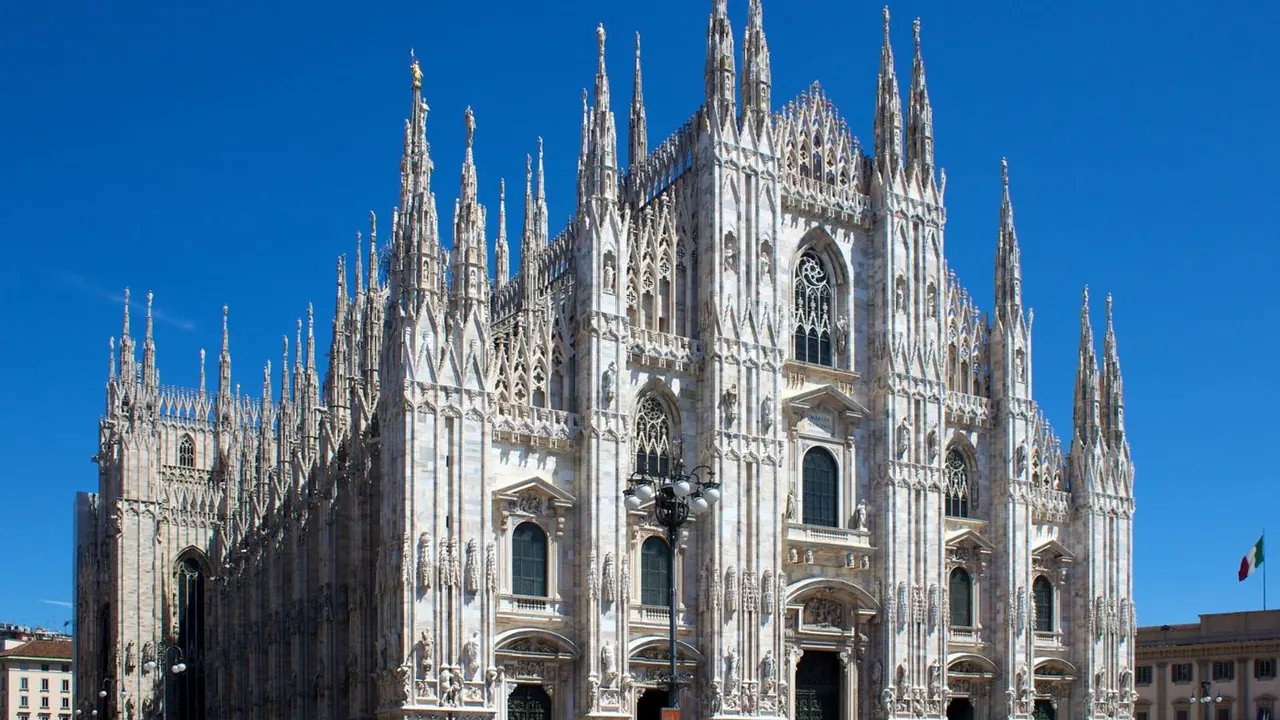
Photos: Bled by Philipp Schwarz, Pexels License; Milan by Jiuguang Wang, CC BY-SA 3.0, cropped.
Bled or Milan?
Our verdict in twelve categories, each scored against the same fixed benchmark cities, and the climate month by month, so you can choose for your trip.
Choose Bled for
- beaches
- nature and the outdoors
- wellness
Bled is for travellers who want mountains, water and quiet. It sits where the Julian Alps begin, with Triglav National Park, the Vintgar Gorge and Lake Bohinj close by and a lake warm enough to swim in during summer. Evenings mean a terrace and a stroll along the shore. The point of a trip here is a few days of walking, rowing and hiking, not a busy city schedule.
Choose Milan for
- shopping
- live music and the arts
- nightlife
Milan rewards people who come for the city itself. It has Leonardo's Last Supper, the Duomo roof, opera at La Scala, aperitivo along the Navigli and the fashion houses of the Quadrilatero. It costs more, and its countryside only starts an hour away at the lakes. But for food, shopping, culture and a night out, Bled has almost nothing to set against it.
Scoreboard
Twelve categories on one fixed scale from 0 to 100. The shaded stretch is the gap between the two.
Your match
Pick a travel style or drag the sliders, and both match scores follow your weighting.
Wins on beaches and nature and the outdoors with your weighting.
Wins on shopping and live music and the arts with your weighting.
What matters to you?
Category by category
What the scores mean for a trip.
Beaches & swimming
Neither city is on the sea, but Bled has its swimming on the doorstep. From late June to early September you can swim in the lake from the lidos below the castle, the shallows near Velika Zaka or the rocks along the path. Colder, wilder Bohinj is also close.
In Milan, swimming means the Idroscalo basin, the public pools, or a train of about an hour to Como or Maggiore. A swim there is a planned day out, not something you fit in before lunch.
Food & drink
This is one of the widest gaps between the two. In Bled you eat kremšnita on a lake terrace, trout, žlikrofi and buckwheat dishes in a few inns, and otherwise hotel dining rooms and pizzerias. The better cooking is out in the farm inns of the valleys.
Milan has its own rich, butter-based cooking of saffron risotto, ossobuco and cotoletta. It also has food from every Italian region, serious fine dining and the ritual of aperitivo in Brera, Isola and along the Navigli. Someone who travels to eat will run out of options in Bled within two days, but not in Milan.
Culture & sights
Bled's sights fit into a single day: the clifftop castle with its small museum and printing workshop, the pletna boat to the island church and its wishing bell, and the old spa villas along the shore. They are lovely to look at but slight.
Milan has works of world rank. There is the Last Supper, the Duomo with its rooftop spires, the Brera picture gallery and Michelangelo's Rondanini Pietà in the Castello Sforzesco. Its heritage sits in clusters within a modern city, but there is enough for several full days.
Nightlife
After dinner, Bled offers a drink on a hotel terrace and a walk along the lit shore, and the village goes quiet well before midnight. Milan's evenings start with aperitivo and carry on along the Navigli towpaths, in the relaxed bars of Isola and Porta Venezia, and in the dressy clubs around Corso Como. Anyone in Bled who wants a real night out has to go to Ljubljana.
Nature & outdoors
In Bled the outdoors starts at the hotel door. There is the lake circuit, the steep climb to Osojnica, the Vintgar Gorge walkways and Triglav National Park within half an hour. On top of that come canyoning on the Sava, paragliding, and skiing on Pokljuka and at Vogel in winter.
Milan sits on the flat Po plain, and its green space is Parco Sempione and the canal towpaths. The walking on the Grigne ridges above Lecco or around Como and Maggiore is good, but it takes a train ride to reach. From Milan the mountains are an outing, while in Bled they are all around you.
Day trips
Both make good bases, but Milan's rail links put much more within reach. Bergamo, Verona and Turin are all about an hour away by train. Bologna, Mantua, the Certosa di Pavia, the Borromean Islands and Lugano are also easy days out, all without a car.
Bled's trips cover a smaller country and often need the road. Ljubljana is under an hour away and Radovljica is next door. Postojna cave, Predjama Castle, Piran on the Adriatic and the Austrian Wörthersee each take a full day, and several are easier with a hire car.
Good for families
The two are about equally good for children, in different ways. Bled is an outdoor village, with rowing to the island, the church bell, shallow lidos, the toboggan run and rope park on Straža, and a lake path you can push a pushchair along. It has little to fill a rainy day.
Milan has the rainy-day options Bled lacks: the science and technology museum with its submarine, and the small aquarium by Parco Sempione. Theme parks such as Leolandia and Gardaland are also within reach. On the other hand, its summer heat is heavy and its great sights mostly appeal to adults.
Getting around
In Bled you mostly walk. The village is small and the shore path ties the whole lake together, so for the first day or two a car is of no use. The trouble starts when the plan turns to the mountains. Buses and the Bohinj railway line reach the obvious places, but Pokljuka, the Vršič pass and the Soča valley are poorly served, and most visitors who want them end up hiring a car or booking transfers.
Milan is much easier to manage without a car. You can walk across the centre, and where walking stops, the metro and trams take over and are simple to use from the first morning. Its trains also run straight out to the lakes and towns around it, so you can reach by rail the places that need a hire car from Bled. The main drawbacks are a stuffy metro in high summer and the long trip in from Malpensa.
Shopping & style
Milan is a fashion capital. The great Italian houses line Via Montenapoleone and Via della Spiga, there are old shops in the Galleria and La Rinascente beside the Duomo, vintage shops in Porta Ticinese and design showrooms across the city. Bled has a few lakeside stalls selling honey, lace and painted beehive panels, and for anything more you go to Ljubljana. On this count the two cannot really be compared.
Affordability
A stay in Bled costs less than one in Milan, as long as you stay away from the lakefront. Hotels looking out on the island and the terrace restaurants charge for the view, most of all in July and August. Guesthouses in the surrounding villages, the campsite at the western end of the lake, or a room in Radovljica or Bohinj bring the bill down, and the lake path, viewpoints and trails cost nothing.
Milan is dearer again, with hotel prices high even by Italian standards. Rooms become very hard to find at fair rates during the trade fairs and fashion weeks, and meals in Brera or near the Duomo add up quickly. Aperitivo snacks in place of a light supper, the set lunches aimed at office workers and a room near a metro stop outside the centre all help.
Live music & performing arts
Milan has La Scala, one of the world's great opera houses, whose season opens each December on the feast of Sant'Ambrogio. It also has the Piccolo Teatro, a symphony orchestra at the Auditorium and big summer concerts at San Siro. Bled has no theatre or concert hall, only occasional summer concerts in the castle or churches and folk evenings put on for visitors, so for opera from Bled you go to Ljubljana.
Wellness & relaxation
Bled is the better place to slow down. It grew up as a health resort in the nineteenth century under Arnold Rikli, and mild springs at the eastern end of the lake supply the hotel spas. Early walks beside the still water set an unhurried pace, especially outside high summer.
Milan is a working city where you have to look for rest. It has a thermal spa complex south of the centre, a few hotel spas and the 1930s open-air pools of the Bagni Misteriosi. For real calm, most visitors leave for the lakes, which is the kind of quiet Bled has on its doorstep.
When should you go?
Pick your month. The climate figures are measured averages, not a forecast.
Bled in July
Milan in July
Daytime high, °C
Rainfall in the month, mm
Where the figures come from
Bled's temperatures are measured 36 km from the centre, at Klagenfurt.
Bled has no rain gauge within 25 km of the centre, so its rainfall comes from a gridded climate dataset read at the city rather than from a gauge further away.
Milan has no rain gauge within 25 km of the centre, so its rainfall comes from a gridded climate dataset read at the city rather than from a gauge further away.
Milan's sunshine is measured 41 km from the centre, at Novara / Cameri.
Temperature and rainfall are climate normals, averaged over the years shown. Bled: 1991-2020 normals, Klagenfurt (35.5 km from centre). Milan: 1991-2020 normals, Milano / Linate (8 km from centre).
Bled has a short, clear summer. From late June to early September, days reach about 27°C and the lake is warm enough to swim. This is also the sunniest stretch, though autumn is wetter, with August bringing around 152mm of rain. May and September suit hiking, with cool mornings and pleasant days. Winter is properly Alpine, around 1°C by day in January, which suits skiing on Pokljuka or at Vogel better than walking around the lake.
Milan is warmer for most of the year and gets hot and humid in high summer, near 30°C in July, which makes long afternoons on foot tiring. Its wettest time is autumn, peaking around 128mm in November. Spring and early autumn are the most comfortable months for walking the centre. Winters are grey and chilly but milder than Bled's, so Milan is the better choice from late autumn to early spring and Bled the better one from June to September.
Which traveller are you?
On an outdoors trip, choose Bled. Triglav National Park, the Vintgar Gorge, Lake Bohinj and hut-to-hut routes are all within about half an hour, along with rafting on the Sava and paragliding. Milan's mountains need a train ride first.
For a shopping trip, Milan is in another league. The flagships on Via Montenapoleone, La Rinascente beside the Duomo, the boutiques of Brera and the design showrooms make shopping a reason to go. Bled has lakeside gift stalls and little more.
On a food and nightlife trip, Milan wins easily. It has risotto, ossobuco and cotoletta, aperitivo along the Navigli and bars and clubs late into the night. Bled has kremšnita, hotel dining rooms and a village that is asleep before midnight.
Before you go
| Measure | Bled | Milan |
|---|---|---|
| Official language | Slovene | Italian |
| Currency | Euro (EUR) | Euro (EUR) |
| Sockets | CF230 V, 50 Hz | CFL230 V, 50 Hz |
| Driving side | Right | Right |
| Time zone | UTC+1, UTC+2 in summer | UTC+1, UTC+2 in summer |
| Emergency number | 112 | 112 |
| Elevation | 501 m | 138 m |
| Main airport | Ljubljana Jože Pučnik Airport (LJU)31 km from centre32 non-stop destinations | Milan Malpensa International Airport (MXP)40 km from centre208 non-stop destinations |
| Public holidays this year | 21 days | 13 days |
By the numbers
| Measure | Bled | Milan |
|---|---|---|
| City population | 4,969 | 1,354,196 |
| People per km² | 26 | 7,453 |
| Museums within 10 km | 4 | 88 |
| UNESCO World Heritage sites within 50 km | 3 | 4 |
Where else could you go?
Every comparison below shares a destination with this one, so you can follow Bled or Milan somewhere new.