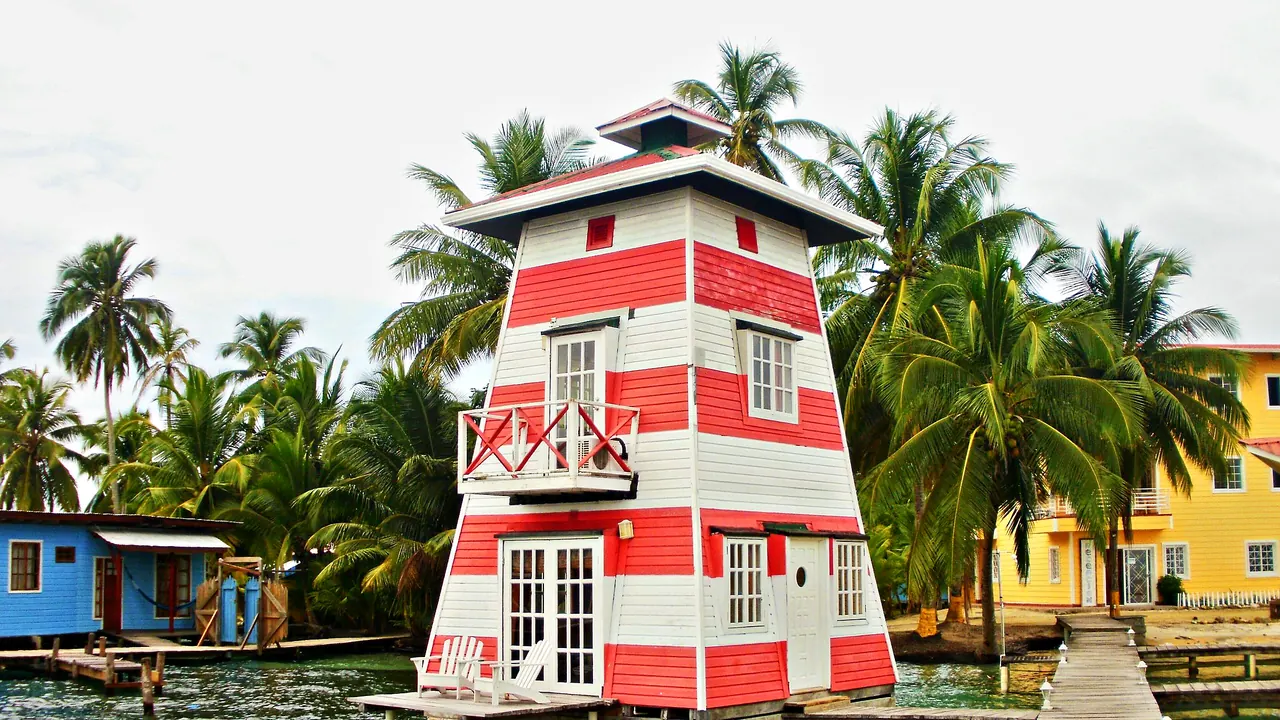
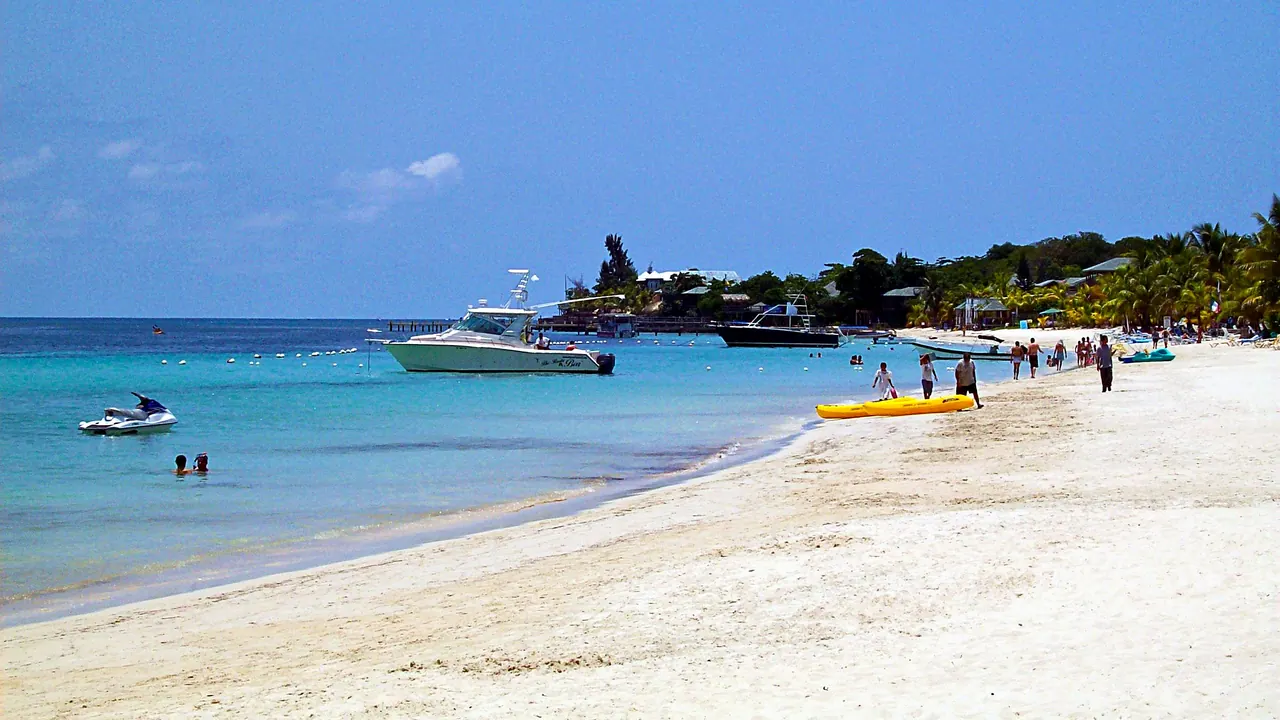
Photos: Bocas del Toro by hh oldman, CC BY 3.0, cropped; Roatán by Adalberto Hernandez Vega from Copan Ruinas, Honduras, CC BY 2.0, cropped.
Bocas del Toro or Roatán?
Our verdict in twelve categories, each scored against the same fixed benchmark cities, and the climate month by month, so you can choose for your trip.
Choose Bocas del Toro for
- nightlife
- prices
- culture and sights
Bocas del Toro suits travellers who want the islands to feel like a small expedition: water taxis between rainforest cays, sloths and red poison dart frogs on Bastimentos, winter reef breaks for surfers, and a town whose pier bars keep going late. Backpackers will find it the cheaper base. Its stilted wooden town and Ngäbe villages also give it a little more character. In return you get rain in most months, and every good beach needs a boat ride.
Choose Roatán for
- beaches
- families
- nature and the outdoors
Roatán is the easier choice for a beach-and-reef vacation. West Bay has calm, clear water with coral a short swim from the sand, the dive sites on the Mesoamerican Barrier Reef are minutes away by boat, and families with children settle in more easily. Evenings end early and the resort end of the island costs more. The payoff is a real dry season in spring, which Bocas never quite has.
Scoreboard
Twelve categories on one fixed scale from 0 to 100. The shaded stretch is the gap between the two.
Your match
Pick a travel style or drag the sliders, and both match scores follow your weighting.
Too close to call, 1 point apart
Wins on nightlife and prices with your weighting.
Wins on beaches and families with your weighting.
What matters to you?
Category by category
What the scores mean for a trip.
Beaches & swimming
Roatán has the stronger beaches, and the reason is West Bay. It is a long stretch of pale sand on calm, clear water, with coral close enough to swim out to, and you can be in the sea a few steps from your room. Half Moon Bay in West End is a smaller, sheltered option, though West Bay fills up on cruise-ship days.
Bocas del Toro has fine beaches but treats them as excursions. Bocas Town has no beach of its own, so a beach day usually starts with a water taxi to Cayos Zapatilla, Red Frog or Starfish Beach. Many of the north-facing beaches are too rough for comfortable swimming.
Food & drink
The two eat about equally well, from the same Afro-Caribbean kitchen of fish and coconut. Bocas del Toro leans towards rondón-style lobster, rice and beans and Johnny cake, with a backpacker spread of sushi, Thai and juice bars along the water in Bocas Town. Cacao-farm chocolate tastings add something Roatán lacks.
On Roatán the local dishes to look for are Garifuna tapado and machuca on the north coast and baleadas from roadside stalls. In West End and West Bay, menus aim more at North American divers and resort guests.
Culture & sights
Neither is a sightseeing destination, but Bocas del Toro has a little more to look at. Bocas Town's painted stilt houses recall its banana-port years, Old Bank on Bastimentos keeps its Creole feel, and you can visit Ngäbe villages on the lagoon.
Roatán's heritage lies mostly in its people: the English-speaking Bay Islanders and the Garifuna of Punta Gorda. Add a small island museum and the stilt village of Oak Ridge, and that is about all there is to see.
Nightlife
Bocas del Toro is the clear choice for going out. Bocas Town is a fixture on the Central American backpacker circuit, with bars on piers over the water every night, theme nights that move between venues, water taxis to island bars and weekend boat parties. It is loud and young, and it runs late.
Roatán is more of a sunset-drinks island. West End's dock bars get busy around dusk and stay lively on party nights, but there are no real clubs. The many divers with early starts keep the island quiet by city standards.
Nature & outdoors
Roatán edges ahead because of what lies underwater. It sits on the Mesoamerican Barrier Reef, with coral walls, wrecks and swim-throughs a few minutes from shore in clear water, and it is a classic place to learn to dive. Above water there is little beyond green hills and some mangrove paddling.
Bocas del Toro spreads its nature more evenly between land and sea. Rainforest on Bastimentos holds poison dart frogs, sloths and howler monkeys, dolphins feed off Isla Cristóbal, night trips show bioluminescence, and winter brings real surf. Its reefs are good for snorkelling, but the coral is patchier than Roatán's.
Day trips
Day trips are limited on both, and almost all go by boat. From Bocas del Toro the outings are short hops to Old Bank, Carenero, Ngäbe communities and mainland cacao farms. Costa Rica's Caribbean towns are better treated as the next stop than as a day trip.
Roatán's best day out is a different island, Utila, which has its own harbour village and dive scene. The Cayos Cochinos, with a Garifuna fishing village, make a longer excursion. The famous Maya ruins at Copán are too far for a day.
Good for families
Roatán is the easier choice for families. West Bay's calm, shallow water lets children snorkel among fish right off the beach, and glass-bottom boats, zip-lines and small animal parks can all be booked from the resorts. Bring strong repellent for the sand flies.
Bocas del Toro works for older children who love wildlife and boats. They can see sloths, dolphins and sea stars at Starfish Beach. However, every outing means a small open boat, the crossings can get rough, and the party crowd sets the tone in town, so a lagoon lodge suits families better.
Getting around
Getting around is about equally easy on both, but in different ways. In Bocas del Toro the water taxi is the bus: launches leave the Bocas Town docks all day and reach the other islands in minutes, though the ride can be wet in bad weather. Isla Colón itself has one road to Bluff Beach and Boca del Drago.
Roatán is a road island. One paved road runs along its spine, served by minibuses and taxis, and you agree the taxi fare before setting off. Exploring the hilly, unlit east usually calls for a car or a scooter. Arrival is also simpler, since the airport sits close to the western beaches.
Shopping & style
Both are places to pack well rather than shop. Bocas del Toro's best finds are Ngäbe chácara bags, beadwork and local chocolate. Roatán offers carved mahogany, hammocks, shell jewellery and a few galleries of local painting, sold near the cruise piers and in West End.
Affordability
Bocas del Toro is kinder to a small budget. Dorms, simple guesthouses, local meals and water taxis all cost little. The money goes on boat tours to the marine park and on the eco-lodges and overwater cabins of the outer islands.
Roatán is pricier than the rest of Honduras and close to wider Caribbean prices at the West Bay resorts. West End is the cheap corner of the island. Divers do well, because courses and fun dives are among the cheapest in the region.
Live music & performing arts
Neither has any formal stage. In Bocas del Toro, live music means reggae and calypso sets in town bars and drumming at local celebrations. Roatán has the more distinctive tradition: Garifuna drumming and the fast punta dance, best seen in Punta Gorda.
Wellness & relaxation
For unwinding the two are evenly matched, since both rely on setting rather than any spa tradition. In Bocas del Toro, calm means staying out on Bastimentos, Isla Solarte or the lagoon, with yoga decks and the sound of rain, and keeping away from the noise of town.
On Roatán, the West Bay resort spas and massages under the palms give the easier pampering. The eastern coves, away from the cruise traffic, offer real silence.
When should you go?
Pick your month. The climate figures are measured averages, not a forecast.
Bocas del Toro in July
Roatán in July
Daytime high, °C
Rainfall in the month, mm
Where the figures come from
Bocas del Toro has no weather station within reach, so its figures come from a gridded climate model rather than a measured record, and read a broad area rather than one spot.
Roatán's temperatures are measured 69 km from the centre, at La Ceiba Airport.
Roatán has no rain gauge within 25 km of the centre, so its rainfall comes from a gridded climate dataset read at the destination rather than from a gauge further away.
Temperature and rainfall are climate normals, averaged over the years shown. Bocas del Toro: 1991-2020 normals, TerraClimate 4 km grid at the town, no weather station within 90 km. Roatán: 1991-2020 normals, La Ceiba Airport (69 km from centre).
Both are hot all year, and the sea is warm enough to swim in every month. Bocas del Toro stays close to 30°C year-round. The real difference between them is the rain. Bocas has no proper dry season. February and March are the lightest months, with February at about 121mm. September is another good window, when the sea tends to be calmest and clearest. May to July and November to December are very wet. Surfers should aim for December to March, when the swells arrive, and accept the rain that comes with them.
Roatán has a clearer pattern and gets hotter in the middle of the year, reaching 32°C from May to September. From February to September it is much drier, with April at only about 56mm, and spring is its sunniest stretch. In the summer heat, walking around at midday is hard going, though beach days stay easy. October to December is the time to avoid, with close to 400mm a month and less sun, and January is still wet. If you want reliably dry weather, Roatán in spring beats anything Bocas can offer.
Which traveller are you?
For a beach and sun trip, Roatán is the better pick. West Bay gives you a long, calm beach right outside the door, with snorkelling straight off the sand. In Bocas del Toro the best sand lies on islets and outer islands that you reach by water taxi.
For a food and nightlife trip, go to Bocas del Toro. The two islands eat about equally well, both on coconut-based seafood. The difference is after dark: Bocas Town has nightly pier bars and weekend boat parties, while Roatán's West End winds down early before the morning dives.
On a trip with a tight budget, Bocas del Toro stretches your money further. Dorms, local plates of rice, beans and fish, and water taxis all cost little. Roatán's West End can be done cheaply too, but most of the island is priced for resort guests.
Before you go
| Measure | Bocas del Toro | Roatán |
|---|---|---|
| Official language | Spanish | Spanish |
| Currency | Balboa (PAB) | Lempira (HNL) |
| Sockets | AB110 V, 60 Hz | AB110 V, 60 Hz |
| Driving side | Right | Right |
| Time zone | UTC-5 | UTC-6 |
| Emergency number | 911 | Police 199, ambulance 199, fire 198 |
| Main airport | Bocas del Toro "Isla Colón" International Airport (BOC)3 non-stop destinations | Juan Manuel Gálvez International Airport (RTB)16 non-stop destinations |
| Public holidays this year | 14 days | 11 days |
By the numbers
| Measure | Bocas del Toro | Roatán |
|---|---|---|
| Population | - | 41,831 |
| People per km² | - | 327 |
| Swim season, months above 21 °C | 12 months | 12 months |
Where else could you go?
Every comparison below shares a destination with this one, so you can follow Bocas del Toro or Roatán somewhere new.
- Caye Caulkervs Roatán
- Ambergris Cayevs Roatán
- Guanacastevs Bocas del Toro
- Cozumelvs Roatán
- Riviera Mayavs Roatán
- Caye Caulkervs Bocas del Toro