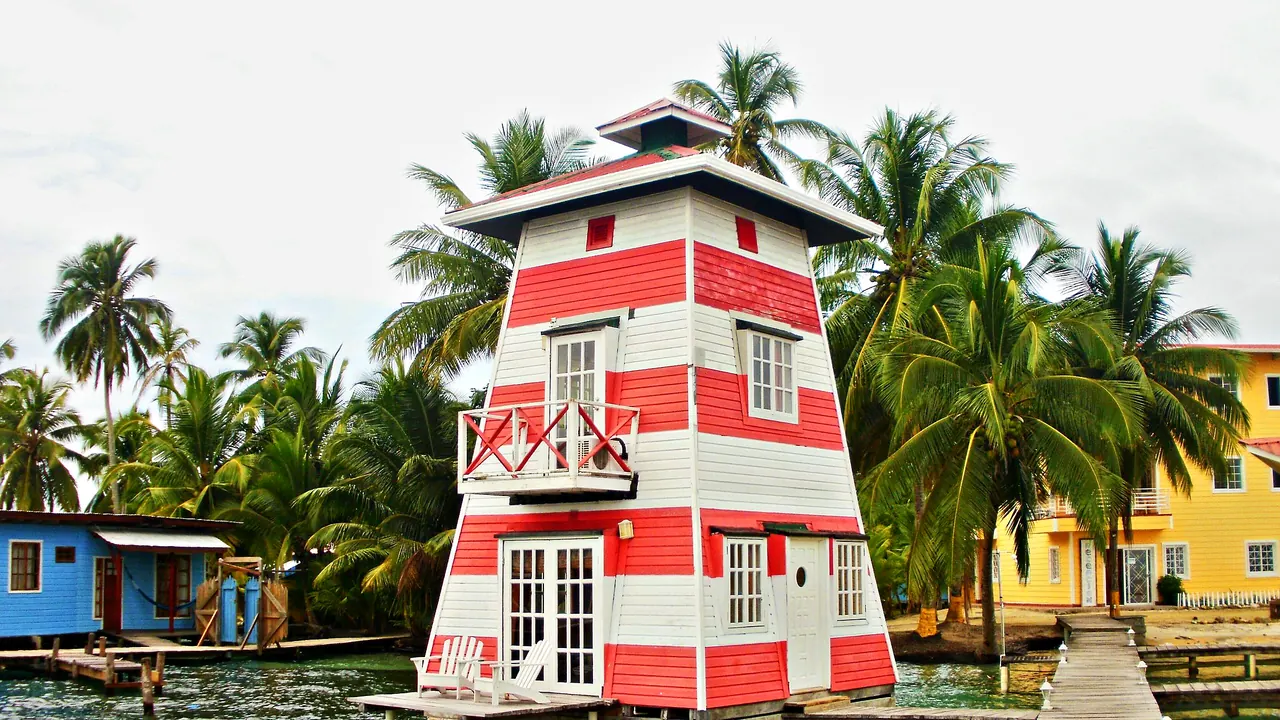
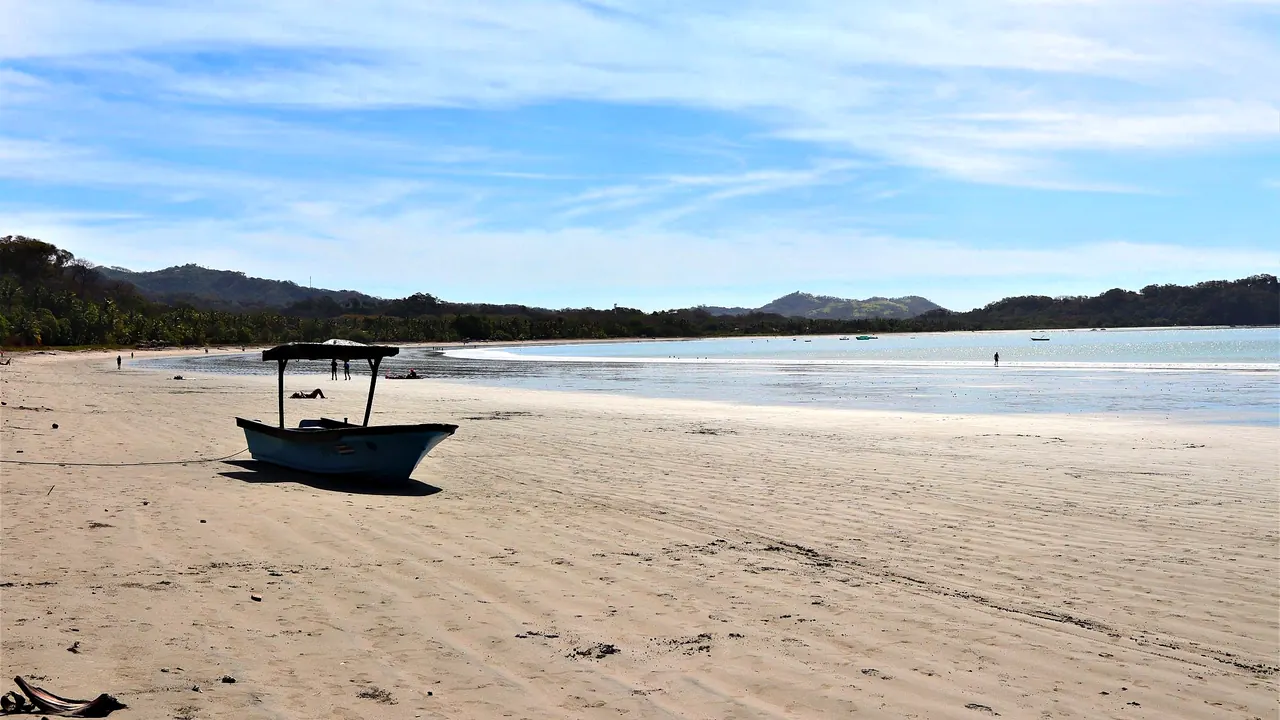
Photos: Bocas del Toro by hh oldman, CC BY 3.0, cropped; Guanacaste by ismael jim, Pexels License.
Bocas del Toro or Guanacaste?
Our verdict in twelve categories, each scored against the same fixed benchmark cities, and the climate month by month, so you can choose for your trip.
Choose Bocas del Toro for
- prices
- nightlife
- getting around
Bocas del Toro is the pick for travellers who want to live on the water: water taxis between rainforest islands, reefs to snorkel from the side of a boat, a lively backpacker scene in Bocas Town at night, and a budget that goes further. Every good beach needs a boat ride, though, and rain falls in almost every month. It suits flexible, younger travellers more than anyone who needs sure sun or easy logistics.
Choose Guanacaste for
- wellness
- families
- beaches
Guanacaste makes more sense when the beach itself is the point and you need to count on the weather. Its Pacific bays run from calm shell-sand coves to well-known surf breaks, and the dry season is close to rainless. Families, yoga and spa seekers, and anyone drawn to hot springs and dry-forest wildlife are better served here. In return it costs clearly more, and you will almost certainly need a hire car.
Scoreboard
Twelve categories on one fixed scale from 0 to 100. The shaded stretch is the gap between the two.
Your match
Pick a travel style or drag the sliders, and both match scores follow your weighting.
Wins on prices and nightlife with your weighting.
Wins on wellness and families with your weighting.
What matters to you?
Category by category
What the scores mean for a trip.
Beaches & swimming
Bocas del Toro's best sand is on Cayos Zapatilla inside the marine park and at the jungle-backed Red Frog and Polo beaches, but every one of them means a boat from town. The north-facing shores are often too rough to swim, and Starfish Beach is the main calm exception.
Guanacaste is a beach coast first, with sand you can drive to along a long chain of bays. Conchal, Flamingo, Hermosa and the Papagayo coves are sheltered for easy swimming, while Tamarindo and Playa Grande have real surf and Sámara has a gentle bay protected by a reef. The downside is little shade, and lifeguards only in the busier towns.
Food & drink
Neither is a food destination, but the cooking is quite different. Bocas is Afro-Caribbean: fish and lobster in coconut sauce, rice and beans cooked in coconut milk, and Johnny cake, eaten on decks over the water in Bocas Town, with chocolate tastings at the cacao farms.
Guanacaste is rural Costa Rican: casados at roadside sodas, ceviche and fried snapper by the beach, and corn-based country dishes in Liberia, Santa Cruz and Nicoya. Tamarindo and Nosara give it a few more places with a range of choice than Bocas, where good food is concentrated in a single town.
Culture & sights
Culture is thin in both, and neither is worth choosing for its sights. Bocas has the stilted wooden houses of an old banana port, the Afro-Caribbean village of Old Bank and Ngäbe communities on the lagoon. Guanacaste has adobe streets in Liberia, Nicoya's colonial church, Chorotega pottery at Guaitil and sabanero rodeos, so the choice is Creole Caribbean against cowboy country.
Nightlife
Bocas Town is the livelier place after dark. It is a fixture on the backpacker route, with bars on piers, rotating theme nights, weekend boat parties and water taxis taking people to island bars until late. Stay on Bastimentos or the lagoon and the noise disappears.
In Guanacaste, going out mostly means Tamarindo's sunset bars and short dance strip, plus a rougher handful of bars in Playas del Coco. Most of the rest of the coast goes to bed early, ready for the dawn surf.
Nature & outdoors
Both are strong on wildlife, but on very different ground. Bocas is wet and watery: mangrove channels, coral cays and rainforest islands explored by boat and kayak. You can see poison dart frogs and sloths, dolphins in the bay off Isla Cristóbal, and go on night trips to see bioluminescence.
Guanacaste has a little more range. There are fumaroles, mud pots and waterfalls at Rincón de la Vieja, old dry forest at Santa Rosa, crocodiles and storks in the Palo Verde wetlands, and mass turtle arrivals at Ostional. It has less to offer underwater, and the heat pushes hikes into the early morning.
Day trips
Neither works as a base for visiting other towns, and outings in both stay close. In Bocas the day out is a boat to a village, a reef or a cacao farm, and Puerto Viejo across the border is really the next stop on a trip rather than a day out. Guanacaste's outings go by road to Liberia, Santa Cruz, Nicoya and the potters of Guaitil, or along the coast to another beach town.
Good for families
Guanacaste is the easier family choice. It has calm swimming at Hermosa, Flamingo, Conchal and Sámara, resorts on the Papagayo peninsula with kids' clubs and pools, and zip-lines, river safaris and hot springs for older children. The things to plan around are the midday heat and the rips at Tamarindo and Nosara.
Bocas can delight older children who love animals, from sloths to sea stars, but nothing there is built for families. Every outing means an open boat that can get rough, medical care is basic and the party crowd sets the tone in town. Families do best at a quiet lodge on the lagoon.
Getting around
Bocas is easier from day to day. Water taxis leave the town docks all day and reach most islands in minutes, and the town is a few flat streets you can walk. The catch is getting there, by small plane from Panama City or a long road trip and then a boat, and the crossings turn wet and bumpy in bad weather.
Guanacaste is the reverse. Liberia's airport is within an hour of most northern beaches, but after that buses are slow and infrequent, and the dirt roads to Nosara or Ostional favour a four-wheel drive. Most visitors end up hiring a car.
Shopping & style
Shopping is an afterthought in both, so pack what you need. Bocas offers Ngäbe chácara bags, beadwork and local chocolate. Guanacaste adds surfwear in Tamarindo and Nosara, and its burnished Chorotega pottery from Guaitil is the more distinctive craft to bring home.
Affordability
Bocas is the cheaper of the two mainly because it grew up on the backpacker trail, so everyday life on Isla Colón is priced for people counting their money. Costs climb when you leave that world behind. A lodge or overwater cabin on the outer islands costs far more than a room in town, anything shipped in by boat carries a mark-up, and a day out to the cays is the expense most visitors notice.
Guanacaste's beach hotels and resorts price themselves in line with North America, especially through the dry season, and the coast charges accordingly. Needing a car adds a fixed cost to every day, which you avoid in Bocas, where boats do the job. Guided outings and park entry also take a bigger share of the budget. Eating where Costa Ricans eat and coming once the rains have started both help, but neither makes it cheap.
Live music & performing arts
Neither has theatres or concert halls, so live performance is incidental in both. What music there is differs in flavour: reggae, calypso and Afro-Caribbean drumming in the bars and celebrations of Bocas, against marimba and folk dance at Guanacaste's village fiestas and Liberia's July celebrations.
Wellness & relaxation
Guanacaste is the stronger choice for rest and restoration. Nosara is a world-known yoga destination with a daily rhythm of early surf and early nights. Inland, the volcanic ground around Rincón de la Vieja provides mud baths and warm mineral pools, and the Papagayo resorts add spas.
Bocas relies on its setting rather than facilities. Jungle lodges and overwater cabins on Bastimentos and Isla Solarte offer yoga decks, massages and long rainy afternoons with a book. It works well as long as you stay away from the late-night noise of Bocas Town.
When should you go?
Pick your month. The climate figures are measured averages, not a forecast.
Bocas del Toro in July
Guanacaste in July
Daytime high, °C
Rainfall in the month, mm
Where the figures come from
Bocas del Toro has no weather station within reach, so its figures come from a gridded climate model rather than a measured record, and read a broad area rather than one spot.
Guanacaste's temperatures are measured 57 km from the centre, at Liberia.
Guanacaste has no rain gauge within 25 km of the centre, so its rainfall comes from a gridded climate dataset read at the destination rather than from a gauge further away.
Temperature and rainfall are climate normals, averaged over the years shown. Bocas del Toro: 1991-2020 normals, TerraClimate 4 km grid at the town, no weather station within 90 km. Guanacaste: 1991-2020 normals, Liberia (56.7 km from centre).
Bocas del Toro is hot and humid all year at around 30°C, and the sea is warm for swimming in every month. It has no true dry season. Rain is heavy in most months, with the wettest spells from May to July and again in November and December. February and March are the least wet, and September is also a good bet, often bringing the calmest, clearest water of the year.
Around Guanacaste's main beach area the year splits sharply in two. From December to April there is barely any rain, but March and April reach 36°C, so beach time works best in the morning and late afternoon rather than at midday. The rains arrive in May, ease off somewhat in July and peak in September and October at up to 377mm. For a dry-season trip with guaranteed sun, Guanacaste wins. In September and October the Caribbean islands are actually the drier choice.
Which traveller are you?
On a trip on a tight budget, Bocas del Toro stretches money much further. It has hostel beds, local plates of rice, beans and fish, and cheap water taxis. In Guanacaste, resorts, car hire, tours and park fees for foreigners make every day costly.
On a family trip with children, Guanacaste is the easier choice. It has calm bays at Hermosa, Flamingo and Sámara, resort kids' clubs, zip-lines and crocodile river trips, without the rough open-boat crossings and party-town feel that Bocas brings.
For a relaxing and wellness trip, Guanacaste leads again. It has Nosara's yoga retreats, volcanic mud and hot springs near Rincón de la Vieja, and dependable dry-season sun. Bocas has quiet lagoon lodges with yoga decks, but rain comes in most months.
Before you go
| Measure | Bocas del Toro | Guanacaste |
|---|---|---|
| Official language | Spanish | Spanish |
| Currency | Balboa (PAB) | Costa Rican Colon (CRC) |
| Sockets | AB110 V, 60 Hz | AB120 V, 60 Hz |
| Driving side | Right | Right |
| Time zone | UTC-5 | UTC-6 |
| Emergency number | 911 | 911 |
| Main airport | Bocas del Toro "Isla Colón" International Airport (BOC)3 non-stop destinations | Daniel Oduber Quirós International Airport (LIR)30 non-stop destinations |
| Public holidays this year | 14 days | 11 days |
By the numbers
| Measure | Bocas del Toro | Guanacaste |
|---|---|---|
| Population | - | 412,808 |
| People per km² | - | 40 |
| Swim season, months above 21 °C | 12 months | 12 months |
Where else could you go?
Every comparison below shares a destination with this one, so you can follow Bocas del Toro or Guanacaste somewhere new.
- Monteverdevs Guanacaste
- La Fortunavs Guanacaste
- Roatánvs Bocas del Toro
- Caye Caulkervs Bocas del Toro
- Los Cabosvs Guanacaste