Costa Rica
Guanacaste
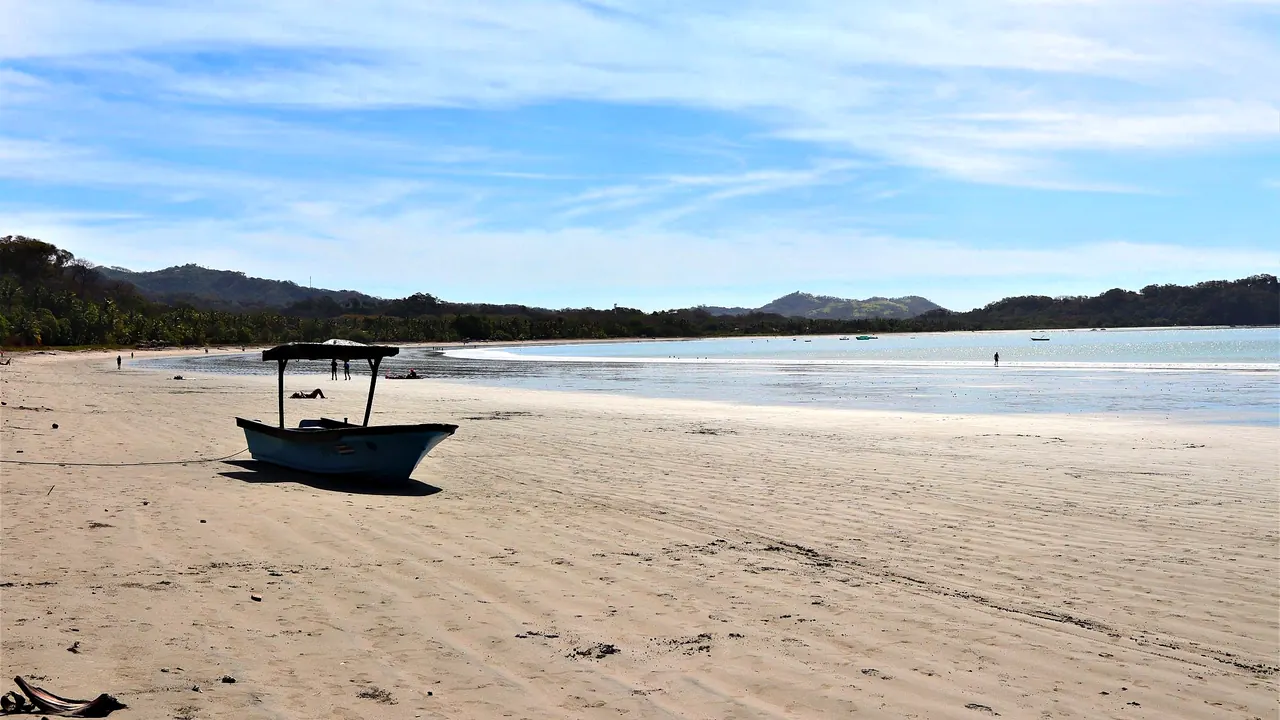
A lone boat on the beach at Samara
- Beaches86
- Nature & outdoors78
- Wellness & relaxation78
Photo: ismael jim, Pexels License
Match
43
Every category weighted equally
- Beach & sun52
- Culture & arts32
- Food & nightlife35
- Family trip49
- Outdoors49
- Relax & unwind52
- Shopping & style36
- On a budget42
Guanacaste in twelve categories
Our verdict on each, scored 0 to 100 against the same fixed benchmark cities, so a score means the same thing on every page.
Beaches & swimming. Scores 86 out of 100.
Food & drink. Scores 40 out of 100.
Culture & sights. Scores 20 out of 100.
Nightlife. Scores 38 out of 100.
Nature & outdoors. Scores 78 out of 100.
Day trips. Scores 26 out of 100.
Good for families. Scores 66 out of 100.
Getting around. Scores 33 out of 100.
Shopping & style. Scores 14 out of 100.
Affordability. Scores 30 out of 100.
Live music & performing arts. Scores 8 out of 100.
Wellness & relaxation. Scores 78 out of 100.
Guanacaste category by category
Beaches & swimming
86The Pacific coast of Guanacaste is a long chain of bays and points, and the beach is the reason most people come. The water is warm, around 28°C for much of the year, though the Papagayo winds can cool the northern bays in the early months. Calm, sheltered water for easy swimming is found at Playa Conchal with its crushed-shell sand, Flamingo, Hermosa, Ocotal and the Papagayo peninsula coves. Tamarindo, Playa Grande, Avellanas and Nosara's Playa Guiones are surf beaches with real rip currents, while the reef-protected bay at Sámara is the gentlest swim further south.
The dry season from December to April brings almost guaranteed sun, and the green season that follows still has bright mornings and quieter sand. Beaches are mostly long and undeveloped, with little shade and lifeguards only in the busier towns.
Food & drink
40Eating here is relaxed rather than memorable. The everyday staples are the casado, a plate of rice, beans, plantain and fish or meat served in roadside sodas, along with ceviche and whole fried snapper by the beach. Guanacaste also has its own corn-based country cooking, rosquillas, tanelas, chorreadas and arroz de maíz, best found in Liberia, Santa Cruz and Nicoya around the fiestas. Tamarindo and Nosara have the widest choice, with sushi, Italian, juice bars and smart dining aimed at visitors, but much of it repeats the same beach menu, and there is little in the way of markets or a drinking culture beyond cold beer and guaro cocktails.
Culture & sights
20Heritage here is modest and rural. Liberia keeps a few streets of whitewashed adobe houses, Nicoya has one of the oldest colonial churches in the country, and the village of Guaitil carries on Chorotega pottery traditions in family workshops. The old hacienda at Santa Rosa marks a battle of 1856 that matters to national history, and cowboy sabanero culture shows itself at rodeos and village fiestas. There is little to fill more than a morning or two, and visitors who want museums will find almost none.
Nightlife
38Going out is concentrated in Tamarindo, a surf town with beach bars at sunset, a short strip of dance spots and a rotating set of busy nights through the week, popular with backpackers and young surfers. Playas del Coco has a smaller, rougher bar scene. Elsewhere, around Nosara, Sámara and the resort peninsulas, nights are quiet: dinner, a drink on the sand and bed before the dawn surf. The liveliest months match the dry season, from December to April, and the Christmas and Easter vacation periods.
Nature & outdoors
78Guanacaste is a lowland of tropical dry forest and cattle savannah, rising inland to a line of volcanoes and running down to a rocky Pacific shore of headlands and bays. The look changes with the season: brown and leafless through the dry months from December to April, green again once the rains come. The landscape is at its most striking at Rincón de la Vieja, about an hour from Liberia, where trails pass fumaroles, bubbling mud pots and waterfalls in forest full of howler monkeys, coatis and toucans.
Wildlife is the region's real strength. Santa Rosa protects a large area of old dry forest, and the Palo Verde wetlands along the Tempisque river are thick with storks, herons and crocodiles in the dry months. Leatherbacks nest at Playa Grande, and Ostional sees mass arrivals of olive ridley turtles, mostly in the green season. The surf breaks along the coast are well known, but there are no high mountains here, and the heat limits long hikes to the early hours.
Day trips
26Most outings from the coast are into nature rather than to other places. The towns are small: Liberia for its colonial streets and market, Santa Cruz and Nicoya for their plazas and folk traditions, and Guaitil for its pottery workshops, which together fill a day. Beyond that, other beach towns along the coast make an easy change of scene. The cloud-forest village of Monteverde and the colonial cities of Nicaragua are both too far for a comfortable day out.
Good for families
66Families do well here if they pick the right beach. Playa Hermosa, Flamingo, Conchal, the Papagayo coves and Sámara have calm water for small children, and the resorts on the Papagayo peninsula are set up with kids' clubs and pools. Zip-lines, river safaris to see crocodiles, horse riding, hot springs and monkeys in the trees give older children plenty to do. Costa Ricans are warm with children and the coast feels safe. There are no theme parks, zoos or museums, the midday heat is strong, and the surf beaches of Tamarindo and Nosara have rips unsuited to young swimmers.
Getting around
33Liberia's international airport sits within an hour of most of the northern beaches, which makes arriving easy. After that a car is the practical choice. Main highways are paved and in decent shape, but buses between beach towns are slow and infrequent, and the roads into Nosara, Ostional and some surf beaches are dirt, dusty in the dry season and rutted in the rains, where a four-wheel drive helps. Within a beach town everything is walkable, and many visitors who skip the car rely on shared shuttles and taxis.
Shopping & style
14Shopping is limited to surf and beachwear shops in Tamarindo and Nosara, a few small boutiques selling linen and jewellery, and souvenir stalls along the beach roads. The one real craft is the Chorotega pottery made and sold in Guaitil and around Santa Cruz, with its burnished red, black and cream designs. Liberia has a supermarket and a market for practical needs.
Affordability
30This is an expensive coast by regional standards. Beach hotels and the resorts of the Papagayo peninsula charge North American prices in the dry season, as do restaurants aimed at visitors, car hire, surf lessons and guided tours, and park entry fees for foreigners add up. Costs come down for travellers who eat at local sodas, stay in hostels or simple cabinas in Tamarindo, Sámara or Coco, and travel in the green season, but few would call it a budget destination.
Live music & performing arts
8There is little to attend. Folk dance and marimba music, the region's proudest traditions, appear at the village fiestas and the celebrations in Liberia each July, and some beach bars put on live bands. There are no theatres or concert halls, and visitors come for other things.
Wellness & relaxation
78Slowing down comes naturally here, and wellness is a serious draw. Nosara is one of the world's well-known yoga destinations, with retreat centres, daily classes and healthy cafés set in the forest behind Playa Guiones, and a pace built around early surf, practice and early nights. Sámara and parts of the Nicoya coast offer the same in a smaller way.
Inland, the volcanic ground around Rincón de la Vieja feeds hot springs and mineral pools where visitors cover themselves in volcanic mud and soak in warm rivers. Resort spas on the Papagayo peninsula round out the offer. What is missing is an old bathing tradition: this is retreat and nature-spa culture rather than historic baths.
Where to stay in Guanacaste
Tamarindo is the natural base for a first visit. It has the widest choice of places to eat, the only real nightlife on the coast, surf schools and streets you can walk, and it suits young surfers, backpackers and couples who want company in the evenings. Its rip currents make it a poor choice for small children, who do better a short drive north at Flamingo or Conchal, where the water is calm.
Further north, within an hour of Liberia's airport, the Papagayo peninsula and the bays around Playa Hermosa and Playas del Coco suit families and anyone after a resort stay with pools and sheltered coves. Coco has cheaper rooms and a few rough-edged bars, while Hermosa is quieter. This end is also the easiest for trips to Rincón de la Vieja and its hot springs.
Nosara and Sámara, down the Nicoya coast, suit a second visit or a slower trip. Nosara is for yoga, early surf and quiet nights, and the roads in are dirt, where a four-wheel drive helps. Sámara has the gentlest swimming bay and a relaxed small-town pace that works for families watching their budget. The coast is long, so most visitors choose one or two bases and use a car for day trips, since changing hotels often cuts into beach time.
When should you go?
Pick a month to see what it is like. The climate figures are measured averages, not a forecast.
Guanacaste in July
Daytime high, °C
Rainfall in the month, mm
The whole year
Shaded against this destination’s own year: the deepest cell is its best month for that figure and the palest its weakest.
Where the figures come from
Guanacaste's temperatures are measured 57 km from the centre, at Liberia.
Guanacaste has no rain gauge within 25 km of the centre, so its rainfall comes from a gridded climate dataset read at the destination rather than from a gauge further away.
Temperature and rainfall are climate normals, averaged over the years shown. Guanacaste: 1991-2020 normals, Liberia (56.7 km from centre).
Before you go
| Measure | Guanacaste |
|---|---|
| Official language | Spanish |
| Currency | Costa Rican Colon (CRC) |
| Sockets | AB120 V, 60 Hz |
| Driving side | Right |
| Time zone | UTC-6 |
| Emergency number | 911 |
| Main airport | Daniel Oduber Quirós International Airport (LIR)30 non-stop destinations |
| Public holidays this year | 11 days |
By the numbers
| Measure | Guanacaste |
|---|---|
| Population | 412,808 |
| People per km² | 40 |
| Swim season, months above 21 °C | 12 months |
Compare Guanacaste with
Every comparison with a written verdict behind it.