Photos: Guanacaste by ismael jim, Pexels License; La Fortuna by Bernard Gagnon, CC0.
Guanacaste or La Fortuna?
Our verdict in twelve categories, each scored against the same fixed benchmark cities, and the climate month by month, so you can choose for your trip.
Choose Guanacaste for
- beaches
- nightlife
- food and drink
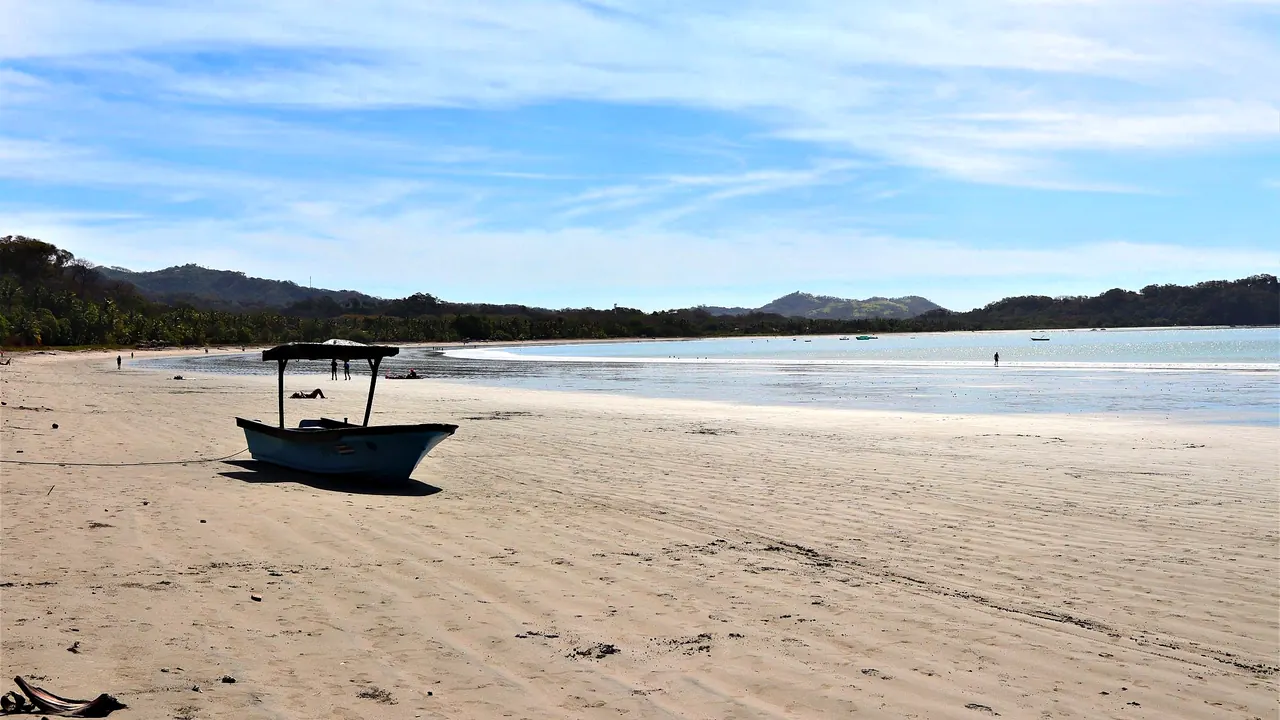
Guanacaste is the pick when the sea is the point of the trip. Its Pacific coast offers warm water, calm bays for swimming at Conchal, Flamingo and the Papagayo coves, and surf at Tamarindo and Nosara. The days run at an unhurried pace of yoga, beach and sunset, and Tamarindo gives you more to do after dark than anywhere inland. It suits beach vacations, families who want easy swimming and anyone who wants to stay in one place and unwind.
Choose La Fortuna for
- nature and the outdoors
- prices
- wellness
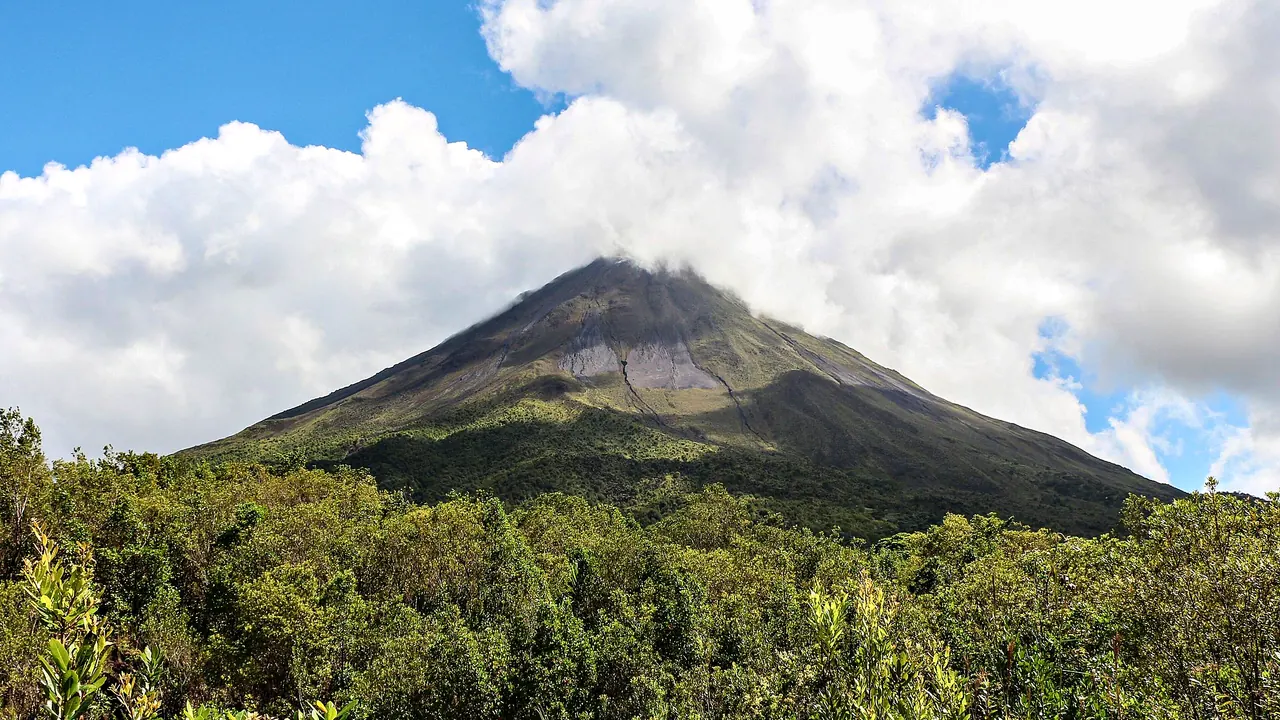
La Fortuna is for travellers who want to be active outdoors. Arenal's cone, the rainforest, the 70m waterfall, the rafting rivers and the hanging bridges are all within a short drive, and each day can end in a hot spring. There is no beach and little nightlife, so it works best as a few busy nights in the middle of a longer trip. It is often paired with a spell on the Guanacaste coast for exactly that reason.
Scoreboard
Twelve categories on one fixed scale from 0 to 100. The shaded stretch is the gap between the two.
Your match
Pick a travel style or drag the sliders, and both match scores follow your weighting.
Wins on beaches and nightlife with your weighting.
Wins on nature and the outdoors and prices with your weighting.
What matters to you?
Category by category
What the scores mean for a trip.
Beaches & swimming
Guanacaste is a beach destination first. Its coast offers shell sand at Conchal and calm coves at Hermosa, Ocotal and Papagayo, while Tamarindo, Avellanas and Playa Guiones draw surfers with real rips, and the reef-sheltered bay at Sámara is the gentlest swim of all.
La Fortuna has no beach life at all. A swim there means the cold, churning pool below the waterfall, a quiet bend in a river or a corner of Lake Arenal. Visitors who want sand drive west to Guanacaste.
Food & drink
Neither place is a reason to travel for food, but Guanacaste has more to offer. Beside the sea there is ceviche and whole fried snapper, the region has its own corn-based country dishes in Liberia, Santa Cruz and Nicoya, and Tamarindo and Nosara give you a wider spread of international cooking.
La Fortuna mostly comes down to casados at the sodas and steakhouses aimed at tour groups. Its one distinctive offer is the cacao and coffee farms at the edge of town, where you taste chocolate made from the bean.
Culture & sights
Heritage is thin in both, but Guanacaste has a little more to show. You can see the adobe streets of Liberia, Nicoya's colonial church, the Chorotega potters of Guaitil and the battlefield hacienda at Santa Rosa, and sabanero cowboy traditions come out at rodeos and village fiestas. In La Fortuna, the white church framed by Arenal is about all there is in town, and the Maleku communities to the north take a separate outing.
Nightlife
Guanacaste is the place for a night out, though only in Tamarindo. The surf town has sunset beach bars, a short strip for dancing and young surfers out most nights, while Playas del Coco has a rougher, smaller scene and the rest of the coast goes to bed early.
La Fortuna rarely keeps going past dinner. A few bars put on salsa or a band at the weekend, but most visitors spend the evening in a hot spring before a dawn start.
Nature & outdoors
La Fortuna has the denser and more dramatic outdoors. The near-perfect cone of Arenal rises over rainforest, lava-flow trails, hanging bridges and a lake for kayaking and kitesurfing, and the rafting rivers and the waterfall are close at hand. Río Celeste and Caño Negro are within reach for longer days.
Guanacaste's nature is drier and more spread out. The best of it is the volcanic trails at Rincón de la Vieja, the storks and crocodiles of Palo Verde and the nesting turtles at Playa Grande and Ostional, with surf breaks along the shore. Heat limits hiking there to the early hours.
Day trips
Guanacaste offers a little more in the way of towns to visit, and they lie close together. A loop through Liberia's market, the plazas of Santa Cruz and Nicoya and the pottery workshops of Guaitil makes a satisfying day, and other beach towns along the coast make an easy change of scene.
From La Fortuna, the main options are the topiary garden at Zarcero and the Maleku villages near Guatuso. The crossing to Monteverde works better as a transfer than as a day out.
Good for families
Guanacaste has a slight edge with young children, thanks to calm bays such as Hermosa, Flamingo and Sámara and the kids' clubs and pools of the Papagayo resorts. Just keep small swimmers away from the rips at Tamarindo and Nosara.
La Fortuna appeals more to children who are ready for adventure. It has hot-spring pools with slides, sloths seen from the hanging bridges and chocolate-making visits. Age limits on rafting and ziplines, the steep waterfall stairs and frequent rain make it harder with toddlers.
Getting around
Guanacaste is the easier of the two to arrive in and move around. Liberia's airport is within an hour of most northern beaches, the main highways are paved, and each beach town is walkable once you are there. The dirt roads to Nosara and Ostional are where a four-wheel drive helps.
La Fortuna's compact centre is easy on foot, but the hot springs, volcano trails and bridges are strung out for kilometres along the lake road. With few buses, you depend on taxis, tour transport or a hire car.
Shopping & style
Both are poor places for shopping, and what differs is the kind of thing you can buy. Guanacaste offers surf and beachwear in Tamarindo and Nosara and the one real local craft, the burnished Chorotega pottery of Guaitil. La Fortuna sells souvenirs around the central park, with local coffee, chocolate and Maleku crafts as the more worthwhile gifts.
Affordability
Guanacaste is the more expensive of the two. In the dry season, beach hotels, the Papagayo resorts and guided tours charge North American prices. Cabinas in Sámara or Coco and a visit in the green season bring the bill down.
La Fortuna is a little cheaper for the basics: rooms in town, meals at the sodas and the free stretch of warm river by the road. The rafting, canyoning and resort springs you came for still add up quickly.
Live music & performing arts
Neither has any stage culture worth planning around. Guanacaste at least has its own traditions of marimba and folk dance, which appear at village fiestas and at the July celebrations in Liberia. In La Fortuna, the nearest thing is folkloric dance served with dinner or a weekend band in a bar.
Wellness & relaxation
Both are excellent for slowing down, but in different ways. Guanacaste's strength is the retreat. Nosara's yoga centres in the forest behind Playa Guiones set the pace of early surf, practice and early nights, and inland there are volcanic mud baths at Rincón de la Vieja.
La Fortuna is built around thermal water. Terraced resort pools and warm streams line the road to Arenal, with a free river for those who want it, and a soak with the volcano disappearing into cloud is the usual end to each day.
When should you go?
Pick your month. The climate figures are measured averages, not a forecast.
Guanacaste in July
La Fortuna in July
Daytime high, °C
Rainfall in the month, mm
Where the figures come from
Guanacaste's temperatures are measured 57 km from the centre, at Liberia.
Guanacaste has no rain gauge within 25 km of the centre, so its rainfall comes from a gridded climate dataset read at the destination rather than from a gauge further away.
La Fortuna's temperatures are measured 60 km from the centre, at Puntarenas.
La Fortuna's station stands 248 m below the city centre, so the centre is likely a little cooler than the figures say.
La Fortuna has no rain gauge within 25 km of the centre, so its rainfall comes from a gridded climate dataset read at the destination rather than from a gauge further away.
Temperature and rainfall are climate normals, averaged over the years shown. Guanacaste: 1991-2020 normals, Liberia (56.7 km from centre). La Fortuna: 1961-1990 (sunshine 1981-2010, rainfall 1991-2020) normals, Puntarenas (59.7 km from centre).
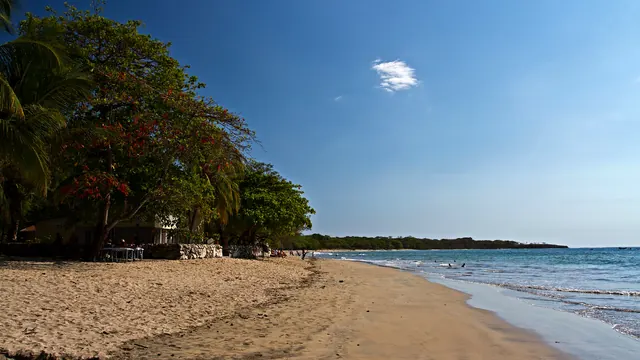
Around the main beach towns, Guanacaste is almost rainless from December to April, the surest time for beach days. Afternoons reach 36°C in March and April, though, so walks and outings are best done early in the morning. The sea stays near 28°C all year, so swimming is good in every season. The rains begin in May and are heaviest in September and October, with about 377mm in October, and July brings a drier break with some clear beach days.
La Fortuna is just as hot, but it is wet in every month. Even March and April see about 85mm, and October brings around 422mm. January to April is its brightest spell, with March the sunniest month of all, and this is the best time to see the volcano clear of cloud. From May to December the cone is often hidden for long stretches. For a trip that combines both places, February to April suits each.
Which traveller are you?
For a beach and sun trip, Guanacaste wins easily. It has a long coast of warm water, sheltered bays for swimming and well-known surf breaks, and its dry season is close to rainless. La Fortuna is more than three hours from any sand.
On an outdoors trip, La Fortuna is the stronger base. The volcano trails, rafting, canyoning, the lake, the waterfall and rainforest wildlife are all within a short radius. Guanacaste's dry forest and turtle beaches are rewarding but more spread out and slower to reach.
On a tight budget, La Fortuna is a little easier to manage. Most of what it costs is in the excursions, so you can pick one or two and keep the rest cheap. In Guanacaste the base itself costs more, with car hire and park fees on top.
Before you go
| Measure | Guanacaste | La Fortuna |
|---|---|---|
| Official language | Spanish | Spanish |
| Currency | Costa Rican Colon (CRC) | Costa Rican Colon (CRC) |
| Sockets | AB120 V, 60 Hz | AB120 V, 60 Hz |
| Driving side | Right | Right |
| Time zone | UTC-6 | UTC-6 |
| Emergency number | 911 | 911 |
| Elevation | - | 253 m |
| Main airport | Daniel Oduber Quirós International Airport (LIR)30 non-stop destinations | Juan Santamaría International Airport (SJO)71 km from centre49 non-stop destinations |
| Public holidays this year | 11 days | 11 days |
By the numbers
| Measure | Guanacaste | La Fortuna |
|---|---|---|
| Population | 412,808 | 16,150 |
| People per km² | 40 | 70 |
| Museums within 10 km | - | 0 |
| UNESCO World Heritage sites within 50 km | - | 1 |
| Swim season, months above 21 °C | 12 months | - |
Where else could you go?
Every comparison below shares a destination with this one, so you can follow Guanacaste or La Fortuna somewhere new.
- Monteverdevs La Fortuna
- San Jose, Costa Ricavs La Fortuna
- Santa Teresa, Costa Ricavs La Fortuna
- Monteverdevs Guanacaste
- Tamarindovs La Fortuna
- Granada, Nicaraguavs La Fortuna