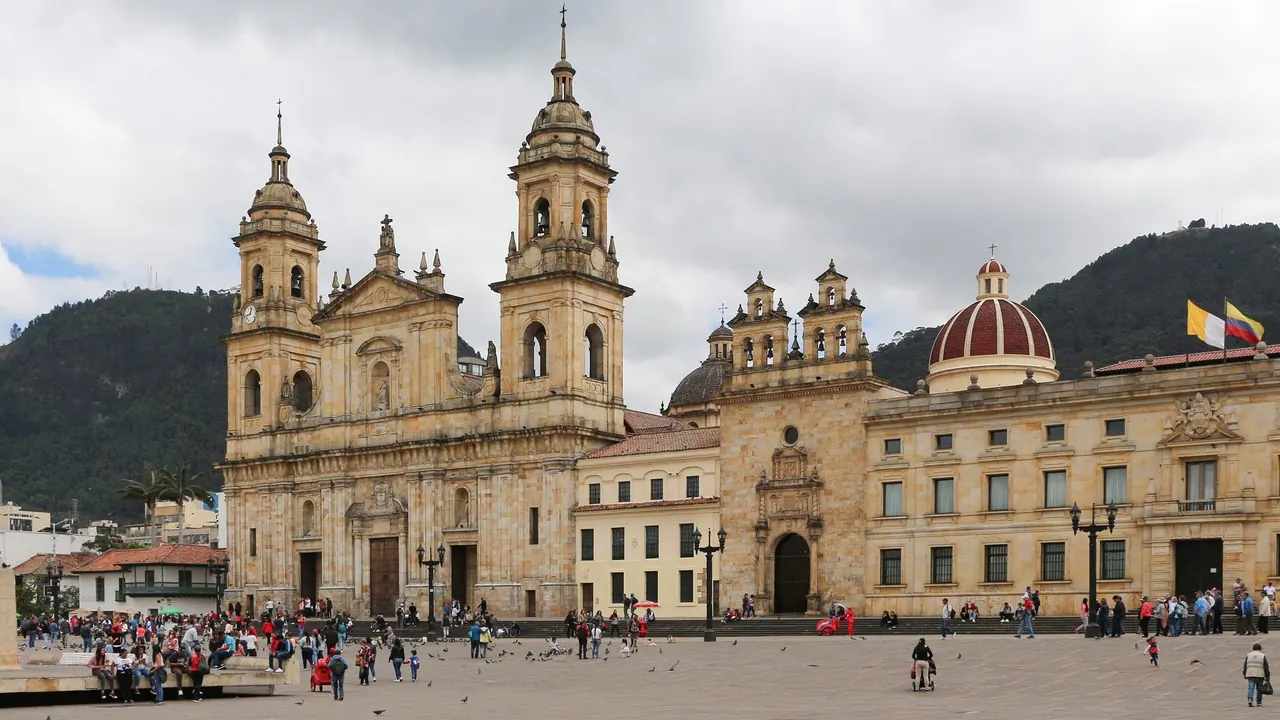
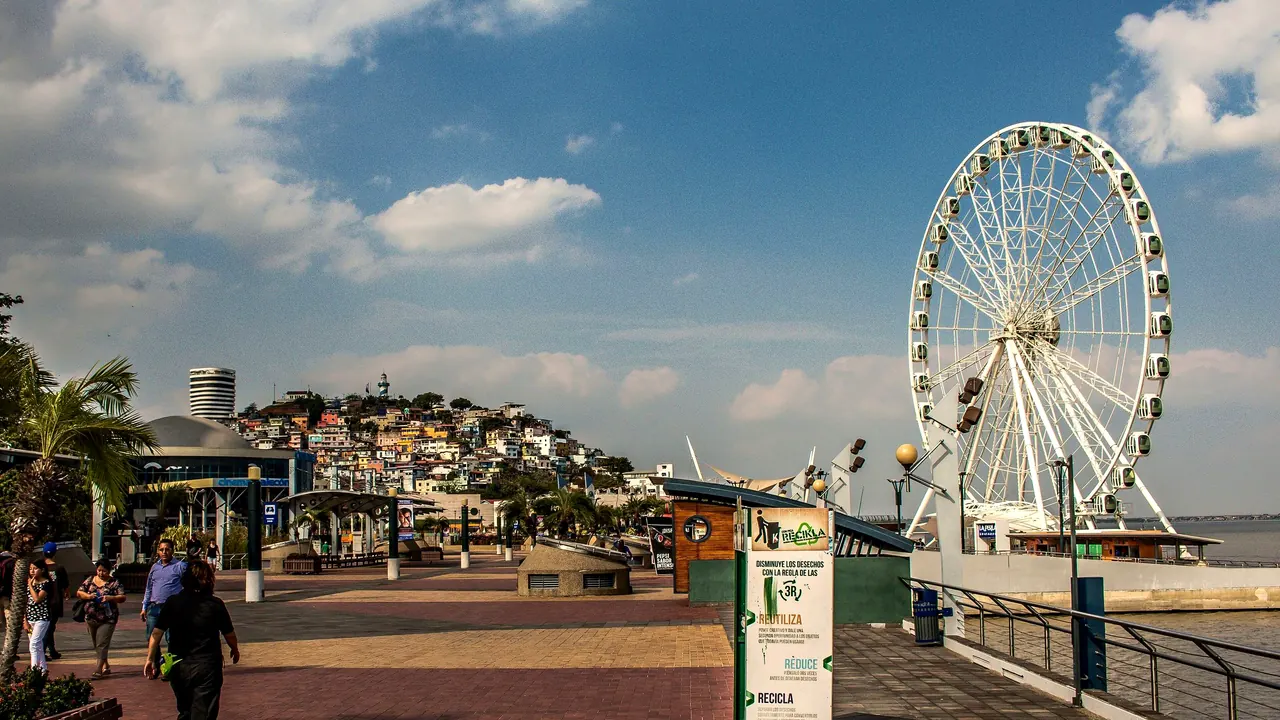
Photos: Bogota by Bernard Gagnon, CC BY-SA 4.0, cropped; Guayaquil by Paulakindsvater, CC BY-SA 4.0, cropped.
Bogota or Guayaquil?
Our verdict in twelve categories, each scored against the same fixed benchmark cities, and the climate month by month, so you can choose for your trip.
Choose Bogota for
- nightlife
- live music and the arts
- culture and sights
Bogota is the stronger choice for a city trip in its own right. It has a colonial quarter worth days of walking, the gold and Botero collections, serious stages and a salsa and club scene, and the páramo and salt mines are within reach. The mild highland air suits long days on foot, as long as you accept the traffic between districts and the altitude in the first day or two.
Choose Guayaquil for
- beaches
- getting around
Guayaquil works best as a short, warm stop on the way to somewhere else. Its riverfront, the painted houses of Las Peñas and the iguanas of Parque Seminario fill a day or two, and the coastal cooking is the best reason to linger. It suits travellers heading for the Galápagos, the Pacific beaches or Cuenca who want ceviche and crab rather than museums.
Scoreboard
Twelve categories on one fixed scale from 0 to 100. The shaded stretch is the gap between the two.
Your match
Pick a travel style or drag the sliders, and both match scores follow your weighting.
Wins on nightlife and live music and the arts with your weighting.
Wins on beaches and getting around with your weighting.
What matters to you?
Category by category
What the scores mean for a trip.
Beaches & swimming
Neither city is a place to swim, but Guayaquil at least has a coast you can drive to. Playas is about an hour and a half away and Salinas and the surf villages around Montañita a little further.
Bogota sits high on its plateau, with the Caribbean a flight away. The closest thing to a swim is the hotel pools and water parks in the warm towns down the western slope.
Food & drink
Bogota has the edge, mostly because of its range. Beyond ajiaco and hot chocolate with cheese, it has Paloquemao market's tropical fruit, ambitious cooking in Zona G, Chapinero and Usaquén, specialty coffee and craft beer.
Guayaquil's strength is narrower but distinctive: coastal seafood cooking at its best in Ecuador, from a bolón or encebollado at breakfast to mallet-cracked mangrove crab at long tables. Go for the comedores and the crab houses, and expect little in the way of wine or café life.
Culture & sights
Here the gap is wide. Bogota has a complete colonial quarter in La Candelaria around the Plaza de Bolívar, one of the great pre-Columbian gold collections in the Museo del Oro, the Botero Museum's European masters and first-rate street art along Calle 26.
Guayaquil lost most of its old wooden town to fire, so what remains is the Malecón, the restored hillside of Las Peñas, the MAAC's coastal archaeology and the marble tombs of the Cementerio General. A day or two covers it all, while Bogota rewards several.
Nightlife
Bogota's rumba is a reason to visit in itself. Salsa bars with skilled dancers, the large clubs and LGBTQ scene of Chapinero, polished Zona T and an underground electronic circuit give a choice of nights that Guayaquil lacks.
Guayaquil's nights are loud but local and spread out. The hillside bars of Las Peñas are easiest for a visitor, and the reggaeton lounges of Samborondón suit those going out with residents. In both cities you take taxis between areas rather than walking.
Nature & outdoors
The landscapes could hardly be more different. Bogota has mountains on its doorstep: the climb to Monserrate, the misty páramo of frailejón plants at Chingaza and Sumapaz, climbing on the Suesca cliffs and the Sunday Ciclovía, which gives the city the stronger outdoor offer.
Guayaquil is flat delta country. Its outings are wetland and wildlife ones, such as the dry-forest trails of Cerro Blanco with howler monkeys, the boardwalks of Isla Santay and dolphin-spotting boat trips at Puerto El Morro. The rainy-season heat limits long walks.
Day trips
Bogota is the better base for days out. The salt cathedral at Zipaquirá, the quieter mine at Nemocón and the El Dorado lake at Guatavita are all easy returns, and Villa de Leyva is close enough for an overnight trip, though traffic leaving the city eats into the day.
Guayaquil's short list runs to the Santa Elena peninsula and its ancient burial museum two hours west, plus cacao hacienda visits inland. Its real prizes, Cuenca and the Galápagos, need nights away rather than a day.
Good for families
Bogota has more to fill a family's days, with Maloka's interactive science halls, two amusement parks, Parque Jaime Duque's zoo and rides and car-free Sunday roads for scooters. Against that, long journeys, uneven pavements and the altitude tire small children.
Guayaquil's pleasures for children are simpler: feeding the iguanas, riverboats on the Malecón and the lighthouse steps of Las Peñas. With no zoo, aquarium or theme park and heavy humid heat, it suits a short stopover more than a family base.
Getting around
Both cities rely on taxis and ride-hailing apps, but the layout differs. Bogota stretches along the mountains, so getting from La Candelaria to the northern districts means half an hour or more in heavy traffic, with crowded TransMilenio buses and a big bike-lane network as the alternatives.
Guayaquil's visitor core around the Malecón and Las Peñas is compact and flat enough to walk, heat permitting. Its airport and bus terminal are close to town, which makes it an easy place to arrive and leave.
Shopping & style
Bogota offers more reasons to browse. There are emerald dealers along Avenida Jiménez, the Sunday crafts market in Usaquén with work from across Colombia, and Colombian designers and good leather in Zona G and Chapinero.
Guayaquil is mostly a mall city. The downtown artisans' market is worth a look for toquilla straw hats, tagua carvings and local chocolate, but keen buyers tend to save their money for Cuenca or Montecristi.
Affordability
Both are cheap, and what differs is where the savings fall. In Bogota a comfortable hotel in the north costs little, and the great museums charge almost nothing.
In Guayaquil the local food is the bargain, and the main sights along the river are free, but the hotels are priced for business travellers. Imported drinks and smart Samborondón dining also cost close to North American levels.
Live music & performing arts
Bogota is the place to plan an evening around a performance. Opera and ballet play in the gilded Teatro Colón, international orchestras come to the Teatro Mayor, and the Ibero-American Theatre Festival and the free Rock al Parque fill the city in their seasons.
Guayaquil has a smaller stage, with plays and touring acts at the Teatro Centro de Arte and the Sánchez Aguilar. Its musical heritage is the pasillo ballad, remembered at the Julio Jaramillo museum in Las Peñas and still heard live in a few bars.
Wellness & relaxation
Neither city is restful, but Bogota gives you slightly more to work with. The thermal springs at Choachí and Tabio are about an hour out, and Usaquén's quieter streets offer some calm.
Guayaquil offers hotel spas and the evening breeze along the Malecón gardens. Visitors who want real rest move on to the coast or the cooler Andean valleys.
When should you go?
Pick your month. The climate figures are measured averages, not a forecast.
Bogota in July
Guayaquil in July
Daytime high, °C
Rainfall in the month, mm
Temperature and rainfall are climate normals, averaged over the years shown. Bogota: 1991-2020 normals, Bogota / Eldorado (14.1 km from centre). Guayaquil: 1991-2020 (rainfall 1981-2010) normals, Guayaquil / Simon Bolivar (4.5 km from centre).
Bogota hardly changes temperature through the year, with days around 18°C in every month, so it is never too hot or too cold to walk. Rain decides the timing. It is wettest from March to May and again in October and November, and driest and sunniest in January at 32mm, with July and August the other reliable stretch. Pack layers in any season, because the evenings at altitude are cool.
Guayaquil stays hot all year, with days near 31°C, but its seasons are sharply split. January to April is the steamy rainy season, peaking at 362mm in March, and this is also when the sea on the nearby coast is warmest at about 27°C. From June to November the city is almost dry and a little less oppressive for walking the Malecón, though the water cools and the coast is often overcast. For sightseeing the two line up well in July and August. For a beach stop from Guayaquil, aim for the start of the year.
Which traveller are you?
On a beach and sun trip, Guayaquil is the better of the two, though only as a starting point. Playas and Salinas are a drive away and the sea is warm early in the year, while Bogota's nearest warm water is hotel pools down the mountainside.
For a culture and arts trip, Bogota wins clearly. La Candelaria, the Museo del Oro and the Botero Museum go far deeper than Guayaquil's riverfront and museums, and the Teatro Colón and the city's festivals add evenings that Guayaquil's modest stage cannot match.
On a food and nightlife trip, Bogota offers more, with modern Colombian kitchens in Zona G, specialty coffee and salsa bars where locals dance seriously. Guayaquil's crab houses and encebollado are memorable, but its nights out are scattered, local and dependent on taxis.
Before you go
| Measure | Bogota | Guayaquil |
|---|---|---|
| Official language | Spanish | Spanish, Shuar, Northern Quichua |
| Currency | Colombian Peso (COP) | US Dollar (USD) |
| Sockets | AB110 V, 60 Hz | AB120 V, 60 Hz |
| Driving side | Right | Right |
| Time zone | UTC-5 | UTC-5 |
| Emergency number | 123 | 911 |
| Elevation | 2,582 m | 4 m |
| Main airport | El Dorado International Airport (BOG)13 km from centre101 non-stop destinations | José Joaquín de Olmedo International Airport (GYE)4 km from centre16 non-stop destinations |
| Public holidays this year | 19 days | 11 days |
By the numbers
| Measure | Bogota | Guayaquil |
|---|---|---|
| City population | 8,034,649 | 2,650,288 |
| People per km² | 5,092 | 7,476 |
| Museums within 10 km | 30 | 6 |
| UNESCO World Heritage sites within 50 km | 0 | 0 |
| Swim season, months above 21 °C | - | 12 months |
Where else could you go?
Every comparison below shares a destination with this one, so you can follow Bogota or Guayaquil somewhere new.
- Cuenca, Ecuadorvs Guayaquil
- Salentovs Bogota
- Medellinvs Bogota
- Quitovs Guayaquil
- Calivs Bogota
- Cartagenavs Bogota