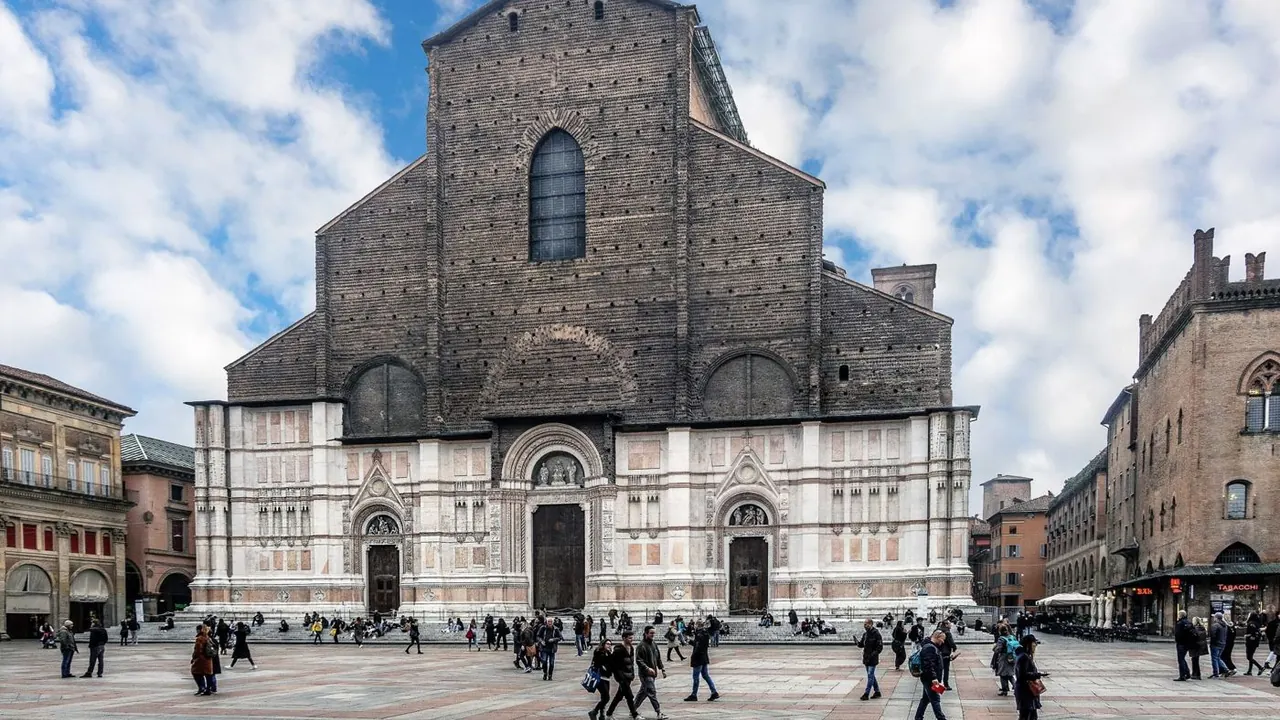
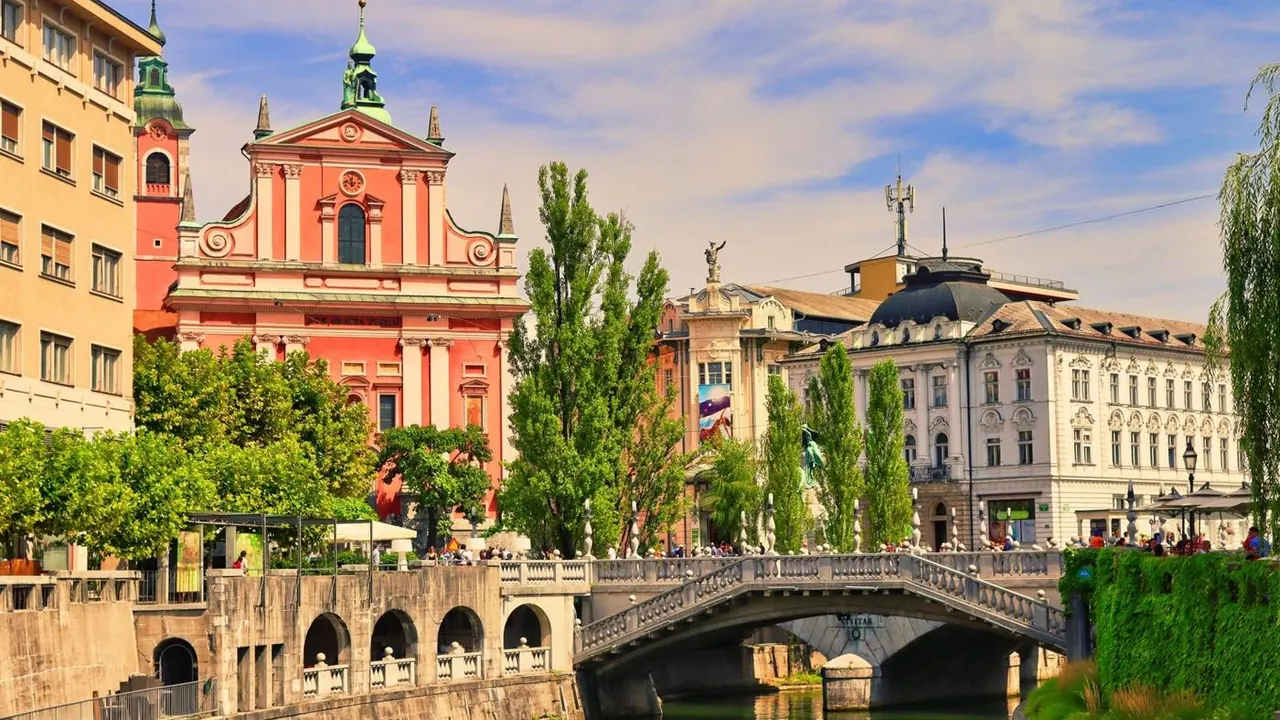
Photos: Bologna by Vanni Lazzari, CC BY-SA 4.0, cropped; Ljubljana by detait, Pexels License.
Bologna or Ljubljana?
Our verdict in twelve categories, each scored against the same fixed benchmark cities, and the climate month by month, so you can choose for your trip.
Choose Bologna for
- food and drink
- culture and sights
- shopping
Bologna is the choice for travellers who plan their days around the table and the train timetable. Its brick-and-portico centre, its fresh pasta and evening aperitivo, its student bars and its fast links to Florence, Ravenna, Parma and Venice make it the richer base for a city-focused trip of eating, sightseeing and day trips through northern Italy.
Choose Ljubljana for
- nature and the outdoors
- prices
- families
If you would rather spend the day outside, Ljubljana is the better fit. The Julian Alps, Lake Bled, the Soča valley and the karst caves are all within easy reach of a small, green capital where most evenings are spent quietly by the river. It suits walkers, cyclists and anyone who wants a calm city with mountains on the horizon more than a full programme of museums and late nights.
Scoreboard
Twelve categories on one fixed scale from 0 to 100. The shaded stretch is the gap between the two.
Your match
Pick a travel style or drag the sliders, and both match scores follow your weighting.
Wins on food and drink and culture and sights with your weighting.
Wins on nature and the outdoors and prices with your weighting.
What matters to you?
Category by category
What the scores mean for a trip.
Beaches & swimming
Neither city is a beach destination, though Bologna's sea is easier to reach: Rimini and the Romagna Riviera are about an hour by train, with shallow, warm water and long rows of organised lidos with sunbeds.
Ljubljana's summer swimming is more about fresh water, in the Sava or at Lake Bled, while its stretch of the Adriatic at Piran lies further away, with concrete platforms and pebbles instead of sand. For either city, a swim is a day out, not a reason to go.
Food & drink
Food is one of the main reasons to choose Bologna. Ragù, tortellini in brodo, mortadella and lasagne verdi are cooked in their home city, the Quadrilatero lanes and Mercato delle Erbe are full of produce, and Parmigiano and Parma ham come from the towns next door.
Ljubljana eats well but more simply: sausage, štruklji and jota at gostilna inns, a fine riverside market, and wine as the real strength, especially the orange wines of the west. In both cities the cooking stays close to home, but Bologna's is the one people travel for.
Culture & sights
Bologna has more to see. The arcaded medieval centre around Piazza Maggiore, the Two Towers, Santo Stefano, the Archiginnasio's anatomical theatre and the Pinacoteca's Bolognese painting add up to a fuller programme.
Ljubljana's appeal is a single architect's vision. Plečnik's bridges, colonnades and library, the baroque old town and the castle on its hill make a lovely whole, but its museums are modest. Each takes two or three days, and Bologna's days are fuller.
Nightlife
Students drive the nights in both cities, but Bologna has more going on. Crowds spill out of cheap bars around Piazza Verdi, Via del Pratello's taverns stay busy until late, and aperitivo turns into wine bars around the Quadrilatero. It does go very quiet in August.
Ljubljana is gentler: drinks on riverside terraces, then Metelkova's scruffy clubs at weekends, with the embankments quietening after midnight on weekdays.
Nature & outdoors
This is Ljubljana's strongest ground. Tivoli Park leads into forested hills, the Kamnik-Savinja Alps and Velika Planina are under an hour away, and Triglav National Park, the Vintgar gorge, the Soča's rafting and the Postojna and Škocjan caves make serious outdoor days easy.
Bologna offers gentler green. The arcaded climb to San Luca, the Colli Bolognesi and the gypsum caves of the Parco dei Gessi are pleasant, and the Via degli Dei to Florence is a fine long walk, but the higher Apennines are further off and the plain to the north is flat farmland.
Day trips
Both are good bases, but Bologna's rail junction gives it the edge. Florence is about half an hour away, Ravenna's mosaics, Ferrara, Modena and Parma are short rides, and Verona, Padua and Venice are all possible in a day, all without a car.
Ljubljana covers a small country: Bled, Škofja Loka, Predjama Castle, Idrija and Piran, with Trieste and Zagreb further out. Its outings lean towards castles and scenery more than great art cities, and the smaller places are easier with a car.
Good for families
For children, the difference is where the fun lies. In Bologna it is mostly outside the city, with a day at the Mirabilandia theme park or on Rimini's beach. In town, the shaded porticoes, easy pasta and gelato and the climb up the Asinelli tower for older children are the highlights, and the summer heat can wear small children out.
Ljubljana keeps more for young children within walking distance: the castle funicular, the dragons on the Dragon Bridge, Tivoli's playgrounds, a modest zoo on Rožnik hill and a puppet theatre that needs no language. Its milder summers are kinder too, though two or three days cover it all.
Getting around
Bologna's central station is its great asset. It sits at the edge of the old town, with fast and regional trains across northern Italy, so onward travel needs no car. Beyond the station, the flat medieval centre is walked in the shade of the porticoes, with buses up into the hills and plenty of bikes under the arches.
Ljubljana is just as easy on foot. The old town, the market, the museums and Tivoli are all within about twenty minutes' walk of each other, with electric shuttles in the pedestrian centre and a bike-share scheme. Leaving town is the weaker side: intercity buses beat the slow railway, and a hired car helps in the mountain valleys.
Shopping & style
Bologna offers more for shoppers. Beyond the Quadrilatero's mortadella, Parmigiano and balsamic, Via dell'Indipendenza has the high-street chains, the Galleria Cavour gathers luxury fashion, and the university quarter adds bookshops and vintage stores.
Ljubljana is about small local finds: honey, pumpkin-seed oil and sea salt at the market, Idrija lace, gingerbread hearts and a Sunday flea market by the river. There is little fashion to speak of.
Affordability
Ljubljana is a little easier on the budget, with set lunch menus at inns, fairly priced local wine and cheap sights. Bologna's trattorias and aperitivo with food are good value too, and many of its churches and squares are free.
In both cities the room is the big cost. Bologna's become scarce during trade fairs, and Ljubljana's small central stock is dearest in July and August.
Live music & performing arts
Bologna has the deeper musical life. The historic Teatro Comunale stages opera, ballet and symphonic concerts, jazz plays in basement clubs most nights, and student gigs and summer concerts in Piazza Maggiore fill out the year.
Ljubljana is solid for its size, with the Philharmonic, the National Opera and Ballet, Cankarjev dom and the summer Ljubljana Festival in Plečnik's Križanke courtyard. In both cities, theatre is in the local language.
Wellness & relaxation
Neither has a bathing tradition of its own, and both rely on thermal towns nearby. Bologna has Castel San Pietro Terme twenty minutes out and Porretta Terme in the Apennines, with the long lunch under the porticoes as its in-town pleasure.
Ljubljana is quieter and greener day to day, with riverside cafés, a water park with saunas, and a line of Slovene spa towns about an hour's drive away.
When should you go?
Pick your month. The climate figures are measured averages, not a forecast.
Bologna in July
Ljubljana in July
Daytime high, °C
Rainfall in the month, mm
Where the figures come from
Bologna has no rain gauge within 25 km of the centre, so its rainfall comes from a gridded climate dataset read at the city rather than from a gauge further away.
Bologna's sunshine is measured 82 km from the centre, at Cervia.
Temperature and rainfall are climate normals, averaged over the years shown. Bologna: 1991-2020 normals, Bologna / Borgo Panigale (5.5 km from centre). Ljubljana: 1991-2020 normals, Ljubljana / Bezigrad (1.9 km from centre).
Bologna has the hotter, drier and sunnier summer. July and August reach about 32°C with long bright days and little rain, so afternoon walks are sticky work, though the porticoes give shade. May and June are its best months for the streets, warm and sunny with only light rain. September is still warm and bright but marks the start of the wetter season, with about 91mm, and October and November are just as wet. Winters are cool and fairly dry.
Ljubljana stays milder, peaking nearer 28°C in July and August. That is pleasant for walking and for a swim in an Alpine lake, but it gets more rain than Bologna in every month, and summer brings frequent showers. Late spring and early summer suit both the city and the mountains best. September is the wettest month of the year at about 159mm, and heavy rain carries on through October and November. Winter is colder and greyer than in Bologna, with December highs near 4°C and little sun.
Which traveller are you?
On a food and nightlife trip, Bologna is the clear pick. Hand-rolled tortellini, Quadrilatero delicatessens and the aperitivo ritual lead into student nights around Piazza Verdi and Via del Pratello, while Ljubljana offers good wine but a narrower table and quieter evenings.
For a culture and arts trip, choose Bologna. Its whole medieval centre, the Archiginnasio, the Pinacoteca and the Teatro Comunale give more to see and hear, with Florence and Ravenna close by, than Ljubljana's charming but smaller Plečnik cityscape.
On an outdoors trip, Ljubljana wins easily. Šmarna Gora rises at the edge of town, the Julian Alps, Triglav National Park and the Soča are about an hour away, and the karst caves lie to the south-west, where Bologna offers mostly gentle hill walks.
Before you go
| Measure | Bologna | Ljubljana |
|---|---|---|
| Official language | Italian | Slovene |
| Currency | Euro (EUR) | Euro (EUR) |
| Sockets | CFL230 V, 50 Hz | CF230 V, 50 Hz |
| Driving side | Right | Right |
| Time zone | UTC+1, UTC+2 in summer | UTC+1, UTC+2 in summer |
| Emergency number | 112 | 112 |
| Elevation | 54 m | 309 m |
| Main airport | Bologna Guglielmo Marconi Airport (BLQ)6 km from centre98 non-stop destinations | Ljubljana Jože Pučnik Airport (LJU)20 km from centre32 non-stop destinations |
| Public holidays this year | 13 days | 21 days |
By the numbers
| Measure | Bologna | Ljubljana |
|---|---|---|
| City population | 387,971 | 284,293 |
| People per km² | 2,754 | 1,736 |
| Museums within 10 km | 68 | 14 |
| UNESCO World Heritage sites within 50 km | 3 | 3 |
Where else could you go?
Every comparison below shares a destination with this one, so you can follow Bologna or Ljubljana somewhere new.