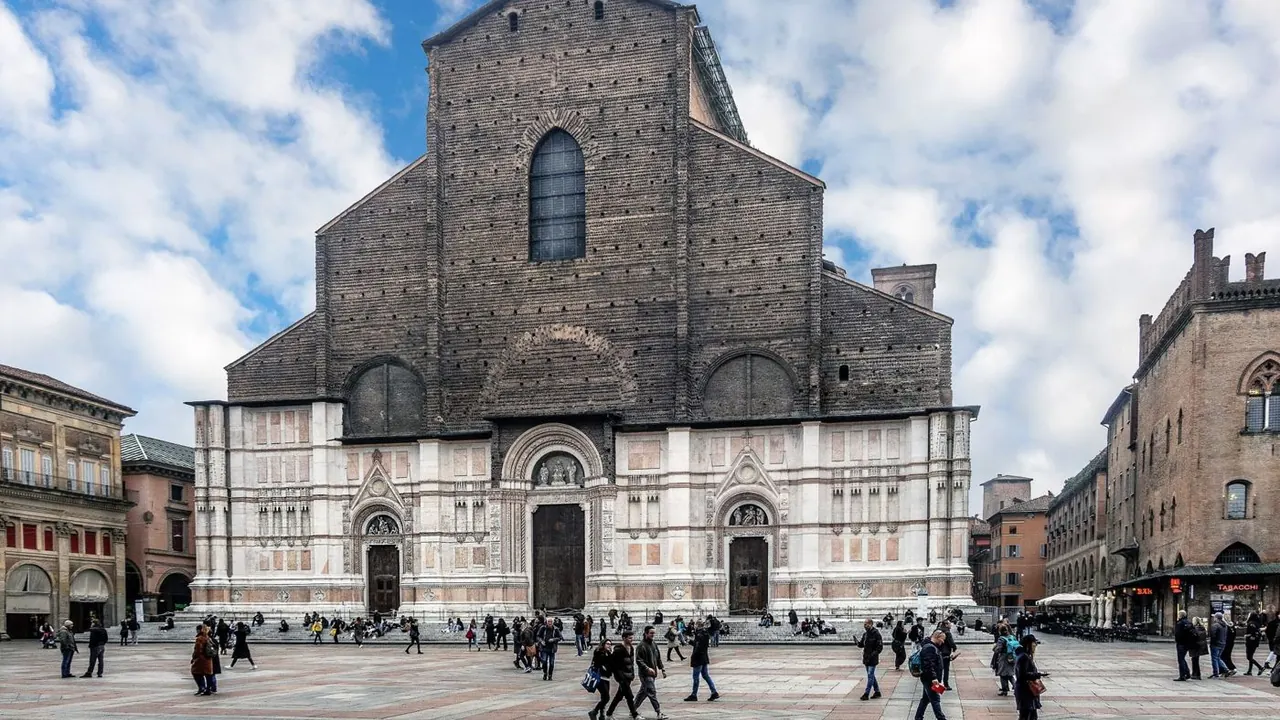
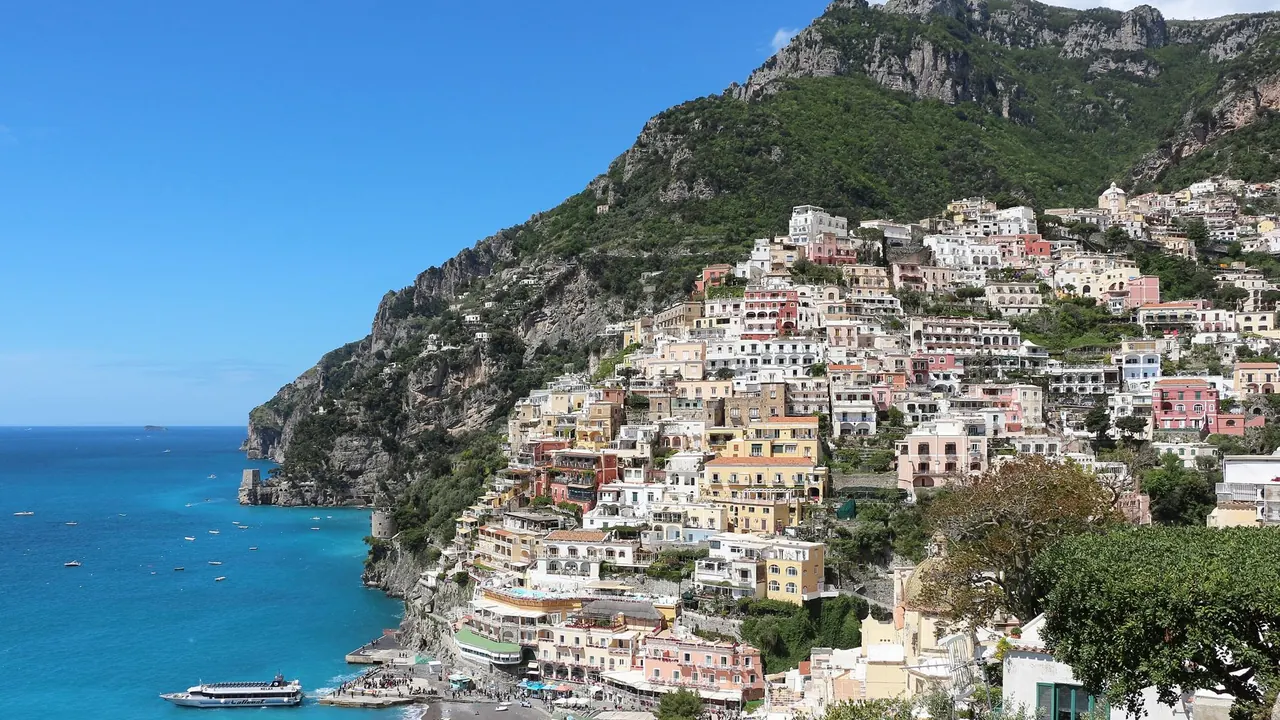
Photos: Bologna by Vanni Lazzari, CC BY-SA 4.0, cropped; Positano by Bernard Gagnon, CC BY 4.0, cropped.
Bologna or Positano?
Our verdict in twelve categories, each scored against the same fixed benchmark cities, and the climate month by month, so you can choose for your trip.
Choose Bologna for
- culture and sights
- live music and the arts
- food and drink
Bologna suits travellers who want to eat well, walk a medieval brick city under its porticoes and see more of northern Italy than one place. Its trains run all year, so Florence, Ravenna or Venice make an easy day out in any season, and the whole trip costs far less than the Amalfi Coast. Student bars and jazz clubs fill the evenings, and spring and autumn are the most comfortable times to come.
Choose Positano for
- beaches
- nature and the outdoors
- wellness
If the sea and the cliffs are the point, choose Positano. You can swim below Spiaggia Grande, take boats to Capri and the coves, and walk the Path of the Gods above the town. It is best for couples who want a slow, scenic summer stay and will accept steep stairs, high prices and quiet nights in return for one of Italy's most dramatic settings.
Scoreboard
Twelve categories on one fixed scale from 0 to 100. The shaded stretch is the gap between the two.
Your match
Pick a travel style or drag the sliders, and both match scores follow your weighting.
Wins on culture and sights and live music and the arts with your weighting.
Wins on beaches and nature and the outdoors with your weighting.
What matters to you?
Category by category
What the scores mean for a trip.
Beaches & swimming
Positano is built around the sea, and Bologna is not. Spiaggia Grande and Fornillo are right below the town, the water is clear and deep blue, and boats reach Arienzo, Laurito and coves along the cliffs. The shore is coarse grey sand and pebble that drops off steeply, and it fills early in high summer.
From Bologna, a swim means an hour on the train to Rimini or Cervia. The Adriatic there is shallow and warm but greener, and the sand is laid out in rows of rented umbrellas. It works as an escape from the summer heat, but not as the centre of a stay.
Food & drink
Food is one of the strongest reasons to choose Bologna over Positano. Bologna is the home of tagliatelle al ragù, tortellini and mortadella. It has the delicatessens of the Quadrilatero, the Mercato delle Erbe and an aperitivo every evening, and the producers of Parma and Modena are close by.
Positano has the lovelier setting for lunch, with clams, grilled fish and lemon desserts on a terrace over the sea. But the menus repeat each other, everyday eating and markets are scarce, and many kitchens close over the winter.
Culture & sights
Bologna has days of sightseeing where Positano has an afternoon. The arcaded centre, Piazza Maggiore and San Petronio, the Two Towers, the seven churches of Santo Stefano, the university quarter and the Pinacoteca fill two or three days.
In Positano the sights are the town itself stacked up the ravine, the majolica dome of Santa Maria Assunta and the Roman villa preserved beneath it. Visitors who want museums go on to Naples or the ruins around the bay.
Nightlife
Bologna's many students give it real evenings out. Crowds stand outside cheap bars around Piazza Verdi, taverns line Via del Pratello, and wine bars near the Quadrilatero follow the aperitivo, though the city goes quiet in August.
In Positano an evening means a drink at sunset and a long dinner, with a few cocktail bars in summer and one club in a cave at the end of the beach. That suits couples, but it all closes when the season ends.
Nature & outdoors
Positano wins on landscape. The Lattari mountains drop straight into the sea, the Path of the Gods runs high above terraced lemon groves with views to Capri, and kayaks can reach the grottoes and the Li Galli islets.
Bologna's outdoors are gentler: the walk up to San Luca, the Colli Bolognesi, the gypsum caves of the Parco dei Gessi and the start of the Via degli Dei trail to Florence. Higher in the Apennines there is hiking and modest skiing, but nothing as dramatic as the coast.
Day trips
Both are good bases, but Bologna is the stronger one because its trains run all year. Florence is about half an hour away, Ravenna, Ferrara, Modena and Parma are short rides, and Venice, Verona and Padua all make an easy day out.
Positano's list is just as tempting, with Amalfi, Ravello, Capri, Pompeii, Herculaneum and Paestum. But getting there depends on seasonal ferries and a slow coast road, so each outing takes more planning and more patience.
Good for families
Bologna is the easier of the two with children, though neither is built for them. Its centre is flat and largely free of cars, the porticoes give shade, and Mirabilandia or the beach at Rimini can fill a day.
Positano is almost all stairs, so pushchairs are no use, and the beaches drop off quickly. Older children who love swimming and boats will enjoy it, but it is hard going with toddlers.
Getting around
Bologna is far simpler to get around. The centre is compact, flat and sheltered by porticoes, buses cover the hills, and the central station at the edge of the old town connects to the rest of northern Italy.
In Positano every walk means hundreds of steps, and the coast buses fill up and crawl in summer. The ferries that make life easier run mainly in season. In both places a car is more trouble than it is worth.
Shopping & style
Bologna offers more variety. Visitors take home Parmigiano, mortadella and balsamic vinegar from the Quadrilatero, and the city also has high-street chains on Via dell'Indipendenza, luxury labels around the Galleria Cavour, and markets at the Montagnola and in Piazza Santo Stefano.
Positano has the more distinctive look, with linen and printed resort wear, sandals made to fit and hand-painted ceramics. But it is one style spread over a few lanes, with no markets or department stores.
Affordability
Bologna is much easier on the wallet. Trattoria meals, aperitivo with food and local wine all cost less than in Italy's main tourist cities, and most sights are free. Only hotel rooms get expensive, especially during the big trade fairs.
Positano is among the most expensive places to stay in Italy, and sea-view rooms, beach loungers, terrace restaurants and boat transfers all cost a premium. Staying in Praiano or Sorrento, or coming in May or October, brings the cost down.
Live music & performing arts
Bologna has a real music scene. There are opera, ballet and concerts at the Teatro Comunale, jazz in basement clubs, student gigs, and outdoor concerts and films in Piazza Maggiore in summer. Positano has only occasional summer concerts in churches, and its best night of music means going along the coast to Ravello's festival, played on a terrace above the sea.
Wellness & relaxation
Neither town has a bathing tradition, so the difference is one of mood. Positano relaxes you through its setting, with hotel pools and spas cut into the cliff and long afternoons on a terrace. It is most restful in May, June and late September, though the stairs never go away.
In Bologna, the calm comes from a long lunch under the arches. Real thermal water is close by at Castel San Pietro Terme and in the old spa town of Porretta Terme in the Apennines.
When should you go?
Pick your month. The climate figures are measured averages, not a forecast.
Bologna in July
Positano in July
Daytime high, °C
Rainfall in the month, mm
Where the figures come from
Bologna has no rain gauge within 25 km of the centre, so its rainfall comes from a gridded climate dataset read at the city rather than from a gauge further away.
Bologna's sunshine is measured 82 km from the centre, at Cervia.
Positano's temperatures are measured 25 km from the centre, at Capri.
Positano has no rain gauge within 25 km of the centre, so its rainfall comes from a gridded climate dataset read at the city rather than from a gauge further away.
Positano's sunshine is measured 59 km from the centre, at Grazzanise.
Temperature and rainfall are climate normals, averaged over the years shown. Bologna: 1991-2020 normals, Bologna / Borgo Panigale (5.5 km from centre). Positano: 2005-2025 (sunshine 1991-2020, rainfall 1991-2020) normals, Capri (25.3 km from centre).
Bologna is at its best in late spring and early autumn. May, June and September are warm and sunny without the worst of the summer, though rain falls in showers through most of the year rather than in one dry season. In July and August the afternoons reach 32°C in humid air, which makes long walks through the streets hard work, and January highs of around 7°C bring cold, grey days. October and November are the wettest months.
Positano is much milder in winter, around 13°C in January, but that is also its rainy season, with the most rain in November at 127mm. Summer is the opposite: June to August are almost dry and very sunny, and the sea is warm enough to swim from June to early October, reaching 26°C in August. For the cliff paths, May and late September are kinder than the midsummer heat.
Which traveller are you?
On a beach and sun trip, Positano is the clear pick. It has deep-blue water, Spiaggia Grande and Fornillo right below the town, and boats to coves and Capri. From Bologna the nearest sea is the lido strip at Rimini, an hour away.
For a culture and arts trip, Bologna offers far more: a whole medieval centre, the Archiginnasio's anatomical theatre, the Pinacoteca and an opera season at the Teatro Comunale. Positano's church dome and Roman villa take a couple of hours.
On a trip with a tight budget, Bologna is much easier. Trattorias, aperitivo with food and churches that are free to enter keep costs down, and you can walk everywhere. Positano charges for every view, lounger and boat, so many visitors stay in Sorrento instead.
Before you go
| Measure | Bologna | Positano |
|---|---|---|
| Official language | Italian | Italian |
| Currency | Euro (EUR) | Euro (EUR) |
| Sockets | CFL230 V, 50 Hz | CFL230 V, 50 Hz |
| Driving side | Right | Right |
| Time zone | UTC+1, UTC+2 in summer | UTC+1, UTC+2 in summer |
| Emergency number | 112 | 112 |
| Elevation | 54 m | 142 m |
| Main airport | Bologna Guglielmo Marconi Airport (BLQ)6 km from centre98 non-stop destinations | Naples International Airport (NAP)33 km from centre131 non-stop destinations |
| Public holidays this year | 13 days | 13 days |
By the numbers
| Measure | Bologna | Positano |
|---|---|---|
| City population | 387,971 | 3,729 |
| People per km² | 2,754 | 429 |
| Museums within 10 km | 68 | 10 |
| UNESCO World Heritage sites within 50 km | 3 | 5 |
| Swim season, months above 21 °C | - | 5 months |
Where else could you go?
Every comparison below shares a destination with this one, so you can follow Bologna or Positano somewhere new.