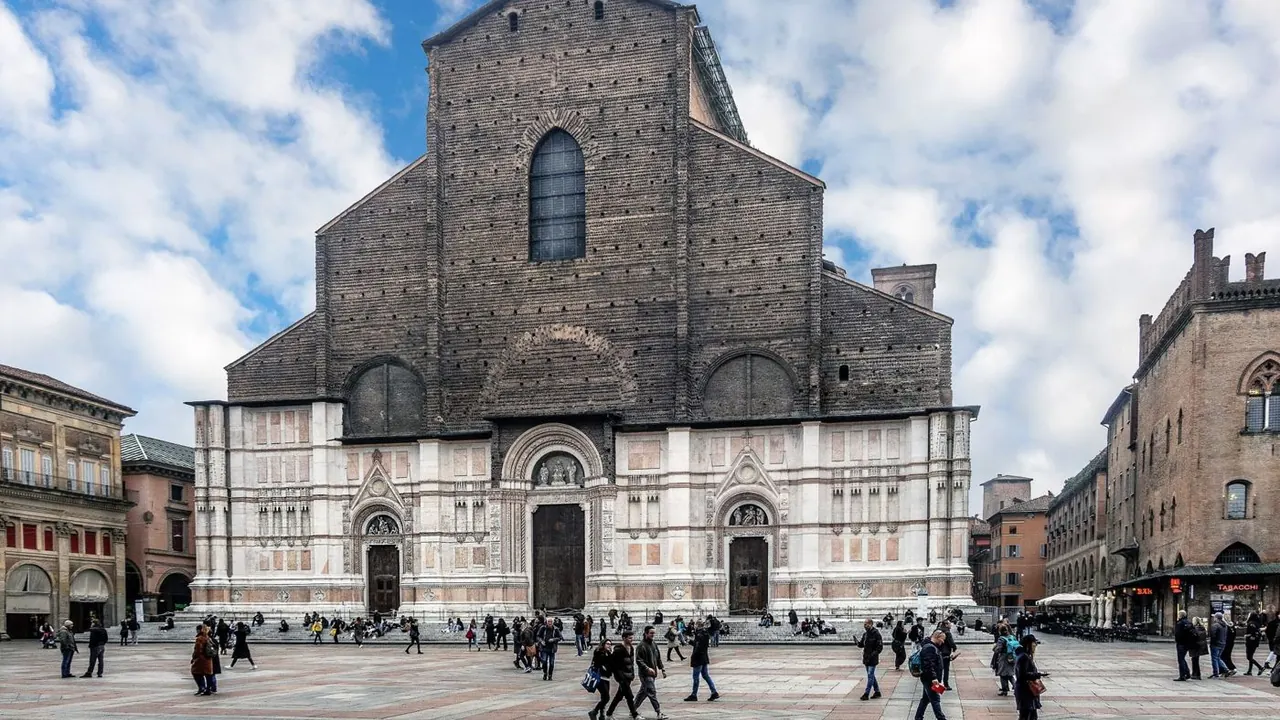
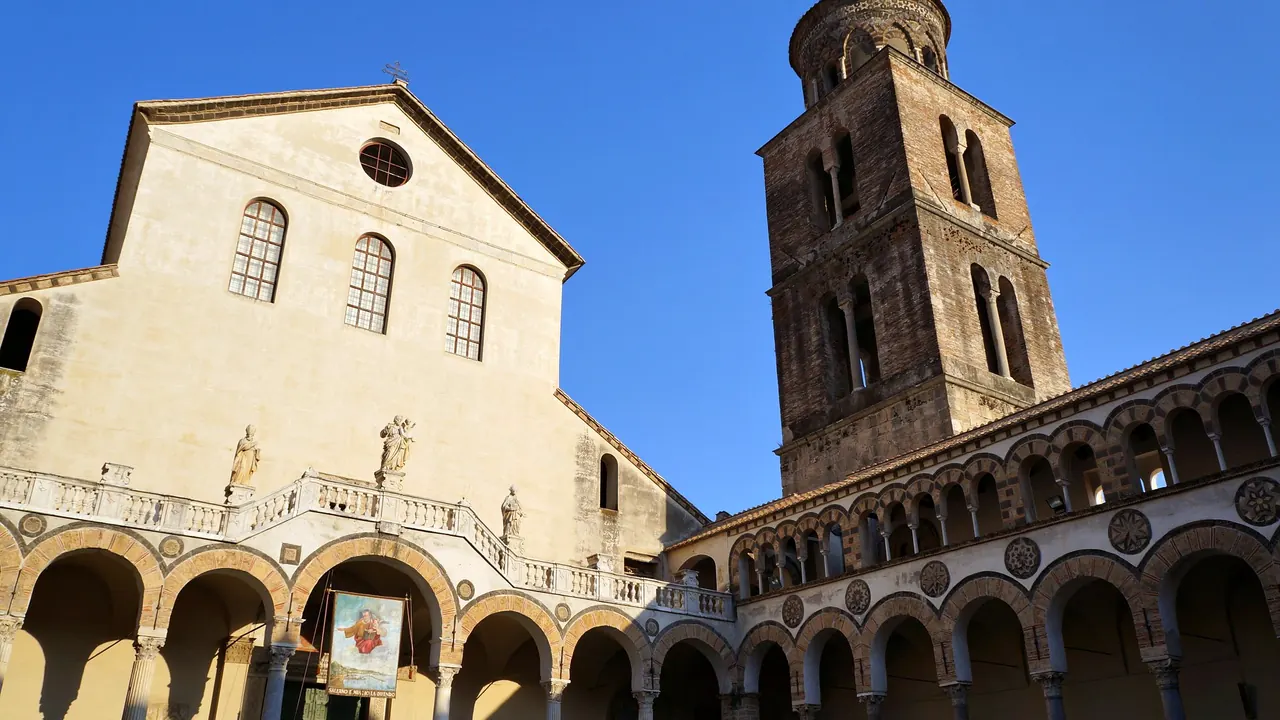
Photos: Bologna by Vanni Lazzari, CC BY-SA 4.0, cropped; Salerno by Leandro Neumann Ciuffo, CC BY 2.0, cropped.
Bologna or Salerno?
Our verdict in twelve categories, each scored against the same fixed benchmark cities, and the climate month by month, so you can choose for your trip.
Choose Bologna for
- culture and sights
- nightlife
- live music and the arts
Bologna suits travellers who want to eat seriously, walk a complete medieval city and fill the evenings. Its arcaded brick centre, its university life and its Emilian cooking keep a stay interesting without leaving town, and the train station puts Florence, Ravenna and Venice within easy reach. It is the better choice for a culture-led trip in spring or autumn, as long as nobody expects to swim.
Choose Salerno for
- beaches
- nature and the outdoors
- prices
Pick Salerno if the sea and the landscape matter more than the city itself. It sits on the water, with sandy beaches to the south and the cliffs of the Amalfi Coast a ferry ride away, and it is cheaper to sleep in than the coastal villages. The town is pleasant but modest, so it works best as a base for Paestum, Pompeii, the coastal paths and summer days by the water.
Scoreboard
Twelve categories on one fixed scale from 0 to 100. The shaded stretch is the gap between the two.
Your match
Pick a travel style or drag the sliders, and both match scores follow your weighting.
Wins on culture and sights and nightlife with your weighting.
Wins on beaches and nature and the outdoors with your weighting.
What matters to you?
Category by category
What the scores mean for a trip.
Beaches & swimming
Salerno is a seaside city, and Bologna is not. In Salerno the grey sand of the city beaches is fine for a quick dip, the long sandy shore towards Paestum suits a full day under the pines, and the coves around Cetara and Amalfi have the clear water.
From Bologna, swimming means an hour's train ride to Rimini and an organised lido on the green, shallow Adriatic. That works as an escape from the summer heat, but it will never be the point of the trip.
Food & drink
Bologna is the stronger food city. Tagliatelle al ragù, tortellini in brodo and mortadella are made with care in old osterie, and the Quadrilatero market lanes and the producers of Parma and Modena nearby make eating a reason to come in itself.
Salerno's cooking is lighter and coastal: fried seafood, pasta with clams, wood-fired pizza and buffalo mozzarella eaten fresh on the day it is made. It is honest everyday food rather than a culinary pilgrimage, though in high summer it may suit better than Bologna's rich, heavy dishes.
Culture & sights
Bologna has far more to see in its own streets. The UNESCO porticoes, San Petronio, the Two Towers, the seven churches of Santo Stefano and the university palaces make a dense, intact medieval centre that rewards two or three full days.
Salerno's highlights are the Norman cathedral with the relics of Saint Matthew, the medicinal garden linked to Europe's first medical school, and the Arechi Castle above the gulf. They are worth seeing but quickly covered, and the region's great ancient sites lie outside the city.
Nightlife
Bologna's student population keeps it going out late most of the year. The cheap bars around Piazza Verdi, the taverns of Via del Pratello and the wine bars near the Quadrilatero give a choice of moods, though August goes very quiet.
Salerno's nights centre on a few old-town squares around Largo Campo, mostly at weekends and in summer, with the seafront passeggiata for gelato before that. It is sociable but small, and anyone after more heads to Naples.
Nature & outdoors
Salerno has the more spectacular setting. The cliffs and lemon terraces of the Amalfi Coast, the Path of the Gods and the Valle delle Ferriere in the Lattari mountains, and the gorges and headlands of the Cilento are all close, along with kayaking and boat trips at sea.
Bologna offers gentler green space: the walk up to San Luca, the Colli Bolognesi, the gypsum caves of the Parco dei Gessi and the start of the Via degli Dei to Florence. The higher Apennines are further off, and the plain to the north is flat farmland.
Day trips
Both cities are outstanding bases, but for different outings. From Bologna, fast and regional trains reach Renaissance and medieval art cities: Florence in barely half an hour, Ravenna's mosaics, Ferrara, Modena, Parma and, a little further, Venice and Verona.
From Salerno the days out are ancient and coastal: the Greek temples of Paestum and Pompeii each about half an hour by train, Herculaneum and Naples, and ferries to Amalfi and Positano with Ravello above. Those ferries only run in season, while Bologna's rail links work all year.
Good for families
Neither city is built around children, and neither has a zoo or aquarium, but they help in different ways. Bologna's centre is flat and largely car-free, with porticoes for shade, and climbing the Asinelli tower is a small adventure. For a big day out, families go to Mirabilandia.
Salerno has the long, flat seafront promenade with playgrounds and the shallow sandy beaches to the south. Against that, its old town is all steps, and the winding coast roads can be hard on carsick children.
Getting around
Bologna is the easier city to get around. Its compact, flat centre is mostly closed to cars and covered by arcades, and the main station at the edge of the old town connects to all of northern Italy.
Salerno is walkable along its central strip and has a short metro line, which Bologna lacks. The castle needs a bus, though, and reaching the Amalfi Coast means seasonal ferries or slow, crowded buses on a road where driving is stressful.
Shopping & style
Bologna has a little more range. Food is what visitors take home from the Quadrilatero, but there is also a small luxury cluster on Via Farini and in the Galleria Cavour, the Montagnola market and independent bookshops in the university quarter.
Salerno's Corso Vittorio Emanuele is mostly chain stores. Its most characteristic buys come from nearby: Vietri majolica, limoncello and Cetara's colatura.
Affordability
Salerno is the cheaper place to stay. Its rooms cost far less than in the coastal villages, and local pizzerias and regional trains charge what locals pay. Costs rise in high summer with sunbeds, repeated ferries and entry to the big archaeological sites.
In Bologna, eating and aperitivo are good value and most sights are free, but old-town hotels are priced like prosperous northern Italy and become scarce during the large trade fairs.
Live music & performing arts
Bologna has the deeper scene. Besides the Teatro Comunale's opera and symphonic season, it has a long jazz tradition in small clubs, student indie gigs and summer concerts and films in Piazza Maggiore, which together earn its UNESCO City of Music title.
Salerno's gilded Teatro Verdi stages a respectable opera and concert season, but little else happens in the city. Its special evening is a Ravello Festival concert on the cliff-top terraces above Amalfi.
Wellness & relaxation
Neither city has its own bathing culture, so in town both offer hotel spas and long lunches. Bologna has thermal water closer at hand, with the spring-fed pools of Castel San Pietro Terme about twenty minutes away and the old spa town of Porretta Terme in the Apennines.
Salerno's nearest thermal pools, at Contursi Terme, are about an hour inland. What it has instead is a palm-lined seafront for slow sunset walks, which is calmer than Bologna's noisy university quarter.
When should you go?
Pick your month. The climate figures are measured averages, not a forecast.
Bologna in July
Salerno in July
Daytime high, °C
Rainfall in the month, mm
Where the figures come from
Bologna has no rain gauge within 25 km of the centre, so its rainfall comes from a gridded climate dataset read at the city rather than from a gauge further away.
Bologna's sunshine is measured 82 km from the centre, at Cervia.
Salerno's temperatures are measured 71 km from the centre, at Grazzanise.
Salerno has no rain gauge within 25 km of the centre, so its rainfall comes from a gridded climate dataset read at the city rather than from a gauge further away.
Temperature and rainfall are climate normals, averaged over the years shown. Bologna: 1991-2020 normals, Bologna / Borgo Panigale (5.5 km from centre). Salerno: 1991-2020 normals, Grazzanise (71.3 km from centre).
Bologna has a continental climate, and it shows. Winters are grey and chilly, with January highs around 7°C and little sunshine. July and August reach 32°C in the humid air of the plain, which makes daytime sightseeing heavy work even with the porticoes for shade. Rain is spread across the year, with October and November the wettest months. May, early June and September are the best months for walking the city and the hills. The days are warm rather than hot, and long and sunny, though a showery day is always possible.
Salerno is milder in winter, at about 13°C in January, but much wetter. The autumn rain sets in from September, and November brings about 154mm. Summer is the reverse: almost dry and very sunny. The sea is warm enough for swimming from June into early October and reaches about 26°C in August. Late May, June and September give the best balance of swimming, hiking and sightseeing. In winter Salerno is the gentler of the two for walking the streets, but it has more rainy days.
Which traveller are you?
On a beach and sun trip, Salerno is the obvious choice. It sits on a warm sea, the wide sands towards Paestum fill a whole day, and the clear coves of the Amalfi Coast are a ferry ride away. Bologna has no beach of its own at all.
For a culture and arts trip, Bologna gives far more within walking distance: the porticoes, Piazza Maggiore, the Archiginnasio's anatomical theatre and the Pinacoteca, plus opera at the Teatro Comunale and jazz in basement clubs. Salerno's cathedral and castle take a day or two.
On a food and nightlife trip, Bologna wins. Hand-rolled pasta, mortadella and Quadrilatero delicatessens lead into aperitivo, wine bars and late student streets around Piazza Verdi and Via del Pratello. Salerno eats honestly and well but goes quieter after dark.
Before you go
| Measure | Bologna | Salerno |
|---|---|---|
| Official language | Italian | Italian |
| Currency | Euro (EUR) | Euro (EUR) |
| Sockets | CFL230 V, 50 Hz | CFL230 V, 50 Hz |
| Driving side | Right | Right |
| Time zone | UTC+1, UTC+2 in summer | UTC+1, UTC+2 in summer |
| Emergency number | 112 | 112 |
| Elevation | 54 m | 4 m |
| Main airport | Bologna Guglielmo Marconi Airport (BLQ)6 km from centre98 non-stop destinations | Naples International Airport (NAP)46 km from centre131 non-stop destinations |
| Public holidays this year | 13 days | 13 days |
By the numbers
| Measure | Bologna | Salerno |
|---|---|---|
| City population | 387,971 | 127,186 |
| People per km² | 2,754 | 2,123 |
| Museums within 10 km | 68 | 9 |
| UNESCO World Heritage sites within 50 km | 3 | 5 |
| Swim season, months above 21 °C | - | 5 months |
Where else could you go?
Every comparison below shares a destination with this one, so you can follow Bologna or Salerno somewhere new.