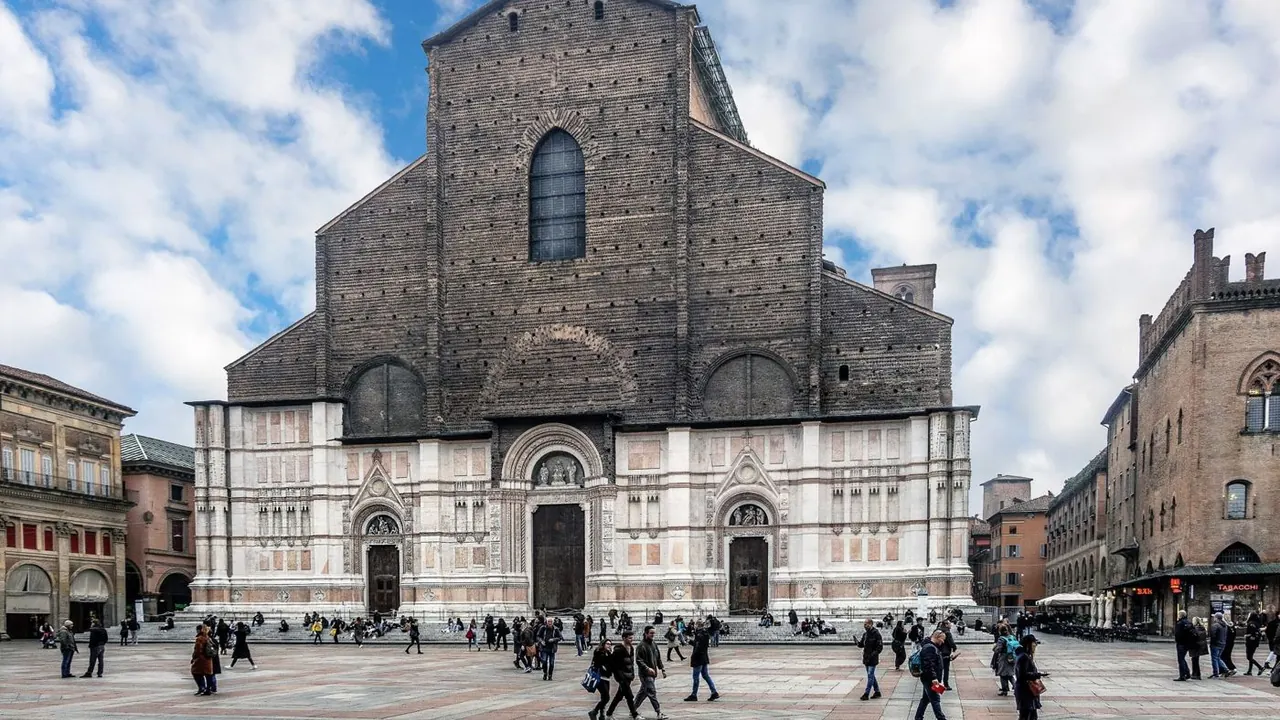
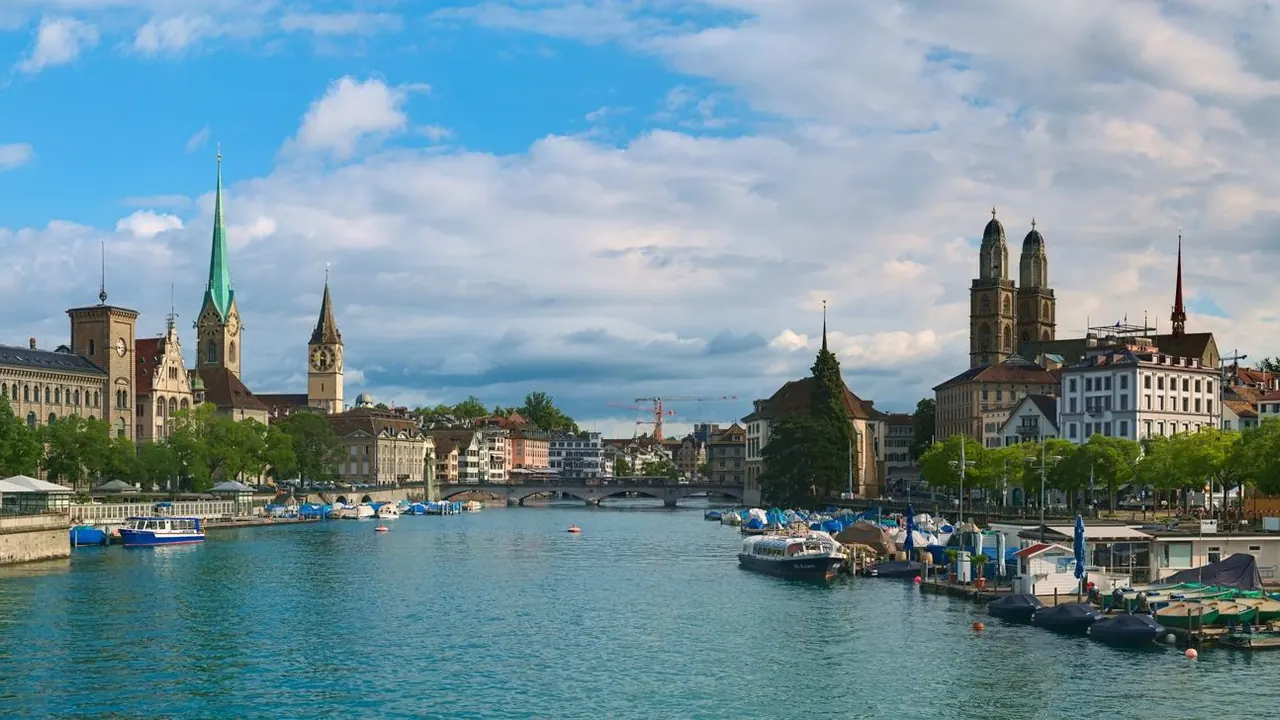
Photos: Bologna by Vanni Lazzari, CC BY-SA 4.0, cropped; Zurich by Daniel Kraft, CC BY-SA 3.0, cropped.
Bologna or Zurich?
Our verdict in twelve categories, each scored against the same fixed benchmark cities, and the climate month by month, so you can choose for your trip.
Choose Bologna for
- prices
- food and drink
- culture and sights
Bologna is the choice when the trip is built around eating and old streets. Its brick centre and miles of porticoes reward slow walking, the trattorias and the Quadrilatero delicatessens are reason enough to come, and the rail junction puts Florence, Ravenna, Ferrara and even Venice within a day out. It also costs far less than Zurich once you sit down to eat, which matters on a longer stay.
Choose Zurich for
- nature and the outdoors
- families
- getting around
Zurich suits travellers who want water, mountains and a city that runs without friction. The lake is clean enough to swim in, the Alps begin about an hour away, and trams, trains and boats on one ticket make it easy with children or on a short visit. It asks a great deal of your wallet in return, so it fits a trip where comfort and scenery matter more than cost.
Scoreboard
Twelve categories on one fixed scale from 0 to 100. The shaded stretch is the gap between the two.
Your match
Pick a travel style or drag the sliders, and both match scores follow your weighting.
Wins on prices and food and drink with your weighting.
Wins on nature and the outdoors and families with your weighting.
What matters to you?
Category by category
What the scores mean for a trip.
Beaches & swimming
Neither city is a beach destination, but Zurich makes far more of its water. The lake is clean and clear, reaching the low twenties in high summer, and you can swim from wooden bathing houses at Utoquai or Mythenquai or drift down the Limmat at the Letten river baths, all within the city.
Bologna is inland, and swimming means a train of about an hour to Rimini or Cervia, where the Adriatic is warmer but the shore is a long row of rented sunbeds and the water is greener. It works as a day out from the summer heat, not as part of daily life.
Food & drink
Food is the sharpest difference between the two. Bologna is the home of tagliatelle al ragù, tortellini in brodo and mortadella, cooked in old osterie and sold in the market lanes of the Quadrilatero, with Parmigiano and Parma ham made less than an hour away. Its weakness is a lack of variety beyond Emilian cooking.
Zurich eats well but rarely memorably: veal in cream sauce with rösti, fondue in guild-house dining rooms, and chocolate and Luxemburgerli as the real highlights. Kreis 4 and 5 add international choice, but there are few markets, and every meal is expensive.
Culture & sights
Bologna's appeal is a whole medieval city rather than single sights: the UNESCO-listed porticoes, Piazza Maggiore with San Petronio, the Two Towers, the seven churches of Santo Stefano and the anatomical theatre of Europe's oldest university.
Zurich is stronger on museums than on townscape. The Kunsthaus, the Swiss National Museum and the Rietberg are excellent, and the Grossmünster and the Chagall windows of the Fraumünster anchor a neat old town, but it feels like a good collection of sights rather than a place that is itself the sight.
Nightlife
The two go out about as much as each other, in very different ways. Bologna's nights are student-led and cheap: crowds standing outside bars around Piazza Verdi, small taverns along Via del Pratello, and wine bars after aperitivo, with proper clubs a taxi ride out of town.
Zurich is the place for electronic music, with clubs in Kreis 4, Kreis 5 and Zurich West running until morning and the Street Parade on the lake shore in August, just when Bologna empties out for the summer. The cost of drinks keeps Zurich nights shorter than its clubs would allow.
Nature & outdoors
Zurich has much the grander landscape. The lake with the Glarus Alps at its far end, the forest trails of the Uetliberg and ridge walks along the Albis are close to the centre, and Rigi, Pilatus and winter skiing at Flumserberg are about an hour away by train.
Bologna offers gentler country: the arcaded climb to San Luca, the Colli Bolognesi and the gypsum caves of the Parco dei Gessi. The Via degli Dei over the Apennines to Florence is a fine multi-day walk, but the higher mountains are further off and the summer heat limits outdoor days.
Day trips
Both are superb rail hubs, and Bologna has the edge for the quality of what it reaches. Florence is barely half an hour away, Ravenna's mosaics, Ferrara, Modena and Parma are short rides, and Venice, Verona and Padua are possible in a day, so you can see several of Italy's great art cities from one base.
Zurich's outings are more varied in kind, mixing towns with scenery: Lucerne's bridges, Bern's old town, Basel's museums, the Rhine Falls with Stein am Rhein, and a boat up the lake to Rapperswil.
Good for families
Zurich is the better city for children. The zoo, with its Madagascar rainforest hall and elephant park, is a full day in itself, the lake lidos have shallow water and lawns, and the Technorama in Winterthur and the Swiss Museum of Transport in Lucerne are easy trips.
Bologna is pleasant with children, flat, shaded and largely car-free, and pasta and gelato make meals simple. But it has no zoo or large aquarium, so families tend to head out to Mirabilandia or the beach at Rimini, and the summer heat is tough on small children.
Getting around
Both centres are compact enough to walk, but Zurich adds a public transport system that makes everything else effortless. Trams, S-Bahn trains, funiculars and even lake boats share one ticket, and the airport is a short train ride from the main station.
Bologna has no metro and relies on buses, which matters little because nearly everything is within the walkable old town, sheltered by the porticoes. Its great strength is the station on the edge of the centre, with fast trains across northern Italy.
Shopping & style
Zurich has the stronger shopping, built around Bahnhofstrasse with its watchmakers, jewellers and department stores, plus design shops under the railway viaduct arches in Zurich West. Prices are high, and beyond luxury and design the choice is narrow.
In Bologna, what most people take home is food: aged Parmigiano, mortadella, fresh tortellini and balsamic vinegar from the Quadrilatero. Via Farini and the Galleria Cavour hold a small luxury cluster, and the antiques market in Piazza Santo Stefano makes a good weekend browse.
Affordability
The gap here is very wide. Bologna is mid-priced for Western Europe, with good trattoria meals, aperitivo with food and free churches, and the main expense is hotel rooms, which get scarce during the large trade fairs.
Zurich is among the most expensive cities anywhere: simple rooms, casual lunches, drinks, transport and museums all cost a lot. Supermarket picnics by the lake, the free lidos and the visitor card help, but only a little.
Live music & performing arts
Zurich has the bigger stage. The Opernhaus is one of Europe's leading opera houses, the Tonhalle Orchestra plays in a restored nineteenth-century hall, and the Rote Fabrik by the lake hosts jazz, indie and electronic acts.
Bologna's scene is smaller but has real character. The Teatro Comunale is a historic opera house, basement jazz clubs play most nights in a UNESCO City of Music, and summer brings concerts and film screenings to Piazza Maggiore. In both cities, theatre is mostly in the local language.
Wellness & relaxation
Zurich is the more restful city and has better places to soak. Thermal pools fill the stone vaults of the old Hürlimann brewery with a rooftop pool above, the lake bathing houses become saunas in winter with cold dips between sessions, and Roman-era Baden is twenty minutes away.
Bologna has no bathing culture of its own, and the noise of the university quarter and the heavy summer heat work against calm. Its spa options are outside town, at Castel San Pietro Terme nearby and Porretta Terme in an Apennine valley.
When should you go?
Pick your month. The climate figures are measured averages, not a forecast.
Bologna in July
Zurich in July
Daytime high, °C
Rainfall in the month, mm
Where the figures come from
Bologna has no rain gauge within 25 km of the centre, so its rainfall comes from a gridded climate dataset read at the city rather than from a gauge further away.
Bologna's sunshine is measured 82 km from the centre, at Cervia.
Temperature and rainfall are climate normals, averaged over the years shown. Bologna: 1991-2020 normals, Bologna / Borgo Panigale (5.5 km from centre). Zurich: 1991-2020 normals, Zurich Town / Ville. (2.2 km from centre).
Bologna is the warmer, drier and sunnier of the two all year round, but its summer is hard work. July and August reach about 32°C in heavy, humid air, too hot for long afternoons on foot. May, early June and late September are the best times for walking the porticoes, warm and bright without the worst of the heat. Rain picks up in autumn, around 71mm a month from September to November. Winters are cold and grey, though rarely very wet.
Zurich stays mild in summer, around 24°C in July and August. That is comfortable for a full day of sightseeing and warm enough for the lake lidos from June to early September. The catch is that summer is also its wettest stretch, with about 126mm a month from May to July, often falling as showers, and it gets less sun than Bologna in every month. Winters are colder and much darker, with fog over the lake. If you want sunshine, go to Bologna in spring or autumn. Choose Zurich in high summer if you want to stay out of the heat, and pack for the rain.
Which traveller are you?
On a trip on a tight budget, Bologna is the realistic pick. Trattoria meals, aperitivo with food and free churches keep daily costs moderate, while Zurich ranks among the most expensive cities in the world, where even a casual lunch strains a budget.
For an outdoors trip, Zurich wins clearly. The lake, the Uetliberg ridge and high-mountain hiking on Rigi and Pilatus about an hour away beat Bologna's gentle Apennine foothills, though the Via degli Dei trail to Florence has its own appeal.
On a family trip with children, Zurich makes life easier. The zoo with its rainforest hall, shallow lake lidos, boat trips and buggy-friendly trams give children plenty to do, while Bologna's sights are mostly churches and palaces aimed at adults.
Before you go
| Measure | Bologna | Zurich |
|---|---|---|
| Official language | Italian | French, German, Italian, Romansh |
| Currency | Euro (EUR) | Swiss Franc (CHF) |
| Sockets | CFL230 V, 50 Hz | CJ230 V, 50 Hz |
| Driving side | Right | Right |
| Time zone | UTC+1, UTC+2 in summer | UTC+1, UTC+2 in summer |
| Emergency number | 112 | 112 |
| Elevation | 54 m | 408 m |
| Main airport | Bologna Guglielmo Marconi Airport (BLQ)6 km from centre98 non-stop destinations | Zürich Airport (ZRH)9 km from centre226 non-stop destinations |
| Public holidays this year | 13 days | 10 days |
By the numbers
| Measure | Bologna | Zurich |
|---|---|---|
| City population | 387,971 | 440,935 |
| People per km² | 2,754 | 5,016 |
| Museums within 10 km | 68 | 63 |
| UNESCO World Heritage sites within 50 km | 3 | 1 |
Where else could you go?
Every comparison below shares a destination with this one, so you can follow Bologna or Zurich somewhere new.