Botswana
Okavango Delta
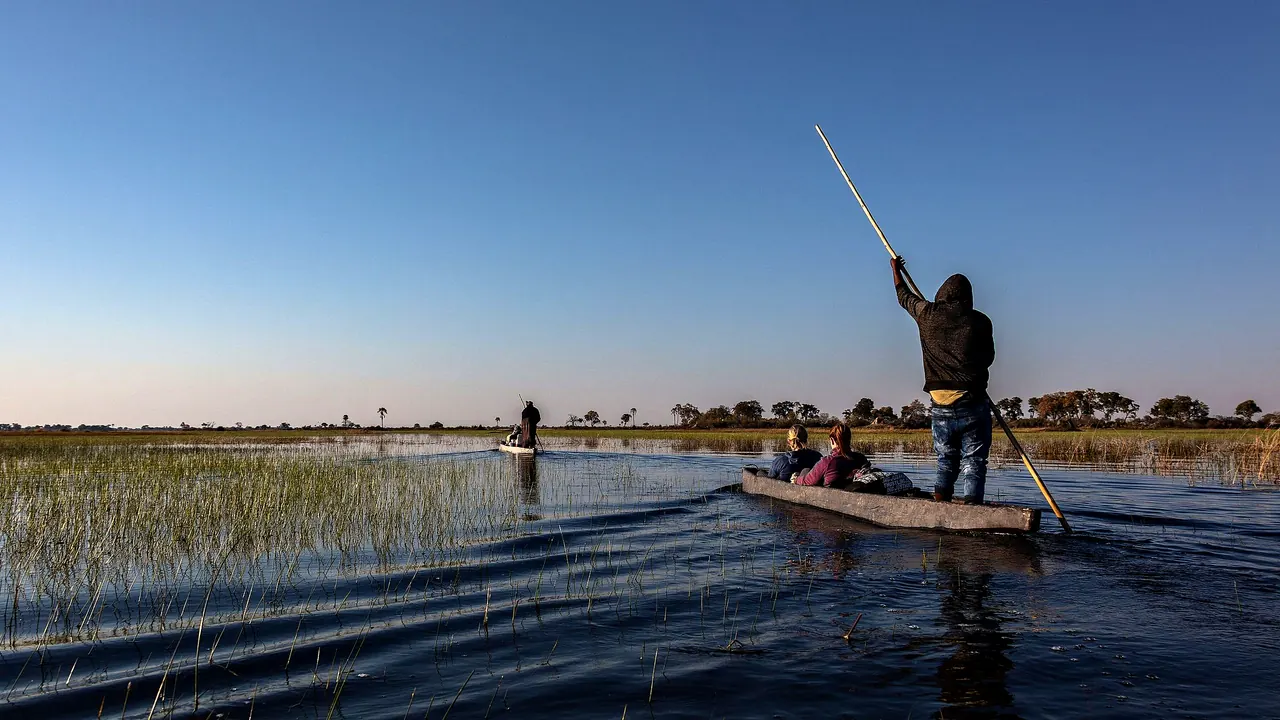
A mokoro on the still water of the Okavango Delta
- Nature & outdoors97
- Wellness & relaxation34
- Families26
Photo: Diego Delso, CC BY-SA 4.0, cropped
Match
19
Every category weighted equally
- Beach & sun20
- Culture & arts15
- Food & nightlife12
- Family trip22
- Outdoors29
- Relax & unwind25
- Shopping & style15
- On a budget18
Okavango Delta in twelve categories
Our verdict on each, scored 0 to 100 against the same fixed benchmark cities, so a score means the same thing on every page.
Beaches & swimming. Scores 3 out of 100.
Food & drink. Scores 20 out of 100.
Culture & sights. Scores 12 out of 100.
Nightlife. Scores 4 out of 100.
Nature & outdoors. Scores 97 out of 100.
Day trips. Scores 7 out of 100.
Good for families. Scores 26 out of 100.
Getting around. Scores 15 out of 100.
Shopping & style. Scores 7 out of 100.
Affordability. Scores 3 out of 100.
Live music & performing arts. Scores 4 out of 100.
Wellness & relaxation. Scores 34 out of 100.
Okavango Delta category by category
Beaches & swimming
3This is not a place to swim. The delta lies in the middle of landlocked Botswana, and its clear channels and lagoons are home to crocodiles and hippos, so nobody gets in the water. Swimming here means the small plunge pool at your camp, usually set on a deck facing the floodplain. That is a pleasant way to cool off between game drives, but it is not a reason to come.
Food & drink
20Most meals are eaten in the camp where you stay, and they are part of the package. The cooking at the better lodges is careful and generous: early breakfasts before the morning drive, brunch on return, sundowner drinks out in the bush and dinners around a fire or under the stars. South African wines are usually on hand. It is good hospitality rather than a cuisine, though. Maun, the gateway town, has a few cafés and grill restaurants and a supermarket for self-drivers, and seswaa, the slow-pounded beef served with pap, is the dish to try if you get the chance. Nobody plans a trip here to eat.
Culture & sights
12The delta is wilderness, and the built and museum heritage that culture travel depends on is almost absent. Maun is a practical frontier town with a small museum and craft outlets rather than sights. The one heritage site of real weight is the Tsodilo Hills, near the panhandle in the north-west, where thousands of San rock paintings cover the outcrops and the hills hold deep spiritual meaning for local communities. Getting there takes a long drive or a charter flight from the main safari areas, so few visitors combine it with a stay. Otherwise culture here means talking to guides from the Bayei and Hambukushu communities and learning how the delta has been fished, poled and lived in.
Nightlife
4There is no nightlife in any usual sense. Evenings in camp mean a drink by the fire, dinner and an early night, since the morning drive leaves at first light and you are escorted to your tent after dark because animals walk through camp. Maun has a few bars where guides and pilots gather, and that is the extent of it. The night sounds of lions, hippos and hyenas are the real entertainment.
Nature & outdoors
97Few places on earth match this for wildlife. Each year the Okavango River spreads across the Kalahari into a maze of channels, papyrus-lined lagoons and palm islands, drawing elephants, buffalo, lions, leopards, wild dogs, hippos, red lechwe and a huge variety of birds. The flood arrives from the Angolan highlands in the dry winter and peaks around June to August, when the animals concentrate and the water is highest. That makes May to October the classic season. The green months of summer bring calving, migrant birds and heavy afternoon storms.
The ways of seeing it are varied. Poling through the reeds in a mokoro, walking with an armed guide across islands, game drives in Moremi Game Reserve and the private concessions, motorboat trips in the deeper panhandle and scenic flights over the floodplain all give a different angle. The concessions, where low visitor numbers are the rule, feel truly wild.
Day trips
7The delta does not work as a base for day trips in the sense of visiting other towns or sights. Maun is the only town of any size, and the places beyond it, such as the Makgadikgadi and Nxai salt pans or the Chobe riverfront, are further wilderness reached on separate safari legs rather than easy outings. Visitors move from camp to camp by light aircraft instead, spending each day in the landscape itself.
Good for families
26For older children who already love animals, a delta safari can be the trip of a lifetime. Some camps offer family tents and private vehicles, and a few run guided activities for young guests. With small children it is much harder. The camps are unfenced and animals wander through them, many lodges set minimum ages for walking and mokoro outings or for staying at all, the area carries a malaria risk, and transfers are by small aircraft with tight luggage limits. There is nothing built for children. Families do best with teenagers, travelling in the dry season and choosing camps known for welcoming them.
Getting around
15Almost everyone arrives through Maun's airport and then flies on in small planes to grass airstrips near each camp. Once there, all movement is by the camp's vehicles, boats and mokoros with a guide, since walking alone outside camp is not safe. The trips are smooth because they are arranged for you, but you cannot move independently or cheaply. Self-driving into Moremi is possible with a well-equipped 4x4 and experience on deep sand and flooded crossings, and many tracks become impassable at high water. There are no buses or trains of any use to a visitor.
Shopping & style
7Shopping is limited to one genuine craft and a few lodge boutiques. The finely woven baskets of the Ngamiland villages, made from palm fibre and coloured with natural dyes, are among the best in southern Africa and can be bought in Maun's craft outlets. Beyond that there are camp curio shops selling safari clothing and carvings. Bring what you need, because there is nowhere to buy it once you leave Maun.
Affordability
3This is one of the most expensive places in the world to travel. Botswana has long chosen a model of few visitors paying a lot, and the delta's camps, most of them all-inclusive with guiding and activities, charge some of the highest nightly rates in African safari travel. Light-aircraft transfers add a good deal on top. The green season from roughly November to March brings lower rates, and self-drive camping in Moremi from a Maun base is the budget route. Even that is costly once park fees, vehicle hire and equipment are counted, and it calls for real experience.
Live music & performing arts
4The music you are most likely to hear here comes from the camp staff. At many lodges they welcome arriving guests, or gather after dinner, to sing in close harmony in Setswana and the local languages, sometimes with a little dancing. These moments are warm and often moving, but they are short, informal and part of camp life rather than performances you plan around. Neither the delta nor Maun has a theatre, concert hall or regular live-music venue, so a visitor who wants concerts or a stage will not find them on this trip.
Wellness & relaxation
34There is no bathing tradition here, and spa treatments are limited to massage rooms at some of the upmarket lodges. What the delta does offer is deep quiet. Camps are small and remote, there is no traffic and often no signal, and the long hot middle of the day is spent resting on a deck above the floodplain while elephants drink below. The rhythm is not truly slow, though. Days start before sunrise for the morning activity and run on a fixed schedule, so it restores the mind more than it pampers the body.
Where to stay in Okavango Delta
Nobody stays in one town here. Visitors split their nights between small camps reached by light aircraft, usually two or three of them, so that one sits in the permanent water and another on drier land. Water camps suit people who want to pole through the reeds in a mokoro, watch birds and walk across islands. Land camps suit those who want game drives and the best chance of lions, leopards and wild dogs.
For a first visit, the private concessions are the best choice if the budget allows. Visitor numbers are low, the guiding is strong, and walking and night drives are often possible. Moremi Game Reserve offers some of the richest game viewing in the delta and is the only part open to experienced self-drivers, who camp at its public sites. The panhandle in the north-west suits a second visit or keen birders, with deep channels and motorboat trips. It is also the closest base for the Tsodilo Hills.
Maun is a practical stop rather than a place to linger. Most people spend a night there before or after the flights, and self-drivers use it to stock up before heading into Moremi. Families with teenagers should choose camps known for welcoming them.
When should you go?
Pick a month to see what it is like. The climate figures are measured averages, not a forecast.
Okavango Delta in July
Daytime high, °C
Rainfall in the month, mm
The whole year
Shaded against this destination’s own year: the deepest cell is its best month for that figure and the palest its weakest.
Temperature and rainfall are climate normals, averaged over the years shown. Okavango Delta: 1961-1990 (rainfall 1991-2020) normals, Maun (0.5 km from centre).
Before you go
| Measure | Okavango Delta |
|---|---|
| Official language | English |
| Currency | Pula (BWP) |
| Sockets | GM230 V, 50 Hz |
| Driving side | Left |
| Time zone | UTC+2 |
| Emergency number | 911 |
| Main airport | Maun International Airport (MUB)9 non-stop destinations |
| Public holidays this year | 11 days |
Compare Okavango Delta with
Every comparison with a written verdict behind it.