Photos: Bratislava by C.Stadler/Bwag, CC BY-SA 4.0, cropped; Cesky Krumlov by Xth-Floor, CC BY-SA 4.0, cropped.
Bratislava or Cesky Krumlov?
Our verdict in twelve categories, each scored against the same fixed benchmark cities, and the climate month by month, so you can choose for your trip.
Choose Bratislava for
- nightlife
- live music and the arts
- day trips
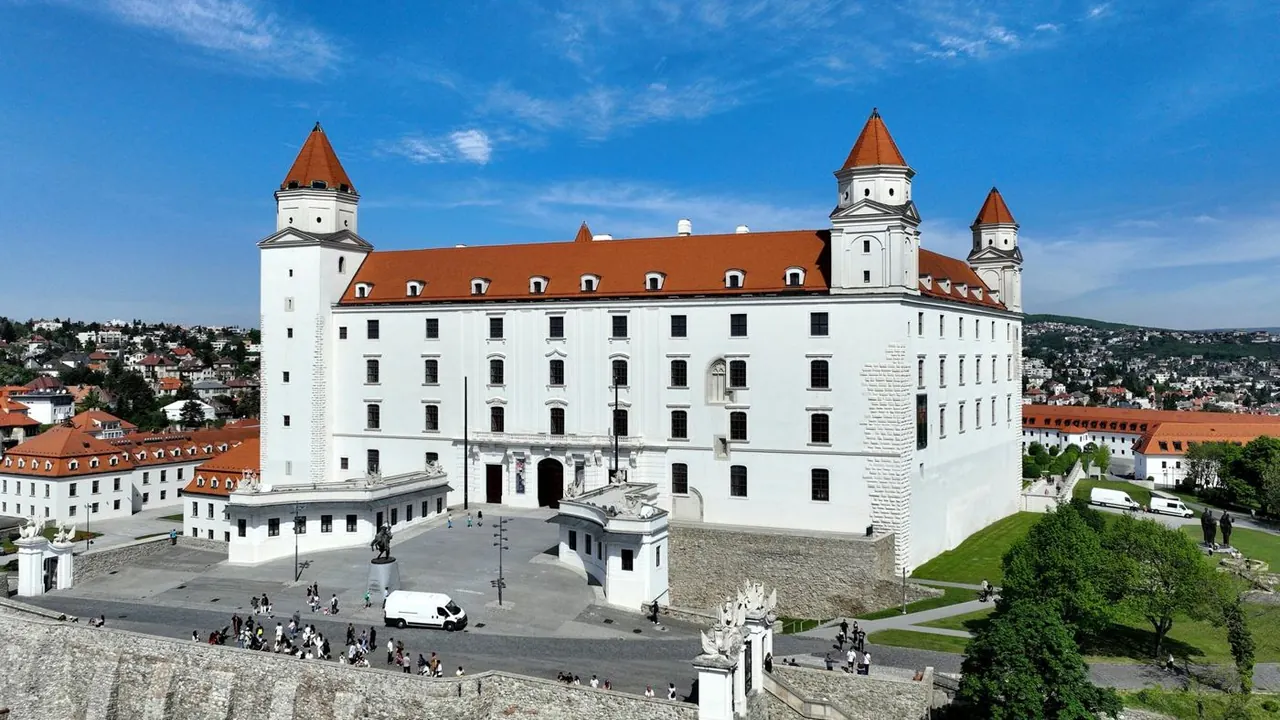
Bratislava is the better pick for travellers who want a small capital with some life in it. Evenings bring wine bars and opera, the Old Town pubs serve hearty food, and trains run straight to Vienna, the Small Carpathian wine villages and towns across three borders. It suits a few easy days with a lot of variety, and it works in any season.
Choose Cesky Krumlov for
- culture and sights
- nature and the outdoors
- beaches
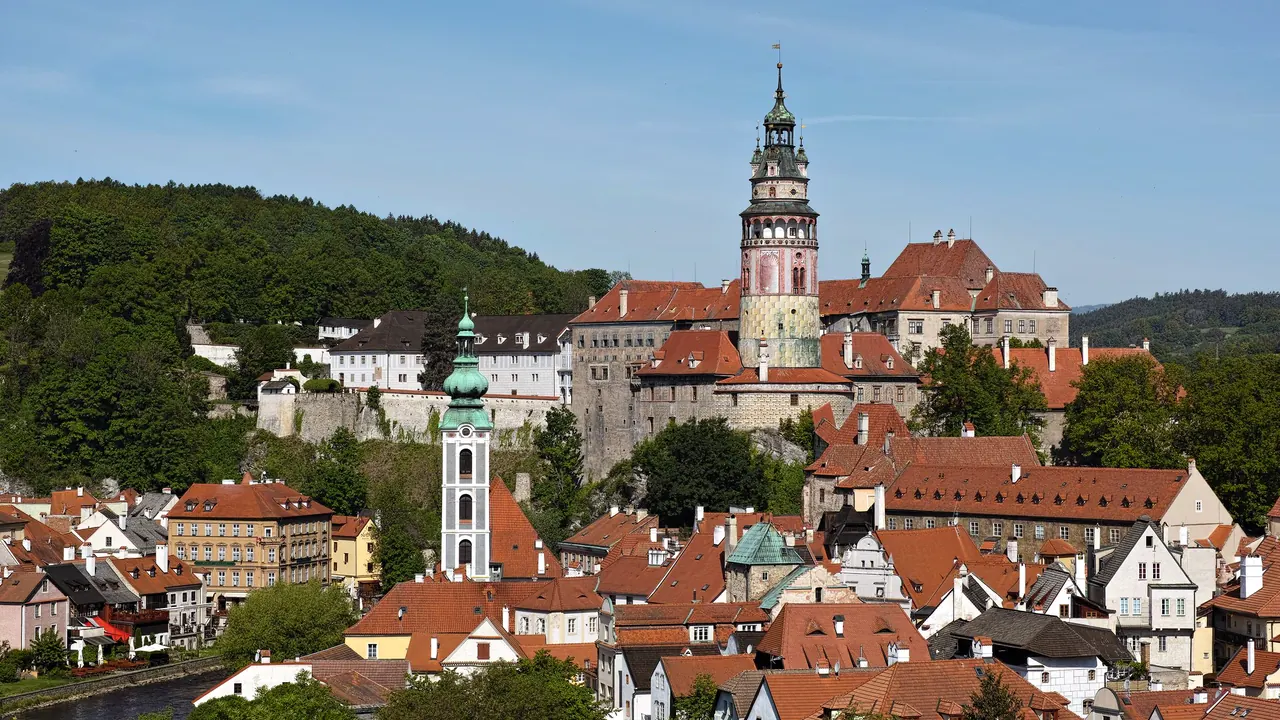
Cesky Krumlov is a single, near-perfect picture of a town: a castle above a loop of the Vltava, painted houses and quiet evenings once the coaches have left. Come here for the townscape, for a day floating downriver by canoe and for walks in the Bohemian Forest. Expect slow nights and a car for the countryside, and for once a smaller town is the more memorable sight.
Scoreboard
Twelve categories on one fixed scale from 0 to 100. The shaded stretch is the gap between the two.
Your match
Pick a travel style or drag the sliders, and both match scores follow your weighting.
Wins on nightlife and live music and the arts with your weighting.
Wins on culture and sights and nature and the outdoors with your weighting.
What matters to you?
Category by category
What the scores mean for a trip.
Beaches & swimming
Neither town is a swimming destination, but Cesky Krumlov has the better lake within reach. Lipno is a large reservoir in the Bohemian Forest with grassy and sandy shores, roughly half an hour's drive south, though its water stays cool even in midsummer.
Bratislava's Zlate piesky is smaller and gets crowded at weekends. On the other hand, a tram goes there and the water is warmer in high summer, so it is the easier choice for a quick swim without a car.
Food & drink
Bratislava eats better, mainly because of its wine. Small Carpathian Riesling and Frankovka are poured in Old Town wine bars, and brewpubs serve halusky with sheep's cheese and roast duck with lokse, with poppy-seed rolls from old bakeries to follow.
Cesky Krumlov's South Bohemian roasts, trout and game taste good in a vaulted cellar, and the local beer has been brewed in town for centuries. The choice is narrower, though, and more of it is aimed at day-trippers.
Culture & sights
Cesky Krumlov is the stronger sight. The whole town is the attraction: painted Renaissance facades in a tight bend of the river, a huge castle with the three-tiered Cloak Bridge, and a rare working Baroque theatre. The Egon Schiele centre in the old brewery adds modern art.
Bratislava's Old Town is just as easy to cover on foot, but it holds fewer sights and is a smaller historic core inside a larger modern city, so the old lanes soon give way to newer streets. Its best story is the coronation route from St Martin's Cathedral, and its twentieth-century layer, the Most SNP bridge and the Slovak National Gallery, is something Krumlov does not have.
Nightlife
This is one of the sharpest differences between the two. Bratislava's Old Town turns loud and late on Friday and Saturday, with pubs, wine and cocktail bars side by side, a few clubs and summer terraces by the Danube. Stag groups are part of the weekend crowd.
Cesky Krumlov has no clubs at all. A few cellar bars and riverside terraces keep going after dinner in summer, and out of season the lanes are empty early.
Nature & outdoors
Cesky Krumlov puts you closer to proper countryside. A canoe trip down the Vltava starts in town, the Bohemian Forest's spruce woods and peat bogs begin half an hour away, and in winter there is cross-country skiing.
Bratislava's outdoors is more of a city's back garden. Beech-wood trails climb from Koliba to Kamzik, steppe meadows cover Devinska Kobyla, and the flat Danube cycle route runs through floodplain forest, with whitewater rafting at Cunovo for something livelier.
Day trips
Bratislava has the better list of excursions, and Vienna alone, an hour by train or a boat ride up the Danube, makes the difference. Add the wine and majolica villages of Modra and Pezinok, Roman Carnuntum, Lednice-Valtice and Pannonhalma, and three countries are within easy reach.
Cesky Krumlov's trips are good but stay closer to home: arcaded Ceske Budejovice and its Budvar brewery, Hluboka's white castle, Holasovice and the fish-pond spa town of Trebon. Most are much easier with a car.
Good for families
Both towns are safe, small and easy for a few days with children, but they appeal in different ways. Bratislava has more to do: a zoo, the chairlift and playgrounds at Kamzik, statue-spotting in the pedestrian Old Town and the thermal water park at Senec.
Cesky Krumlov feels more like a storybook, with bears in the castle moat, a tower to climb and a gentle family raft trip. Its steep cobbled lanes are hard going with a pushchair.
Getting around
Bratislava is easier to get around. The sights are within a twenty-minute walk, and one ticket covers the trams, trolleybuses and buses out to Devin, the zoo and the lakes. Frequent trains reach Vienna and the Slovak towns. Without a metro, though, longer trips across the river take time.
Cesky Krumlov's old town takes a quarter of an hour to cross on foot, over cobbles and uphill. Beyond Ceske Budejovice, public transport thins out, so the forest and the smaller castles usually mean hiring a car or joining a tour.
Shopping & style
Bratislava has a little more range. The state folk-craft centre sells genuine Modra majolica, lace and blue-print cloth, the riverside malls cover everyday needs, and Small Carpathian wine is the best thing to take home.
Cesky Krumlov is almost all souvenirs: Bohemian glass, garnets, marionettes and green moldavite, plus a few ceramics workshops. It has no fashion streets and no department stores.
Affordability
The two cost about the same, and both are good value by Western European standards, with cheap local beer and moderately priced hearty meals. The extra costs fall in different places. In Bratislava, the restaurants on the main squares and in the glass complexes by the Danube charge more.
In Cesky Krumlov, the extra cost comes from rooms with castle views, restaurants on the main lanes and paying separately for each castle tour. Staying off-centre or coming outside summer helps.
Live music & performing arts
Bratislava has the deeper programme. From autumn to spring the Slovak National Theatre stages opera and ballet in its old house on Hviezdoslav Square and its modern hall by the river, and the Philharmonic plays in the Reduta, with tickets easy to come by. The autumn music festival and a long-running jazz festival add highlights. In summer the main stages are quieter and live music shrinks to small bar gigs.
Cesky Krumlov is the reverse. Its performances happen mainly in summer, with plays and opera in the revolving open-air theatre in the castle garden and a long-running festival of classical concerts in the castle and churches. From autumn to spring there is very little to attend.
Wellness & relaxation
Neither town has thermal baths of its own, but Bratislava is closer to good ones. The Senec water park is half an hour away and the historic mud and sulphur cures of Piestany are an hour by train. In town, the Danube embankment and quiet forest paths offer an unhurried pace.
Cesky Krumlov offers a few hotel wellness rooms and beer baths, with Trebon's peat baths as a day out. Its real draw for relaxing is the stillness of the old town after dark.
When should you go?
Pick your month. The climate figures are measured averages, not a forecast.
Bratislava in July
Cesky Krumlov in July
Daytime high, °C
Rainfall in the month, mm
Where the figures come from
Bratislava has no rain gauge within 25 km of the centre, so its rainfall comes from a gridded climate dataset read at the city rather than from a gauge further away.
Bratislava's sunshine is measured 56 km from the centre, at Wien / Hohe Warte.
Cesky Krumlov's temperatures are measured 50 km from the centre, at Grainet-Rehberg.
Cesky Krumlov has no rain gauge within 25 km of the centre, so its rainfall comes from a gridded climate dataset read at the city rather than from a gauge further away.
Temperature and rainfall are climate normals, averaged over the years shown. Bratislava: 1991-2020 normals, Bratislava Ivanka (8.6 km from centre). Cesky Krumlov: 1991-2020 normals, Grainet-Rehberg (50.3 km from centre).
Both towns have cold, grey winters and are at their best from May to September, but Bratislava runs warmer and sunnier through the summer. Its days reach about 27°C in July and August, warm enough for an afternoon at the lakes, while Cesky Krumlov, higher up and in a river valley, peaks nearer 23°C. That suits walking and paddling there, but it is only just warm enough for swimming at Lipno.
Summer is the wettest season in both. Cesky Krumlov gets the heavier rain, around 111mm in July against 82mm in Bratislava, so pack for showers on a river trip. Spring and early autumn are the easiest months for walking either town. In winter both sit a few degrees above freezing with similarly short, dim days, and Cesky Krumlov is the damper of the two.
Which traveller are you?
On a food and nightlife trip, Bratislava is the clear choice. Its Old Town fills on weekend nights with pubs, cocktail bars and wine bars pouring Small Carpathian Veltliner, while Cesky Krumlov's evenings stop at a quiet beer by the river.
For an outdoors trip, Cesky Krumlov has more to offer. You can canoe the Vltava's wooded meanders, walk or cycle in the Bohemian Forest national park, climb Klet and sail on Lipno. Bratislava's forest trails and Danube cycle route are pleasant but tamer.
On a culture and arts trip built around seeing a place, Cesky Krumlov wins with its UNESCO-listed old town, its vast castle and a Baroque theatre that keeps its original stage machinery. Choose Bratislava instead if your evenings are for opera and concerts.
Before you go
| Measure | Bratislava | Cesky Krumlov |
|---|---|---|
| Official language | Slovak | Czech |
| Currency | Euro (EUR) | Czech Koruna (CZK) |
| Sockets | CE230 V, 50 Hz | CE230 V, 50 Hz |
| Driving side | Right | Right |
| Time zone | UTC+1, UTC+2 in summer | UTC+1, UTC+2 in summer |
| Emergency number | 112 | 112 |
| Elevation | 152 m | 492 m |
| Main airport | M. R. Štefánik Airport (BTS)8 km from centre68 non-stop destinations | Václav Havel Airport Prague (PRG)143 km from centre178 non-stop destinations |
| Public holidays this year | 15 days | 13 days |
By the numbers
| Measure | Bratislava | Cesky Krumlov |
|---|---|---|
| City population | 480,902 | 12,797 |
| People per km² | 1,308 | 576 |
| Museums within 10 km | 22 | 4 |
| UNESCO World Heritage sites within 50 km | 2 | 2 |
Where else could you go?
Every comparison below shares a destination with this one, so you can follow Bratislava or Cesky Krumlov somewhere new.
- Viennavs Bratislava
- Brnovs Bratislava
- Praguevs Cesky Krumlov
- Salzburgvs Cesky Krumlov
- Hallstattvs Cesky Krumlov
- Budapestvs Bratislava