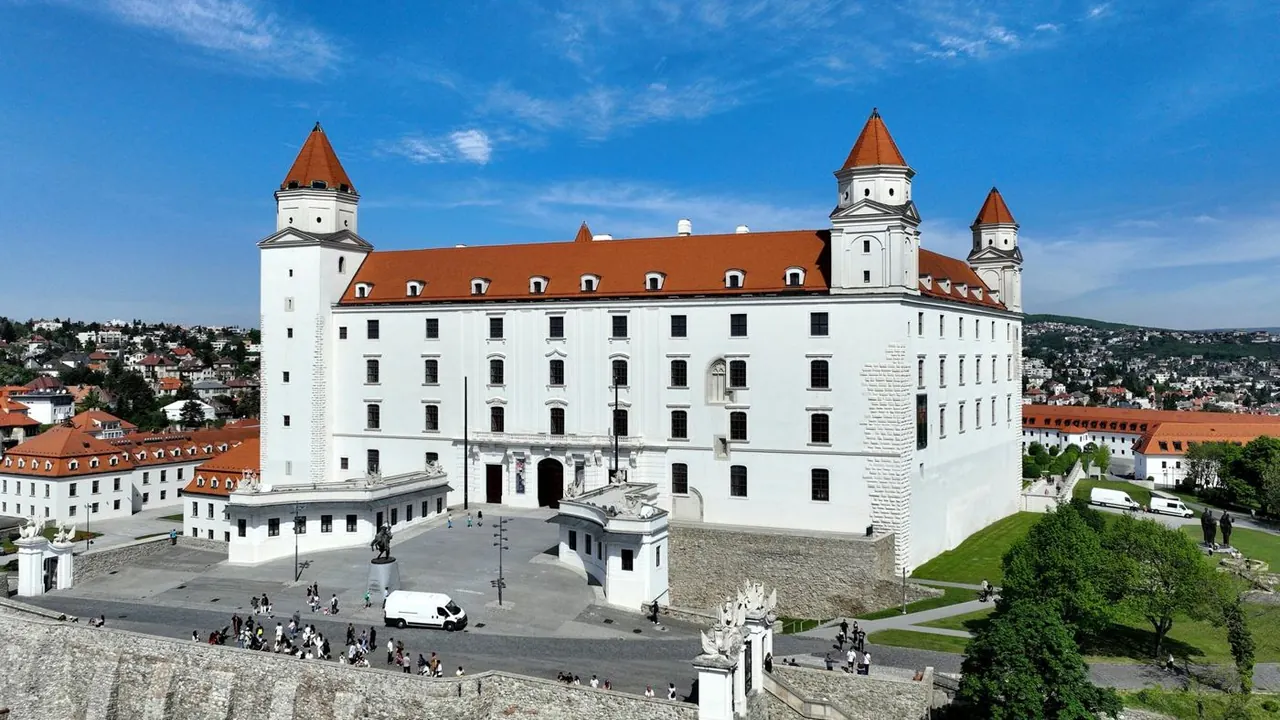
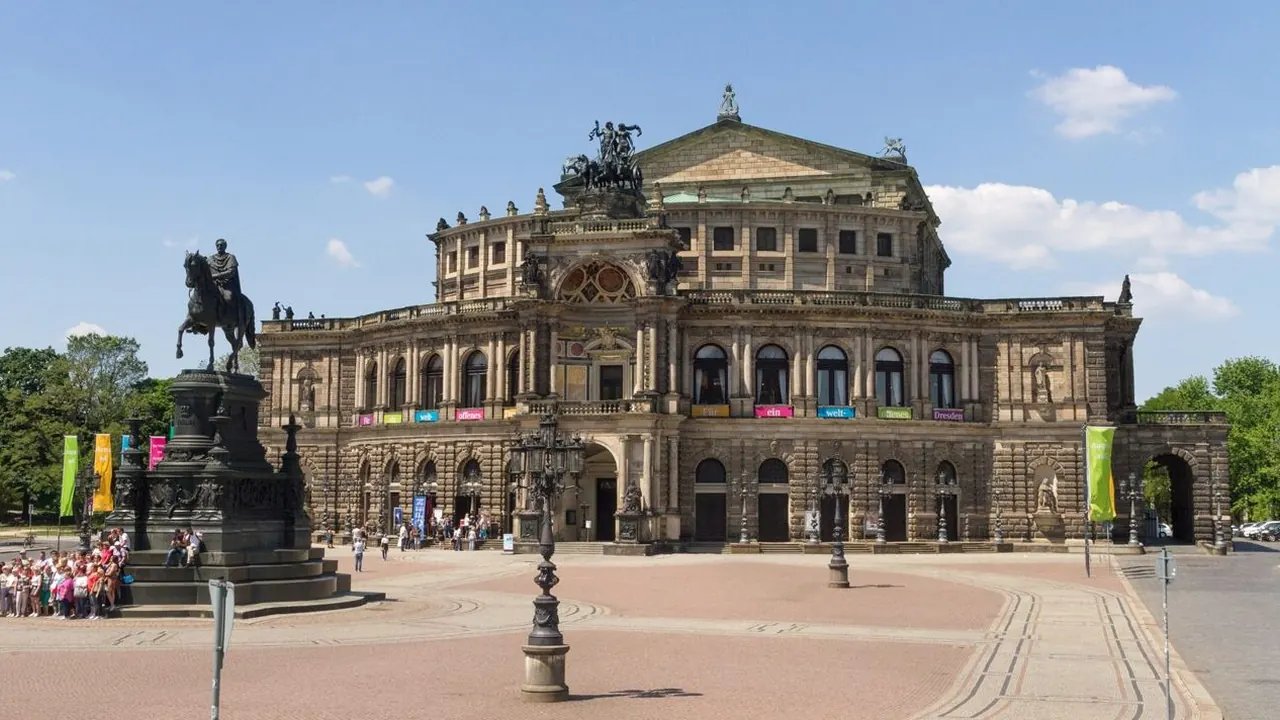
Photos: Bratislava by C.Stadler/Bwag, CC BY-SA 4.0, cropped; Dresden by Maksym Kozlenko, CC BY-SA 4.0, cropped.
Bratislava or Dresden?
Our verdict in twelve categories, each scored against the same fixed benchmark cities, and the climate month by month, so you can choose for your trip.
Choose Bratislava for
- prices
- beaches
- day trips
Bratislava is made for a short, inexpensive break. Its Old Town, castle and riverfront are compact enough to take in over a day or two without feeling rushed. Beer, wine and pub lunches cost little, and Vienna is close enough to add to the same trip. Choose it for an easy weekend with an afternoon in the wine villages or a hop across a border, rather than days filled with museums.
Choose Dresden for
- culture and sights
- live music and the arts
- families
Dresden rewards a longer stay. Its baroque riverfront holds art collections of real world standing, and the Semperoper and its orchestra give it a musical tradition few cities can match. The sandstone gorges of Saxon Switzerland start less than an hour upriver by suburban train, and the Neustadt makes for livelier evenings. You will need more days and a slightly larger budget, but art lovers, music lovers, walkers and families get far more from it.
Scoreboard
Twelve categories on one fixed scale from 0 to 100. The shaded stretch is the gap between the two.
Your match
Pick a travel style or drag the sliders, and both match scores follow your weighting.
Wins on prices and beaches with your weighting.
Wins on culture and sights and live music and the arts with your weighting.
What matters to you?
Category by category
What the scores mean for a trip.
Beaches & swimming
Neither city is a place to swim, and both rivers are off limits because of currents and shipping. The difference is in what replaces them. Bratislava has a proper sandy lakeshore at Zlate piesky, reachable by tram, plus the bigger Senec lakes half an hour out. Dresden relies on outdoor pools, flooded gravel pits and the Moritzburg ponds, with deckchairs on the Elbe's sandy banks for lounging rather than bathing.
Food & drink
The two kitchens are close in standard but differ in emphasis. Bratislava is about hearty plates and drink: sheep's cheese dumplings, duck with lokse, brewpubs pouring their own lager and wine bars stocked with Small Carpathian Veltliner and Frankovka that you rarely find abroad.
Dresden's strength is the coffee table, with Christstollen, Eierschecke and a serious afternoon cake habit, along with dry Elbe valley wines from Radebeul and Meissen. It also has the wider casual range, as the Neustadt mixes Vietnamese and Middle Eastern food with beer gardens. In both, the streets nearest the main sights lean towards tourist menus.
Culture & sights
This is where the two part company most. Dresden's riverfront is a treasury: Raphael in the Zwinger, the jewelled Green Vault in the Residenzschloss, Caspar David Friedrich in the Albertinum and the rebuilt Frauenkirche, enough for three or four absorbing days. The post-war reconstruction and nearby concrete blocks give it a layered feel rather than a seamless one.
Bratislava offers a pleasant, compact Old Town with real history, from the coronation cathedral of St Martin to the Blue Church and the cliff-top ruins of Devin. It is charming to stroll through, but it has nothing of Dresden's museum weight, and a day or two covers it.
Nightlife
Dresden has the more rewarding night out, concentrated in the Äußere Neustadt, where students fill courtyard pubs and beer kiosks, people drink on the pavements in summer and a few clubs occupy old industrial buildings. The old town across the river goes quiet after dinner.
Bratislava's scene is all in a few Old Town streets of pubs, wine bars and cocktail bars. It gets loud and crowded on Fridays and Saturdays, partly because cheap drinks draw stag groups, but it is a pub crawl rather than a club scene, and weeknights are subdued.
Nature & outdoors
Dresden has real landscape on its doorstep. Saxon Switzerland's sandstone towers and gorges begin under an hour upriver, with the Bastei view, multi-day walking on the Malerweg and a historic free-climbing tradition, and the Ore Mountains add summer hiking and light cross-country skiing.
Bratislava's countryside is gentler. Beech-wood trails climb from Koliba to Kamzik, Devinska Kobyla looks over the Morava confluence and the Danube floodplain forests suit cyclists, while Cunovo adds whitewater rafting. These are pleasant hills rather than a destination in their own right.
Day trips
Both are excellent bases, so the choice comes down to the destinations. Bratislava's trump card is Vienna an hour away, and its border position puts Carnuntum, Lake Neusiedl, Lednice-Valtice and Pannonhalma within reach alongside the wine villages of Modra and Pezinok.
Dresden's excursions stay mostly within Saxony: porcelain and cathedral at Meissen, Moritzburg on its lake, the Königstein fortress, and Leipzig, Bautzen or Görlitz by train. Prague is possible, but it makes a long day.
Good for families
Dresden gives children more to do. The Großer Garten has its zoo and a miniature railway run by children, the Transport Museum is full of trams and trains, the Hygiene Museum has a hands-on section and paddle steamers lead to Moritzburg and the rock country. Art galleries and cobbles test young patience, though.
Bratislava is safe and calm, and spotting the bronze statues, riding the Kamzik chairlift and a day at the Senec water park are good fun. After two or three days, however, it runs out of child-friendly ideas.
Getting around
Both centres are walkable, but Dresden is easier to get around beyond them. Its dense tram network and suburban trains along the Elbe reach Meissen and Saxon Switzerland, so even the day trips need no car.
Bratislava's sights are all within a twenty-minute walk and its trams and trolleybuses run to Devin and Kamzik. With no metro, though, longer journeys across the river are slow, and the wine villages and castles off the rail lines are easier to reach by car.
Shopping & style
Dresden has a little more to browse. The Neustadt's second-hand clothes, small design shops and the Kunsthofpassage courtyards make a good afternoon, the Meissen porcelain showrooms and Ore Mountain wooden toys are distinctive, and in Advent the Striezelmarkt is a real draw.
In Bratislava, the state folk-craft centre with its majolica, lace and blue-print cloth is the highlight, and Small Carpathian wine is the best thing to bring home. For serious fashion, most shoppers head to Vienna.
Affordability
Bratislava is the cheaper of the two day to day. Beer, wine, transport and museum entry cost little and pub lunch menus are generous, so you only pay Western prices on the main squares and along the Danube complexes.
Dresden is moderate and cheaper than western German cities, with good-value eating in the Neustadt and a day ticket that covers trams and suburban trains. Separate entry to each major museum adds up, though, and old town rooms climb during the Christmas market.
Live music & performing arts
Dresden is one of Europe's great music cities. The Semperoper, with the centuries-old Staatskapelle and its Wagner and Strauss premieres, sits at the heart of a calendar that also includes the Dresden Philharmonic in the Kulturpalast and the Kreuzchor boys' choir, plus Bach at the Frauenkirche.
Bratislava's Slovak National Theatre and Philharmonic in the Reduta are solid and easy to get tickets for, which makes them a relaxed evening out. For a programme on a truly international level, however, locals take the train to Vienna.
Wellness & relaxation
Neither city has thermal springs of its own, so unwinding here depends more on the pace of the city than on spas. In Bratislava that means hotel spas, slow café afternoons and forest paths that are quiet on weekdays. For proper bathing you go out of town, to the Senec water park or to the mud and sulphur cures at Piestany.
Dresden offers a little more close by. Saunas with cold plunges in the municipal baths are an ordinary local habit, Bad Schandau's thermal pool is under an hour away, and the wide Elbe meadows and coffee and cake on a terrace above the river do the rest.
When should you go?
Pick your month. The climate figures are measured averages, not a forecast.
Bratislava in July
Dresden in July
Daytime high, °C
Rainfall in the month, mm
Where the figures come from
Bratislava has no rain gauge within 25 km of the centre, so its rainfall comes from a gridded climate dataset read at the city rather than from a gauge further away.
Bratislava's sunshine is measured 56 km from the centre, at Wien / Hohe Warte.
Temperature and rainfall are climate normals, averaged over the years shown. Bratislava: 1991-2020 normals, Bratislava Ivanka (8.6 km from centre). Dresden: 1991-2020 normals, Dresden-Strehlen (3.8 km from centre).
The two cities share a Central European climate and follow almost the same year. Winters are cold and grey, with daytime highs of only 3°C or 4°C in January, so outdoor sightseeing is short and the attraction is opera, museums and warm cafés. Spring arrives in April, and May and September are the most comfortable months for long days on foot, mild without being hot. Summer brings highs around 27°C, warm enough for the lakes and outdoor pools from late June to August.
The difference is in the light and the timing of the rain. Bratislava is noticeably sunnier through spring and summer, with around 270 hours of sunshine in July, while Dresden stays duller and its wettest stretch comes later, peaking in July and August with showers and thunderstorms. Bratislava's rain arrives a little earlier, from May, so early autumn tends to be the more settled time to visit both.
Which traveller are you?
On a culture and arts trip, Bratislava's coronation cathedral, palaces and castle fill a day or two, but Dresden is the clear choice. The Sistine Madonna in the Zwinger, the Green Vault and an evening at the Semperoper fill three or four days.
For an outdoors trip, Bratislava has gentle beech-wood hills, the Danube cycle route and rafting at Cunovo. Dresden leads, though: suburban trains reach the Bastei rocks, the Malerweg trail and the climbing towers of Saxon Switzerland in under an hour.
On a tight budget, Bratislava is easier, since its best days cost little: the climb to the castle, forest trails up to Kamzik, a tram to the lake at Zlate piesky and Vienna as a day out rather than a base. Dresden's main draws sit inside paid galleries.
Before you go
| Measure | Bratislava | Dresden |
|---|---|---|
| Official language | Slovak | German |
| Currency | Euro (EUR) | Euro (EUR) |
| Sockets | CE230 V, 50 Hz | CF230 V, 50 Hz |
| Driving side | Right | Right |
| Time zone | UTC+1, UTC+2 in summer | UTC+1, UTC+2 in summer |
| Emergency number | 112 | 112 |
| Elevation | 152 m | 126 m |
| Main airport | M. R. Štefánik Airport (BTS)8 km from centre70 non-stop destinations | Dresden Airport (DRS)10 km from centre13 non-stop destinations |
| Public holidays this year | 15 days | 11 days |
By the numbers
| Measure | Bratislava | Dresden |
|---|---|---|
| City population | 480,902 | 562,764 |
| People per km² | 1,308 | 1,713 |
| Museums within 10 km | 22 | 70 |
| UNESCO World Heritage sites within 50 km | 2 | 1 |
Where else could you go?
Every comparison below shares a destination with this one, so you can follow Bratislava or Dresden somewhere new.