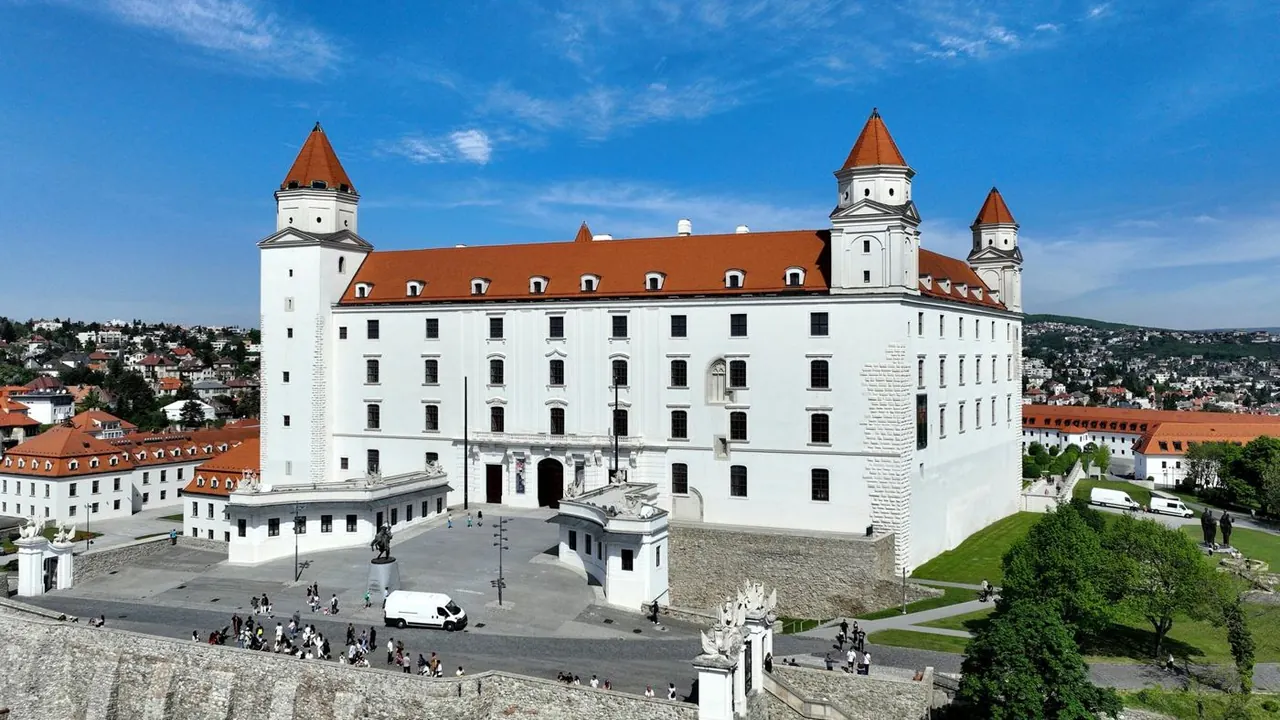
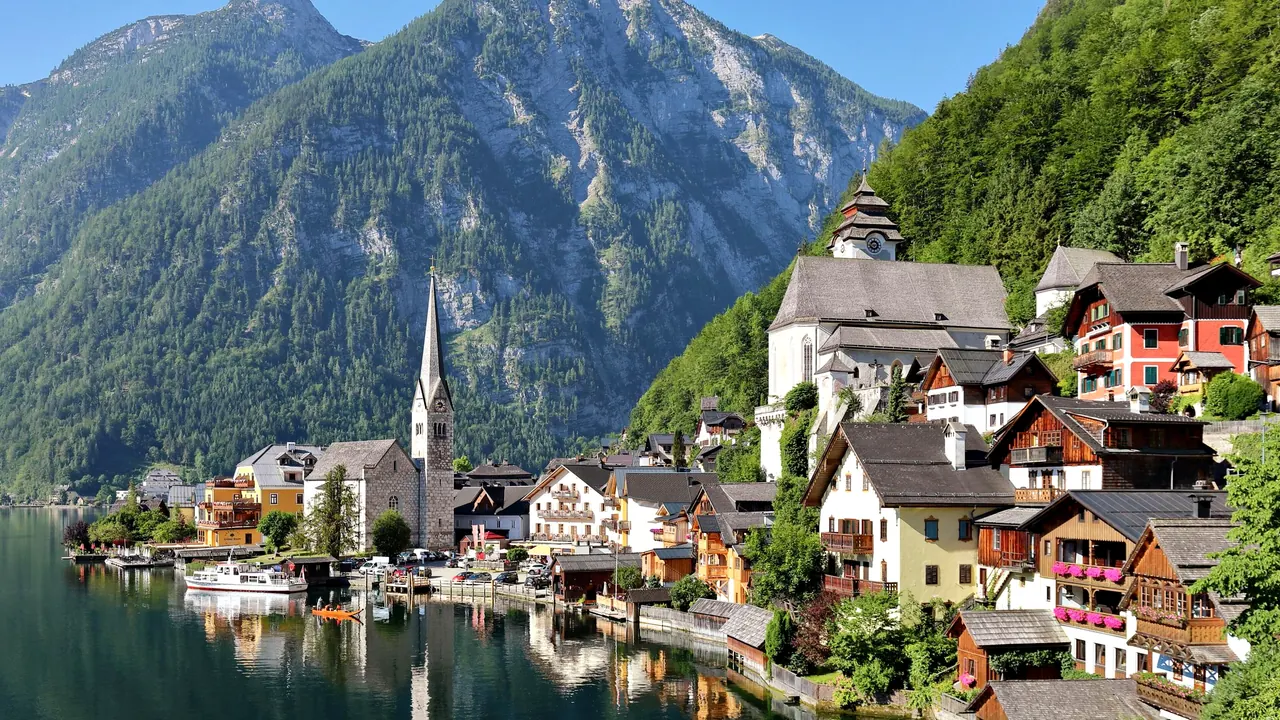
Photos: Bratislava by C.Stadler/Bwag, CC BY-SA 4.0, cropped; Hallstatt by C.Stadler/Bwag, CC BY-SA 4.0, cropped.
Bratislava or Hallstatt?
Our verdict in twelve categories, each scored against the same fixed benchmark cities, and the climate month by month, so you can choose for your trip.
Choose Bratislava for
- live music and the arts
- nightlife
- prices
Bratislava is the better choice for a city trip with evenings in it. It is a compact capital where a baroque Old Town, an opera house, wine bars pouring Small Carpathian whites and a lively weekend pub scene all sit within walking distance, and the prices stay kind. Vienna is close enough for a day out, so a few nights here can easily take in two capitals. It suits travellers who want culture, food and a night out without spending heavily.
Choose Hallstatt for
- nature and the outdoors
- beaches
- wellness
Hallstatt rewards a very different trip, one built around mountains and still water. The village is tiny and expensive, and it goes quiet after dark, but the Dachstein massif rises straight from its edge, with cable cars, ice caves, glacier valleys and the walk to the Gosausee. Come for hiking, lake mornings and Alpine scenery, and accept that the evenings will be dinner and a stroll by the water.
Scoreboard
Twelve categories on one fixed scale from 0 to 100. The shaded stretch is the gap between the two.
Your match
Pick a travel style or drag the sliders, and both match scores follow your weighting.
Wins on live music and the arts and nightlife with your weighting.
Wins on nature and the outdoors and beaches with your weighting.
What matters to you?
Category by category
What the scores mean for a trip.
Beaches & swimming
Neither is a swimming destination, but Hallstatt gives the better dip. Its clear, deep Alpine lake has a jetty and lawn in the village and a proper lido at Obertraun, though the water only reaches about 20°C at best.
Bratislava's river is off limits, so bathing means Zlate piesky on the tram line or the Senec lakes half an hour out. They are warmer and sandier, but crowded at weekends and flatter in setting.
Food & drink
Bratislava eats far better. Bryndzove halusky, roast duck with lokse and Bratislava rolls come in generous Old Town portions, with brewpub lagers and Veltliner or Frankovka from vineyards at the city's edge.
Hallstatt is a village of guesthouse dining rooms serving schnitzel and goulash, with smoked or pan-fried char from the lake as its single local speciality. Kitchens close early, and anyone wanting more drives to the patisseries of Bad Ischl.
Culture & sights
Bratislava has more to see and spreads it over a day or two: the coronation cathedral of St Martin, the Primate's Palace, Michael's Gate, the Blue Church, the castle museum and the ruins of Devin above the rivers.
Hallstatt's draw is deeper history in a smaller package. Seven thousand years of salt mining, the Iron Age finds that named the Hallstatt culture and the painted skulls of the Beinhaus make a fascinating half day or full day, but the village itself is the main sight.
Nightlife
Bratislava has a real if modest night out: Old Town pubs, wine bars and cocktail bars that fill on Friday and Saturday, with students and weekend groups keeping things going late. In Hallstatt the evening ends with dinner and a walk by the dark lake, which is lovely, but there is no bar scene to speak of.
Nature & outdoors
Hallstatt is in another league here. The lake lies in a glacial trough under the Dachstein, with the Five Fingers platform, karst plateau, ice caves, via ferratas, glacier paths and winter ski touring all close at hand.
Bratislava's outdoors is gentle by comparison: beech woods up to Kamzik, the vineyard ridge of the Little Carpathians, the steppe meadows of Devinska Kobyla, Danube floodplain forest and whitewater rafting at Cunovo. It is pleasant for a half day on foot or by bike, but there are no real mountains.
Day trips
Bratislava has the stronger set of outings, above all because Vienna is an hour away by train or a scenic boat ride. Add the Small Carpathian wine towns, Trnava, Carnuntum, Lednice-Valtice and Pannonhalma, and three countries are within easy reach by rail.
Hallstatt's Salzkammergut excursions are lovely, from Bad Ischl's Kaiservilla to St Wolfgang, Gmunden and Altaussee, with Salzburg as a long day. Without a car they need careful planning around buses and the lakeside railway.
Good for families
Both work for a short family stay, in different ways. Bratislava is calm and easy with children, with a pedestrian Old Town, bronze statues to hunt for, the Kamzik forest park and chairlift, a hillside zoo and the Senec water park.
Hallstatt has the bigger single thrills, the salt mine slides and underground lake, the Krippenstein cable car and the ice caves, but its steep, crowded lane is hard with a pushchair. Families usually base themselves in Obertraun and visit for a few hours.
Getting around
Bratislava is easier to manage without a car. The sights lie within a twenty-minute walk, and trams, trolleybuses and buses on one ticket reach Kamzik, Devin and the lake, though without a metro the longer trips are slow.
Hallstatt is tiny and walkable, but steep, and simply arriving involves a boat across from the station. Buses to Obertraun, Gosau and Bad Ischl are sparse outside summer, so many visitors hire a car.
Shopping & style
Bratislava offers more, though still not much: genuine Modra majolica, lace and blue-print cloth at the folk-craft centre, chain-store malls by the river and bottles of Small Carpathian wine. Hallstatt's lane of souvenir shops is a half-hour stroll, with salt from the local mine as the one purchase worth making.
Affordability
Bratislava is much kinder on the wallet. Beer, wine, transport and museums are cheap, and a modest budget buys a central room and good meals once you step off the main squares.
Hallstatt is costly on every front: scarce rooms that fill early, resort-priced meals and the salt mine, funicular and cable car adding up. Budget travellers sleep in Obertraun, Bad Goisern or Bad Ischl and come in for the day.
Live music & performing arts
Bratislava has a proper cultural calendar, with opera and ballet at the Slovak National Theatre, the Slovak Philharmonic in the Reduta and tickets that are easy to come by from autumn to spring. Hallstatt offers a brass band on feast days and the occasional church concert, and anyone wanting a real evening of music heads to Salzburg or to Bad Ischl's summer operetta.
Wellness & relaxation
Hallstatt makes the better retreat, though neither has baths of its own. The brine spas of Bad Ischl, Bad Aussee and Bad Goisern are close by, and early mornings on the misty lake are deeply restful once you avoid the midday crowds.
Bratislava's calm comes from slow café afternoons and quiet forest paths. For real bathing you need to go out to Senec or to the mud and sulphur cures of Piestany, an hour away by train.
When should you go?
Pick your month. The climate figures are measured averages, not a forecast.
Bratislava in July
Hallstatt in July
Daytime high, °C
Rainfall in the month, mm
Where the figures come from
Bratislava has no rain gauge within 25 km of the centre, so its rainfall comes from a gridded climate dataset read at the city rather than from a gauge further away.
Bratislava's sunshine is measured 56 km from the centre, at Wien / Hohe Warte.
Hallstatt's temperatures are measured 56 km from the centre, at Salzburg.
Hallstatt has no rain gauge within 25 km of the centre, so its rainfall comes from a gridded climate dataset read at the city rather than from a gauge further away.
Temperature and rainfall are climate normals, averaged over the years shown. Bratislava: 1991-2020 normals, Bratislava Ivanka (8.6 km from centre). Hallstatt: 1991-2020 normals, Salzburg (55.5 km from centre).
The two have almost the same temperatures through the year, but not the same weather. Both are cold from December to February, around 3°C by day, and both are comfortable for walking the streets or the trails from May to September. Bratislava gets a little warmer in high summer, about 27°C in July and August, which is warm enough for an afternoon at Zlate piesky or the Senec lakes. It is also clearly drier and sunnier, and April, May and September are its most pleasant months for sightseeing.
Hallstatt is far wetter, and its rain peaks in summer, around 178mm in July against roughly 82mm in Bratislava. Hikers should expect showers and mist even in the warmest months. June to August is still the time for the high trails and a cold swim in the lake. September is the better compromise: it is still mild, with noticeably less rain at 137mm, while May is nearly as wet as midsummer. In winter the Krippenstein is for ski touring and freeride rather than walking.
Which traveller are you?
For an outdoors trip, Hallstatt is the clear pick. The Dachstein starts at the village edge, with the Krippenstein cable car, giant ice caves, the Echerntal waterfalls, hut-to-hut routes and the Gosausee walk, while Bratislava offers only gentle forest hills and riverside cycling.
On a trip on a tight budget, Bratislava wins easily. Rooms, beer, wine, transport and museum entry are all modest, and pub lunch menus stretch the money further, whereas Hallstatt has few rooms, resort-level meals and attractions that add up quickly.
For a food and nightlife trip, choose Bratislava. Hearty Slovak cooking, brewpubs and local wine bars fill the Old Town, and weekend nights run loud and late, while Hallstatt offers lake fish, early-closing kitchens and essentially no nightlife at all.
Before you go
| Measure | Bratislava | Hallstatt |
|---|---|---|
| Official language | Slovak | German, Austrian Sign Language |
| Currency | Euro (EUR) | Euro (EUR) |
| Sockets | CE230 V, 50 Hz | CF230 V, 50 Hz |
| Driving side | Right | Right |
| Time zone | UTC+1, UTC+2 in summer | UTC+1, UTC+2 in summer |
| Emergency number | 112 | 112 |
| Elevation | 152 m | 511 m |
| Main airport | M. R. Štefánik Airport (BTS)8 km from centre68 non-stop destinations | Salzburg Airport (SZG)55 km from centre64 non-stop destinations |
| Public holidays this year | 15 days | 16 days |
By the numbers
| Measure | Bratislava | Hallstatt |
|---|---|---|
| City population | 480,902 | 741 |
| People per km² | 1,308 | 12 |
| Museums within 10 km | 22 | 3 |
| UNESCO World Heritage sites within 50 km | 2 | 2 |
Where else could you go?
Every comparison below shares a destination with this one, so you can follow Bratislava or Hallstatt somewhere new.
- Salzburgvs Hallstatt
- Viennavs Bratislava
- Bledvs Hallstatt
- Grazvs Hallstatt
- Cortina d'Ampezzovs Hallstatt
- Budapestvs Bratislava