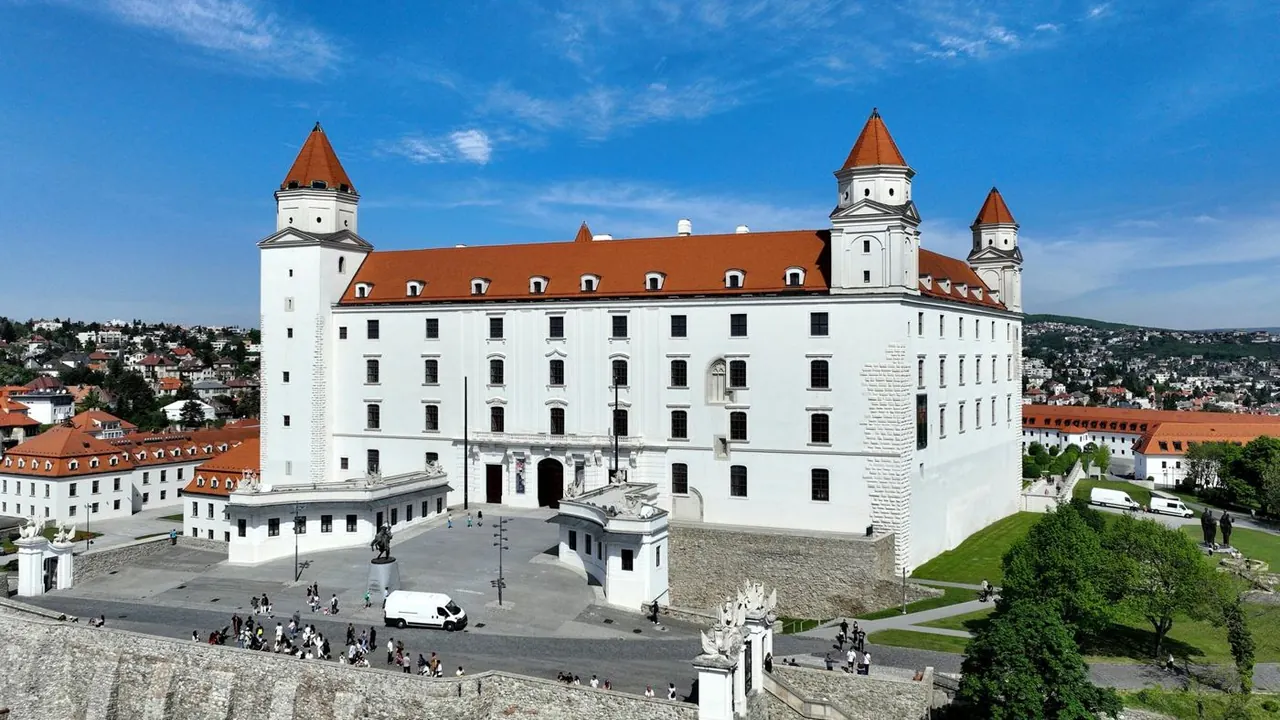
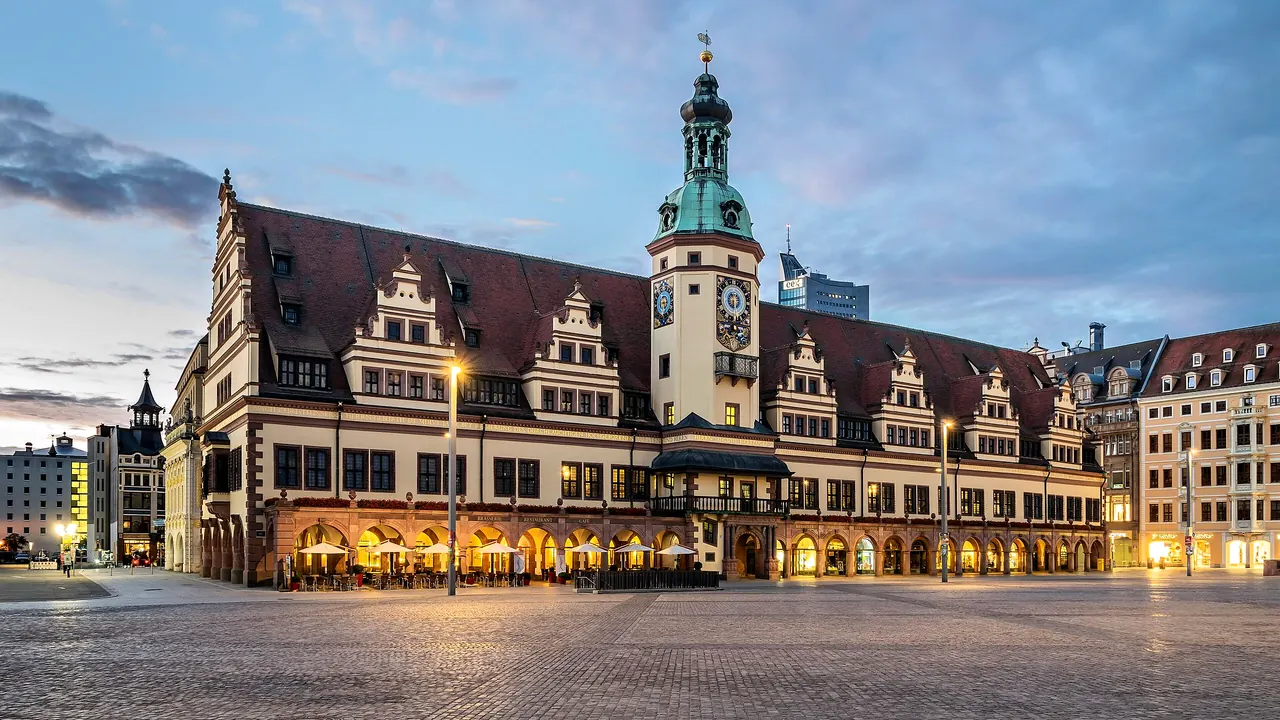
Photos: Bratislava by C.Stadler/Bwag, CC BY-SA 4.0, cropped; Leipzig by Krzysztof Golik, CC BY-SA 4.0, cropped.
Bratislava or Leipzig?
Our verdict in twelve categories, each scored against the same fixed benchmark cities, and the climate month by month, so you can choose for your trip.
Choose Bratislava for
- nature and the outdoors
- prices
- wellness
Bratislava suits a relaxed, inexpensive few days where the city is only part of the plan. Its Old Town is small and pretty and you can see it quickly. The wooded Little Carpathians and the vineyards start right where the city ends. The real bonus is where you can go from it: Vienna, Austrian wine villages and Moravian chateaux are all easy day outings. Pick it if you want cheap evenings over local wine, gentle walks in the hills and a base that reaches three countries.
Choose Leipzig for
- live music and the arts
- families
- nightlife
Leipzig is the better choice for anyone who travels for music, history and a livelier evening. Bach's church, the Gewandhaus Orchestra and the story of 1989 give it far more depth than Bratislava, and the club scene in old factories keeps going long after the Slovak pubs have closed. It is also easier with children, thanks to a first-rate zoo and the lakes, and trams and bikes make it simple to get around.
Scoreboard
Twelve categories on one fixed scale from 0 to 100. The shaded stretch is the gap between the two.
Your match
Pick a travel style or drag the sliders, and both match scores follow your weighting.
Wins on nature and the outdoors and prices with your weighting.
Wins on live music and the arts and families with your weighting.
What matters to you?
Category by category
What the scores mean for a trip.
Beaches & swimming
Neither city has a coast, but Leipzig does better on a hot day. South of the centre, flooded former mines form a chain of lakes with sandy shores, clear water and beach bars, and you can reach them by tram, S-Bahn or bike through the forest.
Bratislava has the Zlate piesky lake on the tram line and the Senec lakes half an hour out. Both get crowded at weekends, and you cannot swim in the Danube itself. In both places this is a summer afternoon out, not a beach vacation.
Food & drink
The two are about level, and both serve filling Central European food: halusky with sheep's cheese and duck with lokse in Bratislava, roasts with dumplings and marzipan Lerche pastries in Leipzig.
What you drink sets them apart. Bratislava's highlight is Small Carpathian wine, Veltliner and Frankovka from vineyards at the edge of town. Leipzig offers sour, salted Gose beer and a coffee-house tradition three centuries old. For variety, Leipzig's Südvorstadt and Plagwitz have more international kitchens and brunch spots, while Bratislava's choice thins out beyond local cooking.
Culture & sights
Leipzig has more to see and more to think about. The Thomaskirche, where Bach is buried, and the Nikolaikirche, where the 1989 revolution began, stand a few streets apart. Around them are trade-fair arcades, the brooding Battle of the Nations monument, the Grassi museums and the former Stasi headquarters.
Bratislava's appeal is a pretty baroque Old Town below its white castle, with crowns in the pavement marking the route of Hungarian coronations. Add the Blue Church and the ruins of Devin, and you can see it all in a day or two.
Nightlife
Leipzig is the real night out. Its electronic club scene grew up in old factories and warehouses, nights run past dawn, and the bouncers are relaxed. The bar streets of the Karli, Connewitz and the canal-side mills of Plagwitz each have their own character.
Bratislava's evenings stay in a few Old Town streets of pubs and wine bars. On weekends they are loud and full, with plenty of stag groups, and the clubs are few. Think of it as a good pub crawl rather than a clubbing city.
Nature & outdoors
Bratislava has more variety outdoors, mainly because it has hills. Beech-wood trails climb from Koliba to the Kamzik tower and carry on along the Little Carpathian ridge, and Devinska Kobyla looks out over the meeting of the Morava and the Danube. The flat Danube cycle route runs into Austria, and there is whitewater rafting at Cunovo.
Leipzig is flat, but the Auwald floodplain forest runs right through it. You can paddle the canals from Plagwitz almost to the centre, and the lake district suits sailing and paddleboarding. For real hiking you need a two-hour train ride.
Day trips
Both are superb bases, and what differs is the kind of outing. From Bratislava you cross borders: Vienna is an hour away by train or a boat ride up the Danube. There are also Carnuntum's Roman ruins, the Lake Neusiedl villages and the Lednice-Valtice chateaux, plus the Slovak wine route through Modra and Pezinok.
Leipzig keeps you in Germany but offers a dense set of heritage towns: Dresden, Weimar, Erfurt, Wittenberg, Naumburg and the Bauhaus in Dessau, with Berlin a little over an hour away. All of them leave by train from one station.
Good for families
Leipzig is much easier with children. Its zoo is one of Europe's best, and the Gondwanaland tropical hall rescues a rainy day. Summer adds shallow lake beaches and a theme park beside the Cospudener See, and the Panometer's huge panoramas impress older children.
Bratislava is safe and calm, with the bronze statues to spot in the Old Town, the Kamzik chairlift and playgrounds, and the water park at Senec. Beyond that, little is built for children, and a third day starts to drag.
Getting around
Both centres are easy to walk, but Leipzig works better beyond them. Its large tram network and an S-Bahn line under the centre reach the lakes and the outer districts, and the flat streets with their cycle lanes make a bike the quickest option.
Bratislava's Old Town, castle and riverfront are close together, but the castle climb is steep and there is no metro. Trips across the river are slower than they look, and a car helps for the wine villages beyond the railway.
Shopping & style
Leipzig offers a bit more. Its covered trade-fair arcades are pleasant in any weather, and Karl-Heine-Strasse and the Spinnerei mill add vintage, design, records and galleries, though the main streets are mostly chains.
Bratislava's best finds are genuine folk crafts, such as Modra majolica and blue-print cloth, and bottles of Small Carpathian wine. Otherwise you are looking at malls, and serious fashion means a train to Vienna.
Affordability
Bratislava is easier on the wallet, because the everyday things are cheap: beer, wine, trams, museums and filling lunch menus. Only the main squares and the glass complexes along the river charge Western prices.
In Leipzig the saving is mostly the hotel, which costs less than in most big German cities, except during the big trade fairs. Meals, cocktails and taxis are priced as anywhere else in Germany, but concert and opera tickets are good value for the quality.
Live music & performing arts
This is where the two differ most. Leipzig is one of Europe's great music cities. The Gewandhaus Orchestra and the opera house face each other on Augustusplatz, the Thomanerchor sings Bach in his own church, and the Bachfest fills the churches each June. Operetta, cabaret, indie clubs and the huge Whitsun goth festival widen the range.
Bratislava offers a solid, affordable night at the Slovak National Theatre or a Philharmonic concert in the Reduta, mainly from autumn to spring. For a major international programme, people head to Vienna.
Wellness & relaxation
Neither city is a spa destination, and in both the proper baths mean a day out. From Bratislava that is the Senec water park or the historic mud and sulphur cures of Piestany, an hour away by train. Leipzig's own offer is German sauna culture, with pool and sauna complexes and lakeside saunas.
The calm is different too. In Bratislava it comes from café afternoons by the Danube and quiet forest paths. Leipzig offers long walks in the floodplain forest and a slow Sunday pace.
When should you go?
Pick your month. The climate figures are measured averages, not a forecast.
Bratislava in July
Leipzig in July
Daytime high, °C
Rainfall in the month, mm
Where the figures come from
Bratislava has no rain gauge within 25 km of the centre, so its rainfall comes from a gridded climate dataset read at the city rather than from a gauge further away.
Bratislava's sunshine is measured 56 km from the centre, at Wien / Hohe Warte.
Temperature and rainfall are climate normals, averaged over the years shown. Bratislava: 1991-2020 normals, Bratislava Ivanka (8.6 km from centre). Leipzig: 1991-2020 (sunshine 1961-1990, rainfall 1961-1990) normals, Leipzig-Holzhausen (5.7 km from centre).
Both cities have a continental climate and follow much the same pattern: cold, grey winters, a pleasant spring and a warm summer. Bratislava is a little warmer and clearly sunnier. Its July and August highs reach about 27°C, so a summer afternoon there can be properly hot, while Leipzig peaks at around 25°C and stays more comfortable for long days on foot. In both cities July and August are the only months when the lakes are warm enough for an afternoon swim. July is also the wettest month in Bratislava, and June in Leipzig.
May, June and September are the best months for exploring either city on foot. They are warm without being sticky, and Bratislava gets noticeably more sun in spring. November turns cool and dull, and from December to February daytime highs sit at only about 3°C to 5°C in both places, with short, grey days. That is the season for concert halls and cafés, not for the hills or the river.
Which traveller are you?
For a culture and arts trip, choose Leipzig. You can hear the Thomanerchor sing in Bach's own church and the Gewandhaus Orchestra across the square from the opera house. Add the Stasi museum and the 1989 churches, and it outweighs Bratislava's compact coronation town.
On a family trip with children, Leipzig is the easier city. One of Europe's best zoos has a covered tropical hall that works in any weather. The flat streets are easy with a pushchair, and there are sandy lake shores in summer. Bratislava runs out of things for children after a couple of days.
On a trip on a tight budget, Bratislava stretches the money further. Beer, wine, transport and museum entry are cheap, and pub lunch menus cost little. In Leipzig only the beds are cheap, and meals and drinks cost what they do anywhere in Germany.
Before you go
| Measure | Bratislava | Leipzig |
|---|---|---|
| Official language | Slovak | German |
| Currency | Euro (EUR) | Euro (EUR) |
| Sockets | CE230 V, 50 Hz | CF230 V, 50 Hz |
| Driving side | Right | Right |
| Time zone | UTC+1, UTC+2 in summer | UTC+1, UTC+2 in summer |
| Emergency number | 112 | 112 |
| Elevation | 152 m | 110 m |
| Main airport | M. R. Štefánik Airport (BTS)8 km from centre68 non-stop destinations | Leipzig/Halle Airport (LEJ)13 km from centre20 non-stop destinations |
| Public holidays this year | 15 days | 11 days |
By the numbers
| Measure | Bratislava | Leipzig |
|---|---|---|
| City population | 480,902 | 615,932 |
| People per km² | 1,308 | 2,068 |
| Museums within 10 km | 22 | 40 |
| UNESCO World Heritage sites within 50 km | 2 | 1 |
Where else could you go?
Every comparison below shares a destination with this one, so you can follow Bratislava or Leipzig somewhere new.
- Viennavs Bratislava
- Dresdenvs Leipzig
- Berlinvs Leipzig
- Budapestvs Bratislava
- Grazvs Bratislava
- Praguevs Leipzig