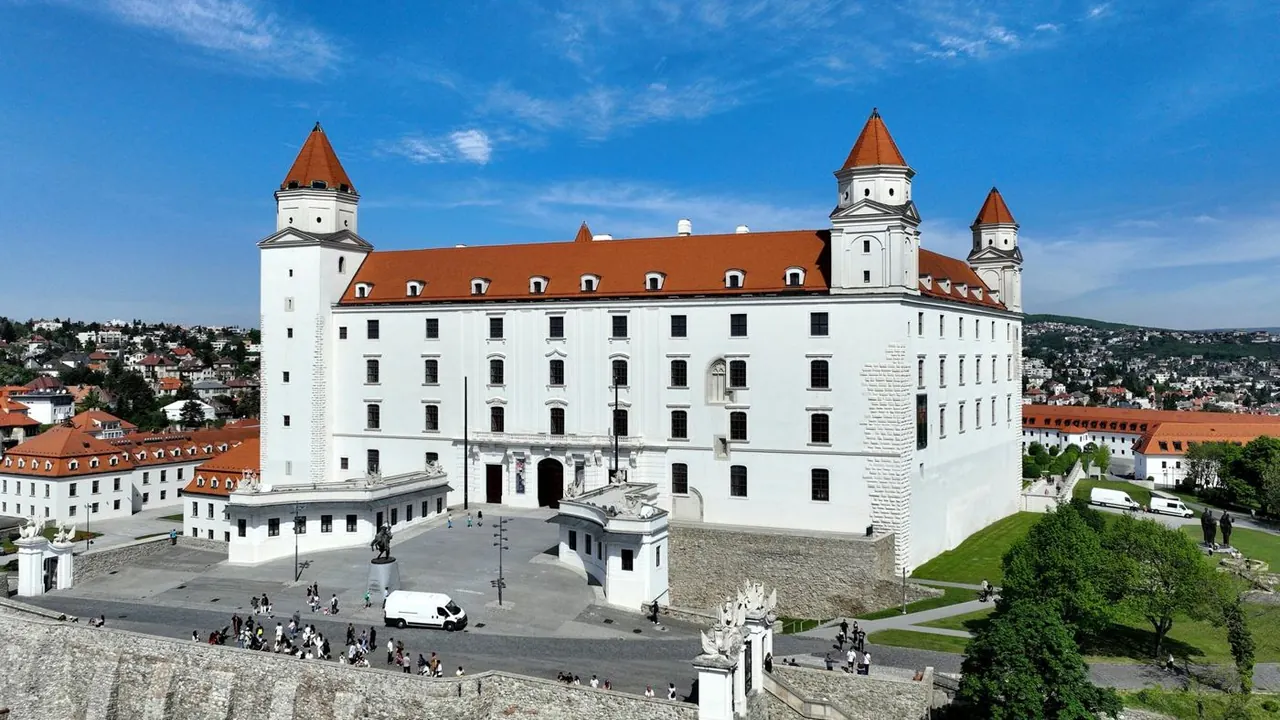
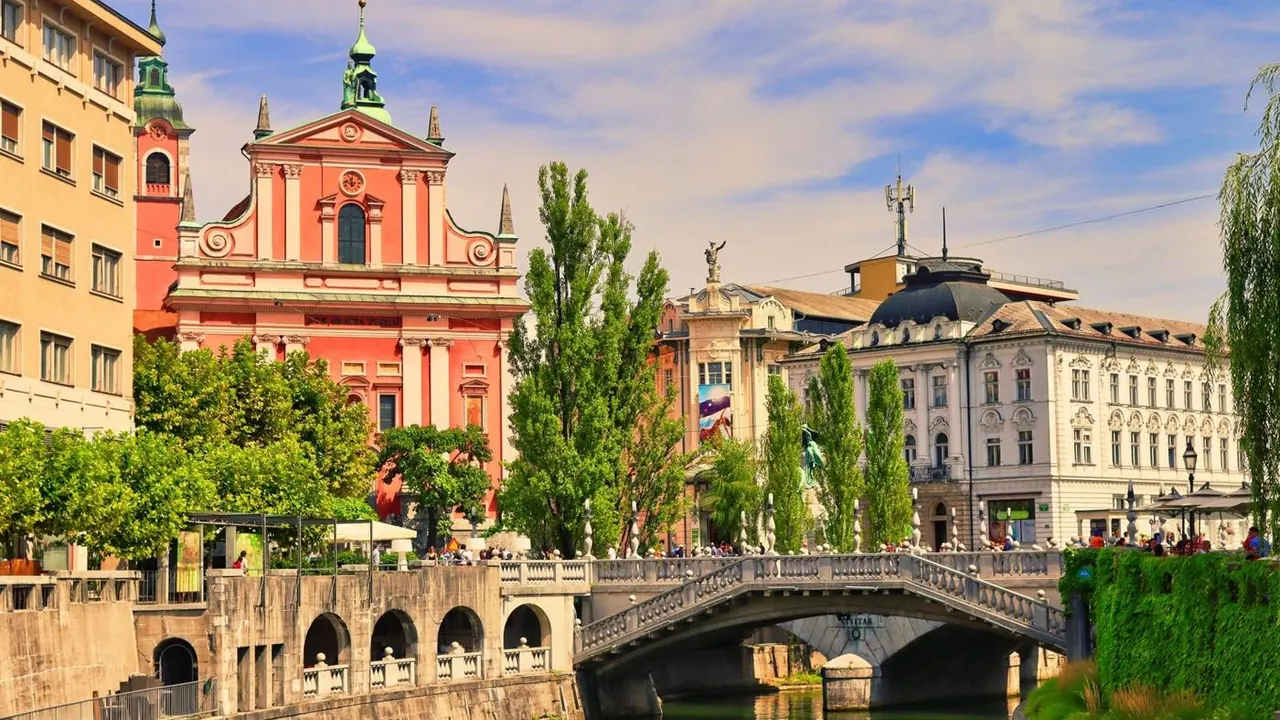
Photos: Bratislava by C.Stadler/Bwag, CC BY-SA 4.0, cropped; Ljubljana by detait, Pexels License.
Bratislava or Ljubljana?
Our verdict in twelve categories, each scored against the same fixed benchmark cities, and the climate month by month, so you can choose for your trip.
Choose Bratislava for
- prices
- shopping
Bratislava suits travellers who want a cheap, easy-going base with the rest of Central Europe close by. Everyday costs stay low, the Old Town turns into one long pub crawl at weekends, and Vienna is near enough for a day out. It works best for a short break that mixes coronation history, Small Carpathian wine and a hop across a border or two.
Choose Ljubljana for
- nature and the outdoors
- families
- food and drink
Ljubljana is the better pick for anyone who wants mountains, lakes and caves within an hour of a calm, car-free centre. The food is more rooted in its market, Plečnik's townscape gives the city a single, distinctive look, and families find it easier going. Expect to pay more for a room, especially in summer.
Scoreboard
Twelve categories on one fixed scale from 0 to 100. The shaded stretch is the gap between the two.
Your match
Pick a travel style or drag the sliders, and both match scores follow your weighting.
Wins on prices and shopping with your weighting.
Wins on nature and the outdoors and families with your weighting.
What matters to you?
Category by category
What the scores mean for a trip.
Beaches & swimming
Neither city is a place for a beach vacation, but Ljubljana gives a swimmer more to work with. Bratislava has its lakes: Zlate piesky, which you can reach by tram and which has a sandy shore, and the larger Senec lakes half an hour away. Both are crowded at weekends.
From Ljubljana you can swim in the Sava, go to Lake Bled, which is about an hour away and warms to around 24°C in high summer, or go to the colder, clearer Bohinj. The Adriatic at Piran is a day trip, though you swim there from concrete and pebbles, not sand.
Food & drink
Ljubljana eats better, and the reason is its Central Market under Plečnik's colonnades, full of Alpine cheeses, cured meats and pumpkin-seed oil. A few ambitious kitchens cook modern Slovenian food, and the wine bars pour orange wines from the Vipava valley and Goriška Brda.
Bratislava sticks closer to hearty farm cooking: bryndzové halušky, roast duck with lokše, and brewpubs pouring their own lager. Its own wine, Small Carpathian Veltliner and Frankovka, is just as rewarding. On the most central streets, though, you have to dodge tourist menus to eat well.
Culture & sights
Bratislava's Old Town is small and well kept, and its strongest story is a single one. For almost three centuries St Martin's Cathedral crowned Hungarian kings, and brass crowns in the pavement still trace the route. Cathedral, palaces and castle sit close together below the hill, and a day or two covers the lot.
Ljubljana comes out ahead because its centre reads as one piece of design. Between the wars Plečnik reworked the bridges, embankments, market and library into a townscape that is now UNESCO-listed, so the pleasure lies in walking the whole of it rather than ticking off sights. Its museums are good rather than great, but the city repays two or three unhurried days.
Nightlife
The two are evenly matched in size, but the evenings feel different. Bratislava's Old Town fills with pubs and cocktail bars that run into each other, and on Friday and Saturday nights it gets loud, partly because cheap drinks bring in stag groups from abroad.
Ljubljana is quieter and spends its evenings on terraces along the Ljubljanica. Its one place with a real reputation is Metelkova, a former barracks with scruffy little clubs open late at weekends.
Nature & outdoors
This is where Ljubljana pulls far ahead. Šmarna Gora is a short climb from the city's edge, the Kamnik-Savinja Alps start about 40 minutes away, and Triglav National Park, the Vintgar gorge and the Soča are around an hour or a little more. Add the Postojna and Škocjan caves and winter skiing, and you have a proper outdoor base.
Bratislava's green side is gentler. There are beech-wood trails up to Kamzík, steppe meadows on Devínska Kobyla, Danube floodplain forest and a flat cycle route into Austria. The whitewater course at Čunovo is the one adrenaline option, and the Tatras are a full day's journey away.
Day trips
Both are excellent bases for day trips, but in different directions. From Bratislava the best trips cross borders: Vienna is about an hour away by train, and Roman Carnuntum, the Lednice-Valtice chateaux and Pannonhalma Abbey are all close, along with the home-grown wine route through Pezinok and Modra.
Ljubljana's best trips stay mostly inside Slovenia, because the country is small enough to reach from the centre: Bled's island church, Predjama Castle in its cliff, Idrija and Venetian-style Piran. Trieste and Zagreb, each about two hours away, add a foreign city.
Good for families
Bratislava is safe and calm with children, but little in it is built for them. Most family days rely on the outdoors: spotting the bronze statues on Old Town corners, the chairlift and playgrounds at Kamzík, the hillside zoo and, in summer, the lake at Zlaté piesky, with the Senec water park as the big treat.
Ljubljana is the easier and more rewarding city for a family. Its centre is flat and mostly closed to traffic, so children can walk from one sight to the next, and the ride up to the castle and the dragons on their bridge are right there in the centre. Tivoli Park's lawns are close by, a hands-on science centre fills a wet afternoon, and the puppet theatre plays to children who don't speak Slovene.
Getting around
Both cities are compact enough to walk, but Ljubljana is the simpler place to get around on foot. Its centre is flat and largely pedestrianised, with a bike-share scheme and electric shuttles, so you will barely touch the buses.
Bratislava's centre involves a steep climb to the castle and a walk down from the station on its rise. On the other hand, its trams reach Devín, the zoo and Zlaté piesky. For trips beyond the city, Bratislava has the quick train to Vienna, while in Ljubljana intercity buses usually beat the slow trains.
Shopping & style
Neither is a shopping destination, and in both the best buys are local crafts and food. In Bratislava that means Modra majolica, lace and blue-print cloth from the state folk-craft centre, plus Small Carpathian wine. Ljubljana offers market honey, coastal salt, Idrija lace and a Sunday flea market on the embankment. For serious fashion, Bratislava has the advantage of Vienna's boutique streets a train ride away.
Affordability
Bratislava is easier on the wallet. Beer, wine, trams and museum tickets are cheap, ordinary pubs serve filling weekday lunches, and you can get a central room at a reasonable price for most of the year. The main squares and the riverside complexes are the only real traps.
Ljubljana is middling for Europe. Lunch menus and local wine are fair, and walking costs nothing, but the small stock of central hotels pushes up summer room prices. Staying further out or avoiding July and August makes a real difference.
Live music & performing arts
The two are close, and both are good for an opera or concert night rather than a trip built around the arts. What differs is the season. Bratislava's opera and ballet at the Slovak National Theatre and its concerts in the Reduta run mostly from autumn to spring, with a music festival in autumn.
Ljubljana's high point is summer, when the Ljubljana Festival fills Plečnik's open-air Križanke courtyard. Metelkova adds alternative live music, and from Bratislava, Vienna's major stages are a short train ride away.
Wellness & relaxation
Neither city has a bathing tradition of its own. Ljubljana is slightly more restful: it has an indoor water park with a sauna complex on its eastern edge, a calm car-free centre and several thermal spa towns within about an hour's drive.
Bratislava's real cures are further out. The Senec water park is half an hour away, and historic Piešťany, with its mud and sulphur waters, is about an hour by train. In town, unwinding means hotel spas and quiet weekday walks in the forest above the city.
When should you go?
Pick your month. The climate figures are measured averages, not a forecast.
Bratislava in July
Ljubljana in July
Daytime high, °C
Rainfall in the month, mm
Where the figures come from
Bratislava has no rain gauge within 25 km of the centre, so its rainfall comes from a gridded climate dataset read at the city rather than from a gauge further away.
Bratislava's sunshine is measured 56 km from the centre, at Wien / Hohe Warte.
Temperature and rainfall are climate normals, averaged over the years shown. Bratislava: 1991-2020 normals, Bratislava Ivanka (8.6 km from centre). Ljubljana: 1991-2020 normals, Ljubljana / Bezigrad (1.9 km from centre).
Summers feel much the same in both cities, with highs of about 27°C in Bratislava and 28°C in Ljubljana in July and August. Those are the months for lake swimming and long evenings outdoors. Late spring and early autumn are the most comfortable for walking the streets. Winter is cold in both, with highs around 4°C, and the short grey days suit concerts and cafés more than sightseeing.
Rain is the real difference. Ljubljana is wet all year and wettest in autumn, with about 159mm in September, while Bratislava gets only around 71mm that month and is the drier of the two in every season. For an autumn trip Bratislava is the safer bet. Ljubljana is at its best from May to August, and its sunniest month is July.
Which traveller are you?
On an outdoors trip, Ljubljana is the clear choice. The Julian Alps, Triglav National Park, the Soča rafting rivers and the karst caves are all within about an hour or two, while Bratislava's Little Carpathians are pleasant wooded hills rather than mountains.
On a trip with a tight budget, Bratislava stretches the money further. Beer, transport, museums and central rooms all stay cheap, while in Ljubljana summer accommodation in the old town costs about what it would in Western Europe.
On a family trip with young children, Ljubljana is gentler. Its flat, car-free centre suits pushchairs, the castle funicular and Dragon Bridge charm small children, and the puppet theatre needs no language. Bratislava is safe, but it has less made for children.
Before you go
| Measure | Bratislava | Ljubljana |
|---|---|---|
| Official language | Slovak | Slovene |
| Currency | Euro (EUR) | Euro (EUR) |
| Sockets | CE230 V, 50 Hz | CF230 V, 50 Hz |
| Driving side | Right | Right |
| Time zone | UTC+1, UTC+2 in summer | UTC+1, UTC+2 in summer |
| Emergency number | 112 | 112 |
| Elevation | 152 m | 309 m |
| Main airport | M. R. Štefánik Airport (BTS)8 km from centre70 non-stop destinations | Ljubljana Jože Pučnik Airport (LJU)20 km from centre32 non-stop destinations |
| Public holidays this year | 15 days | 21 days |
By the numbers
| Measure | Bratislava | Ljubljana |
|---|---|---|
| City population | 480,902 | 284,293 |
| People per km² | 1,308 | 1,736 |
| Museums within 10 km | 22 | 14 |
| UNESCO World Heritage sites within 50 km | 2 | 3 |
Where else could you go?
Every comparison below shares a destination with this one, so you can follow Bratislava or Ljubljana somewhere new.