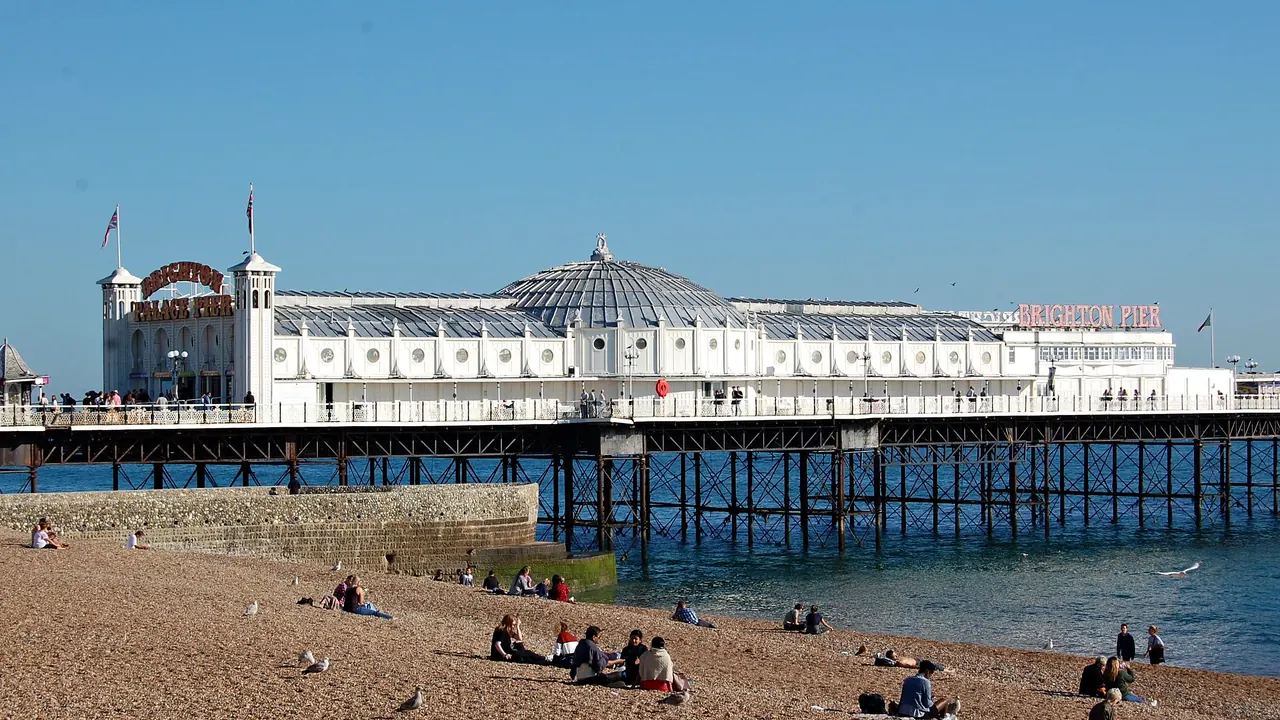
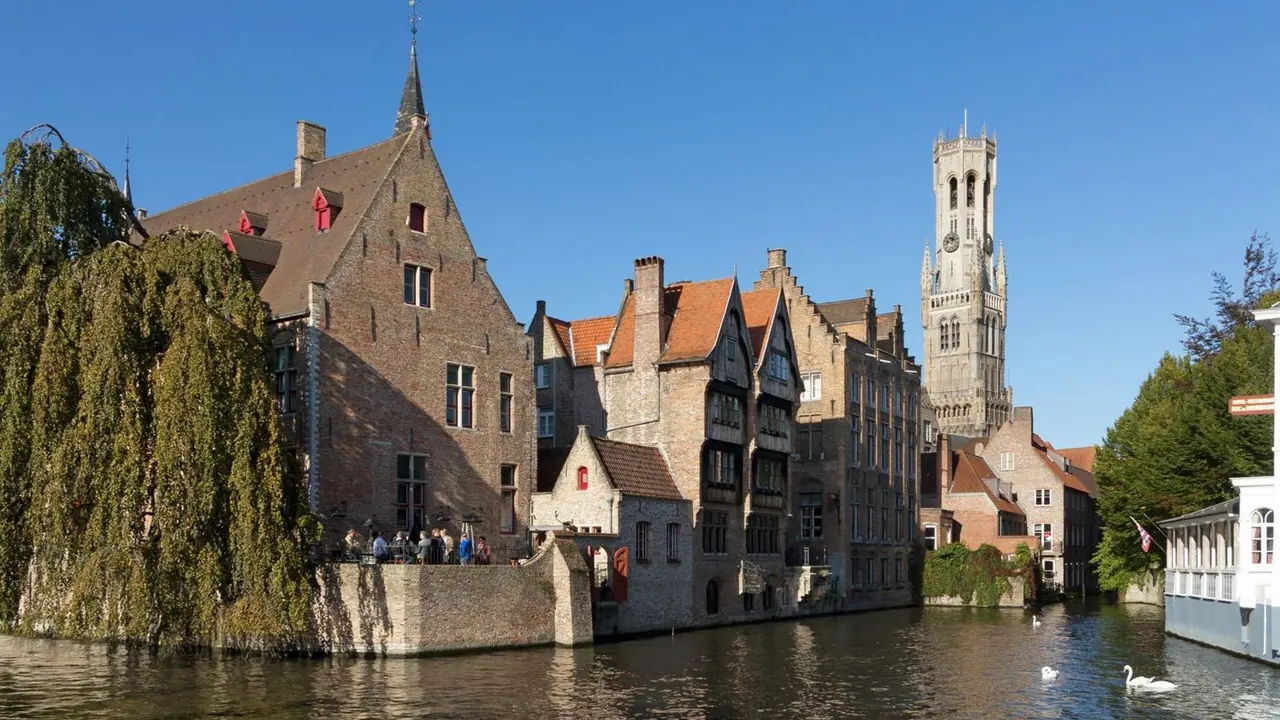
Photos: Brighton by Hassocks5489, CC0; Bruges by Michielverbeek, CC BY-SA 4.0, cropped.
Brighton or Bruges?
Our verdict in twelve categories, each scored against the same fixed benchmark cities, and the climate month by month, so you can choose for your trip.
Choose Brighton for
- nightlife
- nature and the outdoors
- live music and the arts
Brighton suits travellers who want a lively seaside town with plenty to do after dark. The nights out, the festivals and comedy, the junk shops of the North Laine and the open chalk hills of the South Downs on the edge of town make it a good pick for groups of friends, couples who like a busy evening and families who want an old-fashioned day on the pier.
Choose Bruges for
- culture and sights
- wellness
- day trips
Bruges is the better choice if you want to spend your days looking at beautiful things and your evenings in quiet. Its canal-ringed medieval centre and Flemish masterpieces are in a different league from Brighton's handful of sights, and its brown beer cafés and lit canals make for slow, romantic nights. Ghent and Brussels are close by train. Choose it for a cultural break, not a party.
Scoreboard
Twelve categories on one fixed scale from 0 to 100. The shaded stretch is the gap between the two.
Your match
Pick a travel style or drag the sliders, and both match scores follow your weighting.
Wins on nightlife and nature and the outdoors with your weighting.
Wins on culture and sights and wellness with your weighting.
What matters to you?
Category by category
What the scores mean for a trip.
Beaches & swimming
Brighton has the beach on its doorstep. A shingle strand runs the whole seafront from the Marina to Hove, with lifeguards on the central stretches in summer, and it is where the town spends its sunny afternoons, even if the pebbles are steep and the Channel is cold.
Bruges has no beach of its own. You take a fifteen-minute train to Blankenberge, where the coast tram connects a long line of wide, flat sand. That suits children better than Brighton's shingle, but the North Sea is just as chilly and it is always a half-day outing rather than part of daily life.
Food & drink
The two are evenly matched at the table, but they are good at different things. Brighton's strength is lots of small independent kitchens, with a long vegetarian and vegan tradition, serious coffee in the North Laine, seafood from the stalls under the arches and Sussex sparkling wine from the Downs.
Bruges is built around Belgian beer, with Trappist and abbey brews poured in wood-panelled cafés, plus mussels and frites, beer-braised beef, waterzooi and chocolate everywhere. In both, the most touristy spots disappoint, the seafront on summer weekends in Brighton and the Markt's set menus in Bruges, so walk a street or two further.
Culture & sights
Brighton has one sight that would stand out anywhere: the Royal Pavilion, with Indian domes outside and chinoiserie rooms inside. Around it are the Lanes, the Palace Pier, the bare frame of the West Pier, the Booth Museum and the white Regency crescents of Kemptown and Hove. These fill a day or two of wandering and looking at buildings, but there is no long list of landmarks to work through.
Bruges is far richer for sightseeing. Its whole canal-ringed centre is a World Heritage site, from the guildhalls and stepped gables around the Belfry and the Burg to the Begijnhof, and its churches and museums hold Flemish art of real international weight. The old town is compact, though, and two full days cover the main sights. Start early, because the narrow streets fill with day-trippers by late morning.
Nightlife
Going out is one of the main reasons to visit Brighton, and it barely registers in Bruges. Brighton fills its pubs every night thanks to two universities and its long role as London's weekend escape. Kemptown has one of Britain's oldest LGBTQ+ scenes, and the clubs on West Street and in the seafront arches stay open into the small hours.
In Bruges an evening means a long session over strong ales in a brown café or cellar bar around the Eiermarkt or 't Zand, then a walk along the canals. Most of the town is asleep by midnight on weeknights. That is lovely for a couple, but a let-down for anyone who wants to dance.
Nature & outdoors
Brighton has much better countryside close at hand. A short bus ride takes you onto the chalk grassland of the South Downs National Park at Devil's Dyke or on the South Downs Way, and the white cliffs of the Seven Sisters and Beachy Head are under an hour east. Windsurfing, kitesurfing and sailing off the seafront add a watery side.
Around Bruges the land is flat polder with poplar-lined canals. It is ideal for an easy bike ride to Damme or a birdwatching visit to the Zwin salt marsh, but there are no hills and nothing to build an outdoor trip around.
Day trips
Both make excellent bases, and the difference is in the kind of outings. From Brighton the big draw is London, about an hour by fast train, along with Sussex towns like Lewes, Arundel, Chichester and Rye. The country houses of the Weald and the vineyards of the Downs are easier with a car.
From Bruges almost everything is a quick train ride to another historic city. Ghent is under half an hour away and Brussels and Antwerp are not much further, with the First World War memorials of Ypres and the Westhoek about an hour away by car or bus.
Good for families
Brighton is the easier choice with children. It offers the full English seaside package: rides and arcades on the Palace Pier, the Victorian aquarium, Volk's Electric Railway and paddling at Hove Lagoon, all within a compact centre. Do keep away from the centre late on weekend nights.
Bruges works best for short outings like canal boats, horse-drawn carriages, climbing the Belfry and feeding the swans at the Minnewater, with Boudewijn Seapark for a fuller day. The sandy coast is good for sandcastles, but cobbles and crowded summer streets are hard going with a pushchair.
Getting around
Both are easy to see on foot, but the ground differs. Brighton's centre is compact but hilly, with a steady climb back up to the station and steep streets in Kemptown, and a dense bus network covers Hove and the edge of the Downs.
Bruges is flat and largely car-free inside its canal ring, so bikes are the natural way to get around. Its station sits outside the ring, though, and the cobbles are hard on ankles and suitcase wheels. In both cities a car only gets in the way.
Shopping & style
Brighton is the more rewarding place to browse. The North Laine's vintage clothes, records, retro furniture and comics, plus the jewellers and antique dealers of the Lanes, make for an afternoon of finding odd things, even without any luxury streets.
In Bruges, shopping mostly means things to eat and drink: pralines, specialist beer shops selling bottles and glasses, and lace, much of it imported. Beyond that there are mostly chains on Steenstraat and weekend markets on 't Zand and along the Dijver.
Affordability
Both are expensive for their size, and in both the room is the main cost. Brighton is dearest on summer weekends, when Londoners and party groups fill the seafront hotels. Once you are there, the beach, piers and Downs cost nothing, but train fares add up if you plan several day trips.
Bruges charges a lot for hotels inside the canal ring and for ordinary food on the main squares. Its trains to Ghent and Brussels are reasonably priced, though, and its beer is fair value. In both cities, staying midweek makes the biggest difference.
Live music & performing arts
Brighton has far more on stage. Every May the Brighton Festival and England's largest fringe take over theatres, churches and pubs for weeks. The rest of the year there is the Dome, the Theatre Royal, plenty of small live-music rooms and strong comedy, with Glyndebourne's summer opera about twenty minutes away.
Bruges is more specialised. The Concertgebouw is known for early music, chamber music and contemporary dance, the city holds a respected early-music festival each summer, and the Belfry carillon plays over the rooftops. Bars offer little live music, so many people head to Ghent or Brussels for an evening out.
Wellness & relaxation
Neither city has a spa culture, but Bruges is the more restful place to slow down. Early in the morning and after the tour groups leave, the canals, the Begijnhof and Minnewater park are very peaceful, and the Sint-Anna and Langestraat area stays calm even at midday.
Brighton's version of relaxation is bracing rather than soothing: dawn sea swims with a seafront sauna afterwards, or quiet midweek walks past the beach huts on Hove's lawns. On summer weekends you will need to escape to the Downs for real calm.
When should you go?
Pick your month. The climate figures are measured averages, not a forecast.
Brighton in July
Bruges in July
Daytime high, °C
Rainfall in the month, mm
Where the figures come from
Brighton has no rain gauge within 25 km of the centre, so its rainfall comes from a gridded climate dataset read at the city rather than from a gauge further away.
Brighton's sunshine is measured 37 km from the centre, at London Gatwick Airport.
Bruges has no rain gauge within 25 km of the centre, so its rainfall comes from a gridded climate dataset read at the city rather than from a gauge further away.
Bruges's sunshine is measured 37 km from the centre, at Vlissingen.
Temperature and rainfall are climate normals, averaged over the years shown. Brighton: 1999-2020 (sunshine 1981-2010, rainfall 1991-2020) normals, Shoreham Airport (10.3 km from centre). Bruges: 2009-2025 (sunshine 1991-2020, rainfall 1991-2020) normals, Zeebrugge / Zeemanshaard (15.8 km from centre).
The two share a mild, damp northern climate, and both are at their best from June to September, when daytime highs reach about 20°C in Brighton and a degree warmer in Bruges. Neither ever gets too hot for walking the streets. Summer is the only time the sea is worth considering, and it stays cool. The Channel off Brighton peaks around 17°C in August and September, while the Belgian coast near Bruges reaches about 19°C in August.
The wet seasons fall differently. Brighton is fairly dry through spring and summer, but its rain builds sharply from October, and December brings around 105mm. Bruges spreads its rain more evenly and gets wetter in high summer, with August one of its rainiest months, though it is clearly sunnier than Brighton from spring to early autumn. For a dry, bright city break, late spring is the sweet spot in both.
Which traveller are you?
On a culture and arts trip, Bruges is the clear winner. Its whole UNESCO-listed centre is a sight in itself, and the Groeninge Museum's Van Eycks, the Memlings at St John's Hospital and Michelangelo's Madonna outclass anything Brighton has beyond the Royal Pavilion.
For a food and nightlife trip, Brighton has far more going on. The eating is roughly level, with vegetarian kitchens and seafront seafood against Belgian beer and mussels. After dark, though, Brighton's pubs, Kemptown's LGBTQ+ scene and its late clubs leave sleepy Bruges behind.
On an outdoors trip, go to Brighton. The South Downs start at the city's edge, with walking and mountain biking on the South Downs Way and the Seven Sisters cliffs nearby, plus windsurfing and sailing off the seafront. Flat Flanders offers little beyond gentle cycling.
Before you go
| Measure | Brighton | Bruges |
|---|---|---|
| Official language | English | French, German, Dutch |
| Currency | Pound Sterling (GBP) | Euro (EUR) |
| Sockets | G230 V, 50 Hz | CE230 V, 50 Hz |
| Driving side | Left | Right |
| Time zone | UTC, UTC+1 in summer | UTC+1, UTC+2 in summer |
| Emergency number | 112 or 999 | 112 |
| Elevation | 22 m | 2 m |
| Main airport | London Gatwick Airport (LGW)37 km from centre224 non-stop destinations | Brussels Airport (BRU)94 km from centre191 non-stop destinations |
| Public holidays this year | 8 days | 14 days |
By the numbers
| Measure | Brighton | Bruges |
|---|---|---|
| City population | 134,293 | 118,509 |
| People per km² | 1,624 | 840 |
| Museums within 10 km | 11 | 38 |
| UNESCO World Heritage sites within 50 km | 0 | 4 |
| Swim season, months above 21 °C | None | None |
Where else could you go?
Every comparison below shares a destination with this one, so you can follow Brighton or Bruges somewhere new.