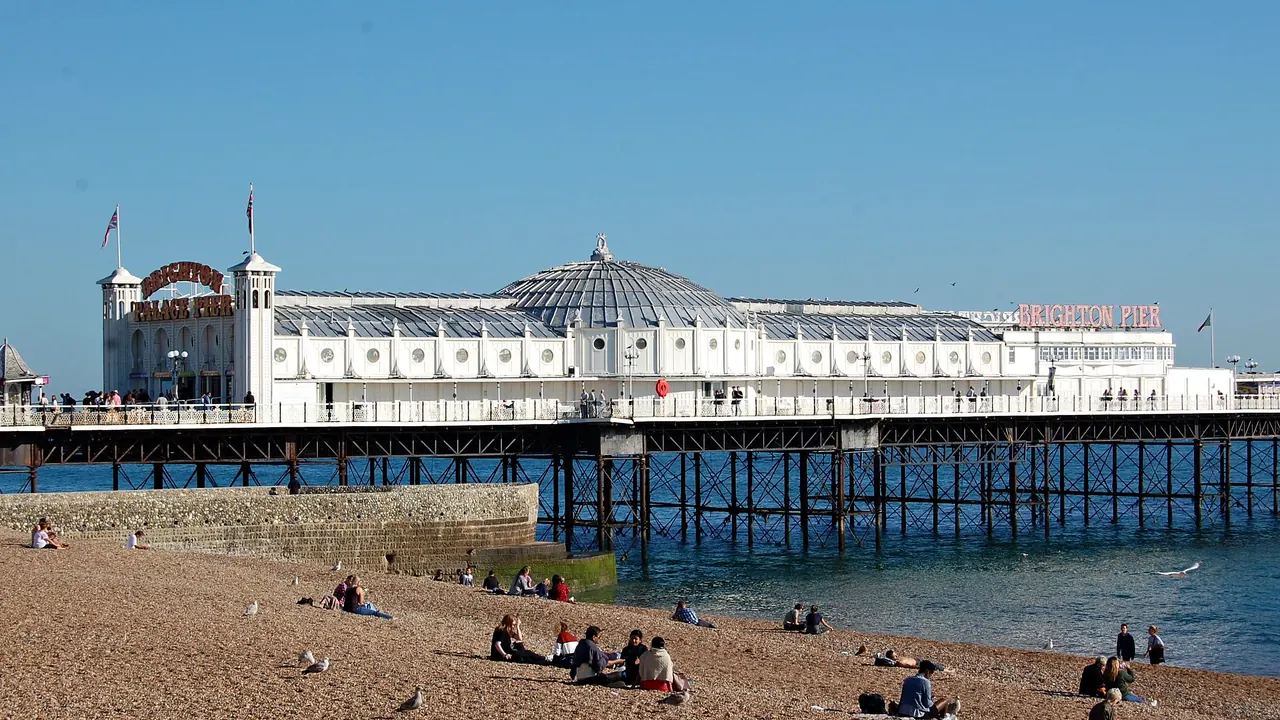
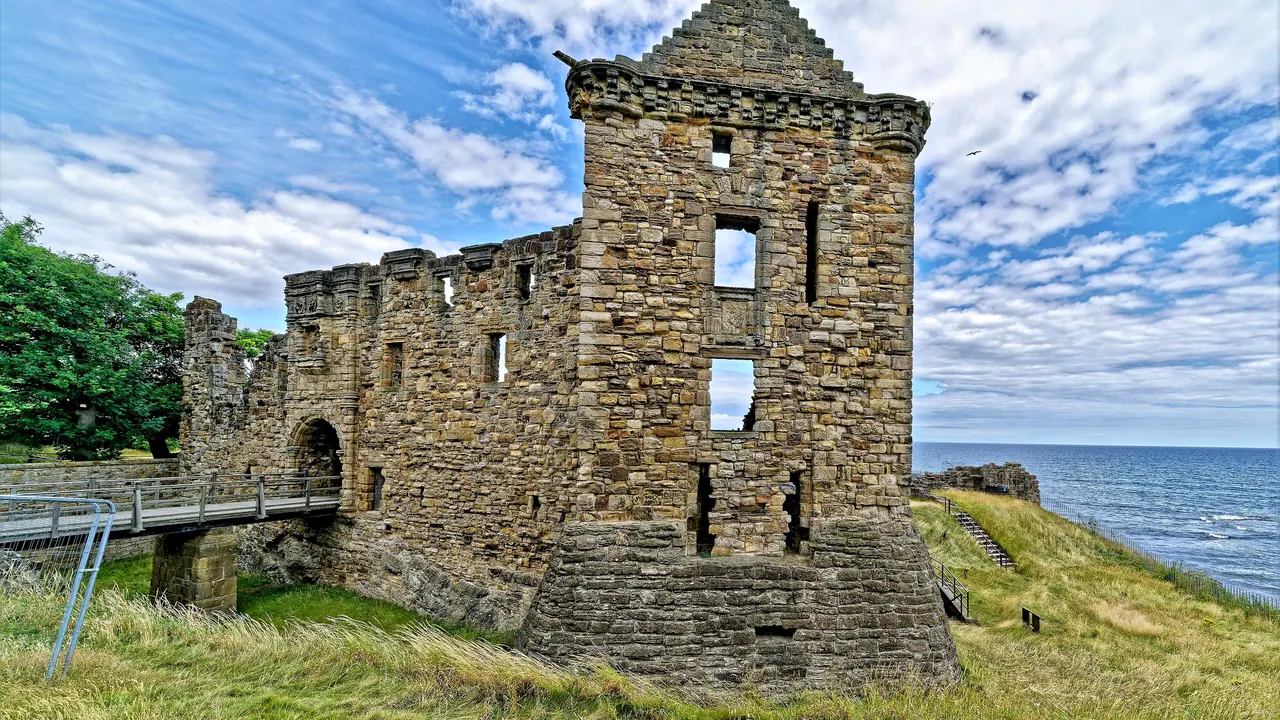
Photos: Brighton by Hassocks5489, CC0; St Andrews by Holger Uwe Schmitt, CC BY-SA 4.0, cropped.
Brighton or St Andrews?
Our verdict in twelve categories, each scored against the same fixed benchmark cities, and the climate month by month, so you can choose for your trip.
Choose Brighton for
- nightlife
- live music and the arts
- shopping
Brighton is the livelier and more rounded choice. It suits travellers who want plenty going on, with independent kitchens, late bars and clubs, a busy festival and gig calendar and the North Laine's odd little shops all within a short walk. London and the Sussex towns are an easy train ride away, and the South Downs start at the edge of the city. Pick it for a weekend with friends, a family seaside break or a trip that mixes town and country.
Choose St Andrews for
- wellness
St Andrews is for those who want quiet over choice. Its appeal is narrower and calmer: medieval ruins on the headland, a university town of old quadrangles, long sandy beaches for walking, and the Old Course for anyone who plays golf. Evenings are early and simple. It rewards golfers, couples after fresh air and slow days, and anyone happy to use it as a base for the East Neuk villages and the castles of eastern Scotland.
Scoreboard
Twelve categories on one fixed scale from 0 to 100. The shaded stretch is the gap between the two.
Your match
Pick a travel style or drag the sliders, and both match scores follow your weighting.
Wins on nightlife and live music and the arts with your weighting.
Wins on wellness with your weighting.
What matters to you?
Category by category
What the scores mean for a trip.
Beaches & swimming
Brighton comes out ahead, and the reason is the water rather than the shore. Its pebble beach runs along the whole front in the middle of town, so a swim fits easily between lunch and an afternoon in the Lanes, and the busiest stretches are patrolled through the summer. The shingle is steep and hard on bare feet, though, and on the many grey days the beach is more a place to sit with chips than to bathe. Quieter pebbles lie under the cliffs at Rottingdean.
St Andrews has much the better sand. West Sands is wide and pale, with dunes and the links behind it, East Sands is sheltered by the harbour, and little Castle Sands sits beneath the cliffs. What it lacks is a sea most visitors want to get into, so its beaches are for running along the waterline, flying kites and building sandcastles, with swimming left to the hardy.
Food & drink
Brighton is clearly the better place to eat. Independent kitchens crowd the North Laine, the Lanes and Kemptown, there is a long tradition of vegetarian and vegan cooking, coffee is taken seriously, and seafood stalls line the arches on the front.
St Andrews eats pleasantly but within a narrow range. You get cafés and bakeries, a few restaurants cooking Fife lamb and East Neuk crab, and ice cream queues on summer evenings. The harbour fish and chips and smokehouses of the nearby fishing villages are its best extras.
Culture & sights
The two are fairly close, and each covers a day or two of sightseeing, but the character is different. Brighton is Regency and royal eccentricity: the domes and chinoiserie of the Royal Pavilion, the white crescents of Kemptown and Hove, and the piers. The Pavilion gives it the slightly stronger headline sight.
St Andrews is medieval and scholarly. The ruined cathedral and St Rule's Tower stand on the headland, you can crawl through the siege tunnels of the clifftop castle, and the university's quadrangles date back to 1413. Golf heritage around the Old Course adds a layer that Brighton has no equivalent for.
Nightlife
The two are far apart here. In Brighton, going out is one of the main reasons to visit. Pubs and bars fill every night, Kemptown has one of Britain's oldest LGBTQ+ scenes, and the clubs on West Street and in the seafront arches run into the small hours. Weekend nights can get rowdy with stag and hen groups.
St Andrews offers pubs, golf lounges and student haunts in term time. In summer, when most visitors come, the town is quiet early, and anyone wanting a real night out travels to Dundee or Edinburgh.
Nature & outdoors
Both sit in open, gentle country, with Brighton slightly ahead. From Brighton, the chalk grassland of the South Downs is a bus ride away at Devil's Dyke, and the Seven Sisters cliffs give it the more dramatic scenery. The seafront is also busy with windsurfing, kitesurfing and sailing.
St Andrews is more coastal and wild-life minded. The Fife Coastal Path passes sea stacks and caves, wading birds gather on the Eden estuary, and seals haul out at Tentsmuir. It also has links golf on every side and the Lomond Hills for proper hill walking by car.
Day trips
Brighton is the stronger base, largely because London is only about an hour away by fast train. Lewes, Arundel, Chichester, Rye and Battle add castles, cathedrals and Norman history, and most of them can be reached by rail.
St Andrews has a fine spread of its own, including the East Neuk harbours, Falkland Palace, Dundee's V&A and the ship Discovery, and Edinburgh as a full day out. More of its castles and palaces, from Glamis to Stirling, need a car or careful bus planning.
Good for families
Brighton gives children more to do. The Palace Pier's rides and arcades, the Victorian aquarium, Volk's Electric Railway and paddling at Hove Lagoon make a classic seaside day. Just steer clear of the centre late on weekend nights.
St Andrews is gentler and safer-feeling, with real sand for castles and rock pools, Craigtoun Park's miniature railway and the putting green by the Old Course. It suits a slow few days with younger children better than a packed programme.
Getting around
Both centres are easy on foot, but Brighton connects better beyond them. Its station is a short walk from the sea, frequent buses reach Hove and the Downs, and direct trains run to London and along the coast. The catch is the climb back up from the seafront.
St Andrews is flat and compact within town, but it has no station of its own. Trains leave from Leuchars, about 8km away, and inland sights are much easier with a car.
Shopping & style
Vintage clothing, record shops, retro furniture and alternative fashion fill the narrow streets of Brighton's North Laine, and the jewellers and antique dealers of the Lanes are a few minutes away, so browsing can easily take a whole day. The chains are in Churchill Square, but there are no luxury streets.
St Andrews is good for a pleasant afternoon on Market Street, South Street and North Street. Golf gear and Old Course souvenirs are its speciality, along with cashmere, tartan and independent bookshops, and serious shoppers head to Edinburgh.
Affordability
Neither town is cheap to stay in, and what pushes prices up differs. Brighton's rooms peak on summer weekends when Londoners and party groups arrive, so midweek and winter stays are the way to save. Once you are there, the beach, the piers and the Downs are free.
St Andrews has few rooms, priced for golfers and university families, and they climb around tournaments and graduation. Staying in the East Neuk villages helps, and if you plan to play the famous courses, budget for that.
Live music & performing arts
Brighton is far ahead. In May the Brighton Festival and England's largest fringe take over the town, and the rest of the year the Dome, the Theatre Royal, a deep gig circuit and a strong comedy scene keep stages busy. Glyndebourne's opera is about twenty minutes away.
St Andrews has the Byre Theatre, university concerts and choral evenings in term time, and folk sessions in some pubs. In the summer break it goes quiet, and for orchestras or major theatre you go to Edinburgh or Dundee.
Wellness & relaxation
St Andrews is the more restful of the two, thanks to its slow pace and the proper spas at the golf resorts, though neither town has thermal baths to build a trip around. Brighton's problem is noise. On summer weekends the front fills with day-trippers and party groups, and for spas it has only a few small day and hotel spas. Its quieter side comes out on a winter weekday, or in the Downs villages a short bus ride away.
St Andrews stays calm for most of the year. A day there might be a long stroll on the sand, a coffee on one of the old streets and an early night, and the resort spas on the edge of town have pools and treatment rooms you can book without staying there. In both towns you can join the locals for a cold-water dip.
When should you go?
Pick your month. The climate figures are measured averages, not a forecast.
Brighton in July
St Andrews in July
Daytime high, °C
Rainfall in the month, mm
Where the figures come from
Brighton has no rain gauge within 25 km of the centre, so its rainfall comes from a gridded climate dataset read at the city rather than from a gauge further away.
Brighton's sunshine is measured 37 km from the centre, at London Gatwick Airport.
Temperature and rainfall are climate normals, averaged over the years shown. Brighton: 1999-2020 (sunshine 1981-2010, rainfall 1991-2020) normals, Shoreham Airport (10.3 km from centre). St Andrews: 1991-2020 normals, Leuchars (6.5 km from centre).
Both towns are at their best from June to September, and neither is truly hot. Brighton is a little warmer, with highs of about 20°C in July and August, and its sea reaches about 17°C by late summer. That makes a swim on a calm day reasonable. In St Andrews the North Sea stays near 14°C even in August, so summer is for beach walks rather than swimming. Brighton also has more sunshine through high summer, while St Andrews has about as much in May and keeps it more evenly.
The wet seasons fall differently. Brighton's rain arrives in autumn, and October to December each bring about 100mm, so late autumn is a grey time for walking the seafront. St Andrews is drier in winter than Brighton but a touch wetter in July and August. Its winters are also colder and windier, so spring and early autumn are the more comfortable times to explore on foot.
Which traveller are you?
For a food and nightlife trip, Brighton is the obvious pick. The North Laine and Kemptown are packed with small kitchens and coffee roasteries, and the night runs from craft-beer pubs to clubs in the seafront arches. St Andrews has pubs, and the town goes to bed early.
On a relaxing and wellness trip, St Andrews has the edge. Its pace is unhurried, it is quiet in the evenings, and the golf resorts have full spas open to non-residents. Brighton's summer weekends are loud, and you only really find calm there midweek or out of season.
For golfers, St Andrews has no real rival. The Old Course, the Swilcan Bridge, the British Golf Museum and links courses all around town are the reason many people come. Brighton offers the Downs for walking and riding, but nothing comparable on the fairway.
Before you go
| Measure | Brighton | St Andrews |
|---|---|---|
| Official language | English | English |
| Currency | Pound Sterling (GBP) | Pound Sterling (GBP) |
| Sockets | G230 V, 50 Hz | G230 V, 50 Hz |
| Driving side | Left | Left |
| Time zone | UTC, UTC+1 in summer | UTC, UTC+1 in summer |
| Emergency number | 112 or 999 | 112 or 999 |
| Elevation | 22 m | 24 m |
| Main airport | London Gatwick Airport (LGW)37 km from centre224 non-stop destinations | Edinburgh Airport (EDI)56 km from centre163 non-stop destinations |
| Public holidays this year | 8 days | 10 days |
By the numbers
| Measure | Brighton | St Andrews |
|---|---|---|
| City population | 134,293 | 16,460 |
| People per km² | 1,624 | - |
| Museums within 10 km | 11 | 5 |
| UNESCO World Heritage sites within 50 km | 0 | 0 |
| Swim season, months above 21 °C | None | None |
Where else could you go?
Every comparison below shares a destination with this one, so you can follow Brighton or St Andrews somewhere new.
- Edinburghvs St Andrews
- Londonvs Brighton
- Aberdeenvs St Andrews
- Glasgowvs St Andrews
- Oxfordvs Brighton
- Invernessvs St Andrews