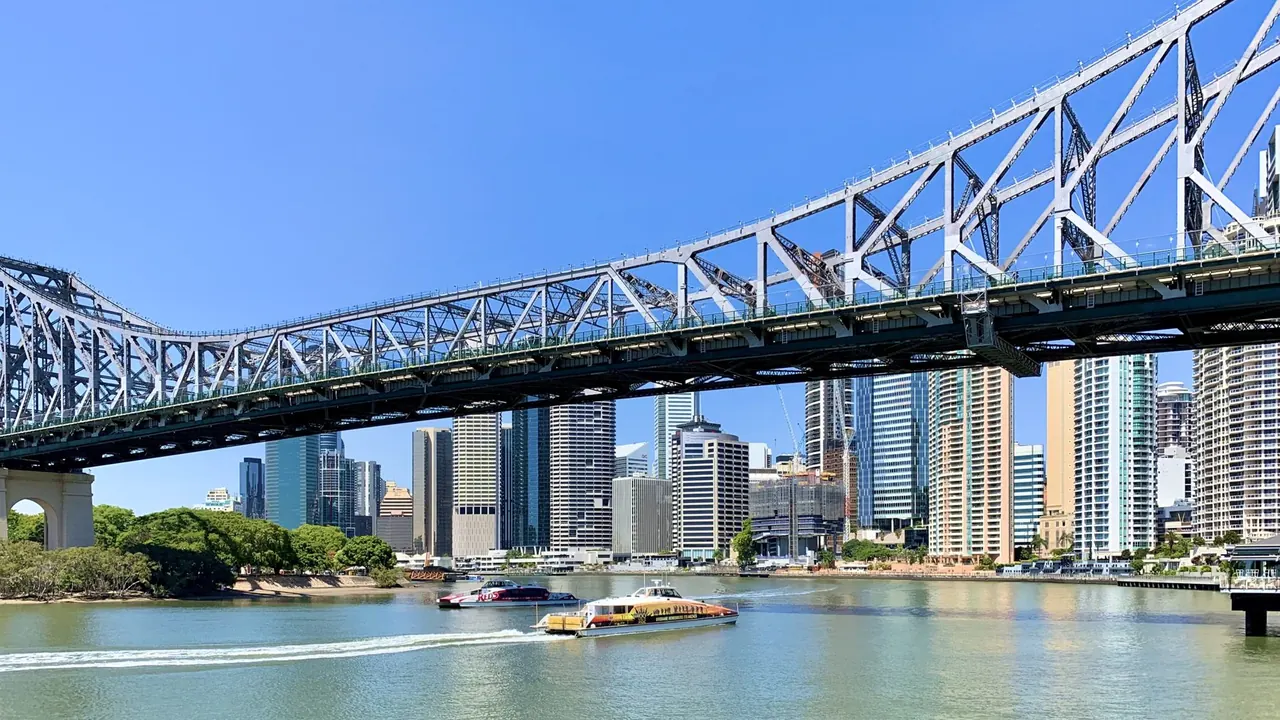
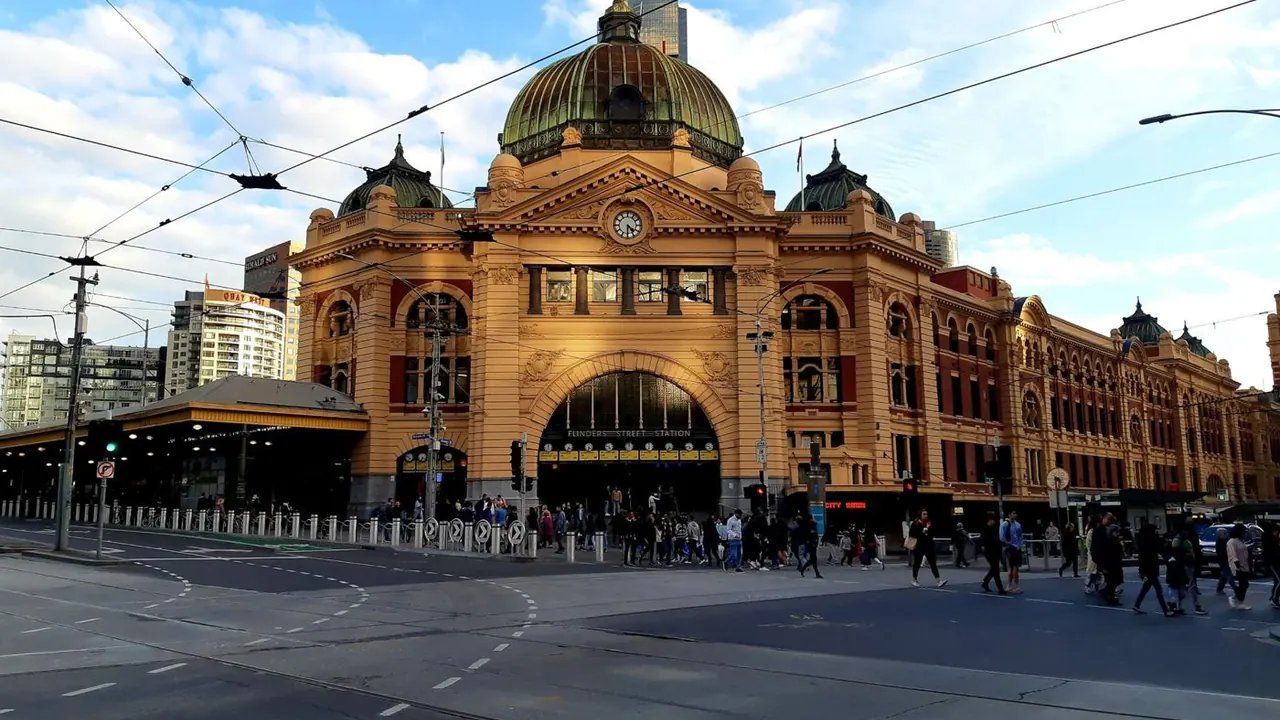
Photos: Brisbane by Kgbo, CC BY-SA 4.0, cropped; Melbourne by Medelam, CC BY-SA 4.0, cropped.
Brisbane or Melbourne?
Our verdict in twelve categories, each scored against the same fixed benchmark cities, and the climate month by month, so you can choose for your trip.
Choose Brisbane for
- beaches
- families
- nature and the outdoors
Brisbane suits a warm-weather trip built around the outdoors and the coast. Its winters are dry, mild and sunny, surf beaches and rainforest walks lie about an hour away in either direction, and it is one of the easiest Australian cities to bring children to, with a free lagoon in the centre and theme parks and zoos within a day's drive. The trade-off is a smaller city for eating, drinking and evenings out, and most of its best days happen outside town.
Choose Melbourne for
- shopping
- nightlife
- live music and the arts
Melbourne is the better pick when the city itself is the point. Its laneway bars, café culture and many migrant cuisines make eating and drinking a reason to come, and its stages, band rooms, gold rush architecture and independent shops fill several days more fully than Brisbane can. Wine country and the gold rush towns make good day trips. In return you get cooler, more changeable weather and a bay that is rarely warm enough for a long swim.
Scoreboard
Twelve categories on one fixed scale from 0 to 100. The shaded stretch is the gap between the two.
Your match
Pick a travel style or drag the sliders, and both match scores follow your weighting.
Wins on beaches and families with your weighting.
Wins on shopping and nightlife with your weighting.
What matters to you?
Category by category
What the scores mean for a trip.
Beaches & swimming
Neither city has a surf beach in town, and both offer a similar amount of swimming, but of different kinds. Brisbane's in-town options are the sandy South Bank lagoon and outdoor pools, with the real beaches of the Gold Coast, Sunshine Coast and Moreton Bay islands about an hour away and noticeably warmer water.
Melbourne has actual beaches at St Kilda, Elwood and Brighton a tram ride from the centre, which makes a spontaneous swim easier. The bay is cool, though, and the weather fickle, so the wilder, better sand on the Mornington Peninsula is a car trip.
Food & drink
Melbourne is the stronger food city by some distance. Its range is the draw: Greek on Lonsdale Street, Italian in Carlton, Vietnamese in Richmond and Footscray, a deep Chinatown, serious coffee in every laneway, and wines from the Yarra Valley and Mornington Peninsula close at hand.
Brisbane eats well but more simply, around verandas, cafés, tropical fruit and Moreton Bay bugs, with cheap immigrant cooking in West End and breweries in Newstead. It is pleasant grazing rather than a reason to travel.
Culture & sights
Melbourne has the fuller set of sights. Its gold rush fortune left a grand Victorian city, with the UNESCO-listed Royal Exhibition Building, Flinders Street Station, the State Library's domed reading room and the bluestone lanes with their street art, and the National Gallery of Victoria has the larger international collection.
Brisbane's best is concentrated in the South Bank Cultural Centre, whose Asia-Pacific and Aboriginal art is a real strength. Beyond that and its stilted Queenslander houses, the centre is mostly modern, and it runs out of sights sooner.
Nightlife
Melbourne offers more evenings out and more variety. Its small bars tucked up stairwells and behind unmarked doors, the creative crowd in Fitzroy and Collingwood, Chapel Street's clubs and St Kilda's rougher edge keep things busy most nights, with clubs open into the early hours at weekends.
In Brisbane, going out largely means Fortitude Valley at the weekend, with rooftop bars and riverside terraces for warm evenings. Licensing rules close venues earlier, and weeknights are quiet.
Nature & outdoors
Both cities have plenty of outdoors within reach, but of a different character. Brisbane leans subtropical: bush trails on Mount Coot-tha and in D'Aguilar on the city's edge, the World Heritage rainforest of Lamington and Springbrook, the Glass House Mountains and Moreton Island's dunes, with whales passing in winter.
Melbourne's version is cooler and more coastal: mountain ash and tree ferns in the Dandenongs, cliff walks on the Mornington Peninsula, the surf coast at Torquay and Phillip Island's penguins and seals. It also has to be planned around changeable weather in every season.
Day trips
A day out from Brisbane almost always means coast or hills: the Gold Coast an hour away by car or train, Noosa on its river mouth at the far end of the Sunshine Coast, and the gallery and winery villages of Montville, Maleny and Tamborine Mountain, with Toowoomba's gardens over the range. They are relaxed, scenic days, but there is little history to go and see.
Melbourne adds wine and heritage to the choice. Ballarat's open-air goldfields museum and Bendigo's grand boom-era streets and art gallery are each under two hours by train, the Yarra Valley pairs cool-climate chardonnay and pinot noir with local produce, and the Mornington Peninsula and the old port of Queenscliff mix vineyards with seaside villages.
Good for families
Both are easy, safe cities with children, and the difference lies in the kind of outing. Brisbane has the warmer, splashier version: the free South Bank lagoon, Lone Pine's koalas, river ferry rides, and the Gold Coast theme parks and Australia Zoo for big days out.
Melbourne has no theme-park cluster, but it has more variety close by: Melbourne Zoo, the Werribee safari bus, platypus at Healesville, Luna Park, the Puffing Billy steam train and good indoor options for cool or rainy days.
Getting around
Brisbane's best transport is its river. The CityCat and cross-river ferries link the inner suburbs and double as a sightseeing ride, and the compact core of the CBD, South Bank, West End and Fortitude Valley can be walked, though hills and summer humidity wear you down. Trains and busways cover the suburbs, but the rainforest parks and hinterland villages really need a car.
Melbourne is simpler without a car. Its flat central grid suits walking, trams are free within the CBD, and one of the world's largest tram networks fans out on separate routes to St Kilda, Fitzroy, Carlton and South Yarra, so most inner neighbourhoods are a short ride away. Only the Dandenongs, the Yarra Valley and Phillip Island push you towards a car or a tour.
Shopping & style
Melbourne is the better place to shop. The mosaic-floored Block and Royal arcades, luxury labels at the top of Collins Street, and a strong independent scene of local designers, vintage and record shops in Fitzroy, Collingwood and the laneways give real depth.
Brisbane covers the basics in Queen Street Mall and its arcades, with local fashion on James Street and antiques in Paddington. It is pleasant enough, but rarely worth planning a day around.
Affordability
Both are expensive, with Australian prices for meals, drinks and taxis, so the budget will be similar in either. Brisbane offers cheap public transport, free main galleries and the free South Bank lagoon.
Melbourne's savings come from the free tram zone in the centre, free museums and the good cheap eating of Chinatown, Footscray and Richmond, though its hotels rise sharply during big sporting events and festivals.
Live music & performing arts
Melbourne has the deeper stage. The Arts Centre is home to the Australian Ballet and the Melbourne Symphony Orchestra, historic theatres such as the Regent and Her Majesty's host the big musicals, and the pub stages of Fitzroy, Collingwood and St Kilda have live bands most nights, with the autumn Comedy Festival on top.
Brisbane covers the essentials at the Queensland Performing Arts Centre and the Powerhouse, with a good band circuit in Fortitude Valley and the Brisbane Festival in September, but the choice on any given night is narrower.
Wellness & relaxation
Brisbane has no springs or bathhouse culture, so unwinding there comes down to its pace: heritage open-air pools such as the Spring Hill Baths of 1886, warm evenings by the river and long café mornings. A proper retreat means heading to the rainforest lodges and spas of the hinterland, about an hour and a half away.
Melbourne has a real spa tradition at the same distance, in the mineral springs of Daylesford and Hepburn Springs, bathed in since the nineteenth century around a historic bathhouse. Closer in, the sea baths at St Kilda and Brighton have pools and saunas by the water, day spas are plentiful, and the geothermal hot pools of the Mornington Peninsula make an easy day out.
When should you go?
Pick your month. The climate figures are measured averages, not a forecast.
Brisbane in July
Melbourne in July
Daytime high, °C
Rainfall in the month, mm
Temperature and rainfall are climate normals, averaged over the years shown. Brisbane: 1991-2020 normals, Brisbane (4.5 km from centre). Melbourne: 1991-2020 normals, Latrobe University / Kingsbury (13.1 km from centre).
Brisbane is subtropical. Summer from December to March is hot, humid and stormy, with February the wettest month at around 151mm, though this is also when the sea off the Gold and Sunshine coasts is warmest, at about 26°C. The drier months from May to September are the most comfortable for walking the city and the hinterland, with sunny days near 22°C at the coolest, very little rain from July to September, and sea water still mild enough for a swim.
Melbourne runs cooler and more evenly through the year. Rain falls in modest amounts in every month, so there is no true dry season, but also no stormy one. Summer from December to March is the time for the bay beaches, though the water peaks at only about 21°C and hot days can turn cool quickly. Winter is grey and chilly, with highs around 14°C and short hours of sun, which suits galleries, cafés and theatres better than outdoor plans. Spring and autumn are pleasant for walking the streets, if you bring layers.
Which traveller are you?
On a beach and sun trip, Brisbane is the better base. Its surf beaches north and south are warm enough for swimming through much of the year, while Melbourne's bay stays cool and its swimming season is short and unreliable.
For a food and nightlife trip, Melbourne is the clear choice. Laneway cocktail and wine bars, Fitzroy's late pubs, Lygon Street, Footscray and Chinatown give it far more range than Brisbane's Fortitude Valley and West End, and the night goes on later.
On a shopping trip, Melbourne again comes out ahead. Victorian arcades off Collins Street, luxury labels, and independent designers on Gertrude, Smith and Chapel streets offer much deeper browsing than Queen Street Mall and Paddington's antique shops.
Before you go
| Measure | Brisbane | Melbourne |
|---|---|---|
| Official language | English | English |
| Currency | Australian Dollar (AUD) | Australian Dollar (AUD) |
| Sockets | I230 V, 50 Hz | I230 V, 50 Hz |
| Driving side | Left | Left |
| Time zone | UTC+10 | UTC+10, UTC+11 in summer |
| Emergency number | 000 | 000 |
| Elevation | 0 m | 31 m |
| Main airport | Brisbane International Airport (BNE)13 km from centre88 non-stop destinations | Melbourne Airport (MEL)19 km from centre69 non-stop destinations |
| Public holidays this year | 11 days | 13 days |
By the numbers
| Measure | Brisbane | Melbourne |
|---|---|---|
| City population | 2,706,966 | 5,350,705 |
| People per km² | 171 | 535 |
| Museums within 10 km | 16 | 43 |
| UNESCO World Heritage sites within 50 km | 0 | 1 |
| Swim season, months above 21 °C | 9 months | None |
Where else could you go?
Every comparison below shares a destination with this one, so you can follow Brisbane or Melbourne somewhere new.