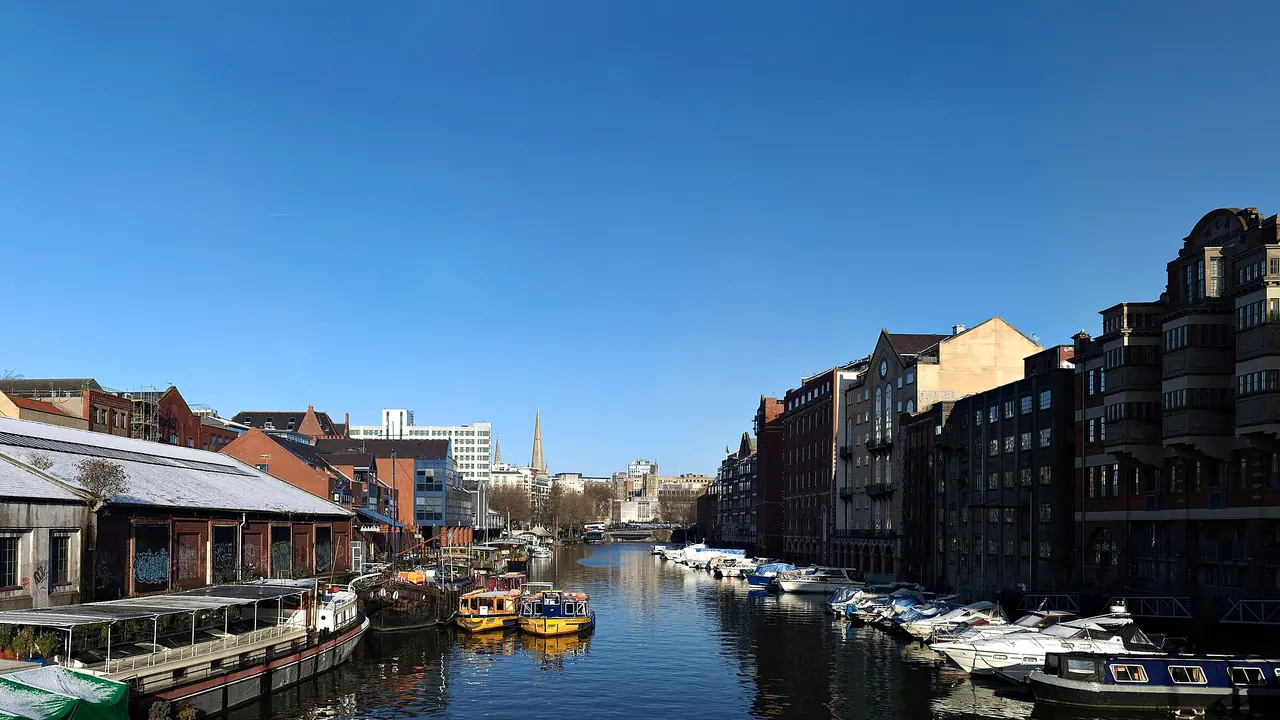
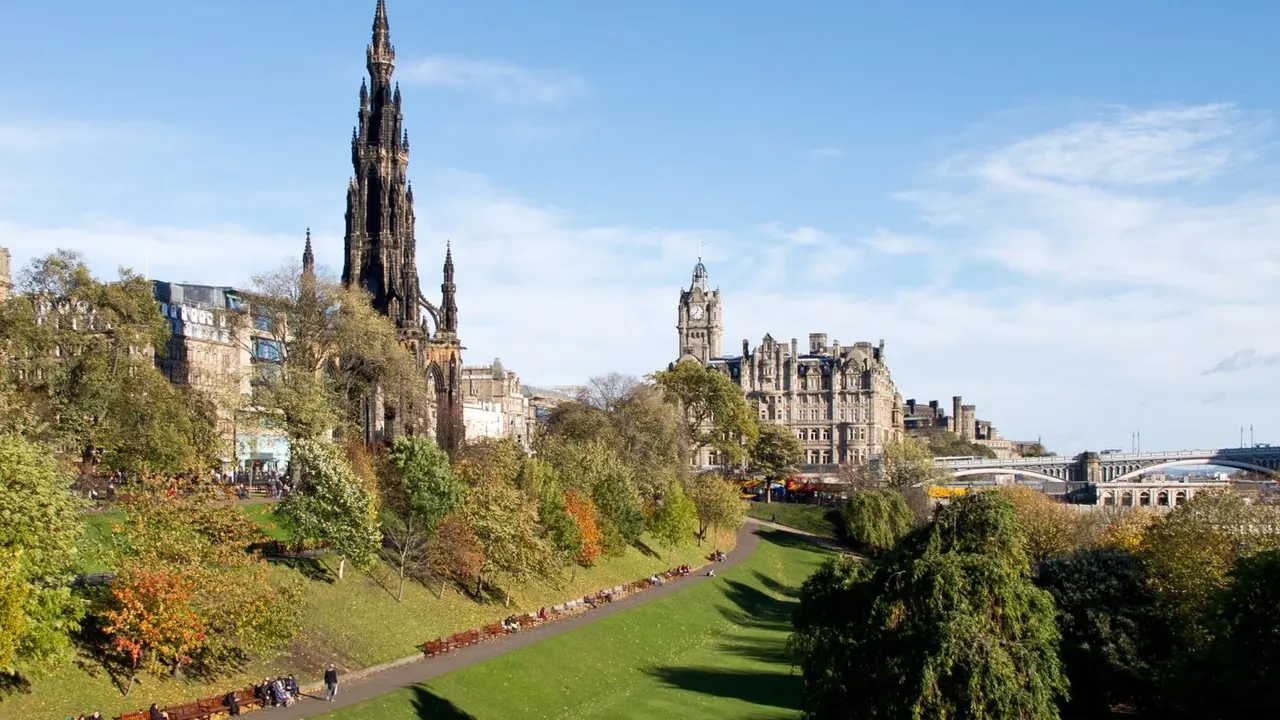
Photos: Bristol by NotFromUtrecht, CC BY-SA 3.0, cropped; Edinburgh by Carlos Delgado, CC BY-SA 3.0, cropped.
Bristol or Edinburgh?
Our verdict in twelve categories, each scored against the same fixed benchmark cities, and the climate month by month, so you can choose for your trip.
Choose Bristol for
- nightlife
- prices
- wellness
Bristol suits travellers who care more about how a city feels at night than about its monuments. Its warehouse clubs and grassroots music, its market stalls, cider and craft taprooms give it a looser, more independent character. It also makes the stronger base for southern England, with Bath and its hot springs a short train ride away. It is a little gentler on the budget too, which helps on a long weekend of eating and going out.
Choose Edinburgh for
- culture and sights
- getting around
- live music and the arts
Edinburgh is the choice for a first-time visitor who wants a city that looks extraordinary. Its castle, medieval Old Town and Georgian New Town, the national galleries and the August festivals give it far more depth in culture and the stage. Arthur's Seat rises right beside the Royal Mile, and the compact centre is easy to cover on foot or by tram. Expect to pay more for a room, and expect quieter nights outside festival season.
Scoreboard
Twelve categories on one fixed scale from 0 to 100. The shaded stretch is the gap between the two.
Your match
Pick a travel style or drag the sliders, and both match scores follow your weighting.
Wins on nightlife and prices with your weighting.
Wins on culture and sights and getting around with your weighting.
What matters to you?
Category by category
What the scores mean for a trip.
Beaches & swimming
Edinburgh at least has a seaside worth walking. Portobello's long sandy beach and promenade is a short bus ride from the centre, and the wide East Lothian sands at Gullane and North Berwick are within an hour. The North Sea stays cold even in summer, so most people stroll rather than swim.
Bristol's shore on the Severn estuary is silty mud at low tide. Even at Weston-super-Mare the water retreats so far that a swim takes careful planning. Its sea is slightly less cold, but the best option is a dip in Clevedon's Victorian marine lake.
Food & drink
Both eat well without being places to travel for food, but in different ways. Bristol is a grazing city: covered stalls in St Nicholas Market, container kitchens on the harbourside, and neighbourhood bakeries and roasters along Gloucester Road and North Street, with West Country cider and craft beer doing the drinking.
Edinburgh's strength is produce rather than variety. West-coast scallops and langoustines, Highland beef and autumn game are best eaten in the modern dining rooms of Leith and Stockbridge, and whisky bars with hundreds of malts are the local speciality. Cheap street eating is much harder to find than in Bristol.
Culture & sights
Edinburgh is the far richer city to look at. The castle rock, the closes of the Royal Mile and the Georgian crescents of the New Town together form one World Heritage Site. The National Museum of Scotland and the Scottish National Gallery add real weight indoors.
Bristol's story is narrower and industrial: Brunel's SS Great Britain and Clifton Suspension Bridge, the Gothic splendour of St Mary Redcliffe, and M Shed's frank account of the port's past. Banksy's street art in Stokes Croft gives it a modern edge that Edinburgh lacks, but two or three days cover the essentials.
Nightlife
Bristol is the better city for a big night out. Its clubs in old warehouses and the railway arches near Temple Meads carry on a home-grown tradition of trip hop, drum and bass and dubstep. Students keep the scruffy bars of Stokes Croft busy all year.
Edinburgh's evenings centre on the pub: panelled Victorian bars on Rose Street, Grassmarket taverns beneath the castle and harbour pubs in Leith, with the Cowgate as the late strip. It is a fairly early city except in August, when the festivals keep everything open into the small hours.
Nature & outdoors
Edinburgh has the wilder setting. Arthur's Seat, an extinct volcano with crags and lochs, rises a short walk from the Royal Mile, and the Pentland Hills offer ridge walking within half an hour. Boat trips from North Berwick reach the gannets of the Bass Rock, and the Highland edge is about two hours off.
Bristol's outdoors is softer and greener. Climbers use the limestone of the Avon Gorge, Ashton Court and Leigh Woods have trails for walking and biking, and the railway path to Bath makes an easy ride. Cheddar Gorge and the Mendips are close, but the landscape rolls rather than rears.
Day trips
Both are excellent bases, and the difference is the country you see. From Bristol it is southern England: Georgian Bath a quarter of an hour by train, Wells and Glastonbury, Stonehenge and Avebury, and Cotswold villages such as Lacock. Cardiff is close too, just across the Severn.
From Edinburgh the trips are Scottish history and scenery. Stirling's castle, Linlithgow Palace and the Borders abbeys are within easy reach, as are Glasgow's very different city and the golf and ruins of St Andrews, most of them simple to reach by train from Waverley.
Good for families
Children will be happy in either for a few days. In Bristol the draws cluster on the harbourside: the SS Great Britain, the hands-on science centre with its planetarium and the aquarium, linked by little ferries. There is a spacious wildlife park on the northern edge.
Edinburgh offers a castle with cannons, dinosaurs and machines at the National Museum, Dynamic Earth and a hillside zoo, and Portobello's sand is somewhere to dig. Both cities are hilly and have no theme park. Edinburgh adds cobbles and, in August, crowds.
Getting around
Edinburgh is much easier to get around. The Old Town, New Town, Calton Hill and Holyrood Park all lie within about 2km of one another. Buses are dense, a tram runs from the airport through Princes Street to Leith, and Waverley station sits right in the centre.
Bristol's core around the harbour and Queen Square is walkable, and the yellow ferries are a pleasant extra. Beyond that, though, there is no tram or metro, the buses get stuck in traffic, and the climb to Clifton is steep.
Shopping & style
Neither is a shopping destination, but they reward different shoppers. Bristol's appeal is independent: record shops, delis and vintage clothes along Gloucester Road, boutiques on Park Street and galleries in Clifton's Georgian arcades.
Edinburgh is where you buy things made in the country: cashmere, tweed, tartan from proper kiltmakers and deep ranges of single malts. Victoria Street and Stockbridge are the most pleasant streets to browse, while the Royal Mile's souvenir shops are best skipped.
Affordability
Bristol is the cheaper of the two, though neither is a bargain by British standards. Most of the gap is the cost of a bed, and how predictable it is: Bristol stays within reach for most of the year, while Edinburgh's prices rise and fall with its festival calendar. Free entry to most of Bristol's main museums and churches, and a centre small enough to cross on foot, keep day-to-day spending low.
Edinburgh offsets its rooms with plenty that costs nothing, from the national galleries to the climb up Arthur's Seat, and its buses are cheap. Where it costs more is its paid heritage, since both the castle and the royal palace charge for entry. Coming in the dark months, while avoiding the run-up to Christmas, is the surest way to bring it closer to Bristol's costs.
Live music & performing arts
Bristol's stage rests on the Bristol Old Vic, the oldest continuously working theatre in the English-speaking world, and on the small venues of Stokes Croft and Old Market, with bands and electronic acts most nights. It suits gig-goers more than lovers of classical music or opera.
Edinburgh goes much further. In August the Fringe takes over hundreds of venues, alongside the International Festival's orchestras and opera and the Tattoo on the castle esplanade. For the rest of the year the Royal Scottish National Orchestra, Scottish Opera and Scottish Ballet perform there, and the Traverse produces new drama.
Wellness & relaxation
Bristol has the better options for unwinding, largely thanks to Bath. Britain's only natural hot springs, with a rooftop pool above the abbey, are a quarter of an hour away by train. Closer to home, the heated Victorian lido behind Clifton's terraces makes a restful half day.
Edinburgh's offer is quirkier: tiled Victorian Turkish baths at Portobello, the modernist Commonwealth Pool and saunas on the shore for cold-water swimmers. Its gardens and riverside walks are calming out of season, but August is far too loud for rest.
When should you go?
Pick your month. The climate figures are measured averages, not a forecast.
Bristol in July
Edinburgh in July
Daytime high, °C
Rainfall in the month, mm
Where the figures come from
Bristol's station stands 178 m above the city centre, so the centre is likely a little warmer than the figures say.
Bristol has no rain gauge within 25 km of the centre, so its rainfall comes from a gridded climate dataset read at the city rather than from a gauge further away.
Bristol's sunshine is measured 43 km from the centre, at Lyneham.
Temperature and rainfall are climate normals, averaged over the years shown. Bristol: 1991-2020 normals, Lulsgate Bottom (11.8 km from centre). Edinburgh: 1991-2020 (sunshine 1981-2010, rainfall 1981-2010) normals, Edinburgh Airport (10 km from centre).
Bristol and Edinburgh share a cool, mild climate, and neither is ever too hot for walking the streets. In both, the comfortable months run from May to September. Summer highs reach about 20°C in Bristol and a degree less in Edinburgh, and winters are chilly rather than harsh. Bristol is noticeably sunnier from May to July, while Edinburgh's summers are greyer.
Rain is where they differ most. Bristol is properly wet from October to December, with close to 100mm a month, and stays damp into January. Edinburgh is drier in most months, though the two are level in midsummer. Neither has a beach season: Bristol's sea reaches about 18°C in late summer, against 14°C off Edinburgh, so both are for brief, bracing dips.
Which traveller are you?
On a culture and arts trip, Edinburgh is the clear pick. A UNESCO-listed Old Town and New Town, free national galleries, two national orchestras and Scottish Opera fill a stay, and in August the Fringe and International Festival make it the most crowded stage anywhere.
For a food and nightlife trip, Bristol has more going on after dark. Its warehouse and railway-arch clubs grew out of the city's own sound-system culture, small venues host bands most nights, and street-food stalls, cider houses and brewery taprooms keep the evenings cheap and varied.
On a trip with a tight budget, Bristol stretches money further. Its hotels are kinder outside weekends, and the market stalls make cheap eating easy. Edinburgh's rooms stay expensive all year and become extreme in August and at Hogmanay, though its free museums help.
Before you go
| Measure | Bristol | Edinburgh |
|---|---|---|
| Official language | English | English |
| Currency | Pound Sterling (GBP) | Pound Sterling (GBP) |
| Sockets | G230 V, 50 Hz | G230 V, 50 Hz |
| Driving side | Left | Left |
| Time zone | UTC, UTC+1 in summer | UTC, UTC+1 in summer |
| Emergency number | 112 or 999 | 112 or 999 |
| Elevation | 11 m | 47 m |
| Main airport | Bristol Airport (BRS)11 km from centre117 non-stop destinations | Edinburgh Airport (EDI)11 km from centre163 non-stop destinations |
| Public holidays this year | 8 days | 10 days |
By the numbers
| Measure | Bristol | Edinburgh |
|---|---|---|
| City population | 472,465 | 488,050 |
| People per km² | 4,311 | 1,884 |
| Museums within 10 km | 23 | 32 |
| UNESCO World Heritage sites within 50 km | 3 | 3 |
| Swim season, months above 21 °C | None | None |
Where else could you go?
Every comparison below shares a destination with this one, so you can follow Bristol or Edinburgh somewhere new.
- Bathvs Bristol
- Cardiffvs Bristol
- St Andrewsvs Edinburgh
- Glasgowvs Edinburgh
- Oxfordvs Bristol
- Aberdeenvs Edinburgh