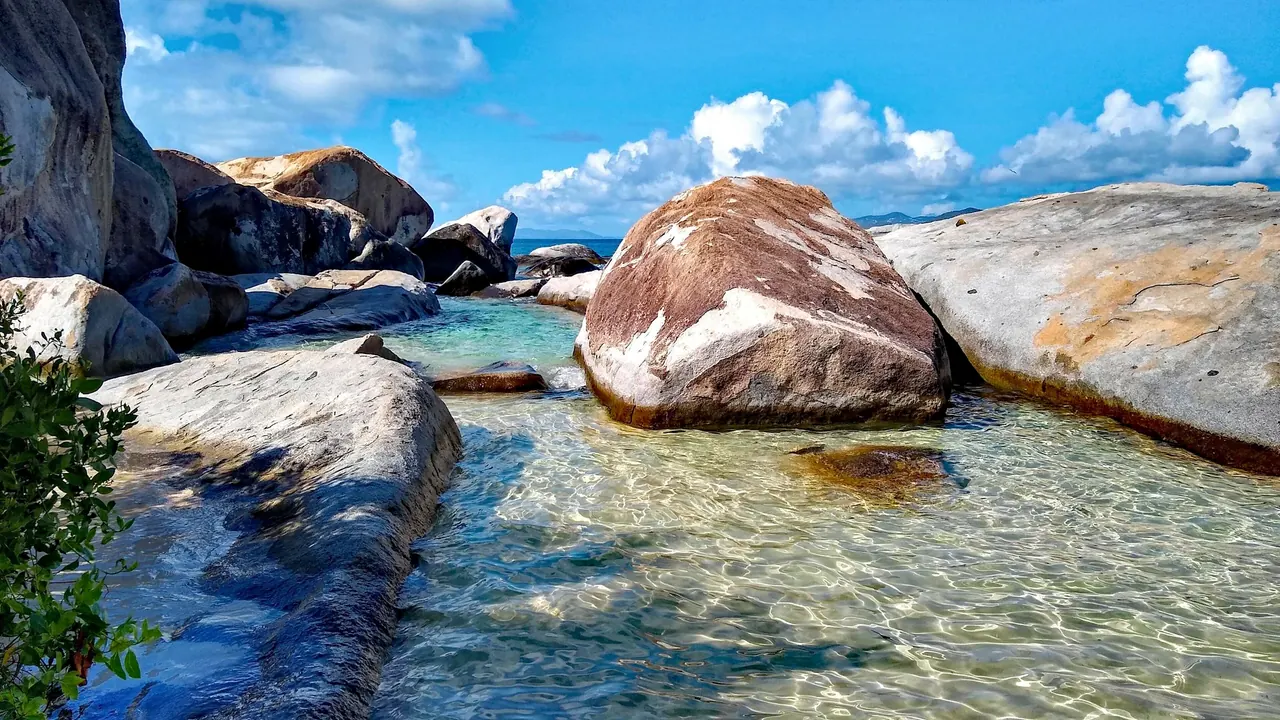
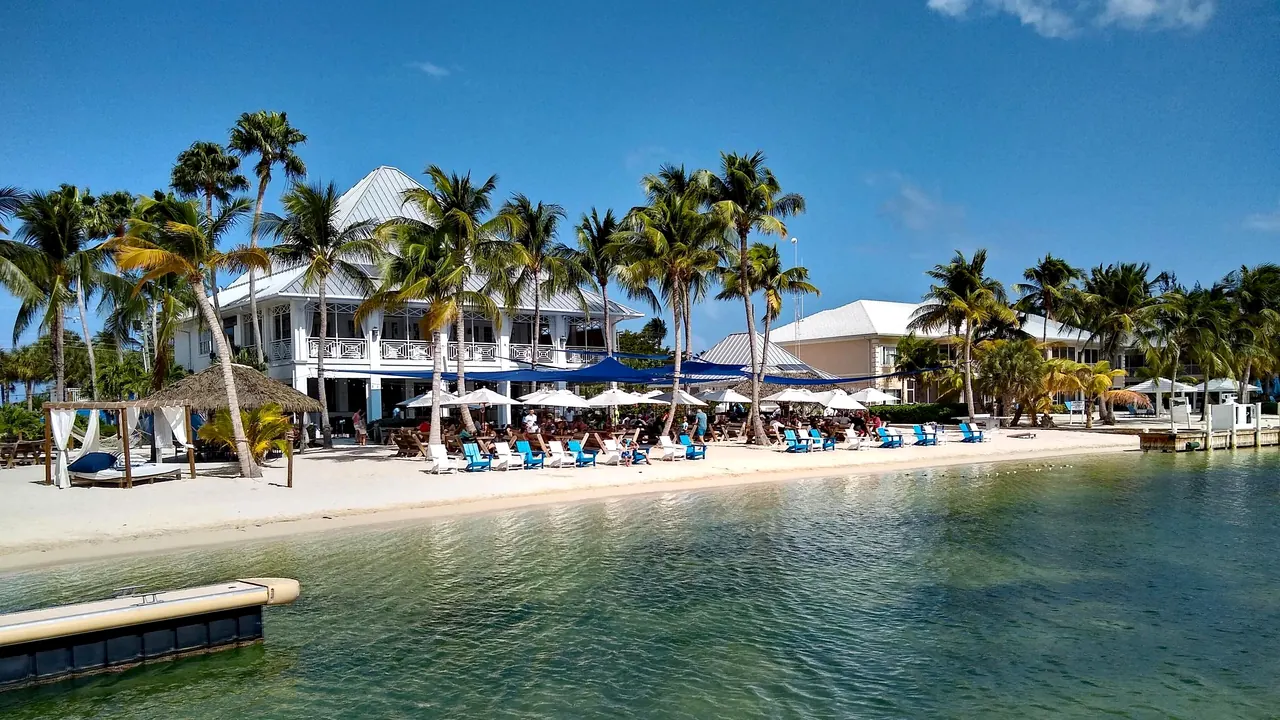
Photos: British Virgin Islands by P. Hughes, CC BY-SA 4.0, cropped; Cayman Islands by P. Hughes, CC BY-SA 4.0, cropped.
British Virgin Islands or Cayman Islands?
Our verdict in twelve categories, each scored against the same fixed benchmark cities, and the climate month by month, so you can choose for your trip.
Choose British Virgin Islands for
- day trips
- wellness
- nightlife
The British Virgin Islands suit travellers who want the islands themselves to be the trip. Dozens of small islands lie close together around a sheltered channel, so a yacht charter or a run of ferries takes you from The Baths on Virgin Gorda to White Bay on Jost Van Dyke and out to the empty reefs of Anegada. The secluded resorts of North Sound and the private islands also make it the better choice for a quiet escape, provided you accept simple food and the effort of getting from one island to the next.
Choose Cayman Islands for
- food and drink
- families
- shopping
Choose the Cayman Islands for one easy base with more laid on. Seven Mile Beach puts hotels, restaurants and calm water side by side, and the food is broader, from waterside dining rooms to roadside fish fries. Families get Stingray City, the turtle farm and shallow lagoons, and divers get some of the Caribbean's great wall dives. In return you give up island-hopping, because the only trip away is a small plane to the sister islands.
Scoreboard
Twelve categories on one fixed scale from 0 to 100. The shaded stretch is the gap between the two.
Your match
Pick a travel style or drag the sliders, and both match scores follow your weighting.
Wins on day trips and wellness with your weighting.
Wins on food and drink and families with your weighting.
What matters to you?
Category by category
What the scores mean for a trip.
Beaches & swimming
Both are first-rate for the sea, but the beaches are laid out very differently. In the British Virgin Islands they are spread across many islands and many are best reached by boat: Cane Garden Bay on Tortola, the granite pools of The Baths, White Bay where yachts anchor off, and the long empty reefs of Anegada. Variety is the reward, and moving between them is part of the day.
The Cayman Islands concentrate the beach life on one long strand. Seven Mile Beach runs straight past the hotels, so you can step from your room into calm, clear water, with the glassy lagoons of Rum Point and Starfish Point on the north side for a change. In winter the sea is about a degree warmer than in the Virgin Islands.
Food & drink
Grand Cayman gives a food lover far more to work with. Seven Mile Beach and Camana Bay have steakhouses, sushi, Italian and seafood dining rooms by the water, and the Caymanian side, turtle stew, fish cooked Cayman style and weekend fish fries in West Bay and Bodden Town, is worth seeking out.
In the British Virgin Islands eating is a pleasant routine of rotis, conch fritters and johnnycakes, with grilled spiny lobster on Anegada's beaches as the one meal to plan around. Away from Road Town and the resort dining rooms the choice thins quickly.
Culture & sights
Neither will fill more than half a day of sightseeing, but the sights are different. The British Virgin Islands have working and ruined industry in a fine setting: the rum distillery in stone sheds at Cane Garden Bay and the roofless Cornish engine house of the Copper Mine on a headland of Virgin Gorda. Grand Cayman has more of a museum morning, with the restored great house at Pedro St James, the National Museum in the old courthouse and the National Gallery's Caribbean art.
Nightlife
Evenings are low-key in both, but they happen in different places. In the British Virgin Islands the night moves between anchorages, with dinghy rides from bar to bar at Great Harbour and the Bight, full-moon fire sculptures at Trellis Bay and a famous New Year's Eve on Jost Van Dyke. There are no clubs.
Grand Cayman has a handful of small clubs and a Friday crowd of locals and expats, but licensing laws close things around midnight or one, earlier before the quiet Sunday. Sunset drinks on Seven Mile Beach are the main event.
Nature & outdoors
Cayman's underwater world is the bigger draw. Walls drop into deep water just offshore, Bloody Bay Wall off Little Cayman is a Caribbean classic, and there are many shore-dive entry points. Stingray City and the bioluminescent bay by kayak add encounters you will not find in the Virgin Islands.
The British Virgin Islands win on sailing and on land. The sheltered channel between the islands is a cruising ground in itself, the wreck of the RMS Rhone is a well-known dive, and Sage Mountain and Gorda Peak give real hill walks with views over the chain. Cayman is flat, its best walking the Mastic Trail through dry forest.
Day trips
The British Virgin Islands give you more places to go for the day. Ferries run from Tortola to Virgin Gorda and Jost Van Dyke, and with a passport you can cross to the US Virgin Islands for the Danish warehouses and stepped streets of Charlotte Amalie, or Cruz Bay and the Annaberg plantation ruins on St John.
From Grand Cayman the only real outing is a small-plane flight to Cayman Brac or Little Cayman, and most people who go stay a few nights. Otherwise a drive to the East End and Rum Point is as far as you get.
Good for families
Grand Cayman makes a family trip much simpler. Condos with kitchens, calm water on Seven Mile Beach, good roads and healthcare are the foundation, and the turtle farm, the submarine and glass-bottom boats, the blue iguanas and wading among stingrays give children a run of highlights.
The British Virgin Islands suit families who already love the water. A charter can be a memorable trip for older children, and snorkelling starts a few strokes from shore. Small children, though, have to cope with boat transfers and steep roads, and there are no attractions built for them.
Getting around
Both take some planning, though in different ways. In the British Virgin Islands you get between islands by ferry or by charter yacht, and on Tortola you drive on the left on steep, winding roads because the buses are of little use. Many visitors simply let the boat do the travelling.
Grand Cayman is flatter and easier. Informal minibuses run along the West Bay to George Town strip, and a hire car on good roads covers the north side and East End. Rush-hour traffic into George Town is the main irritation.
Shopping & style
Grand Cayman offers a little more. The George Town waterfront has duty-free jewellery and watches for the cruise trade, Camana Bay adds boutiques, bookshops and galleries, and caymanite carvings are a local souvenir. In the British Virgin Islands you get a few shops on Road Town's Main Street and marina stores selling swimwear and sailing gear. Serious shoppers there take the boat to Charlotte Amalie on St Thomas.
Affordability
Both are expensive, with nearly everything imported and winter the dearest season, and neither can be done on a budget. What differs is how you save. In the British Virgin Islands, sharing a charter yacht spreads the cost of beds and transport across a group, and small guesthouses on Tortola are cheaper than the resorts. On Grand Cayman, a condo with a kitchen, meals at roadside jerk stands and fish fries, and a trip outside December to April help most.
Live music & performing arts
Neither has a concert or theatre life to plan a trip around. The British Virgin Islands have their own folk sound, fungi played by scratch bands on washboards and gourds, which peaks at the late-summer Emancipation Festival in Road Town. Grand Cayman at least has a stage in the Harquail Theatre, and its big events are street festivals: Batabano carnival in spring and Pirates Week in autumn.
Wellness & relaxation
The British Virgin Islands make it easier to switch off completely. The secluded resorts on Virgin Gorda's North Sound and the private islands combine open-air treatment rooms, yoga above the water and the near-total quiet of a small island with no traffic.
On the Cayman Islands, spas cluster in the large Seven Mile Beach resorts, which are polished but sit on the busiest stretch. For real stillness you have to fly to Little Cayman, whose dive lodges and empty roads offer the islands' most restful days.
When should you go?
Pick your month. The climate figures are measured averages, not a forecast.
British Virgin Islands in July
Cayman Islands in July
Daytime high, °C
Rainfall in the month, mm
Where the figures come from
British Virgin Islands's temperatures are measured 40 km from the centre, at C. Amalie / St. Thomas Airport.
British Virgin Islands has no rain gauge within 25 km of the centre, so its rainfall comes from a gridded climate dataset read at the destination rather than from a gauge further away.
Temperature and rainfall are climate normals, averaged over the years shown. British Virgin Islands: 1991-2020 normals, C. Amalie / St. Thomas Airport (39.7 km from centre). Cayman Islands: 1971-2000 normals, Owen Roberts Airportgrand Cayman (6.8 km from centre).
Both are hot all year, with daytime highs from the high twenties in winter to 32°C through summer and early autumn, and the sea is warm enough to swim in every month. The difference is the rain. On Grand Cayman the dry season is sharper: March is the driest month at about 31mm, then the wet season builds from May to a peak of around 225mm in October. The British Virgin Islands are less extreme. Their driest month is February at about 47mm, and their rain peaks later, at around 154mm in November, staying fairly wet into December.
For both, late winter and early spring are the most reliable time for a beach trip. From late summer through autumn both fall within the Atlantic hurricane season and see their heaviest rain, and on Cayman summer storms start earlier. December is noticeably drier on Cayman than in the Virgin Islands, so a pre-Christmas trip favours Grand Cayman.
Which traveller are you?
On a family trip with young children, the Cayman Islands make the days simpler. Grand Cayman is flat and compact, so there are no ferry crossings or steep hairpin roads to manage, English is spoken everywhere, and snorkelling at Cemetery Beach starts within easy reach of the sand.
For a relaxing and wellness trip, the British Virgin Islands have the edge. Choose one resort, stay put, and the days settle into reading, swimming and quiet coves such as Smuggler's Cove on Tortola's west end. On Grand Cayman, cruise passengers in George Town make the main island less restful.
For sailors, the British Virgin Islands are the obvious choice. Short passages, steady trade winds and sheltered anchorages around the Sir Francis Drake Channel make bareboat or crewed charters simple. The Cayman Islands lie far apart and have nothing comparable for cruising from island to island.
Before you go
| Measure | British Virgin Islands | Cayman Islands |
|---|---|---|
| Official language | English | English |
| Currency | US Dollar (USD) | Cayman Islands Dollar (KYD) |
| Sockets | AB110 V, 60 Hz | AB120 V, 60 Hz |
| Driving side | Left | Left |
| Time zone | UTC-4 | UTC-5 |
| Emergency number | 999 | 911 |
| Main airport | Terrance B. Lettsome International Airport (EIS)8 non-stop destinations | Owen Roberts International Airport (GCM)30 non-stop destinations |
| Public holidays this year | 14 days | 11 days |
By the numbers
| Measure | British Virgin Islands | Cayman Islands |
|---|---|---|
| Population | 39,369 | 88,833 |
| People per km² | 257 | 339 |
| Swim season, months above 21 °C | 12 months | 12 months |
Where else could you go?
Every comparison below shares a destination with this one, so you can follow British Virgin Islands or Cayman Islands somewhere new.
- St Johnvs British Virgin Islands
- St Thomasvs British Virgin Islands
- US Virgin Islandsvs British Virgin Islands
- Culebravs British Virgin Islands
- St Croixvs British Virgin Islands
- Viequesvs British Virgin Islands