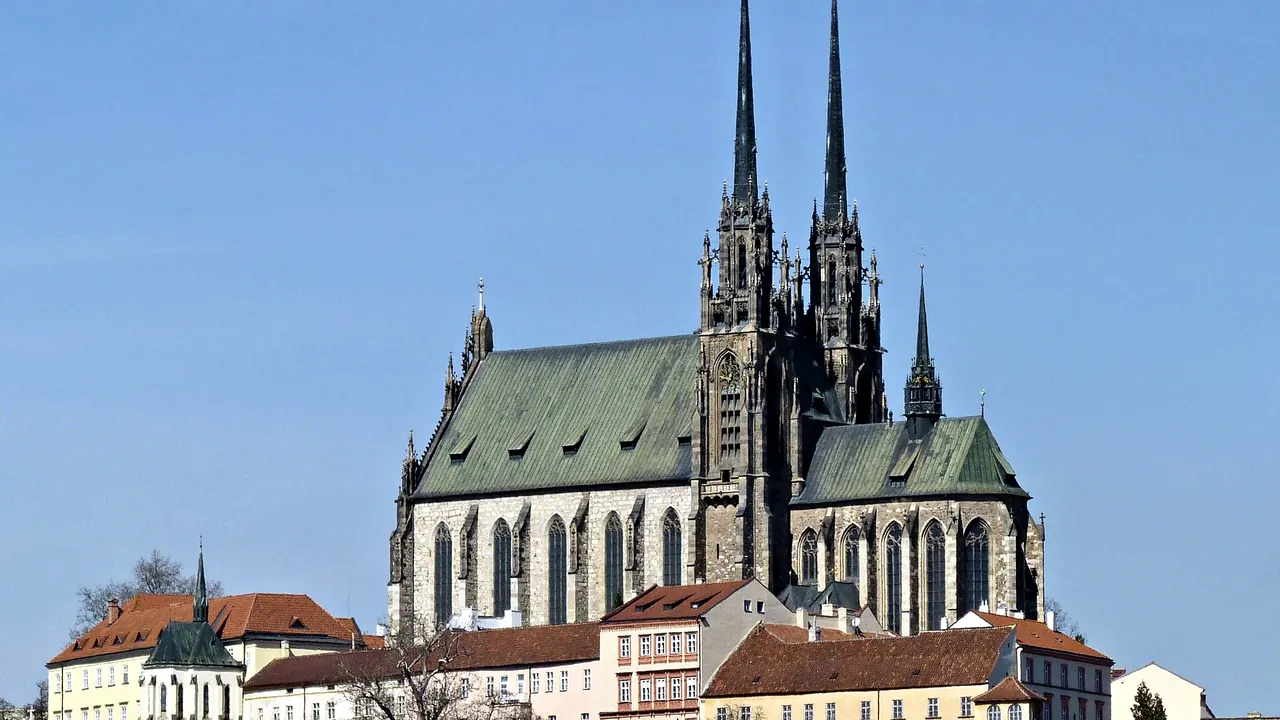
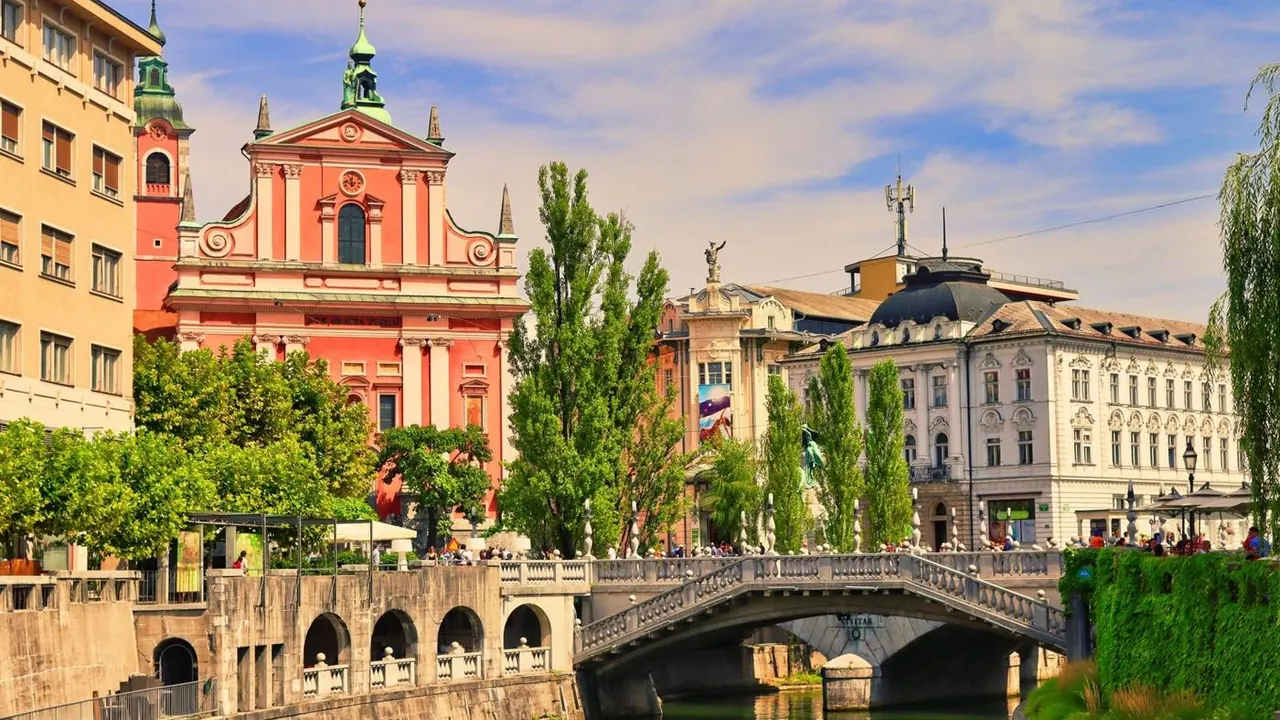
Photos: Brno by Michal Klajban, CC BY-SA 3.0, cropped; Ljubljana by detait, Pexels License.
Brno or Ljubljana?
Our verdict in twelve categories, each scored against the same fixed benchmark cities, and the climate month by month, so you can choose for your trip.
Choose Brno for
- prices
- live music and the arts
- nightlife
Brno suits a traveller who wants a lot for little. It is the cheaper city, its opera and ballet stages give it the stronger night at the theatre, built around Janacek, and its evenings run on cocktail cellars and Moravian wine bars. One ticket covers trams and regional trains, so it also makes an easy base for a string of UNESCO chateaux and old towns, the Austerlitz battlefield and even Vienna.
Choose Ljubljana for
- nature and the outdoors
- wellness
- beaches
If you want mountains, lakes and fresh air alongside a pretty small capital, pick Ljubljana. The Julian Alps, Bled and the Soča valley are all within reach, thermal spa towns are a short drive away, and the riverside cafés set a slower pace. Rooms cost more, especially in summer, but the landscape on the doorstep makes up for it.
Scoreboard
Twelve categories on one fixed scale from 0 to 100. The shaded stretch is the gap between the two.
Your match
Pick a travel style or drag the sliders, and both match scores follow your weighting.
Too close to call, 2 points apart
Wins on prices and live music and the arts with your weighting.
Wins on nature and the outdoors and wellness with your weighting.
What matters to you?
Category by category
What the scores mean for a trip.
Beaches & swimming
Neither city is a place for a beach vacation. Brno's choices are the reservoir on the Svratka, reached by tram and river boat, where algae can spoil the water in hot spells, and the Nove Mlyny lakes an hour south.
Ljubljana gives a swimmer more to work with. There is the Sava on the edge of town, Bled's lake, which gets properly warm in high summer, and the colder, clearer Bohinj. The Adriatic at Piran is about an hour and a half away, though you swim there from concrete platforms and pebbles rather than sand.
Food & drink
Ljubljana eats better. Its open-air Central Market under Plečnik's colonnades is a real food destination, with cheeses, pumpkin-seed oil and Alpine produce. Gostilna inns serve štruklji and jota, and a handful of kitchens cook ambitious modern Slovenian food. The orange wines of the west give the wine bars something you will not find in Moravia.
Brno's plates are heavier and plainer: svickova and roast pork in beer halls, with fine dining thin on the ground. Its real strength is the glass and the cup, with specialty coffee, serious cocktails and Moravian whites and Frankovka reds from the vineyards just to the south.
Culture & sights
Both cities were shaped by interwar architecture, and each takes two or three days. In Brno it is functionalist modernism, led by Villa Tugendhat and backed by villas, office blocks and the exhibition grounds. Brno also has odder corners, such as the Capuchin Crypt's mummified monks, the ossuary under St James's and the abbey where Mendel founded genetics.
In Ljubljana the defining figure is Plečnik, whose bridges, colonnades and library are woven through a baroque and Secession old town under the castle hill. Its pleasure lies in the cityscape as a whole rather than in individual sights, with Metelkova's murals adding an alternative streak.
Nightlife
Evenings are much alike in scale, and neither city is built for an all-night party. Brno's nights happen indoors, in small cocktail bars behind unmarked doors and in student cellars around Jakubske namesti. It goes noticeably quiet in July and August, when the students leave.
Ljubljana's nights happen outside, on the terraces along both banks of the Ljubljanica, which suit a warm summer evening. For something rougher and later, the clubs at Metelkova run into the small hours at weekends.
Nature & outdoors
Ljubljana wins this one. Tivoli Park runs straight into forest and locals climb Šmarna Gora before work. The Kamnik-Savinja Alps start about 40 minutes out, and the Julian Alps, Vintgar gorge and the emerald Soča bring serious hiking, rafting and winter skiing. It even matches Brno on caves, with Postojna and Škocjan in the karst to the south-west.
Brno's outdoors is gentler. The Moravian Karst and its boat ride under the Macocha Abyss is the highlight, and the Palava ridge, the Podyji valley and the wine-country cycle routes fill out the rest. There are no mountains, and winter brings grey skies rather than snow.
Day trips
Both make excellent bases, and the difference is in what you go out to see. From Brno it is a dense run of UNESCO heritage: Lednice-Valtice's chateaux and parkland, Kromeriz, Trebic and Telc, plus the Austerlitz battlefield. Vienna and Bratislava are both an easy day by train.
Ljubljana's outings mix scenery with towns. There is Bled's island church, Predjama Castle in its cliff, Idrija's mining heritage, Piran on the coast and the hill villages of Goriška Brda. Brno's integrated ticket makes its trips simpler by public transport, while Ljubljana's smaller places are much easier with a car.
Good for families
For families the two are about level, and they differ in kind more than in how much there is. Brno has more to keep children busy indoors: the hands-on VIDA science centre, the mammoths and cave dwellers of the Anthropos pavilion and the planetarium on Kravi hora. Half an hour north, the boat trip through the Punkva Caves gives it a stronger day out for children than anything Ljubljana lays on for them in town.
Ljubljana is the easier city to get around with small children. Its flat, largely car-free centre suits pushchairs better than Brno's cobbles and hills, and younger children remember the funicular to the castle and the dragons on the Dragon Bridge. The puppet theatre by the castle hill puts on shows they can follow without the language, though most families will have seen the city's sights for children in two or three days.
Getting around
Both centres are compact and mostly pedestrianised, so walking covers the core of either. Beyond the centre, Brno has a dense tram network that reaches Villa Tugendhat, the zoo and the reservoir, on one ticket that also covers regional trains.
Ljubljana has no trams, only buses, a bike-share scheme and electric shuttles in the centre, and as a visitor you will rarely need any of them. For trips out, intercity buses beat its slow trains, and a hired car opens up the mountain valleys.
Shopping & style
Neither is a shopping destination, and in both the best buys are local. In Brno that means Moravian wine bought straight from the cellars and produce from the Zelny trh market, with high-street chains along Ceska and Masarykova.
Ljubljana has a little more to browse for gifts. You can find honey and coastal salt at the Central Market, Idrija lace, gingerbread hearts, and a Sunday antiques market on the embankment.
Affordability
Brno is clearly the cheaper stay. Hotels, pub lunch menus, beer, wine, tram tickets and museum entry all cost little, and only the cocktail and coffee bars charge more. Big trade fairs are the one thing that can push up room prices.
Ljubljana costs more, mostly because of where you sleep. Eating and sightseeing are fairly priced, but the small stock of central hotels means summer rooms in the old town cost what they would in Western Europe. Staying further out, or outside July and August, narrows the gap.
Live music & performing arts
Brno has the richer stage life, thanks to Janacek. His operas anchor the programme at the Janacek Theatre, and there is a festival in his name. The Reduta, where the young Mozart played, and the Brno Philharmonic's regular season add depth, so an opera or ballet night is a real reason to visit.
Ljubljana is solid without being a draw in itself. It has a philharmonic with roots in 1701, a neo-Renaissance opera house and the summer festival in Plečnik's open-air Križanke courtyard. In both cities most drama is in the local language, so music and dance work best for visitors.
Wellness & relaxation
Ljubljana is the more restful choice. Several of Slovenia's thermal spa towns with mineral pools are about an hour's drive away. In town there is a large water park with a sauna complex, and the quiet, car-free centre and long riverside café afternoons make the pace easy.
Brno has no springs and no spa tradition, so wellness means public pools with sauna areas and a few hotel spas. Its calm comes from parks such as Luzanky and the Spilberk slopes. Anyone who wants to take the waters has to go a long way.
When should you go?
Pick your month. The climate figures are measured averages, not a forecast.
Brno in July
Ljubljana in July
Daytime high, °C
Rainfall in the month, mm
Temperature and rainfall are climate normals, averaged over the years shown. Brno: 1991-2020 normals, Brno / Turany (8.4 km from centre). Ljubljana: 1991-2020 (sunshine 1981-2010, rainfall 1981-2010) normals, Ljubljana / Bezigrad (1.9 km from centre).
Brno has the colder and drier climate. Winter highs sit around 2°C in December and January, so the streets are best walked from May, when days reach about 20°C, until late September. July and August peak at about 26°C, which is warm enough for an afternoon at the reservoir, and even the wettest summer months bring only moderate showers. Sunshine is plentiful from April to August.
Ljubljana runs a couple of degrees warmer all year. It reaches 28°C in high summer, which is good for a swim at Bled or in the Sava but can feel close in town at midday. It is also far wetter. June and October each bring around 170mm of rain, more than twice Brno's wettest month, and August and September are not far behind. July is its sunniest and driest summer month. May and the first half of September are the best balance for walking in the city and in the mountains.
Which traveller are you?
On an outdoors trip, Ljubljana is the clear choice. The Julian Alps, Triglav National Park, rafting on the Soča and winter skiing all lie within reach, while Brno offers the gentler caves and trails of the Moravian Karst and has no mountains at all.
For a trip on a tight budget, Brno goes further. Rooms, pub lunch menus, beer, local wine and transport all cost little. In Ljubljana, central summer rooms are priced like those in Western Europe, which eats into the savings made elsewhere.
On a relaxing and wellness trip, Ljubljana wins. Its centre is quiet and largely free of cars, and several thermal spa towns with mineral pools lie about an hour away. Brno has no springs and offers only swimming complexes with saunas.
Before you go
| Measure | Brno | Ljubljana |
|---|---|---|
| Official language | Czech | Slovene |
| Currency | Czech Koruna (CZK) | Euro (EUR) |
| Sockets | CE230 V, 50 Hz | CF230 V, 50 Hz |
| Driving side | Right | Right |
| Time zone | UTC+1, UTC+2 in summer | UTC+1, UTC+2 in summer |
| Emergency number | 112 | 112 |
| Elevation | 237 m | 309 m |
| Main airport | Brno-Tuřany Airport (BRQ)8 km from centre40 non-stop destinations | Ljubljana Jože Pučnik Airport (LJU)20 km from centre32 non-stop destinations |
| Public holidays this year | 13 days | 21 days |
By the numbers
| Measure | Brno | Ljubljana |
|---|---|---|
| City population | 402,739 | 284,293 |
| People per km² | 1,750 | 1,736 |
| Museums within 10 km | 25 | 14 |
| UNESCO World Heritage sites within 50 km | 2 | 3 |
Where else could you go?
Every comparison below shares a destination with this one, so you can follow Brno or Ljubljana somewhere new.
- Bledvs Ljubljana
- Triestevs Ljubljana
- Viennavs Brno
- Zagrebvs Ljubljana
- Bratislavavs Brno
- Rovinjvs Ljubljana