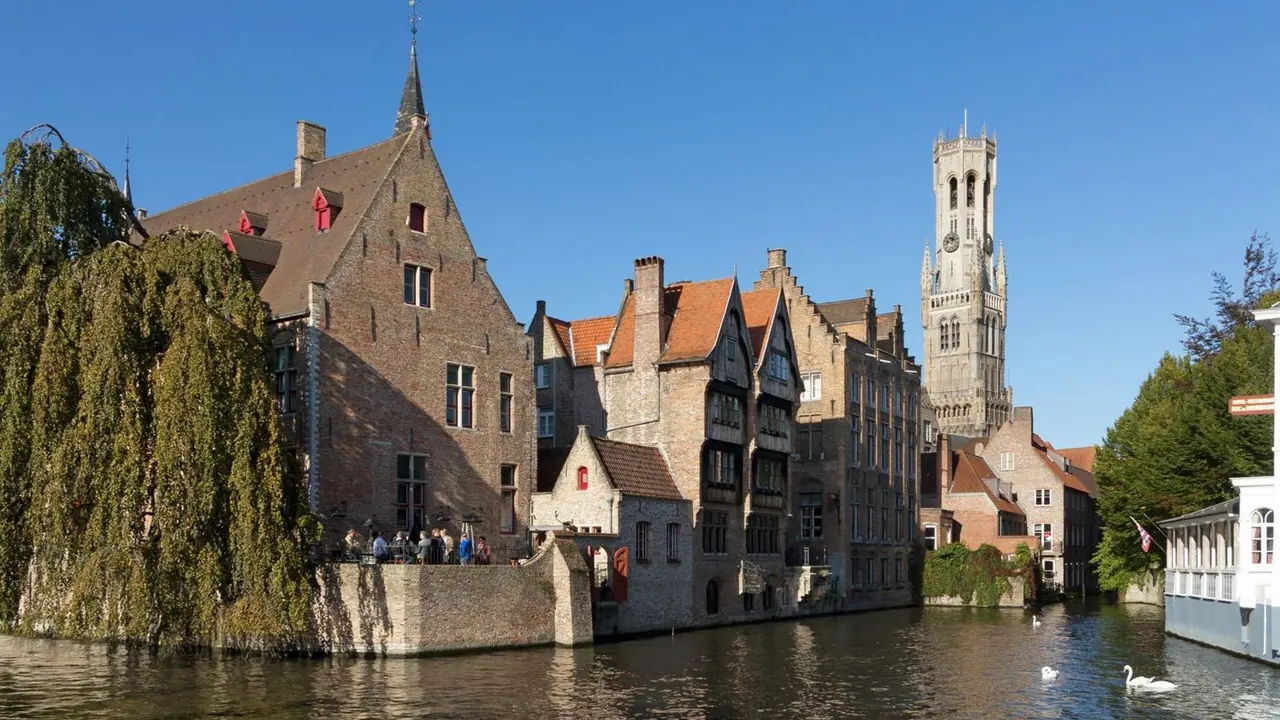
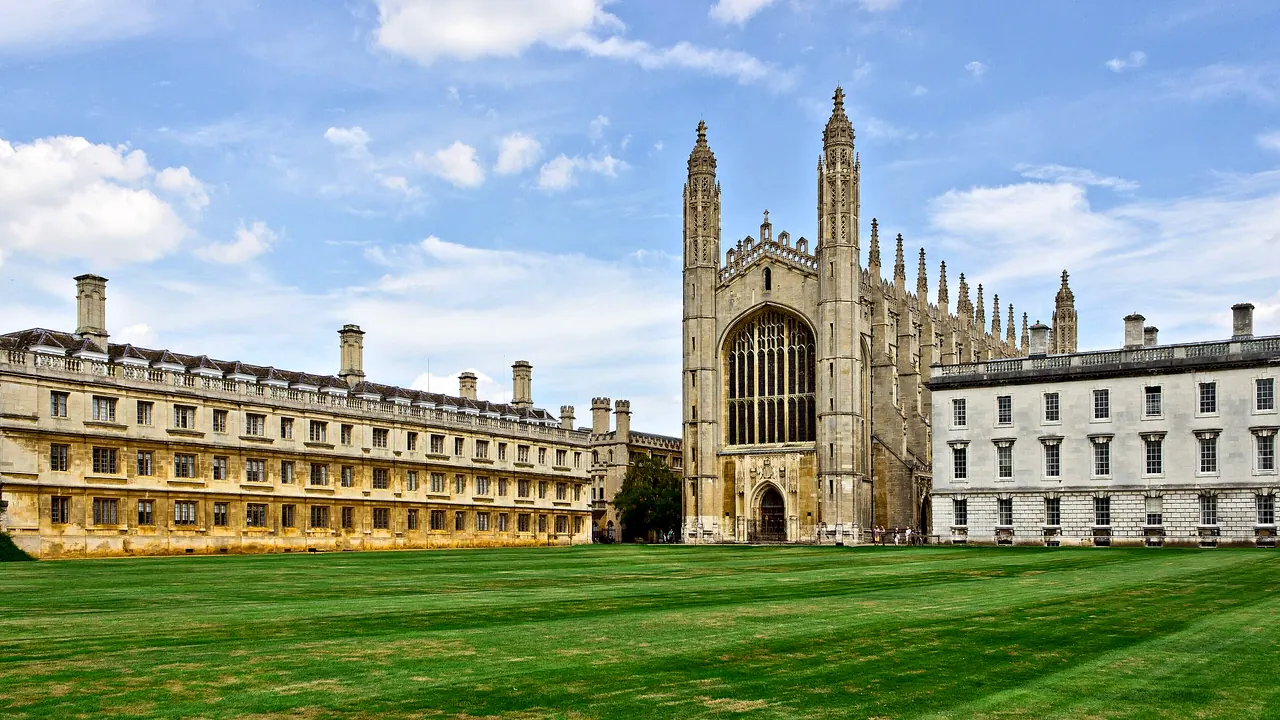
Photos: Bruges by Michielverbeek, CC BY-SA 4.0, cropped; Cambridge by Dmitry Tonkonog, CC BY-SA 3.0, cropped.
Bruges or Cambridge?
Our verdict in twelve categories, each scored against the same fixed benchmark cities, and the climate month by month, so you can choose for your trip.
Choose Bruges for
- beaches
- food and drink
- prices
Bruges is for the traveller who wants a whole medieval town to wander, long evenings over Trappist ale and Flemish cooking, and a fast train to a different city each day. Ghent, Brussels and Antwerp are all close, and in summer the sandy coast is nearer still. It is also a little easier on the budget, though neither place is cheap.
Choose Cambridge for
- live music and the arts
- nightlife
- families
Cambridge makes more sense if your evenings matter as much as your days. Choral evensong in the college chapels, student theatre and comedy, and pubs and bars that stay lively during term give it more to do after dark. The colleges and the free university museums fill the daytime, and London is close enough for an extra day.
Scoreboard
Twelve categories on one fixed scale from 0 to 100. The shaded stretch is the gap between the two.
Your match
Pick a travel style or drag the sliders, and both match scores follow your weighting.
Wins on beaches and food and drink with your weighting.
Wins on live music and the arts and nightlife with your weighting.
What matters to you?
Category by category
What the scores mean for a trip.
Beaches & swimming
Neither city is a beach destination, but Bruges at least has the sea within easy reach. Blankenberge is a short train ride away, and the coast tram runs past continuous sandy beaches and promenades all the way to Knokke. It makes a good half-day outing on a warm August afternoon, even if the water is only cool enough for a quick dip.
Cambridge has no coast nearby. The Suffolk and Norfolk shores are an hour and a half away by car, so swimming here means the 1920s Jesus Green Lido or the river at Grantchester Meadows.
Food & drink
Bruges gives anyone who cares about food far more to seek out. Belgian beer is the centrepiece, Trappist and abbey ales in dark old cafés. Around it come Flemish dishes Cambridge has nothing to match: mussels and frites, beer-braised beef, waterzooi and a serious chocolate culture. Skip the set menus on the main squares and eat on the side streets and canalsides.
Cambridge has no regional cooking to hunt down. Its strength is the old pub, with real ale and a Sunday roast in a low-beamed room. Add the daily street-food stalls on Market Hill and the Asian and Mediterranean places along Mill Road. Chains fill much of the centre, and a few days covers it.
Culture & sights
Both are among the finest historic small cities in northern Europe, and both take two or three days to see properly. Bruges works as one complete picture: a ring of canals, stepped gables, the Belfry over the Markt and the quiet Begijnhof. Its art is concentrated and superb, with van Eyck in the Groeninge, Memling in St John's Hospital and Michelangelo's Madonna in the Church of Our Lady.
Cambridge's heritage is a working university. The courts and chapels along the Backs, King's College Chapel and the Wren Library are still in daily use, so some colleges charge for entry or close around exams. The free Fitzwilliam and the smaller university museums, from Kettle's Yard to the Polar Museum, give it more range than Bruges.
Nightlife
Cambridge offers more of a night out, at least in term. Bars cluster around Regent Street and Mill Road, riverside pubs spill onto the greens in summer, and a small student club scene keeps things going later. It does go quiet in the long vacation.
Bruges is gentler. Its evenings mean strong ales in a brown café or a vaulted cellar around the Eiermarkt, then a walk along the lit canals, and most of the centre is asleep by midnight on weeknights.
Nature & outdoors
Both sit in flat, open country under wide skies, and the outdoors in either means an easy bike ride rather than a hike. From Bruges the classic route is the poplar-lined towpath to Damme, and the coast adds the birds of the Zwin salt marsh and windy walks over the dunes.
Cambridge has its green space right in town: punts on the Cam, cattle on the Grantchester meadows and the big commons. Further out, Wicken Fen's wild ponies and dragonflies and the chalk woodland at Wandlebury give it a little more variety inland, though nothing dramatic.
Day trips
Bruges is the stronger base, because the frequent Belgian trains put several major cities within easy reach. Ghent is under half an hour away, Brussels about an hour and Antwerp a little further, and the war cemeteries around Ypres and the French city of Lille add more variety again.
From Cambridge the big draw is London, under an hour by train. Ely Cathedral is only fifteen minutes away. Beyond that, the choice is mostly rural, with the wool towns of Lavenham and Long Melford, Audley End and the National Trust estates, and several of these are easier by car.
Good for families
The two are about even for children: both are small, flat and safe. Bruges has canal boats, horse-drawn carriages, swans on the Minnewater and Boudewijn Seapark, plus sandcastles on the nearby coast. Its cobbles and crowded summer streets are hard going with a pushchair.
Cambridge gives children open commons and playgrounds, punting, the whale skeleton at the free Museum of Zoology and the Sedgwick dinosaurs. Its best day out is the huge collection of historic aircraft at Duxford, just south of the city.
Getting around
Both are compact and best on foot or by bike, with cars more trouble than they are worth in the centre. Bruges is slightly simpler, since the whole canal ring can be crossed on foot in about half an hour and trains to Ghent, Brussels and the coast leave often. The cobbles are the one real nuisance.
In Cambridge the station is a longer walk from the centre and the buses are ordinary. The country estates and villages around the city are much easier to reach with a car.
Shopping & style
Neither is worth a trip for shopping alone, and they differ mainly in what they specialise in. In Bruges it is things to eat and drink, with pralines from countless chocolate makers and Belgian beer with matching glasses, plus the flea market along the Dijver.
Cambridge's speciality is books, from long-established academic booksellers to second-hand dealers in the lanes. Independent clothes shops line Trinity Street and Green Street, and Mill Road has vintage finds.
Affordability
Both are expensive, but Bruges is the more manageable of the two. Staying midweek or near the station, avoiding the restaurants on the Markt and using the cheap trains for day trips all make a real difference.
Cambridge has few hotel rooms in or near the centre, and they are in steady demand, while eating out costs what it does across south-east England. The free Fitzwilliam, the free evensong and a college room out of term help to balance it.
Live music & performing arts
Cambridge is the better choice for an evening of performance. Choral evensong by the King's, St John's and Trinity choirs is open to anyone during term. The Arts Theatre, student plays and Footlights comedy at the ADC, bands and orchestras at the Corn Exchange and the long-running Folk Festival in summer add more.
Bruges is serious about music but narrower in range. The Concertgebouw specialises in early music, chamber music and contemporary dance, the summer early-music festival is well known, and the Belfry carillon plays over the rooftops. For a wider choice, people take the train to Ghent or Brussels.
Wellness & relaxation
Neither has a spa or bathing tradition, so rest in both means quiet places at quiet hours. In Bruges that is the Begijnhof, the Minnewater park and the calm streets of Sint-Anna, best early or late once the tour groups have gone.
Cambridge's slow pace is greener and more active: an afternoon in a punt, a bench in the Botanic Garden or a walk across the meadows to tea in a Grantchester orchard. King's Parade is as crowded on summer afternoons as the streets around the Markt in Bruges.
When should you go?
Pick your month. The climate figures are measured averages, not a forecast.
Bruges in July
Cambridge in July
Daytime high, °C
Rainfall in the month, mm
Where the figures come from
Bruges has no rain gauge within 25 km of the centre, so its rainfall comes from a gridded climate dataset read at the city rather than from a gauge further away.
Bruges's sunshine is measured 37 km from the centre, at Vlissingen.
Cambridge's temperatures are measured 59 km from the centre, at Wattisham.
Cambridge has no rain gauge within 25 km of the centre, so its rainfall comes from a gridded climate dataset read at the city rather than from a gauge further away.
Temperature and rainfall are climate normals, averaged over the years shown. Bruges: 2009-2025 (sunshine 1991-2020, rainfall 1991-2020) normals, Zeebrugge / Zeemanshaard (15.8 km from centre). Cambridge: 1991-2020 normals, Wattisham (58.5 km from centre).
The two share much the same mild northern climate, and both are at their best from late May to September. July and August peak at around 21°C in Bruges and 22°C in Cambridge. That is comfortable for walking all day, never too hot, and only Bruges has the coast for an August swim in a North Sea that reaches about 19°C. Winters are cold and grey in both, with daytime highs in single figures from December to February.
Where they differ is rain and sun. Bruges gets noticeably more sunshine from spring through summer, but it is also wetter, with August and the late autumn months bringing close to 89mm. Cambridge is the drier of the two all year, and even its wettest month, October, stays near 60mm. That makes it the safer bet for an autumn visit.
Which traveller are you?
On a beach and sun trip, neither city suits, as both face a cool, windy North Sea. Bruges at least offers a day out at Ostend or Knokke, with dune walks and a bracing paddle. Cambridge's coast is too far.
On a tight budget, Bruges stretches a little further, though neither is cheap. Its canal ring costs nothing to wander, frites and waffles make street food, and the beer is fair value for its quality. Cambridge's colleges charge for entry.
For a culture and arts trip that runs into the evening, Cambridge is the better pick. Bruges has the more complete medieval townscape and Flemish Primitives, but Cambridge adds candlelit evensong in term and a fuller programme of theatre, comedy and concerts.
Before you go
| Measure | Bruges | Cambridge |
|---|---|---|
| Official language | French, German, Dutch | English |
| Currency | Euro (EUR) | Pound Sterling (GBP) |
| Sockets | CE230 V, 50 Hz | G230 V, 50 Hz |
| Driving side | Right | Left |
| Time zone | UTC+1, UTC+2 in summer | UTC, UTC+1 in summer |
| Emergency number | 112 | 112 or 999 |
| Elevation | 2 m | 6 m |
| Main airport | Brussels Airport (BRU)94 km from centre191 non-stop destinations | London Stansted Airport (STN)37 km from centre197 non-stop destinations |
| Public holidays this year | 14 days | 8 days |
By the numbers
| Measure | Bruges | Cambridge |
|---|---|---|
| City population | 118,509 | 123,867 |
| People per km² | 840 | 3,043 |
| Museums within 10 km | 38 | 17 |
| UNESCO World Heritage sites within 50 km | 4 | 0 |
| Swim season, months above 21 °C | None | - |
Where else could you go?
Every comparison below shares a destination with this one, so you can follow Bruges or Cambridge somewhere new.