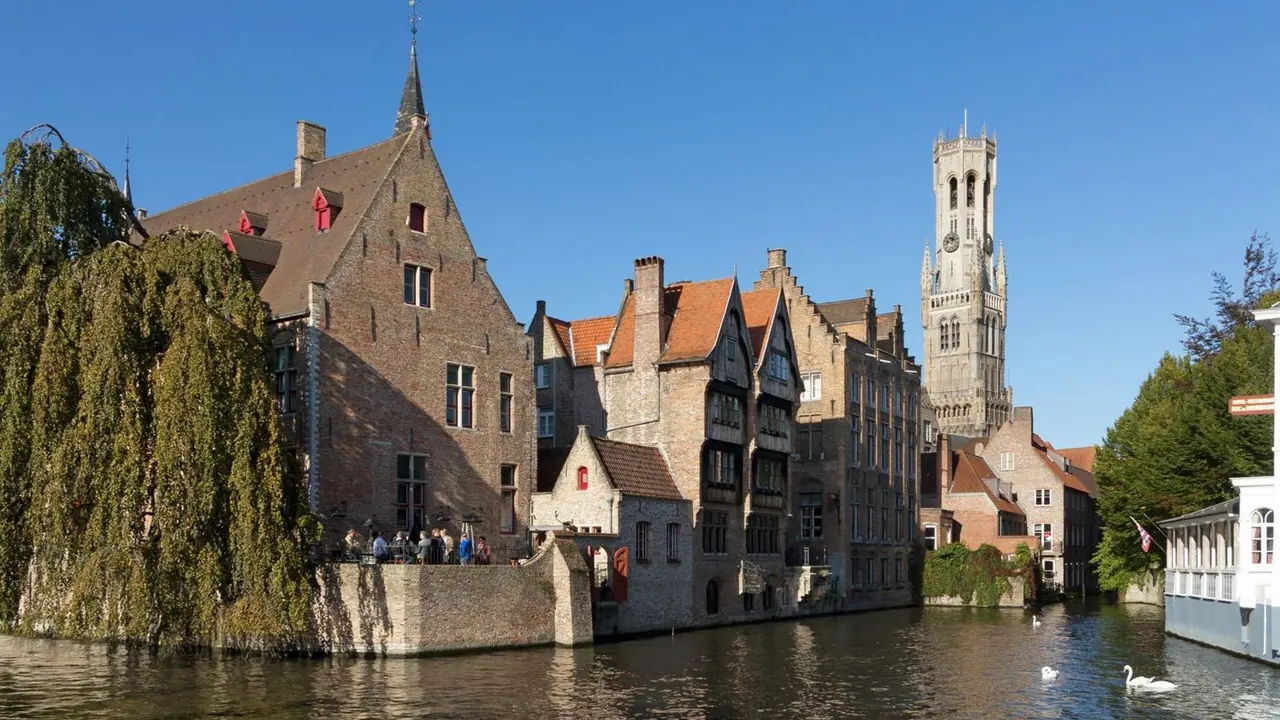
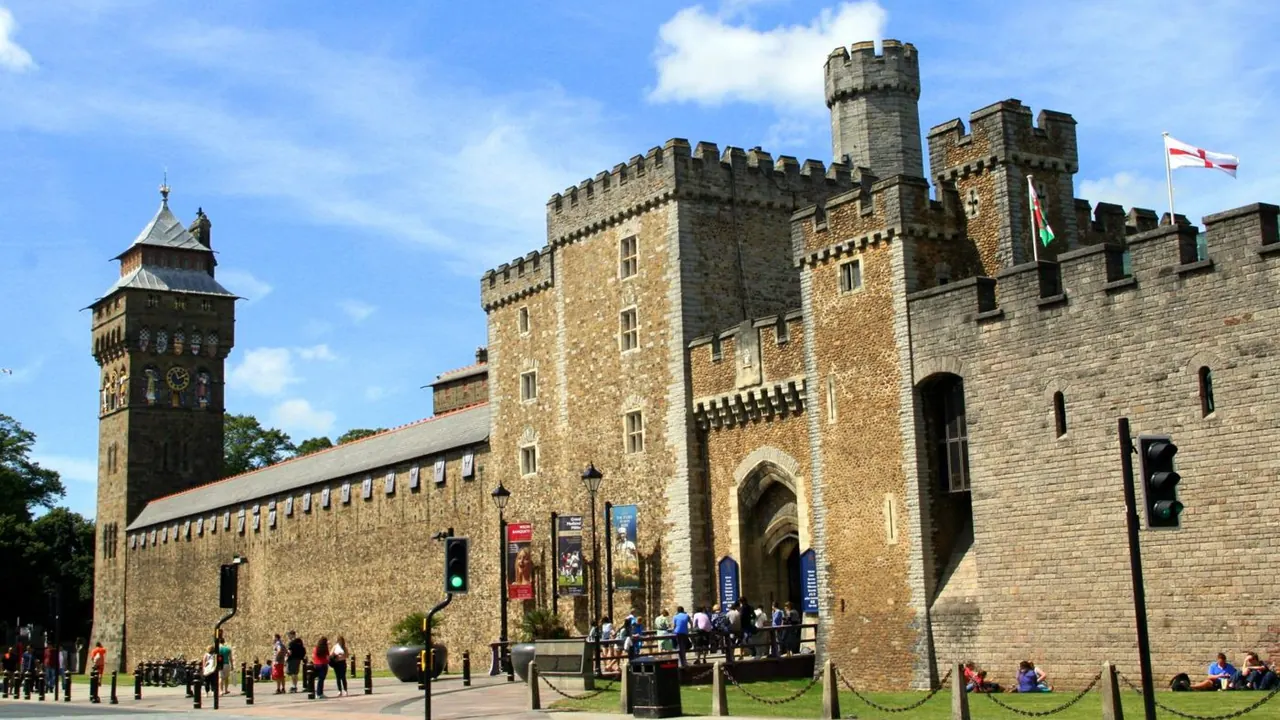
Photos: Bruges by Michielverbeek, CC BY-SA 4.0, cropped; Cardiff by Tevfik Teker, CC BY 3.0, cropped.
Bruges or Cardiff?
Our verdict in twelve categories, each scored against the same fixed benchmark cities, and the climate month by month, so you can choose for your trip.
Choose Bruges for
- culture and sights
- day trips
- wellness
Bruges suits a traveller who wants a medieval city to wander slowly and a base for seeing more of Flanders. Its canal ring, Flemish Primitives and beer cafés reward a couple of unhurried days, the whole centre can be crossed on foot, and Ghent, Brussels and Antwerp are short train rides away. Evenings are quiet, and for most people who choose it that is the point.
Choose Cardiff for
- nature and the outdoors
- nightlife
- live music and the arts
Choose Cardiff if hills, coast paths and a livelier night out matter more than old streets. The Brecon Beacons are close, Welsh National Opera and small music venues fill the evenings, and weekends in the centre are loud. It is also easier on the wallet, though its sights are mostly Victorian rather than medieval.
Scoreboard
Twelve categories on one fixed scale from 0 to 100. The shaded stretch is the gap between the two.
Your match
Pick a travel style or drag the sliders, and both match scores follow your weighting.
Too close to call, 2 points apart
Wins on culture and sights and day trips with your weighting.
Wins on nature and the outdoors and nightlife with your weighting.
What matters to you?
Category by category
What the scores mean for a trip.
Beaches & swimming
Neither city is a beach destination, and both seas stay cool enough that most people only paddle. What differs is how easily you reach the sand. From Bruges a short train to Blankenberge puts you on a long, unbroken strip of wide beach, and the coast tram runs along it from the French border to Knokke, so you can pick almost any stretch.
Cardiff has no sand of its own, and the water in the Bay is brown and tidal. Barry Island's bay with its funfair is the nearest option and Penarth's shore is pebble. The better beaches at Porthcawl and on Gower take a drive of an hour or more.
Food & drink
Bruges has the stronger table, mostly because of its beer: Trappist and abbey ales poured in wood-panelled cafés, alongside mussels with frites, beef stewed in beer, waterzooi and chocolate in every other window. The catch is the set-menu restaurants on the main squares, so it pays to eat on the side streets.
Cardiff's food is pleasant but rarely a reason to go. The Victorian market with its griddled Welsh cakes, cawl and laverbread, the bistros of Pontcanna and Canton and the long run of Middle Eastern and South Asian cooking on City Road give you variety, and the pubs pour good local ale. None of it matches the depth of a Belgian beer list.
Culture & sights
For sights, Bruges is the clear choice. Its whole canal-ringed centre is medieval and protected as a UNESCO site, from the Belfry and the Burg to the Begijnhof. The art is world-class too: van Eyck in the Groeninge Museum, Memling in St John's Hospital and a Michelangelo Madonna in the Church of Our Lady.
Cardiff's highlights are more spread out and mostly younger. The castle's Victorian Gothic rooms, the Impressionists at the National Museum and the rebuilt Welsh buildings at St Fagans fill two or three good days. But the city has none of the unbroken old fabric that makes Bruges itself the main sight.
Nightlife
Cardiff is the place for a night out. St Mary Street fills with large groups on Saturdays, rugby internationals take over the whole centre, and Womanby Street opposite the castle has small alternative bars that stay open late. Students from two universities keep things going in term time.
Bruges offers a slower kind of evening: long sessions of strong ale in brown cafés and cellar bars around the Eiermarkt and 't Zand, then a walk along the lit canals. Clubs are few, mostly a weekend affair, and the centre is largely asleep by midnight.
Nature & outdoors
Cardiff wins easily outdoors. Bute Park runs from the castle onto the Taff Trail, the coast path passes the cliffs at Penarth, and about an hour's drive gets you to Pen y Fan in the Brecon Beacons for a proper hike over open moorland.
The land around Bruges is flat polder. It is lovely for an easy ride along the canal towpath to Damme or for watching birds in the Zwin salt marsh, but with no hills or forest it makes a gentle afternoon on a bike rather than a reason to travel.
Day trips
Both make good bases, but Bruges has the richer list close by. Belgium is small and its trains run often, so Ghent is under half an hour away and Brussels and Antwerp, each a major art city, take about an hour or a little more. Ypres and the First World War memorials of the Westhoek, and even Lille, are within reach as well.
Cardiff's outings are mostly castles: Caerphilly by train, Castell Coch in the woods, and Chepstow and Tintern Abbey together in one day. Bath and Bristol are about an hour away and Big Pit at Blaenavon adds industrial history, though some of the best trips need a car.
Good for families
Both cities are easy with children, but they keep them busy in different ways. Bruges relies on canal boats, horse-drawn carriages, the swans at the Minnewater and the Boudewijn Seapark amusement park, and the coast adds sandcastles and a large theme park. The cobbles make pushchairs hard work, though.
Cardiff's offer is more hands-on and mostly free: the Techniquest science centre at the Bay, the farm animals and craft demonstrations at St Fagans, and rowing boats on Roath Park lake. It has no theme park of its own, but Barry Island's funfair is a short train ride away.
Getting around
Bruges is the simpler city to get around. Everything sits inside the canal ring, which you can cross on foot in about half an hour, the centre is flat and largely car-free, and hired bikes cover the rest. Only the cobbles and the walk in from the station count against it.
Cardiff's centre is just as flat and close to its station, but the Bay is a separate trip by shuttle train, bus or water taxi, and there is no tram or metro. For the national park and the remoter castles you need a car.
Shopping & style
Neither city is a shopping destination, so what differs is the kind of browsing. Bruges sells things to eat and drink: chocolate makers on almost every street and specialist beer shops with bottles and matching glasses, plus bobbin lace and the Saturday market on 't Zand.
Cardiff's character lies in its glass-roofed Victorian and Edwardian arcades, where independent record, book and vintage shops sit just off the chain-store streets. The market sells Welsh lovespoons, woollen blankets and slate alongside its produce.
Affordability
Cardiff is the more affordable of the two. Hotels are moderate on ordinary weekdays, though they climb sharply on rugby and big concert dates, and the free national museums, St Fagans included, keep sightseeing cheap.
Bruges makes visitors pay for its popularity, and both rooms inside the canal ring and meals on the main squares are expensive. Staying midweek or near the station and eating away from the Markt narrows the gap, and the old town itself costs nothing to walk.
Live music & performing arts
Cardiff has far more on stage. The Wales Millennium Centre is home to Welsh National Opera and hosts musicals, dance and comedy, the BBC National Orchestra of Wales is based in the city, and small venues around Womanby Street book bands most nights.
Bruges is serious about music but narrower in range. The Concertgebouw specialises in early music, chamber music and contemporary dance, and the summer early-music festival draws listeners from across Europe. Beyond that there are the Stadsschouwburg, the carillon and church concerts, but no opera.
Wellness & relaxation
Bruges is the easier place to slow down, but its calm depends on the time of day. The restful part is the old town itself, stone and still water rather than parkland, and you have it to yourself only before the day-trippers arrive or after they leave, so staying the night matters more than any treatment. On a summer afternoon, the quiet residential streets east of the centre are where to go to get away from the crowds.
Cardiff's quiet is greener, and it depends on the day of the week rather than the hour. The parkland along the Taff and the leafy western districts are peaceful on most weekdays, while Saturday nights and match days fill the centre with noise. Neither city offers more than hotel and day spas for pampering, though the hotels at the Bay add leisure pools.
When should you go?
Pick your month. The climate figures are measured averages, not a forecast.
Bruges in July
Cardiff in July
Daytime high, °C
Rainfall in the month, mm
Where the figures come from
Bruges has no rain gauge within 25 km of the centre, so its rainfall comes from a gridded climate dataset read at the city rather than from a gauge further away.
Bruges's sunshine is measured 37 km from the centre, at Vlissingen.
Cardiff has no rain gauge within 25 km of the centre, so its rainfall comes from a gridded climate dataset read at the city rather than from a gauge further away.
Cardiff's sunshine is measured 83 km from the centre, at Lyneham.
Temperature and rainfall are climate normals, averaged over the years shown. Bruges: 2009-2025 (sunshine 1991-2020, rainfall 1991-2020) normals, Zeebrugge / Zeemanshaard (15.8 km from centre). Cardiff: 1991-2020 normals, Cardiff-Wales Airport (14.9 km from centre).
Both cities have mild, damp sea climates, and in each the best stretch runs from May to September. Bruges is a little warmer and clearly sunnier in summer, with highs around 21°C in July and August against 19°C in Cardiff. Its North Sea reaches about 19°C, enough for a brief dip on a sunny afternoon, while Cardiff's water stays a degree cooler. Neither city ever gets too hot for walking the streets.
The rain falls differently. Bruges is driest in spring, with April at about 43mm, which makes it a good month for sightseeing, and its wetter months run from late summer into autumn. Cardiff's rain is steadier through the summer but peaks in October at about 118mm. Its winters are slightly milder, though both cities are grey, chilly and short on sun from November to February.
Which traveller are you?
On an outdoors trip, Cardiff is the better base. A river path leads out of the centre into valley country, and with a car the national park's moorland ridges and Gower's limestone headlands fill whole days. Flanders offers gentle cycling and little more.
For a relaxing and wellness trip, Bruges is the gentler choice. Neither city has much in the way of spas, but a small, flat, largely car-free town of canalside lanes sets a slow pace on its own. Cardiff's loud weekends work against rest.
On a tight budget, Cardiff stretches your money further. The national museums, St Fagans included, are free, the centre is walkable, and short local trains reach castles and the coast cheaply. Avoid rugby and concert dates, when rooms climb steeply.
Before you go
| Measure | Bruges | Cardiff |
|---|---|---|
| Official language | French, German, Dutch | English |
| Currency | Euro (EUR) | Pound Sterling (GBP) |
| Sockets | CE230 V, 50 Hz | G230 V, 50 Hz |
| Driving side | Right | Left |
| Time zone | UTC+1, UTC+2 in summer | UTC, UTC+1 in summer |
| Emergency number | 112 | 112 or 999 |
| Elevation | 2 m | 41 m |
| Main airport | Brussels Airport (BRU)94 km from centre191 non-stop destinations | Cardiff International Airport (CWL)15 km from centre30 non-stop destinations |
| Public holidays this year | 14 days | 8 days |
By the numbers
| Measure | Bruges | Cardiff |
|---|---|---|
| City population | 118,509 | 383,536 |
| People per km² | 840 | 2,734 |
| Museums within 10 km | 38 | 9 |
| UNESCO World Heritage sites within 50 km | 3 | 1 |
| Swim season, months above 21 °C | None | None |
Where else could you go?
Every comparison below shares a destination with this one, so you can follow Bruges or Cardiff somewhere new.