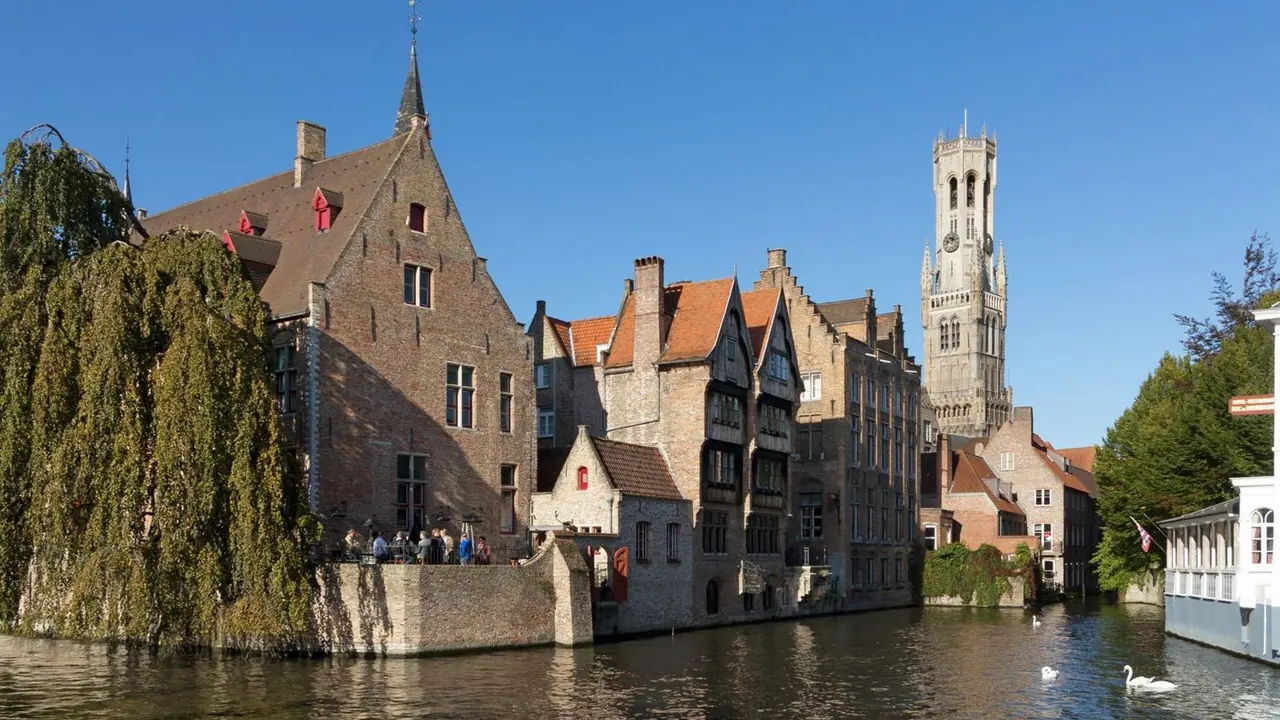
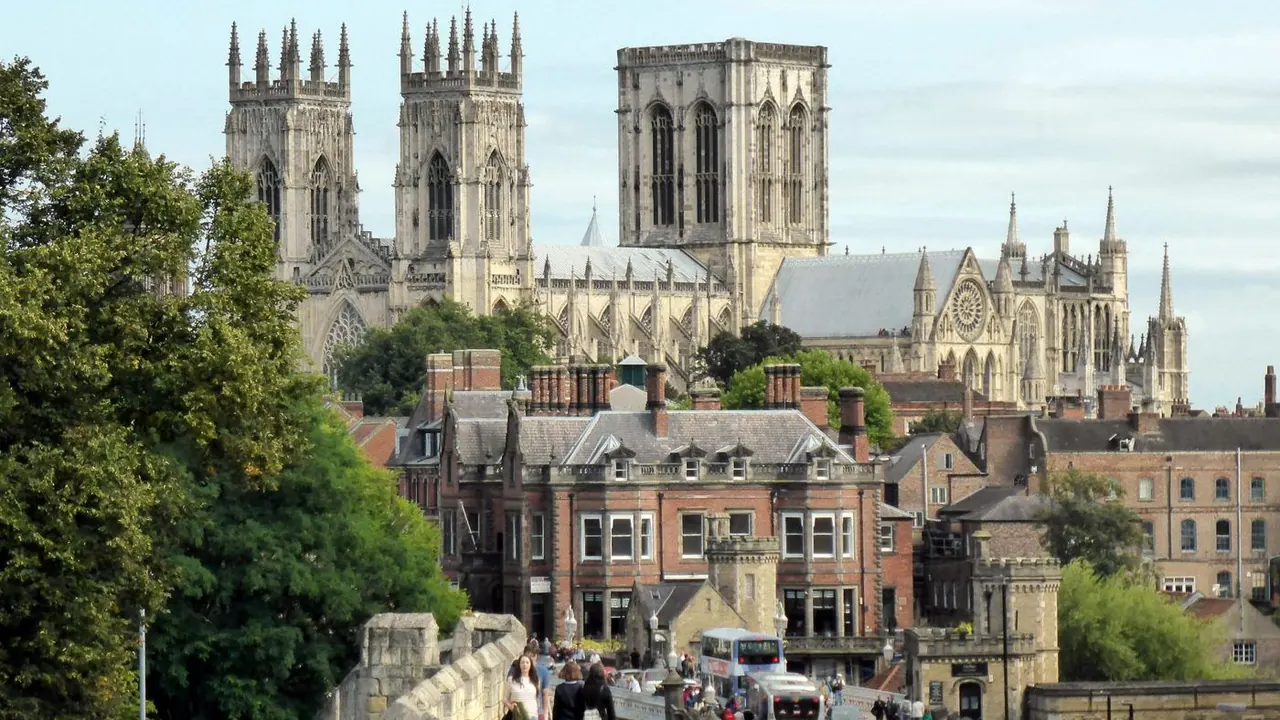
Photos: Bruges by Michielverbeek, CC BY-SA 4.0, cropped; York by PAUL FARMER, CC BY-SA 2.0, cropped.
Bruges or York?
Our verdict in twelve categories, each scored against the same fixed benchmark cities, and the climate month by month, so you can choose for your trip.
Choose Bruges for
- beaches
- food and drink
- getting around
Bruges suits travellers who want a medieval city they can walk in a morning, plus a rail network that reaches Ghent, Brussels and Antwerp without a car. It also eats and drinks better, thanks to Belgian beer and Flemish cooking, and the sandy coast is a quick train ride away for a summer afternoon.
Choose York for
- nature and the outdoors
- nightlife
- families
Choose York if the countryside matters as much as the streets. The moors and the Dales are within reach, the old pubs make for livelier evenings, and children get the railway museum and Jorvik. Plan on a hire car or a tour for the abbeys and country houses.
Scoreboard
Twelve categories on one fixed scale from 0 to 100. The shaded stretch is the gap between the two.
Your match
Pick a travel style or drag the sliders, and both match scores follow your weighting.
Too close to call, 1 point apart
Wins on beaches and food and drink with your weighting.
Wins on nature and the outdoors and nightlife with your weighting.
What matters to you?
Category by category
What the scores mean for a trip.
Beaches & swimming
Neither city is a beach destination, but Bruges has the easier seaside. Blankenberge is about fifteen minutes away by train, and the coast tram runs from one wide sandy beach to the next along the whole Belgian shore, so an August afternoon by the sea takes little effort.
From York, Scarborough and its two bays are about an hour away by train, with Filey and Whitby further still, and the water there stays a few degrees cooler. Both seas are the grey North Sea, better for paddling than for swimming.
Food & drink
Bruges has the stronger table, built on Belgian beer. Its wood-panelled cafés pour Trappist and abbey ales alongside mussels with frites, beef stewed in beer and waterzooi, and the chocolate is serious. Its fine dining also goes further, with farmhouse restaurants just outside town.
York's pleasures are more homely: afternoon tea with fat rascals, Yorkshire real ale, Sunday roasts and pies from the Shambles Market. In both cities the streets around the main sights serve tourist fare, so it pays to walk a few minutes away.
Culture & sights
Both are among the best-preserved historic cities in northern Europe, and each repays two or three unhurried days. In Bruges the draw is the whole townscape and its painting: canals, stepped gables, the Belfry and the Begijnhof, with van Eyck in the Groeninge Museum and Memling in St John's Hospital.
York has more layers of history and more museums to explain them. It is Roman, Viking and medieval at once, with the Minster's great stained glass, walls you can walk along, Jorvik built on an excavated street and the vast National Railway Museum.
Nightlife
York has more going on after dark, though neither is a clubbing city. Its centuries-old inns along Micklegate, Stonegate and the river make for a proper pub crawl, weekends bring stag and hen parties and race-day crowds, and Leeds is half an hour away for serious clubs.
Bruges is quieter and more intimate. An evening there means a long session of strong ale in a brown café or a cellar bar near the Eiermarkt, then a walk along the lit canals, and most of the centre is asleep by midnight on weeknights.
Nature & outdoors
York has far better countryside within reach. The North York Moors begin about 40km away and end in sea cliffs at Robin Hood's Bay, and the Dales, with their limestone scars and waterfalls, are about an hour west. A car makes both much easier.
Around Bruges the land is flat polder. It is lovely for an easy ride along the canal to Damme or a birdwatching walk at the Zwin salt marsh, but it has no hills or forests to plan a day around.
Day trips
Both make excellent bases, and the difference is in how you travel and what you see. From Bruges, frequent trains reach Ghent in under half an hour and Brussels in about an hour, with Antwerp a little further, so a car-free week of Flemish cities and art is easy. Ypres and the First World War memorials make a sombre extra.
York's best outings are more rural: Castle Howard, Fountains Abbey, Rievaulx and the steam railway from Pickering, many of them easiest by car or coach tour. By train it reaches the spa town of Harrogate, Leeds, and Durham with its cathedral and castle.
Good for families
York has the edge with children because its museums seem made for them. There is the National Railway Museum's hall of real locomotives, Jorvik, and the Victorian street in the Castle Museum, plus ghost walks for older children. Walking the walls adds a sense of adventure.
Bruges relies more on short outings, such as boat rides, feeding the swans at the Minnewater and a day at Boudewijn Seapark, and sandcastles are a short train ride away. Its cobbles are harder on pushchairs, and its main attractions are paintings and churches.
Getting around
Both cities are flat and compact and best seen on foot, and a car is a nuisance in either. Bruges is slightly easier. You can cross the whole canal ring in about half an hour, and frequent trains run to the other Belgian cities and the coast, though the cobbles are hard on suitcases.
York's station is only about fifteen minutes' walk from the Minster, and its fast trains are excellent. The weak spot is the countryside, where rural buses to the moors and country houses are sparse.
Shopping & style
Most of what you bring home from Bruges is edible: chocolate from makers on almost every street, Belgian beer with a matching glass for each brew, and bobbin lace, though much of the lace near the Markt is imported. The Saturday market on 't Zand and the flea market along the Dijver are pleasant to browse.
In York the pleasure is the streets themselves, with independent bookshops, jewellers and antiques dealers along Stonegate and Petergate, and the Christmas markets of late autumn and December are worth a trip on their own. In both cities the main high street is mostly familiar chains, and there is little luxury fashion.
Affordability
Neither is cheap, and the costs land in the same places: hotels inside the canal ring or the walls, at weekends and in peak seasons. In both, staying midweek and just outside the centre makes the biggest difference.
York has more free sightseeing, since the National Railway Museum, the walls and the Museum Gardens cost nothing. In Bruges the old town itself is the free pleasure, and the beer is good value for its quality.
Live music & performing arts
For small cities, both take early music unusually seriously. Bruges has its Concertgebouw and summer festival, and York has the National Centre for Early Music in a medieval church. Bruges leans towards chamber music and contemporary dance, with the Belfry carillon playing over the rooftops.
York has the deeper theatre tradition: the Theatre Royal and its pantomime, the Mystery Plays performed on wagons in the streets, and free choral evensong at the Minster. For bigger shows, Bruges looks to Ghent and Brussels, and York to Leeds.
Wellness & relaxation
Neither city has a bathing culture, but Bruges is the more restful place simply to be in. Its canals, the Begijnhof and the Minnewater park are deeply quiet early and late in the day, and the Sint-Anna and Langestraat area stays calm even at midday.
York's quiet corners are the walls at dawn, the Museum Gardens and the riverside paths, but the centre fills up on summer and December weekends. For proper bathing you need Harrogate, half an hour away by train, where the Royal Baths house a Victorian Turkish bath.
When should you go?
Pick your month. The climate figures are measured averages, not a forecast.
Bruges in July
York in July
Daytime high, °C
Rainfall in the month, mm
Where the figures come from
Bruges has no rain gauge within 25 km of the centre, so its rainfall comes from a gridded climate dataset read at the city rather than from a gauge further away.
Bruges's sunshine is measured 37 km from the centre, at Vlissingen.
York has no rain gauge within 25 km of the centre, so its rainfall comes from a gridded climate dataset read at the city rather than from a gauge further away.
York's sunshine is measured 48 km from the centre, at Leeming.
Temperature and rainfall are climate normals, averaged over the years shown. Bruges: 2009-2025 (sunshine 1991-2020, rainfall 1991-2020) normals, Zeebrugge / Zeemanshaard (15.8 km from centre). York: 1991-2020 normals, Linton-On-Ouse (14.9 km from centre).
Neither city ever gets too hot for walking, so May to September is comfortable in both. Bruges reaches about 21°C in July and August, with York a degree or so cooler, and Bruges is clearly the sunnier of the two from April through August. Its coast is only minutes away by train, and the sea there is warmest in August at about 19°C, so July and August are the months for a quick dip. York's seaside is about an hour further off, so a day on the sand there also belongs to high summer.
The rain follows different patterns. Bruges is driest in spring, with April the lightest month, and the rain sets in from August through autumn, when most months bring close to 87mm. York's rain is spread more evenly and is a little lighter for most of the year. Winters are cold and grey in both, with highs around 7°C and short days, so they suit museums and warm pubs more than long walks.
Which traveller are you?
On a beach and sun trip, Bruges is the better of two modest choices. Its summers are sunnier, and the coast tram links wide, sandy Belgian beaches only minutes from the city, while York's nearest seaside is an hour away by train.
For an outdoors trip, York wins clearly. The North York Moors, the Dales and the Cleveland Way along the sea cliffs give real walking and cycling, while Flanders has gentle polder rides and little else. A hire car helps a great deal.
On a family trip with children, York has the edge. The National Railway Museum, Jorvik and walking the walls hold young attention, and the centre is largely pedestrianised. In Bruges the cobbles and the churches are harder on pushchairs and small legs.
Before you go
| Measure | Bruges | York |
|---|---|---|
| Official language | French, German, Dutch | English |
| Currency | Euro (EUR) | Pound Sterling (GBP) |
| Sockets | CE230 V, 50 Hz | G230 V, 50 Hz |
| Driving side | Right | Left |
| Time zone | UTC+1, UTC+2 in summer | UTC, UTC+1 in summer |
| Emergency number | 112 | 112 or 999 |
| Elevation | 2 m | 25 m |
| Main airport | Brussels Airport (BRU)94 km from centre191 non-stop destinations | Leeds Bradford Airport (LBA)39 km from centre69 non-stop destinations |
| Public holidays this year | 14 days | 8 days |
By the numbers
| Measure | Bruges | York |
|---|---|---|
| City population | 118,509 | 208,400 |
| People per km² | 840 | 766 |
| Museums within 10 km | 38 | 24 |
| UNESCO World Heritage sites within 50 km | 3 | 2 |
| Swim season, months above 21 °C | None | - |
Where else could you go?
Every comparison below shares a destination with this one, so you can follow Bruges or York somewhere new.