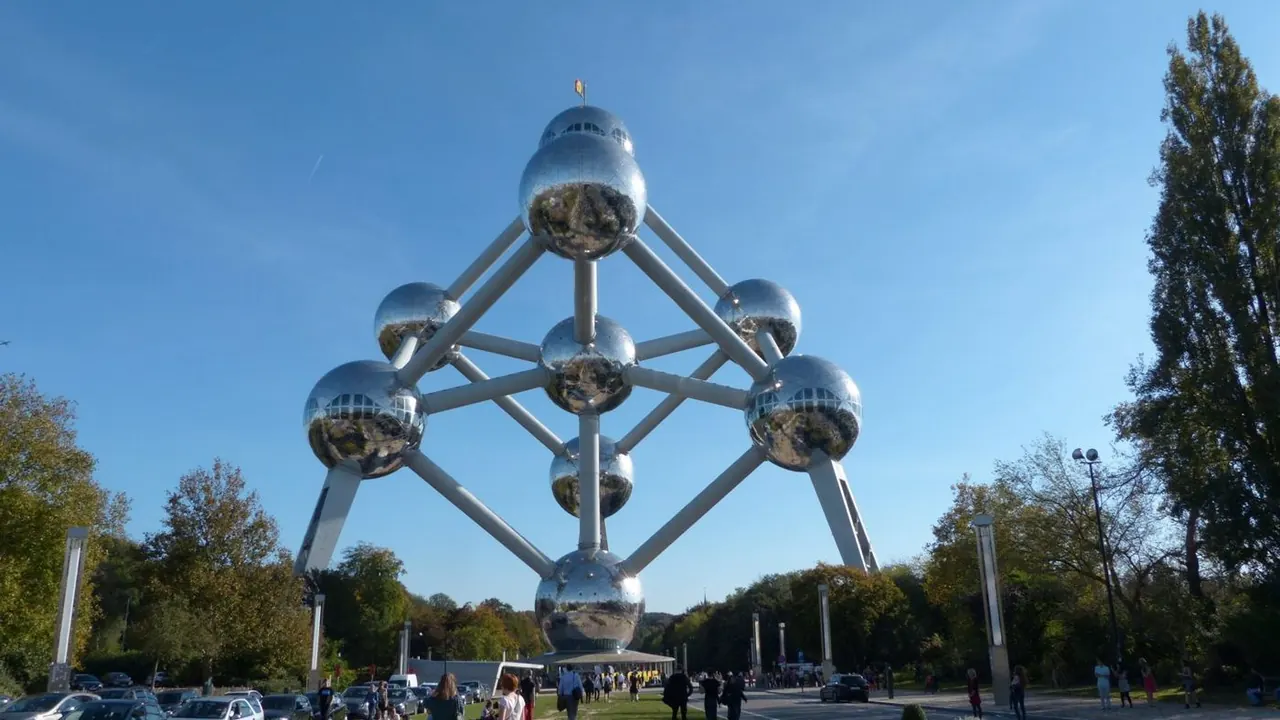
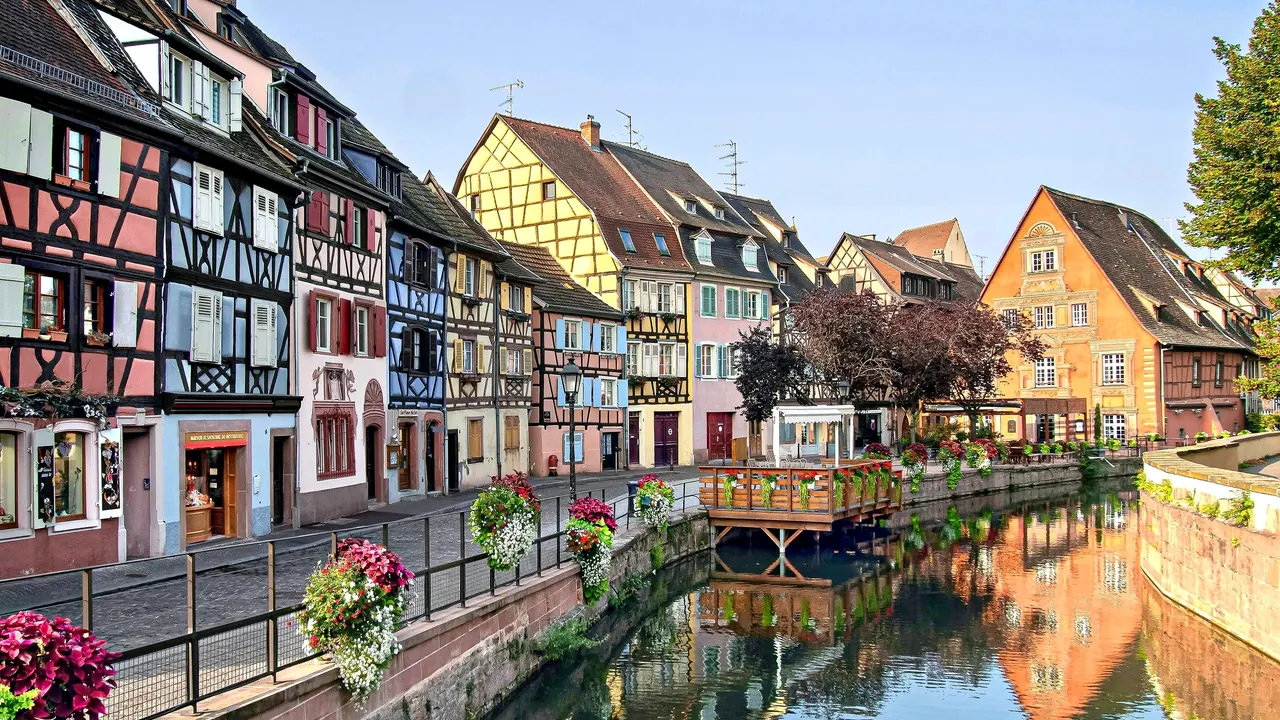
Photos: Brussels by Ettanghe, CC BY-SA 4.0, cropped; Colmar by Rolf Kranz, CC BY-SA 4.0, cropped.
Brussels or Colmar?
Our verdict in twelve categories, each scored against the same fixed benchmark cities, and the climate month by month, so you can choose for your trip.
Choose Brussels for
- nightlife
- live music and the arts
- shopping
Brussels is the better choice for a traveller who wants a real capital: Flemish masters and Horta's Art Nouveau houses by day, an opera house and concert halls in the evening, and brown cafés pouring lambic until late. It also has the wider range of food and shopping. And because the trains run so often, Ghent, Bruges and Antwerp are easy to add without changing hotels.
Choose Colmar for
- nature and the outdoors
- prices
- families
Colmar is for people who would rather wander through one intact old town than a spread-out city. Its half-timbered lanes, the Isenheim Altarpiece and the wine villages next door are the draw, and so are the vineyard paths and the Vosges ridges just above town. Evenings end over dinner and a glass of Riesling. It suits a slower trip, ideally with a car or a bike, and it has the drier, sunnier summer of the two.
Scoreboard
Twelve categories on one fixed scale from 0 to 100. The shaded stretch is the gap between the two.
Your match
Pick a travel style or drag the sliders, and both match scores follow your weighting.
Wins on nightlife and live music and the arts with your weighting.
Wins on nature and the outdoors and prices with your weighting.
What matters to you?
Category by category
What the scores mean for a trip.
Beaches & swimming
Neither city is for a swimming vacation, but Brussels at least has a coast within reach. Ostend, De Haan and Knokke are a little over an hour away by train, with long sandy North Sea beaches that work best as a windy day by the sea.
Colmar is far from any sea. In summer, swimming means the municipal pools or a small lake up in the Vosges valleys.
Food & drink
Brussels offers more range. You can eat frites from a friterie, mussels or carbonnade flamande in a proper restaurant, and Sablon pralines afterwards. The beer culture, including lambics brewed only in this area, is a reason to come in itself. The immigrant cooking in Matonge, Saint-Josse and Schaerbeek takes you well beyond Belgian classics.
Colmar is narrower but very good at what it does. Its winstubs serve choucroute, baeckeoffe and tarte flambée, with Alsace Riesling and Gewurztraminer from the slopes around town. Away from the regional cooking, though, the choice runs out quickly.
Culture & sights
Brussels has the larger body of art and architecture. The Grand-Place, Bruegel and Rubens at the Royal Museums, a whole museum for Magritte, Horta's Art Nouveau houses and the Cinquantenaire collections could fill most of a week. The catch is the setting, because the showpieces sit among office blocks.
Colmar is the opposite. It has less in total, but its painted half-timbered old town and Petite Venise have survived as one piece. The Unterlinden's Isenheim Altarpiece is worth the journey on its own.
Nightlife
Brussels has a real night out, built mostly around bars. Drinkers fill the streets around Saint-Géry, Ixelles has Flagey and Châtelain, and there are strong ales in century-old taverns. A well-known Marolles techno club and the queer scene on Rue du Marché au Charbon add to it.
Colmar's evenings stop after a long dinner and a last glass on a terrace by the canals. For anything later, people take the train to Strasbourg.
Nature & outdoors
Colmar is much better placed for the outdoors. Vineyard paths start within half an hour, and above them the forested Vosges offer glacial lakes, summer pastures and the Route des Crêtes, with views across to the Black Forest. The wine route is also fine cycling country.
Brussels has the tall beech stands of the Sonian Forest and some good parks. For hills or kayaking, though, you need the Ardennes valleys around Dinant, about one and a half to two hours away.
Day trips
Both are excellent bases, but they work in different ways. From Brussels the trips are to cities by fast train: Ghent, Bruges and Antwerp within an hour, and Paris, Cologne or Amsterdam for a long day.
From Colmar the trips are to small places close by. Eguisheim, Riquewihr and Kaysersberg are a few kilometres apart, and Strasbourg, Basel and Freiburg are each under about an hour. The wine villages are much easier by car or bike than by the thin bus service.
Good for families
Brussels keeps the children's attractions inside the city, a tram or metro ride away: the Atomium beside Mini-Europe, and the dinosaur hall at the Natural Sciences museum. The drawbacks are the cobbled pavements and the rain, which often moves the day indoors.
Colmar is the easier town to walk around with small children because it is flat, calm and compact, and there are boat rides through Petite Venise. Its bigger outings are out in the countryside: the Hunawihr stork park, the Kintzheim macaques and Europa-Park. For most of them you need a car.
Getting around
Brussels is easier to manage without a car. Its centre is walkable, apart from the steep climb to the upper town, and metro, trams and tap-to-pay buses cover the rest. The three main stations link straight to the airport.
Colmar can be crossed on foot in minutes, and Strasbourg and Mulhouse are quick by train. The weak point is the countryside, where limited buses push most visitors into a hire car or onto a bicycle.
Shopping & style
Brussels gives shoppers far more to do. There are chocolatiers in the Galeries Royales and on the Sablon, antiques at the weekend Sablon market, the morning flea market on Place du Jeu de Balle, and Belgian designers along Rue Antoine Dansaert.
Colmar is mainly for regional things to take home, such as wine bought from the producer, Soufflenheim pottery and Alsatian linen. Its Christmas markets are the high point of its year.
Affordability
Colmar is a little easier on the wallet: set lunches, regional wine and village tastings cost little. Its rooms are the problem, because they are scarce and expensive in summer and during the Christmas market weeks.
Brussels works the other way round. Its weekday hotel prices are pushed up by business and EU travellers, but weekends are noticeably cheaper.
Live music & performing arts
Brussels is a serious city for the performing arts. La Monnaie stages adventurous opera, Bozar and Flagey host top orchestras, and the spring Queen Elisabeth Competition is a major classical event. There is also contemporary dance in two languages and an old marionette theatre.
In Colmar the offer is mostly festivals, mainly the July classical festival and the autumn jazz festival. For the rest of the year, people go to Strasbourg or Basel.
Wellness & relaxation
Neither city has a bathing tradition. Brussels offers North African hammams, day spas and Art Deco pools, but the capital's traffic and working pace are always around you.
Colmar has only hotel spas. Its quiet evenings by the canals and walks through the vines, however, make for the more restful few days.
When should you go?
Pick your month. The climate figures are measured averages, not a forecast.
Brussels in July
Colmar in July
Daytime high, °C
Rainfall in the month, mm
Temperature and rainfall are climate normals, averaged over the years shown. Brussels: 1991-2020 normals, Uccle (5.2 km from centre). Colmar: 1991-2020 normals, Ihringen (21.1 km from centre).
Brussels is mild and grey all year, and it rains in every month. Summer highs reach about 23°C in July and August, which is pleasant for walking but never hot, and August is actually the wettest month at around 90mm. Late spring and early autumn are the most comfortable times to explore. Winter days are short, dark and damp, so the museums and cafés carry the trip.
Colmar is a few degrees warmer in summer, at about 27°C in August, and gets clearly more sun. That makes June to August good for vineyard walks, cycling and a dip in a pool or a Vosges lake. May is its wettest month at around 87mm, with summer storms after that. Winter is about as cold as in Brussels but much drier, at roughly 32mm in January, so a crisp December visit is more likely to stay dry than it would in Brussels.
Which traveller are you?
For a food and nightlife trip, choose Brussels. You can eat your way across several cuisines in a day and still find bars full near midnight. Colmar suits a long Alsace dinner with good wine, but little happens after it.
On an outdoors trip, choose Colmar and hire a car or a bike. The walking starts at the edge of town and climbs into real mountains, with skiing in winter. From Brussels, anything beyond a forest walk means a long day out.
For a culture and arts trip, Brussels rewards a longer stay. Its galleries and architecture fill several days, and your evenings can go to opera or concerts. Colmar offers one great painting and an intact old town, enough for a couple of days.
Before you go
| Measure | Brussels | Colmar |
|---|---|---|
| Official language | French, German, Dutch | French |
| Currency | Euro (EUR) | Euro (EUR) |
| Sockets | CE230 V, 50 Hz | CE230 V, 50 Hz |
| Driving side | Right | Right |
| Time zone | UTC+1, UTC+2 in summer | UTC+1, UTC+2 in summer |
| Emergency number | 112 | 112 |
| Elevation | 70 m | 185 m |
| Main airport | Brussels Airport (BRU)11 km from centre191 non-stop destinations | EuroAirport Basel–Mulhouse–Freiburg (BSL)55 km from centre112 non-stop destinations |
| Public holidays this year | 14 days | 11 days |
By the numbers
| Measure | Brussels | Colmar |
|---|---|---|
| City population | 195,546 | 66,970 |
| People per km² | 5,908 | 1,006 |
| Museums within 10 km | 106 | 9 |
| UNESCO World Heritage sites within 50 km | 11 | 3 |
Where else could you go?
Every comparison below shares a destination with this one, so you can follow Brussels or Colmar somewhere new.
- Antwerpvs Brussels
- Ghentvs Brussels
- Baselvs Colmar
- Strasbourgvs Colmar
- Brugesvs Brussels
- Maastrichtvs Brussels