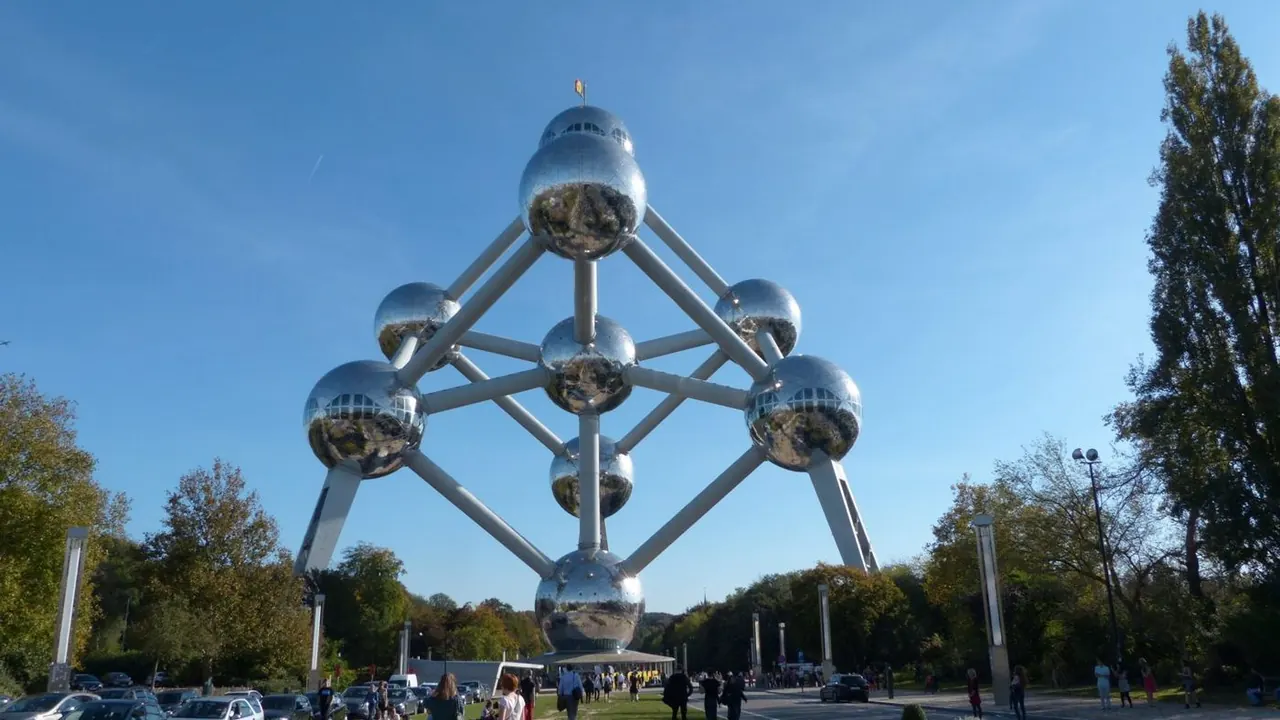
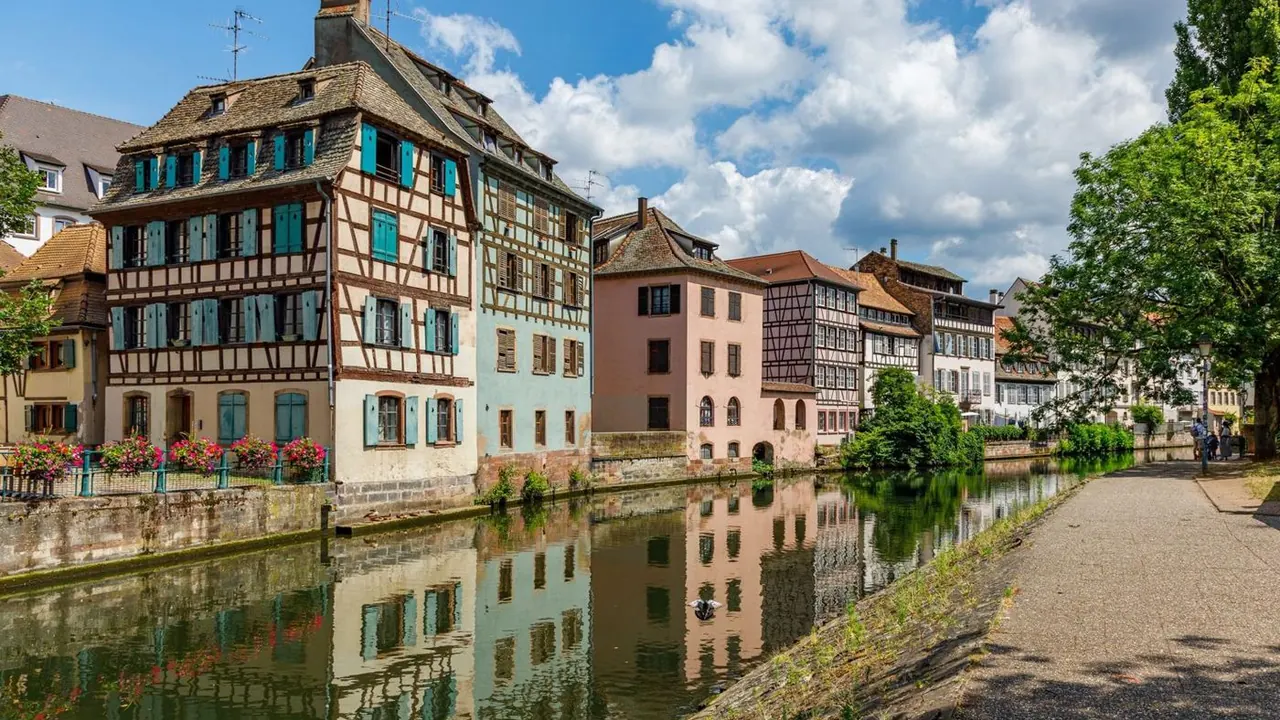
Photos: Brussels by Ettanghe, CC BY-SA 4.0, cropped; Strasbourg by Edoardo Colombo, Pexels License.
Brussels or Strasbourg?
Our verdict in twelve categories, each scored against the same fixed benchmark cities, and the climate month by month, so you can choose for your trip.
Choose Brussels for
- nightlife
- live music and the arts
- shopping
Brussels is the better pick for travellers who want a capital's range: a deep beer culture and more varied eating, a busier night out, a stronger opera and concert life, and a rail hub that puts Ghent, Bruges, Antwerp and even Paris within easy reach. It suits a city break built around food, drink, art and moving on by train, as long as you don't mind grey skies and a centre that mixes grand quarters with office blocks.
Choose Strasbourg for
- wellness
- nature and the outdoors
- getting around
Choose Strasbourg for a calmer, more rounded trip where the old town is intact, flat and easy to cross on foot or by bike, and the countryside starts close by. The Vosges, the Alsace wine villages and the Black Forest bring real walking and cycling, Baden-Baden's baths are near at hand, and families have an easier time in its car-free centre. Evenings are quieter, but the days are richer outdoors.
Scoreboard
Twelve categories on one fixed scale from 0 to 100. The shaded stretch is the gap between the two.
Your match
Pick a travel style or drag the sliders, and both match scores follow your weighting.
Too close to call, 1 point apart
Wins on nightlife and live music and the arts with your weighting.
Wins on wellness and nature and the outdoors with your weighting.
What matters to you?
Category by category
What the scores mean for a trip.
Beaches & swimming
Neither city is a beach destination, but Brussels at least has a coast in reach: Ostend, De Haan and Knokke are a little over an hour by train, with wide sands and promenades on a cool, often windy North Sea. It makes a breezy day out rather than a swimming trip.
Strasbourg has no sea within reach at all. On hot days its swimming means the lifeguarded gravel-pit lakes, such as the Baggersee by tram, with grassy banks and calm fresh water.
Food & drink
Brussels has the edge, mostly through range. Beyond mussels, carbonnade and frites, it has one of the world's great beer cultures, with lambics and gueuzes brewed only around the city, Sablon chocolatiers, and Congolese, Moroccan, Turkish and Portuguese cooking in its neighbourhoods.
Strasbourg is narrower but just as distinctive: choucroute, baeckeoffe and tarte flambée eaten in a winstub with a pichet of Riesling, plus foie gras and a strong fine-dining tier. It is richer, heavier food, at its best in winter, with less choice of other cuisines. In both cities, steer clear of the restaurants around the main tourist square.
Culture & sights
The two are closely matched, but in different ways. Brussels has the bigger collections and the more varied set of sights: the Grand-Place, Bruegel and Rubens at the Royal Museums, the Magritte museum, Horta's UNESCO-listed Art Nouveau houses and the comic-strip murals. Its weakness is a broken historic fabric, with grand quarters next to office blocks.
Strasbourg is the more complete townscape. The Grande Ile, Petite France and the German-built Neustadt form one intact UNESCO ensemble around the pink sandstone cathedral and its astronomical clock, and the Palais Rohan museums sit right in the middle of it. It takes two or three days, where Brussels rewards a longer stay.
Nightlife
Brussels is clearly the livelier place after dark. Saint-Géry and the Bourse fill on warm evenings, Flagey and Saint-Gilles keep a local crowd busy late, and there is a respected techno club in the Marolles and an active queer scene.
Strasbourg's evenings revolve around student bars in the Krutenau and summer terraces along the quays. They are pleasant, but there are few clubs and much of the city is quiet by midnight on weeknights.
Nature & outdoors
Strasbourg has much more to offer outdoors. The Rhine plain forests with storks and beavers are on its doorstep, its cycle routes run flat into the countryside and across into Germany, and the Vosges and the Black Forest put proper hiking, castle ruins and ridges within about an hour.
Brussels has the beautiful beech stands of the Sonian Forest and good city parks, but around it the land is flat farmland. Hills and kayaking mean the Meuse valley at Dinant or Namur, a longer journey away.
Day trips
Both are excellent bases, but Brussels has the stronger hand. Ghent, Antwerp, Leuven and Mechelen are each under an hour, Bruges about an hour, and high-speed trains bring Paris, Lille, Cologne and Amsterdam within a day's range, so you can see several first-rank cities without changing hotel.
Strasbourg's trips lean more towards countryside and small towns: Colmar and the Isenheim Altarpiece, the wine villages of Riquewihr and Eguisheim, and Haut-Koenigsbourg, then Baden-Baden, Freiburg and Basel across the border. Its trains reach the cities well, but the wine route is far easier by car or bike.
Good for families
Strasbourg is the easier city with children. Its centre is flat, compact and largely car-free, the boat trips and the stork-filled Orangerie park are natural family outings, and Europa-Park is about an hour away. Most of its museums are aimed at adults, though.
Brussels has more indoor attractions, with the Natural Sciences museum's Iguanodons, the Atomium, Mini-Europe and Train World, which is useful on its many rainy days. The trade-off is heavy traffic and cobbled, uneven pavements.
Getting around
Strasbourg is the simpler city to move around. The Grande Ile can be crossed on foot in twenty minutes, much of it is pedestrianised, and with trams and separated bike lanes a bike is often the fastest option.
Brussels covers a bigger area with a full metro, tram and bus network, and its stations link straight to the airport. The core sights are walkable too, but the climb to the upper town is steep and the pavements are rough.
Shopping & style
Brussels gives shoppers more to work with. Rue Antoine Dansaert has Belgian designers, Avenue Louise has the luxury brands, and the Sablon antiques market and the daily Jeu de Balle flea market in the Marolles make for good browsing, along with chocolate, lace and comics.
Strasbourg is mostly chain stores around Place Kléber plus independent delicatessens near the cathedral. Its strength is regional goods such as Soufflenheim pottery and Alsace wine, and the Christmas market peaks in December.
Affordability
Costs are much the same in both, and neither is a budget destination. They differ in when to go: Brussels is better value at weekends, when its business hotels empty out, while Strasbourg's rooms get expensive during the Christmas market and Parliament sessions. Strasbourg's winstub meals and free old-town sights help, as do frites and neighbourhood cooking in Brussels.
Live music & performing arts
Brussels has the deeper stage life. La Monnaie is known for adventurous opera, Bozar and the Flagey building host fine concerts, the Queen Elisabeth Competition is a fixture each spring, and big tours always stop there. There is also dance and theatre in two languages.
Strasbourg is strong for its size, with the Opéra national du Rhin, a leading national theatre and the autumn Musica festival of contemporary music. Its programme is smaller, though, and a visit needs planning around the season.
Wellness & relaxation
Strasbourg is the better place to slow down. Its early twentieth-century Bains municipaux offer tiled pools, saunas and a hammam, the Friedrichsbad and Caracalla baths in Baden-Baden are under an hour away, and canal walks set a gentle pace.
Brussels has no bathing tradition. You get North African hammams, hotel spas and Art Deco pools, all set against heavy traffic and a busy capital.
When should you go?
Pick your month. The climate figures are measured averages, not a forecast.
Brussels in July
Strasbourg in July
Daytime high, °C
Rainfall in the month, mm
Temperature and rainfall are climate normals, averaged over the years shown. Brussels: 1991-2020 normals, Uccle (5.2 km from centre). Strasbourg: 1991-2020 normals, Strasbourg (9.1 km from centre).
Both cities are best from May to September, but they get there differently. Strasbourg has the warmer, sunnier summer, with highs around 26°C in July and August, enough for an afternoon at the lakes, while Brussels peaks nearer 23°C and stays mild rather than hot. Brussels is wet in every month and wettest in late summer and December, at around 90mm, so an umbrella belongs in the bag whatever the season. Strasbourg is markedly drier in winter, though its rain arrives with the warmth, from May into the summer.
Spring and early autumn are good for walking either city, with Strasbourg a little warmer and brighter in April and May. Winters are cold and dark in both, with highs around 5°C to 6°C and very little sun, though Strasbourg's drier December makes its streets the easier of the two to walk in the cold.
Which traveller are you?
For a food and nightlife trip, Brussels is the clear choice. Its brown cafés pour lambics and Trappist ales late into the evening, Matonge and Saint-Josse add real range beyond the Belgian classics, and its bars and techno club outlast Strasbourg's early nights.
On an outdoors trip, Strasbourg is the better base. Hire a bike for a day of riding out among the vineyards, then pack walking boots for castle ruins and fir woods the next. From Brussels, real hills mean a long day out to the Ardennes.
For a relaxing and wellness trip, Strasbourg suits far better. Plan a morning swim and sauna alongside the locals, a day across the Rhine soaking in thermal water and long winstub lunches, and avoid December. In Brussels, a café terrace in Ixelles is about as calm as it gets.
Before you go
| Measure | Brussels | Strasbourg |
|---|---|---|
| Official language | French, German, Dutch | French |
| Currency | Euro (EUR) | Euro (EUR) |
| Sockets | CE230 V, 50 Hz | CE230 V, 50 Hz |
| Driving side | Right | Right |
| Time zone | UTC+1, UTC+2 in summer | UTC+1, UTC+2 in summer |
| Emergency number | 112 | 112 |
| Elevation | 70 m | 132 m |
| Main airport | Brussels Airport (BRU)11 km from centre191 non-stop destinations | Strasbourg Airport (SXB)10 km from centre43 non-stop destinations |
| Public holidays this year | 14 days | 11 days |
By the numbers
| Measure | Brussels | Strasbourg |
|---|---|---|
| City population | 195,546 | 293,771 |
| People per km² | 5,908 | 3,752 |
| Museums within 10 km | 106 | 21 |
| UNESCO World Heritage sites within 50 km | 10 | 1 |
Where else could you go?
Every comparison below shares a destination with this one, so you can follow Brussels or Strasbourg somewhere new.