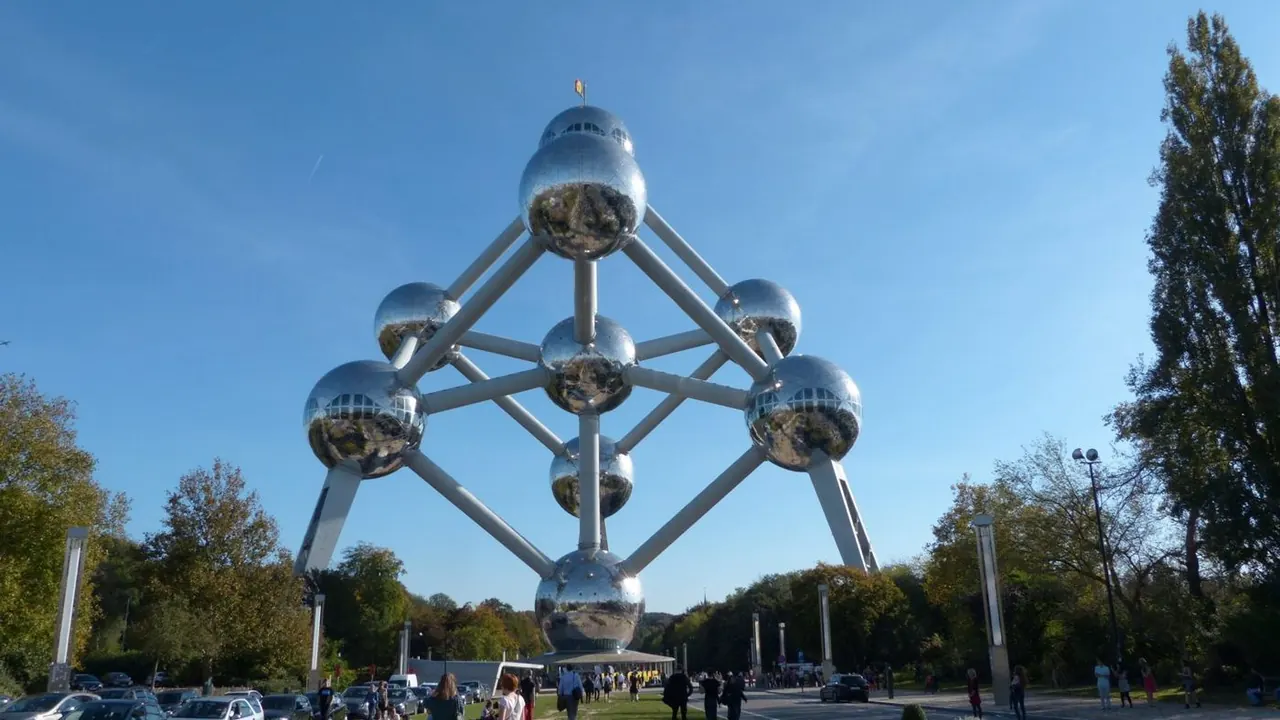
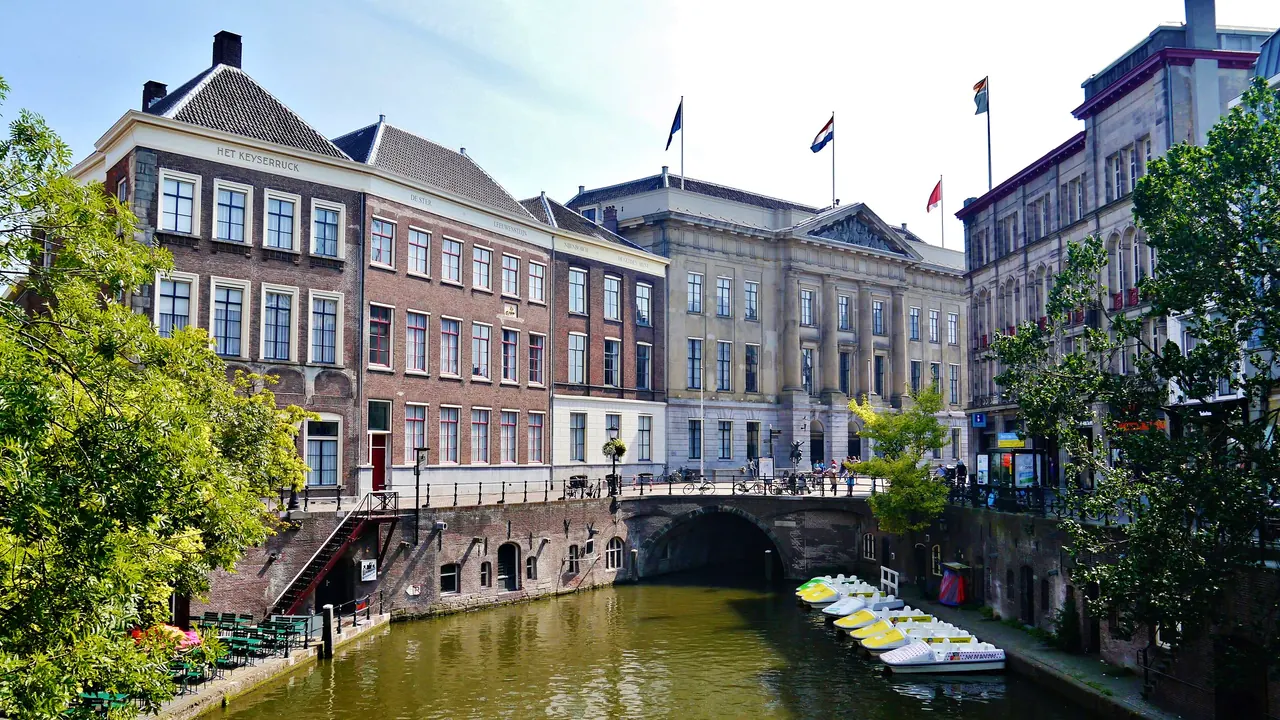
Photos: Brussels by Ettanghe, CC BY-SA 4.0, cropped; Utrecht by Zairon, CC BY-SA 4.0, cropped.
Brussels or Utrecht?
Our verdict in twelve categories, each scored against the same fixed benchmark cities, and the climate month by month, so you can choose for your trip.
Choose Brussels for
- food and drink
- nightlife
- culture and sights
Brussels is the better pick for travellers who plan their days around eating, drinking and art. It has the deeper table, from frites and mussels to lambic poured in old brown cafés, plus Bruegel and Magritte, Horta's Art Nouveau houses and a proper opera house. It is the livelier and more cosmopolitan of the two, and the price is a rougher city to move through.
Choose Utrecht for
- getting around
- wellness
- families
Utrecht suits those who want an easy, calm base with a beautiful medieval core. The station sits at the edge of the old town, everything is flat and close, and the bike does the rest, which makes it the gentler choice with children. The food, nights out and stages are more modest, but Amsterdam and the rest of the Netherlands are a short train ride away.
Scoreboard
Twelve categories on one fixed scale from 0 to 100. The shaded stretch is the gap between the two.
Your match
Pick a travel style or drag the sliders, and both match scores follow your weighting.
Wins on food and drink and nightlife with your weighting.
Wins on getting around and wellness with your weighting.
What matters to you?
Category by category
What the scores mean for a trip.
Beaches & swimming
Neither city is a place for a beach vacation, and the North Sea is cold and windy from both. Brussels has the Belgian coast at Ostend, De Haan or Knokke a little over an hour away by train, with wide sandy beaches and promenades for a breezy day out. At home, swimming means indoor pools, some of them in handsome Art Deco buildings.
Utrecht's sea at Zandvoort or Scheveningen is a similar distance away. Its advantage is closer to hand: in a warm spell, the Maarsseveense Plassen and Strijkviertel lakes on the city's edge make an easy place to cool off.
Food & drink
Food is one of the widest gaps between the two. Brussels has a real cuisine of its own, with mussels, beer-braised carbonnade, waterzooi and shrimp croquettes, and a beer culture of Trappist ales and lambics brewed only in its region. Chocolatiers around the Sablon and the Congolese, Moroccan and Turkish kitchens of Matonge and Schaerbeek give it range as well as depth.
Utrecht is a pleasant place to eat, but people rarely travel there for the food. Its best meals come from the setting, on terraces in the old wharf cellars at the water's edge, along with casual Indonesian and Surinamese places and bistros around the Twijnstraat and Lombok.
Culture & sights
Brussels has more to see and greater things to see. The gilded Grand-Place, the Royal Museums with Bruegel, Rubens and Magritte, and Horta's Art Nouveau houses in Saint-Gilles would each justify a visit on their own, with the Cinquantenaire museums and the Atomium on top. The drawback is a broken city fabric, with grand quarters next to office blocks.
Utrecht turns that the other way round. Its medieval centre is intact and very attractive, with the free-standing Dom Tower and the two-level Oudegracht. Its museums, the Centraal Museum's De Stijl collection and the small Rietveld Schröder House, are fine but modest in number.
Nightlife
Brussels gives the fuller evening out. Bars fill Saint-Géry and the streets around the Bourse, Place Flagey draws a local crowd, and century-old taverns pour strong ales late into the night. It also has a respected techno club in the Marolles and a queer scene around Rue du Marché au Charbon.
Utrecht's nights belong to its students: canal-side terraces, the Neude and the Janskerkhof, and a few clubs. It is a friendly scene but a small one, and locals after a big night tend to take the train to Amsterdam.
Nature & outdoors
Both sit in flat, green country without real wilderness, so the difference is in how you get out into it. In Brussels it means walking or cycling in the Sonian Forest, a tall beech forest on the city's edge, and taking a longer trip to the Meuse and Ardennes valleys for hills and kayaking.
In Utrecht you go out by bike: along the Vecht past country estates and windmills, onto the heath and wooded ridges of the Utrechtse Heuvelrug, or north to sail on the Loosdrecht lakes.
Day trips
These are two of the best day-trip bases in Europe, and the real choice is which country you want to see. From Brussels, Ghent, Bruges and Antwerp are each an hour or less away, Waterloo and Namur lie to the south, and high-speed trains put Paris within reach for a long day.
Utrecht sits at the hub of the Dutch railways, with Amsterdam under half an hour away and Rotterdam, The Hague, Delft and Gouda all close. Kinderdijk's windmills and the Kröller-Müller Museum round out a thorough tour of the Netherlands from one hotel.
Good for families
Utrecht is the more relaxed city with children, though Brussels is not far behind. Utrecht's compact, calm centre, its Railway Museum in an old station and the Miffy museum for toddlers make days simple, and Kasteel de Haar adds a fairy-tale outing. The bikes streaming through the streets are the main thing to watch.
Brussels has bigger set pieces, with the Iguanodon hall at the Natural Sciences museum, the Atomium and Mini-Europe, and comic murals around the centre. Busy traffic, cobbles and rainy days make the logistics harder work.
Getting around
Utrecht is the easier city to move around. You step out of Utrecht Centraal straight into the old town, and the Dom, the canals and most museums are a flat walk away. A rental bike covers the rest, so most visitors hardly need public transport.
The centre of Brussels is walkable too, but the climb from the lower town to the Royal Museums is steep and the pavements are rough. Its metro and trams reach Ixelles and Saint-Gilles well, while driving through its tunnels and one-way streets is best avoided.
Shopping & style
Brussels has more worth buying and more variety. Master chocolatiers line the Galeries Royales and the Sablon, antiques dealers gather on the square, and the Jeu de Balle flea market in the Marolles rewards an early start. Rue Antoine Dansaert shows off Belgian designers, and Avenue Louise has the luxury labels that Utrecht lacks.
Utrecht's appeal is its small independent shops in streets like the Zadelstraat and Twijnstraat, plus the flower market on the Janskerkhof. Serious fashion shoppers end up in Amsterdam.
Affordability
Neither is a budget destination, and the costs work out differently in each. In Brussels much of the hotel trade serves business travellers, so weekends are noticeably better value, and frites and the immigrant quarters keep meals cheap.
In Utrecht it works the other way: central rooms are scarce and weekends cost more. Once you have a bed, though, the walkable centre and a rental bike mean you spend almost nothing on getting around.
Live music & performing arts
Brussels has the broader stage. La Monnaie, where an 1830 performance sparked the Belgian revolution, is known for adventurous opera, Bozar and Flagey host first-rate orchestras, and there is contemporary dance and theatre in both French and Dutch. The Queen Elisabeth Competition brings young classical talent every spring.
Utrecht does well for its size, with TivoliVredenburg stacking classical, pop and jazz under one roof and the Festival Oude Muziek drawing early-music lovers from across Europe. It has no opera house, though, and its theatre is mostly in Dutch.
Wellness & relaxation
Neither city has a bathing tradition, but Utrecht is the calmer place to slow down. Large Dutch sauna complexes, with steam rooms and outdoor pools, sit in the green belt around it. Once the day-trippers leave, quiet evenings on the canal wharves and the Pandhof cloister garden help you unwind.
Brussels has a few North African hammams and hotel spas, but a working capital's traffic and pace come with them. Its best rest is a long lunch or an afternoon on an Ixelles terrace.
When should you go?
Pick your month. The climate figures are measured averages, not a forecast.
Brussels in July
Utrecht in July
Daytime high, °C
Rainfall in the month, mm
Temperature and rainfall are climate normals, averaged over the years shown. Brussels: 1991-2020 normals, Uccle (5.2 km from centre). Utrecht: 1991-2020 normals, De Bilt (4.3 km from centre).
The two cities have almost the same weather, so timing will not decide between them. Summer is the warm season in both, with afternoons around 23°C in July and August, pleasant for walking and rarely hot enough to make the streets tiring. May to August bring the longest sunny days and April is the driest month in each. Winter is dark and chilly, with highs near 6°C and little sun in December and January, and rain falls in every month of the year.
The small differences lie in when the wet spells come. Brussels is wettest in August and December, at about 90mm, while Utrecht stays damper than Brussels through September and October. Only Utrecht has a sea figure: the North Sea peaks around 19°C in August, so a beach day from there means a bracing dip rather than a long swim.
Which traveller are you?
On a food and nightlife trip, Brussels is the clear choice. Its cooking runs from frites to carbonnade and waterzooi, its beer culture is world class, and its evenings in Saint-Géry, Ixelles and Saint-Gilles are livelier than Utrecht's student bars.
For a culture and arts trip, Brussels again has more to fill the days: the Grand-Place, Flemish masters and Magritte, Horta's UNESCO-listed houses, and La Monnaie and Bozar in the evening. Utrecht's lovely medieval centre is done in two or three days.
On a family trip with children, Utrecht is the easier city. It is compact, flat and calm, with the Railway Museum and the Miffy museum close by. Brussels has dinosaurs and the Atomium, but also heavy traffic and cobbled pavements to deal with.
Before you go
| Measure | Brussels | Utrecht |
|---|---|---|
| Official language | French, German, Dutch | Dutch |
| Currency | Euro (EUR) | Euro (EUR) |
| Sockets | CE230 V, 50 Hz | CF230 V, 50 Hz |
| Driving side | Right | Right |
| Time zone | UTC+1, UTC+2 in summer | UTC+1, UTC+2 in summer |
| Emergency number | 112 | 112 |
| Elevation | 70 m | 5 m |
| Main airport | Brussels Airport (BRU)11 km from centre191 non-stop destinations | Amsterdam Airport Schiphol (AMS)34 km from centre287 non-stop destinations |
| Public holidays this year | 14 days | 11 days |
By the numbers
| Measure | Brussels | Utrecht |
|---|---|---|
| City population | 195,546 | 359,370 |
| People per km² | 5,908 | 3,619 |
| Museums within 10 km | 106 | 28 |
| UNESCO World Heritage sites within 50 km | 10 | 5 |
| Swim season, months above 21 °C | - | None |
Where else could you go?
Every comparison below shares a destination with this one, so you can follow Brussels or Utrecht somewhere new.