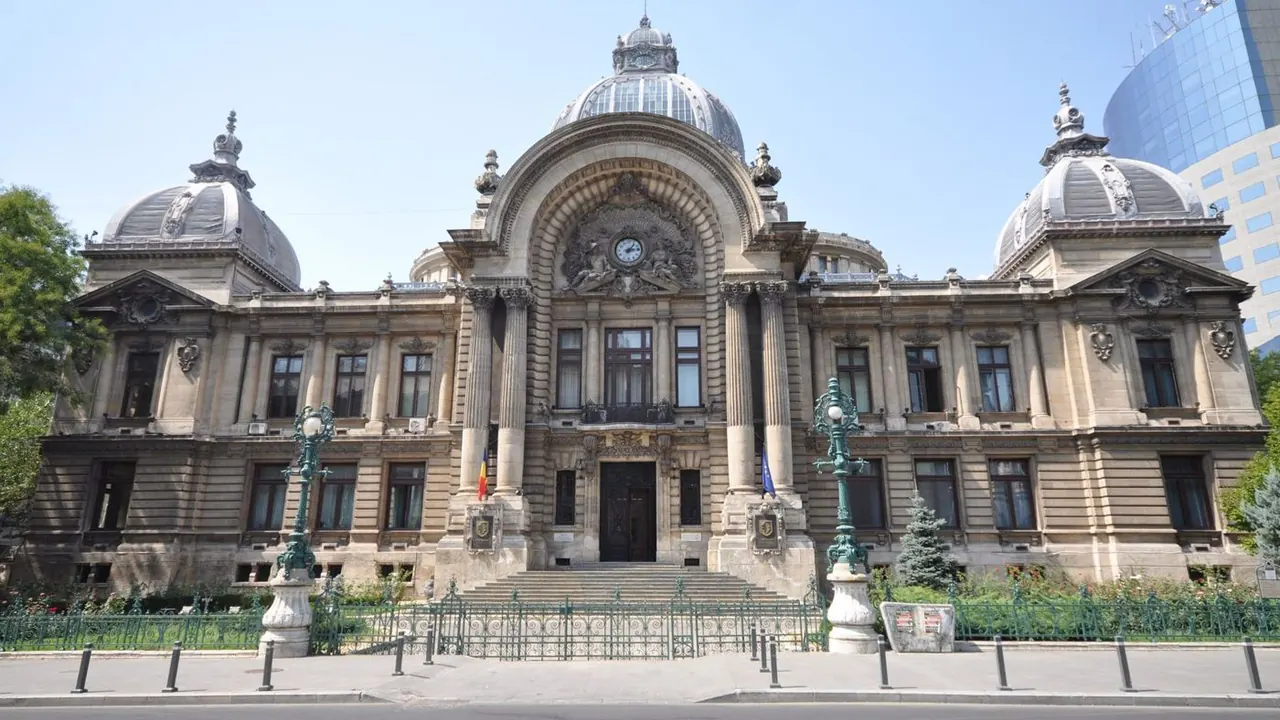
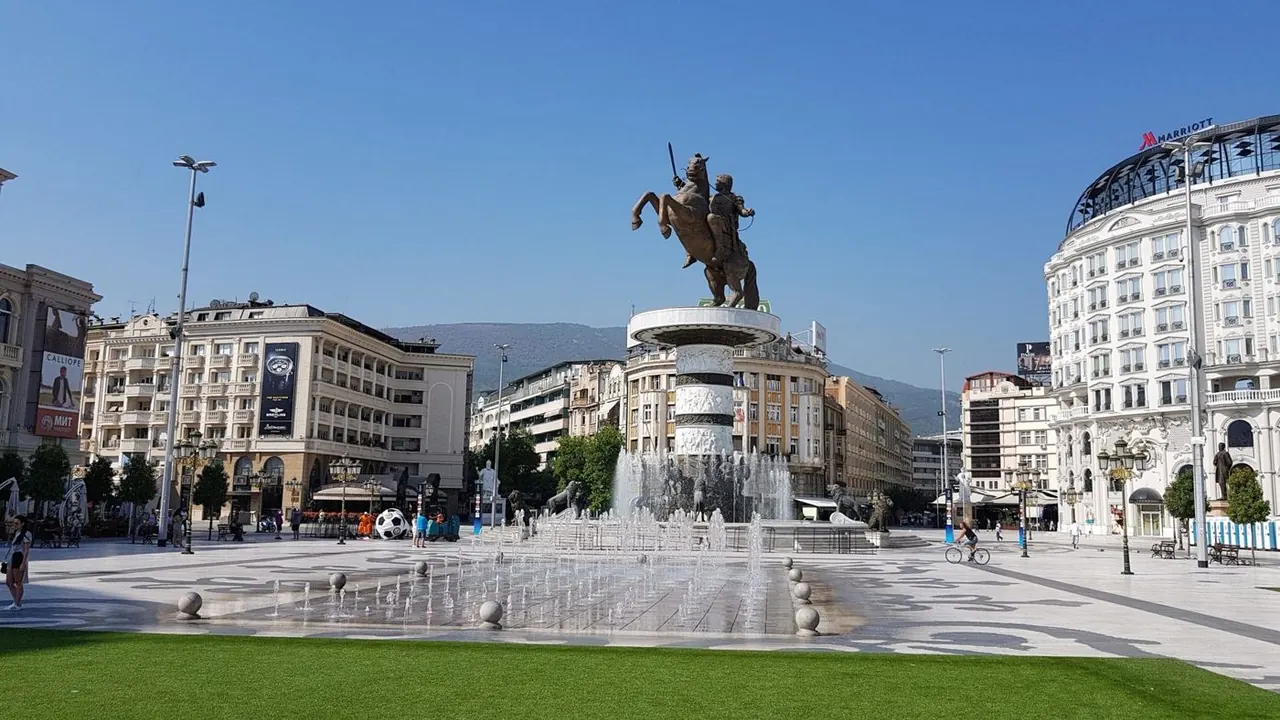
Photos: Bucharest by Jorge Láscar, CC BY 2.0, cropped; Skopje by George M. Groutas, CC BY 2.0, cropped.
Bucharest or Skopje?
Our verdict in twelve categories, each scored against the same fixed benchmark cities, and the climate month by month, so you can choose for your trip.
Choose Bucharest for
- nightlife
- live music and the arts
- wellness
Bucharest suits travellers who want a capital with plenty to do after dark and on a grey afternoon. The Old Town and its techno clubs, concerts at the Athenaeum and the opera, and a thermal complex big enough for a whole day in warm pools give a long weekend more depth. Families also have an easier time, with a metro, lively museums and big parks with boats on the lakes.
Choose Skopje for
- nature and the outdoors
- prices
- day trips
Choose Skopje for hills, canyons and Ottoman lanes at a lower cost. Vodno rises straight from the suburbs, Matka Canyon is half an hour away, and the Sar mountains and Mavrovo are close enough to visit. Meanwhile the bazaar and the cafe terraces of Debar Maalo set a slower pace. A budget goes further here, though the nights are local and quiet by comparison.
Scoreboard
Twelve categories on one fixed scale from 0 to 100. The shaded stretch is the gap between the two.
Your match
Pick a travel style or drag the sliders, and both match scores follow your weighting.
Wins on nightlife and live music and the arts with your weighting.
Wins on nature and the outdoors and prices with your weighting.
What matters to you?
Category by category
What the scores mean for a trip.
Beaches & swimming
Neither city is a beach destination, and both send swimmers a long way. From Bucharest it is the Black Sea coast around Constanta, and from Skopje it is Lake Ohrid, about three hours away. Each deserves a stay of its own rather than a day out.
In town the difference is small. Bucharest has Lake Snagov, where locals do swim, and big pool complexes on its edge. Skopje has public outdoor pools and the cold water of Matka, which is better for a kayak than a dip.
Food & drink
The two cuisines are close relatives, both hearty, with sarma on the table in each, and the difference is range. Bucharest adds modern bistros, specialty coffee and bars serving Romanian wine around Calea Victoriei and Dorobanti, plus Piata Obor for cheese and smoked meat. The tourist terraces of the Old Town are best skipped.
Skopje is narrower but closer to home cooking. Expect burek with drinking yoghurt for breakfast, kebapi and pastrmajlija in the Old Bazaar, long tavern tables with live music in Debar Maalo, and Vranec and Temjanika wines from Tikves. You will have eaten your way through the local repertoire in a few days.
Culture & sights
Both are cities of contrasts that take two or three days to see, but the contrasts differ. Bucharest moves from the Belle Epoque mansions and Athenaeum of Calea Victoriei and small churches such as Stavropoleos to the vast Palace of the Parliament. The National Museum of Art and the Village Museum give it the stronger collections.
Skopje's draw is the Old Bazaar, one of the largest Ottoman market quarters left in the Balkans, with caravanserais, mosques and Kale Fortress above. Across the Stone Bridge stand the statues and replica facades of Skopje 2014. The 1963 earthquake runs through its museums, from the stopped clock at the old station to the Museum of Contemporary Art.
Nightlife
Bucharest is the far stronger night out. The Old Town lanes fill every evening with terraces, cocktail bars and clubs. Beyond them, the bars around Piata Romana, garden bars in villa courtyards and a well-regarded techno and minimal scene keep going until after sunrise, all year round.
Skopje goes out in cafe-bars, mainly in Debar Maalo, where coffee turns into rakija as the evening goes on. Summer weekends in the bazaar courtyards and by the river are lively enough, but weeknights are quiet and there are only a few clubs.
Nature & outdoors
Skopje has far more on its doorstep. Mount Vodno climbs straight from the southern suburbs, with paths through pine woods and a cable car to the Millennium Cross. About half an hour out, Matka Canyon has limestone walls, boats to Vrelo Cave and monasteries on the cliffs, and the Sar mountains and Mavrovo add summer ridges and winter skiing.
Bucharest is flat, and its outdoor life means lakeside parks such as Herastrau, the birdlife of the Vacaresti wetland and easy half days at Snagov or Comana. The nearest real mountains, the Bucegi above Sinaia and Busteni, are two hours away by train and best done overnight.
Day trips
The two are close here, but differ in shape. Bucharest has one excellent day out, Peles Castle above Sinaia, plus the palace at Mogosoaia and the island monastery at Snagov nearer to town. Brasov and Bran really need a night.
Skopje has a wider spread. There is the painted Sarena Mosque at Tetovo, Roman mosaics at Stobi on the way to the Tikves wineries, the crater town of Kratovo, and Prizren across the border in Kosovo. Ohrid, like Brasov, deserves its own stay, and a car makes it easier to combine the rest.
Good for families
Bucharest is the easier city with children. The Grigore Antipa museum, the farmhouses and windmills of the Village Museum, boats on the park lakes and a big thermal complex with slides fill several days in any weather.
Skopje's cafes welcome children just as warmly, but little is made for them beyond the cable car up Vodno, a boat in Matka, a small zoo and a modest funfair. Both cities have busy roads, uneven pavements and hot summers, so the real difference is how much there is to fill the days.
Getting around
Bucharest has the edge because of its cheap, reliable metro, backed by trams, buses and easy ride-hailing. Rush-hour traffic is among the worst in Europe, though, and the boulevards are wide to cross.
Skopje has no metro or tram, and its double-decker buses confuse newcomers. Its advantage is a compact, flat core: the Old Bazaar, the Stone Bridge, Macedonia Square and Debar Maalo are all an easy walk apart along the Vardar. Inexpensive taxis cover Vodno and Matka.
Shopping & style
Bucharest has a little more polish and Skopje has older trades, though the gap between them is small. Near Piata Victoriei, Bucharest has a handful of luxury labels, and a few Romanian designers sell from boutiques in the villa districts. For folk crafts such as embroidered blouses and painted eggs, look in the Village Museum shop and at the craft fairs in the parks. The international chains are in the big malls on the edge of the city.
In Skopje the best buys come from the Old Bazaar workshops, which make silver filigree and copperware. Next door is Bit Pazar, an everyday market of spices, cheese and peppers. Ohrid pearls and a bottle of Tikves wine are the usual souvenirs. For fashion there are only a few malls, with no luxury street.
Affordability
Both are among Europe's cheaper capitals, but Skopje stretches a budget further. Tavern meals with wine, coffee and burek, taxis and most sights cost very little, and even its smarter riverside hotels are modest by Western standards.
Bucharest is good value for hotels, the metro, ride-hailing and tavern lunches. Its smarter restaurants and cocktail bars in the north charge close to Western European prices, though, and the Palace of the Parliament tour has a real fee.
Live music & performing arts
Bucharest is the stronger choice for a night at a concert. The Romanian Athenaeum, home of the George Enescu Philharmonic, and the National Opera both run full seasons. The Enescu Festival, held every other year in late summer and early autumn, brings leading orchestras for several weeks.
Skopje has the opera, ballet and philharmonic of a small capital, and it is best visited around its festivals: the long-running autumn Jazz Festival and the summer shows in the bazaar and at the fortress. In both cities, theatre is almost all in the local language.
Wellness & relaxation
Bucharest is well ahead, thanks to one of Europe's largest thermal complexes about half an hour north of the city. You can spend a whole day there moving between warm water and saunas under one roof, and Skopje has nothing on that scale. In town, a hotel spa or a slow walk around the lake in Herastrau is about as calm as it gets.
Skopje's Ottoman hamams in the bazaar now hold art exhibitions and are no longer used for bathing. That leaves hotel spas or Katlanovska Banja, an old mineral spa half an hour out that feels more like a sanatorium than a pampering retreat. Relaxing in Skopje is mostly social: lingering over coffee in Debar Maalo or on the Vardar embankment.
When should you go?
Pick your month. The climate figures are measured averages, not a forecast.
Bucharest in July
Skopje in July
Daytime high, °C
Rainfall in the month, mm
Where the figures come from
Skopje has no rain gauge within 25 km of the centre, so its rainfall comes from a gridded climate dataset read at the city rather than from a gauge further away.
Skopje's sunshine is measured 68 km from the centre, at Stip.
Temperature and rainfall are climate normals, averaged over the years shown. Bucharest: 1991-2020 normals, Bucuresti / Imh (10 km from centre). Skopje: 1991-2020 (sunshine 1961-1990) normals, Skopje-Petrovec (18.3 km from centre).
Both cities have hot summers and cold winters, and neither has a sea. The warm months are for pools, lakes and evenings outdoors, not beach days. Bucharest peaks at about 31°C in August and is wettest in early summer, with June bringing around 82mm. Skopje's valley gets hotter still, near 32°C in July and August, but it is drier and sunnier. Midsummer sightseeing is tiring in both cities, and more so in Skopje.
For walking the streets and the hills, May and September are the best months in each. Skopje keeps its warmth and sun longer into autumn and is still near 20°C in October, which suits Vodno and Matka, while Bucharest has cooled and has fewer sunny hours by then. Winters are cold in both, and Bucharest is the colder, at around 3°C in January. The short winter days are better for museums, concerts and thermal pools than for outdoor plans.
Which traveller are you?
For a food and nightlife trip, Bucharest is the clear choice. Late Old Town terraces, garden bars in villa courtyards and techno playing past sunrise come on top of modern bistros and Romanian wine bars. Skopje offers sociable cafe-bars and tavern evenings.
On an outdoors trip, Skopje wins easily. You can walk up Vodno from the suburbs, kayak in Matka Canyon half an hour away, and hike the Sar mountains or Mavrovo. Bucharest has flat parks, and the Carpathians are two hours away by train.
On a family trip with children, Bucharest is the easier base. The Antipa natural history museum, the Village Museum, rowing boats in the parks and a thermal water park with slides fill the days. Skopje has little made for children.
Before you go
| Measure | Bucharest | Skopje |
|---|---|---|
| Official language | Romanian | Albanian, Macedonian |
| Currency | Romanian Leu (RON) | Denar (MKD) |
| Sockets | CF230 V, 50 Hz | CF230 V, 50 Hz |
| Driving side | Right | Right |
| Time zone | UTC+2, UTC+3 in summer | UTC+1, UTC+2 in summer |
| Emergency number | 112 | 112 |
| Elevation | 70 m | 251 m |
| Main airport | Bucharest Henri Coandă International Airport (OTP)18 km from centre121 non-stop destinations | Skopje International Airport (SKP)16 km from centre52 non-stop destinations |
| Public holidays this year | 17 days | 12 days |
By the numbers
| Measure | Bucharest | Skopje |
|---|---|---|
| City population | 1,716,961 | 422,540 |
| People per km² | 7,597 | 739 |
| Museums within 10 km | 41 | 17 |
| UNESCO World Heritage sites within 50 km | 0 | 0 |
Where else could you go?
Every comparison below shares a destination with this one, so you can follow Bucharest or Skopje somewhere new.