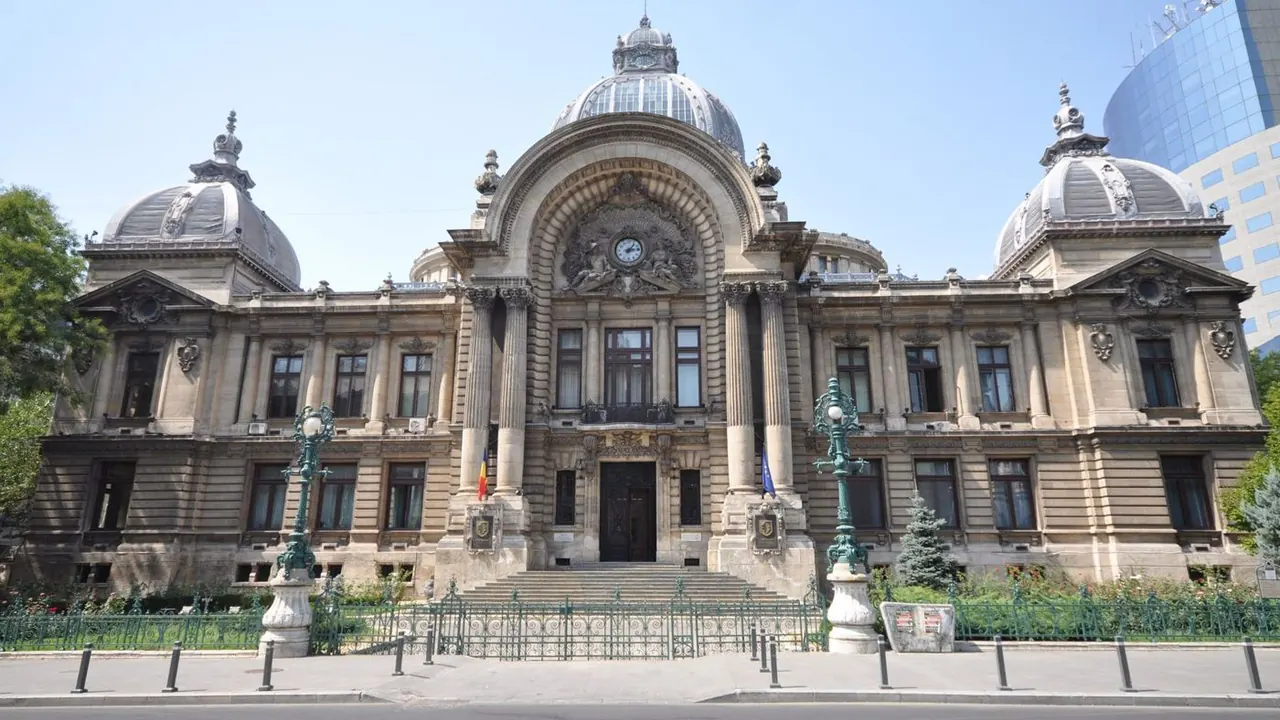
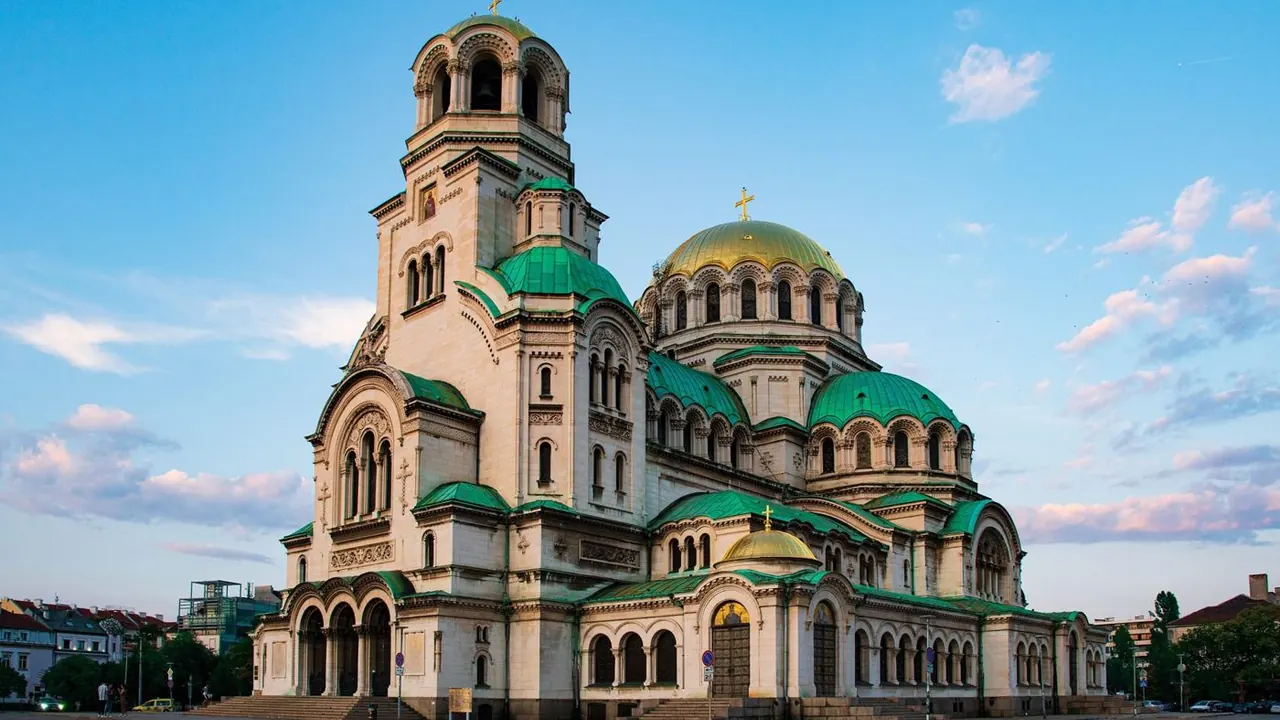
Photos: Bucharest by Jorge Láscar, CC BY 2.0, cropped; Sofia by Jose Ligero Loarte, CC BY-SA 4.0, cropped.
Bucharest or Sofia?
Our verdict in twelve categories, each scored against the same fixed benchmark cities, and the climate month by month, so you can choose for your trip.
Choose Bucharest for
- nightlife
- families
- food and drink
Bucharest suits travellers who want a city to go out in. Its nights run later and louder, from Old Town terraces to techno clubs that close after sunrise. There is more variety at the table, and classical concerts at the Athenaeum give an evening with real weight. It also works better with children, thanks to the natural history museum, the open-air Village Museum and a huge thermal water park on the northern edge.
Choose Sofia for
- nature and the outdoors
- getting around
- day trips
Choose Sofia if you want the outdoors close to the streets. Vitosha rises straight above the city and you can reach it by bus and gondola, and the Rila lakes and ski slopes are not much further. The centre is compact and the metro is easy to use, Rila Monastery and Plovdiv make two excellent days out, and the money goes a little further. Evenings are quieter, but the mountain makes up for it.
Scoreboard
Twelve categories on one fixed scale from 0 to 100. The shaded stretch is the gap between the two.
Your match
Pick a travel style or drag the sliders, and both match scores follow your weighting.
Too close to call, level with your weighting
Wins on nightlife and families with your weighting.
Wins on nature and the outdoors and getting around with your weighting.
What matters to you?
Category by category
What the scores mean for a trip.
Beaches & swimming
Neither city works for a beach trip. Both sit far inland, and the Black Sea coast is a separate journey from each. The difference is in how you cool off. Bucharest relies on hotel pools and the large pool complexes on its edge, with Lake Snagov to the north for a summer swim, while Sofia has open-air pools in its parks and the lake at Pancharevo on the south-eastern fringe.
Food & drink
Both cities serve hearty food from the countryside, but Bucharest gives a hungry visitor more to explore. Its taverns serve sour ciorba, sarmale and grilled mici, and beyond them there is a solid layer of modern bistros, specialty coffee and Romanian wine bars around Calea Victoriei, Dorobanti and Piata Romana. Piata Obor, with its cheese, pickles and smoked meat, is worth the trip across town.
Sofia eats well within a narrower range: grilled kebapche, shopska salad, clay-pot dishes and banitsa from the corner bakery, with a lighter touch in the bistros near Vitosha Boulevard. Its real pleasure is the wine, as glasses of Mavrud and Melnik are poured all over the centre.
Culture & sights
There is roughly as much to see in each city, but the history is laid out differently. Bucharest runs from the early eighteenth-century carved stone courtyard of Stavropoleos in Lipscani, through the Belle Epoque mansions and the domed Athenaeum on Calea Victoriei, to the vast Palace of the Parliament at the end of its 1980s boulevard. The art museum in the former royal palace and the open-air Village Museum complete a picture made mostly of contrasts.
Sofia's oldest layers are easier to see because they lie right in the centre. Roman Serdica is excavated around the metro, and the fourth-century Rotunda of St George is a few minutes from a mosque, a cathedral and the gold domes of Alexander Nevsky. Further out are the medieval frescoes of Boyana Church, listed by UNESCO, and the Thracian gold in the National Museum of History, which give the city a stronger claim on antiquity.
Nightlife
Bucharest is the clear choice for going out. The Old Town's cobbled lanes fill every evening with terraces, cocktail bars and clubs, and the city's well-known techno and minimal scene plays until long after sunrise. Summer moves the party onto rooftops and open-air venues.
Sofia's evenings are smaller and more relaxed. Most of the drinking happens in the cocktail bars, craft beer pubs and wine bars around Shishman and Tsar Ivan Asen streets, and in cellar bars beneath old buildings. It makes a good sociable weekend, but there are only a few clubs to finish the night in.
Nature & outdoors
This is where Sofia pulls far ahead. Vitosha rises above 2,200m right behind the city, and a bus and gondola take you into spruce forest and up towards Cherni Vrah in under an hour. Further south, the glacial Seven Rila Lakes and the ski runs of Borovets make easy outings, and the Pirin range is within longer reach.
Bucharest is flat, so its green spaces are city parks: the lake at Herastrau, the old Cismigiu garden and the reed beds of Vacaresti, which are good for birdwatching. For real hills you take the train two hours north to the Bucegi, and that trip works better with a night there.
Day trips
Sofia has the better pair of day trips. Rila Monastery, with its striped arcades in a mountain valley, and Roman Plovdiv with its painted merchant houses are each about two hours away and both well worth it. Koprivshtitsa and the Iskar Gorge add quieter options.
Bucharest has one standout, Peles Castle above Sinaia, and two short outings to the Brancovenesc palace at Mogosoaia and the island monastery at Snagov. After that the choice runs out, because Brasov and Bran are too far for a comfortable return in one day.
Good for families
Bucharest keeps children busier. The Grigore Antipa museum is lively, the Village Museum lets them wander among farmhouses and windmills, and the thermal complex on the northern edge, with its slides and warm pools, fills a whole day in any weather. Heavy traffic and wide boulevards are the price you pay.
Sofia is calmer to move around with children but has fewer attractions made for them. A day on Vitosha with the gondola and the forest trails is the highlight, along with the science centre and the playgrounds of Borisova Gradina. In both cities, broken pavements make pushing a pushchair hard work.
Getting around
Sofia is the easier city to get around. Its main sights sit close together in a compact centre, and the metro runs straight from the airport through the middle and on towards Vitosha's foothills. The one drawback is that signs away from the centre are mostly in Cyrillic.
In Bucharest the walkable core along Calea Victoriei is longer, crossings are wide, and the metro misses parts of the centre. Trams and buses get stuck in some of Europe's worst rush-hour traffic, which is why most visitors fill the gaps with ride-hailing apps.
Shopping & style
Neither city is worth a trip for shopping, but Bucharest has a little more range. It has big malls in the north, a few luxury labels around Piata Victoriei and Romanian designers selling from boutiques in the old villa districts. Embroidered blouses and painted eggs from the Village Museum shop and the park craft fairs are the best local buys.
Sofia's offer fits into an afternoon: the chain stores along Vitosha Boulevard, then rose oil, Troyan pottery and the icon flea market near Alexander Nevsky for something to take home.
Affordability
Both are among the cheaper capitals in the European Union, and Sofia stretches a budget a little further. A meal in a mehana, a good bottle of Bulgarian wine and a central hotel all cost little, and even a trip up Vitosha or out to Rila hardly adds to the bill.
Bucharest is good value at the tavern and on the metro, and ride-hailing is cheap. However, the smarter restaurants and cocktail bars in the north of the city charge close to Western European prices, and the Palace of the Parliament tour has a notable fee.
Live music & performing arts
Bucharest has the stronger classical calendar. The George Enescu Philharmonic plays under the frescoed dome of the Romanian Athenaeum, the National Opera runs a full season, and in the years when the Enescu Festival is held, it brings leading orchestras to the city in late summer and early autumn.
Sofia's season is solid and easy to get into, with opera and ballet, the Philharmonic at Bulgaria Hall and big shows at the National Palace of Culture. What it does best is Bulgarian choral and Orthodox singing, which you won't hear in Bucharest. In both cities the theatre is in the local language.
Wellness & relaxation
Bucharest puts its relaxation in one place: the huge thermal-water complex half an hour north, where warm pools sit under a glass dome and saunas and quiet areas are set among palms. It easily fills a day, but the city itself is loud, so calm otherwise means a slow morning by the lake in Herastrau.
In Sofia the mineral springs are part of everyday life, and locals fill bottles at the warm taps beside the old Central Mineral Baths. To actually bathe, you go to the pools on the city's edge or to the spa town of Bankya, half an hour west. Velingrad is there for a longer spa stay, and the pace of the capital is gentler.
When should you go?
Pick your month. The climate figures are measured averages, not a forecast.
Bucharest in July
Sofia in July
Daytime high, °C
Rainfall in the month, mm
Temperature and rainfall are climate normals, averaged over the years shown. Bucharest: 1991-2020 normals, Bucuresti / Imh (10 km from centre). Sofia: 1991-2020 normals, Sofia Observ. (7.3 km from centre).
Both cities follow much the same calendar, but Bucharest swings further. Summer on the Wallachian plain gets hot, with August highs around 31°C, so midday sightseeing there is hard going. Sofia sits higher and peaks at about 28°C, which keeps July and August comfortable for walking the streets and hiking on Vitosha. Midsummer is the sunniest time in both. May and June bring the most rain in each city, with Bucharest's June the wettest at about 82mm.
For walking, the best months are mid-May to June and September into early October, when both cities are mild. Winters are cold in both, and January highs sit just above freezing, around 3°C in Bucharest. In Sofia the snow comes to Vitosha, right on the edge of the city, so you can be on a slope the same morning. Bucharest's nearest skiing is around Sinaia and Busteni, two hours away by train, so from there it makes a separate overnight trip.
Which traveller are you?
On a food and nightlife trip, Bucharest is the stronger city. It has more modern bistros and wine bars to choose from, and the nights are livelier, from the garden bars in old villa courtyards to an electronic music scene that keeps going well past dawn.
For an outdoors trip, Sofia wins easily. Vitosha's forests and boulder rivers are less than an hour from the centre, and the Seven Rila Lakes and the slopes at Borovets are close enough for a day. Bucharest's parks are pleasant, but its mountains are an overnight trip.
On a family trip with children, Bucharest gives you more to fill the days. The Grigore Antipa museum, the windmills at the Village Museum and the warm pools and slides of the thermal complex all appeal to children. Sofia is calm, but it has fewer places made for them.
Before you go
| Measure | Bucharest | Sofia |
|---|---|---|
| Official language | Romanian | Bulgarian |
| Currency | Romanian Leu (RON) | Euro (EUR) |
| Sockets | CF230 V, 50 Hz | CF230 V, 50 Hz |
| Driving side | Right | Right |
| Time zone | UTC+2, UTC+3 in summer | UTC+2, UTC+3 in summer |
| Emergency number | 112 | 112 |
| Elevation | 70 m | 560 m |
| Main airport | Bucharest Henri Coandă International Airport (OTP)18 km from centre121 non-stop destinations | Sofia Airport (SOF)8 km from centre97 non-stop destinations |
| Public holidays this year | 17 days | 15 days |
By the numbers
| Measure | Bucharest | Sofia |
|---|---|---|
| City population | 1,716,961 | 1,213,134 |
| People per km² | 7,597 | 2,466 |
| Museums within 10 km | 41 | 42 |
| UNESCO World Heritage sites within 50 km | 0 | 1 |
Where else could you go?
Every comparison below shares a destination with this one, so you can follow Bucharest or Sofia somewhere new.