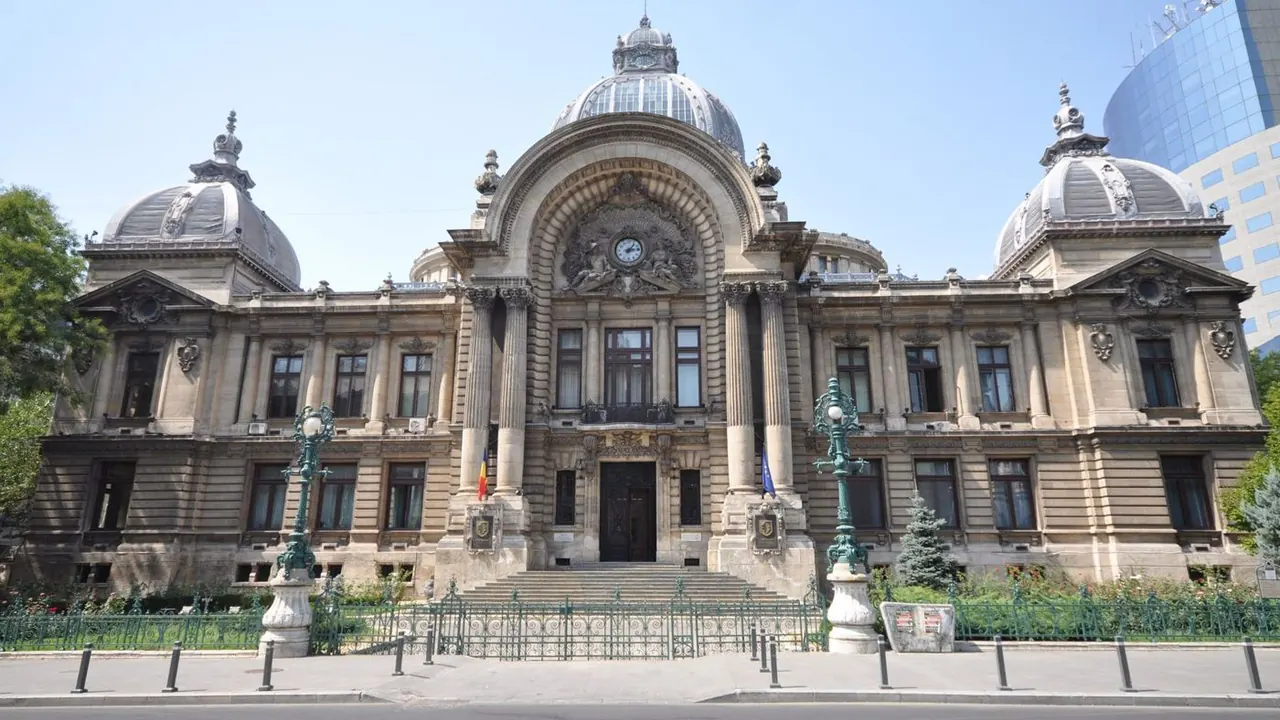
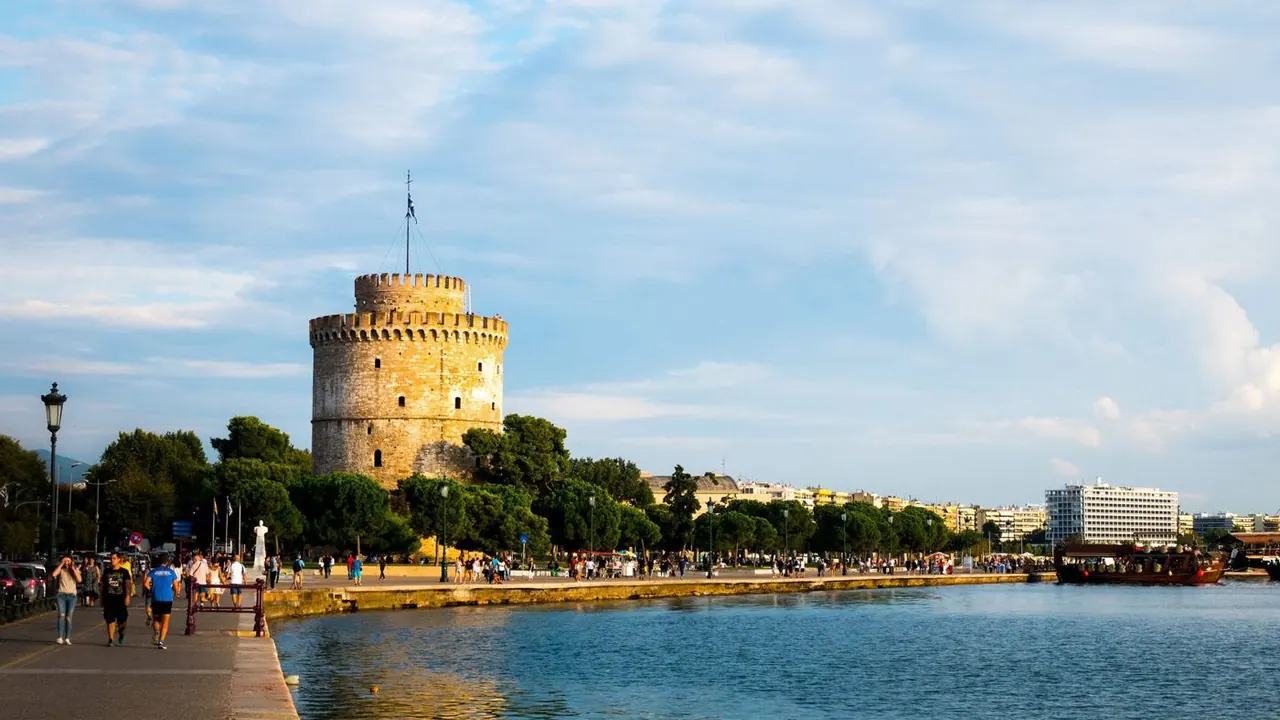
Photos: Bucharest by Jorge Láscar, CC BY 2.0, cropped; Thessaloniki by Destinygreece, CC BY-SA 4.0, cropped.
Bucharest or Thessaloniki?
Our verdict in twelve categories, each scored against the same fixed benchmark cities, and the climate month by month, so you can choose for your trip.
Choose Bucharest for
- wellness
- live music and the arts
- prices
Bucharest is the better pick for a traveller who wants a big, late-night capital at a gentle cost, with a strong classical music calendar and a huge thermal-water complex on its doorstep. Its Belle Epoque avenues, the vast Palace of the Parliament and the techno clubs that run past sunrise make it a city of contrasts. It suits a long weekend of concerts, clubs and spa time more than a sightseeing marathon.
Choose Thessaloniki for
- beaches
- food and drink
- day trips
Thessaloniki wins for anyone who travels to eat, to look at old stones and to get out into the country. Its Byzantine churches, meze tables and late, sociable streets fill the days in town, and the royal tombs at Vergina, Mount Olympus and the clear water of Halkidiki are all within reach. With a hire car it becomes the base for a fuller Greek trip.
Scoreboard
Twelve categories on one fixed scale from 0 to 100. The shaded stretch is the gap between the two.
Your match
Pick a travel style or drag the sliders, and both match scores follow your weighting.
Wins on wellness and live music and the arts with your weighting.
Wins on beaches and food and drink with your weighting.
What matters to you?
Category by category
What the scores mean for a trip.
Beaches & swimming
Bucharest has no beach life at all. Swimming in summer means a hotel pool, the big pool complexes on the city's edge or a trip out to Lake Snagov, and the Black Sea coast near Constanta is a separate vacation.
Thessaloniki looks out on water too poor for swimming, and the nearby beaches at Perea and Nea Michaniona are ordinary. The difference is Halkidiki: about an hour away by car, Kassandra has some of the finest coves in Greece, so a beach day really is possible from here.
Food & drink
Bucharest eats heartily and well enough: sour ciorba, sarmale with polenta, mici with beer and papanasi to finish. Piata Obor shows the everyday market, and the better bistros and wine bars sit around Dorobanti and Piata Romana, away from the tourist terraces of the Old Town.
Thessaloniki is the stronger table by some way, and good meals take far less hunting. Ottoman, Sephardic and Anatolian influences run through the meze at its ouzeri, breakfast is bougatsa, and the Kapani and Modiano markets have tavernas between the stalls. Its strength is everyday eating rather than fine dining, which suits a visitor who wants to eat well at every meal.
Culture & sights
Thessaloniki has the deeper heritage. Its UNESCO-listed Byzantine churches, from the mosaics of the Rotunda to Agios Dimitrios, sit alongside the Arch of Galerius, and the Archaeological Museum's Macedonian gold and the Museum of Byzantine Culture would anchor a stay on their own. Ano Poli adds Ottoman lanes and walls.
Bucharest offers a more recent story told through contrast: Belle Epoque mansions and the Athenaeum on Calea Victoriei, small churches such as Stavropoleos, then the enormous Palace of the Parliament. The National Museum of Art and the Village Museum are good, but two or three days covers it all.
Nightlife
Both cities stay out late, and Thessaloniki has a slight edge for an ordinary night out. Its large student crowd fills Ladadika, the bars near Valaoritou and the tables of the Bit Bazaar, even on weeknights, and the mood is casual and social, with drinking and meze running together.
Bucharest is the choice for serious club music. The Old Town is loud and full of groups, but the city's techno and minimal clubs, the garden bars in old villas and the bars around Piata Romana give it a harder-edged night that often runs past sunrise.
Nature & outdoors
Thessaloniki has far more landscape close by. The Seich Sou pine forest sits right above Ano Poli, Mount Olympus and the Enipeas gorge are about an hour and a half away, and Halkidiki adds sailing, kayaking and coastal walks.
Bucharest is flat, so time outdoors in town means parks: rowing on Herastrau lake, the old Cismigiu garden and the reed beds of Vacaresti for birdwatching. Hiking and skiing in the Bucegi are about two hours away by train, and they work better as an overnight trip.
Day trips
Thessaloniki sits in the heart of ancient Macedonia, which gives it a long list of strong day trips: the royal tombs at Vergina, the mosaics of Pella, Dion below Olympus, then Edessa's waterfalls and the Naoussa vineyards. Buses reach most of them, but a car makes it easy to see several in a day.
Bucharest has one standout, Sinaia and Peles Castle, reached easily by train with no car needed, plus the palace at Mogosoaia and Snagov's island monastery close by. Brasov and Bran are too far for comfort and are better with a night away.
Good for families
Neither city is built around children, and both have heavy traffic and pavements blocked by parked cars. They differ in what saves the day. Bucharest has the Antipa natural history museum, the Village Museum's windmills, boating in the parks and a thermal complex with slides that works whatever the weather.
Thessaloniki's draw is its easygoing street life: children stay out late at tavernas, the seafront promenade has playgrounds and Noesis has a planetarium. Ano Poli is steep, and families who want the beach usually stay in Halkidiki.
Getting around
Thessaloniki is the easier city to cover. Its sights lie along a narrow, flat strip by the sea, and the White Tower, the markets, Ladadika and the main churches are all within about half an hour's walk of one another. A taxi saves the climb to Ano Poli.
Bucharest is bigger and more spread out. The core around Calea Victoriei can be walked, but the metro misses parts of the centre, trams and buses get stuck in some of Europe's worst rush-hour traffic, and most visitors end up relying on ride-hailing apps.
Shopping & style
Neither city is worth a trip for its shops, and both send the big chains out to malls on the edge of town. Bucharest has a few luxury labels near Piata Victoriei and a better line in crafts, with embroidered blouses, ceramics and painted eggs from the Village Museum and the fairs in the parks.
In Thessaloniki the souvenirs to take home are mostly edible, such as spices, olives, loukoumi and tsipouro from Kapani and Modiano. Tsimiski is the high street, and the Bit Bazaar adds a few junk stalls.
Affordability
Both are easy on the budget, and the savings fall in different places. In Bucharest, getting about costs very little thanks to the cheap metro and ride-hailing, and tavern lunches are good value, though the smart restaurants in the north charge close to Western prices.
In Thessaloniki, eating and drinking are where you notice the savings, because the city is priced for students: generous plates at tavernas and cheap nights out. The extra cost here is a hire car for the day trips.
Live music & performing arts
Bucharest is the better city for an evening of serious music. The George Enescu Philharmonic plays under the frescoed dome of the Athenaeum, the National Opera stages opera and ballet through the season, and in festival years the Enescu Festival brings leading orchestras in late summer and early autumn.
Thessaloniki has the State Orchestra at its waterfront concert hall and open-air summer concerts at Dasos, but its most memorable music is informal, with rebetiko and laika played late in the tavernas. In both cities the theatre is almost entirely in the local language.
Wellness & relaxation
Bucharest has the better spa day, thanks to one of Europe's largest thermal-water complexes about half an hour north, with warm pools, saunas and palms under a glass dome. The city itself is noisy, so for calm in town head to Herastrau's lakeside in the morning.
Thessaloniki's Bey Hamam is a monument rather than a working bath, and the springs at Lagadas are simple. What it has instead is an unhurried pace: long iced coffees on the seafront and the evening walk along the waterfront.
When should you go?
Pick your month. The climate figures are measured averages, not a forecast.
Bucharest in July
Thessaloniki in July
Daytime high, °C
Rainfall in the month, mm
Temperature and rainfall are climate normals, averaged over the years shown. Bucharest: 1991-2020 normals, Bucuresti / Imh (10 km from centre). Thessaloniki: 1991-2020 normals, Thessaloniki Airport (14 km from centre).
Bucharest has a continental year with sharp edges. Winters are properly cold, with January highs around 3°C, so street walking is a short, bundled-up affair. Spring warms quickly, and May, June and September are the best months for exploring. June is also the wettest month, with about 82mm, and late summer turns hot and sunny. There is no sea to plan around, so for Bucharest summer means parks, rooftops and pools.
Thessaloniki is milder all year. January days reach about 10°C, so a winter city break is comfortable, and summers are drier and sunnier than in Bucharest. July and August peak near 32°C, which pushes sightseeing into the mornings. They are also the beach months, with the sea at about 27°C in August and still warm through September. For walking the streets, late spring and early autumn suit both cities best.
Which traveller are you?
On a beach and sun trip, Thessaloniki is the only real option. Bucharest is far inland and the Black Sea is a separate journey, while Kassandra in Halkidiki, with its clear, warm coves, is about an hour's drive from the Greek city.
For a food and nightlife trip, Thessaloniki again pulls ahead. Meze and tsipouro at the ouzeri slide straight into late nights in Ladadika and around Valaoritou, busy even midweek. Bucharest answers mainly for clubbers chasing techno until dawn.
On a relaxing and wellness trip, Bucharest has the clear advantage. The vast thermal complex half an hour north, with warm pools under a glass dome and saunas, makes a full day of unwinding. Thessaloniki's old hamams survive only as monuments.
Before you go
| Measure | Bucharest | Thessaloniki |
|---|---|---|
| Official language | Romanian | Greek |
| Currency | Romanian Leu (RON) | Euro (EUR) |
| Sockets | CF230 V, 50 Hz | CF230 V, 50 Hz |
| Driving side | Right | Right |
| Time zone | UTC+2, UTC+3 in summer | UTC+2, UTC+3 in summer |
| Emergency number | 112 | 112 |
| Elevation | 70 m | 6 m |
| Main airport | Bucharest Henri Coandă International Airport (OTP)18 km from centre121 non-stop destinations | Thessaloniki Macedonia International Airport (SKG)14 km from centre90 non-stop destinations |
| Public holidays this year | 17 days | 15 days |
By the numbers
| Measure | Bucharest | Thessaloniki |
|---|---|---|
| City population | 1,716,961 | 309,617 |
| People per km² | 7,597 | 16,042 |
| Museums within 10 km | 41 | 32 |
| UNESCO World Heritage sites within 50 km | 0 | 1 |
| Swim season, months above 21 °C | - | 5 months |
Where else could you go?
Every comparison below shares a destination with this one, so you can follow Bucharest or Thessaloniki somewhere new.