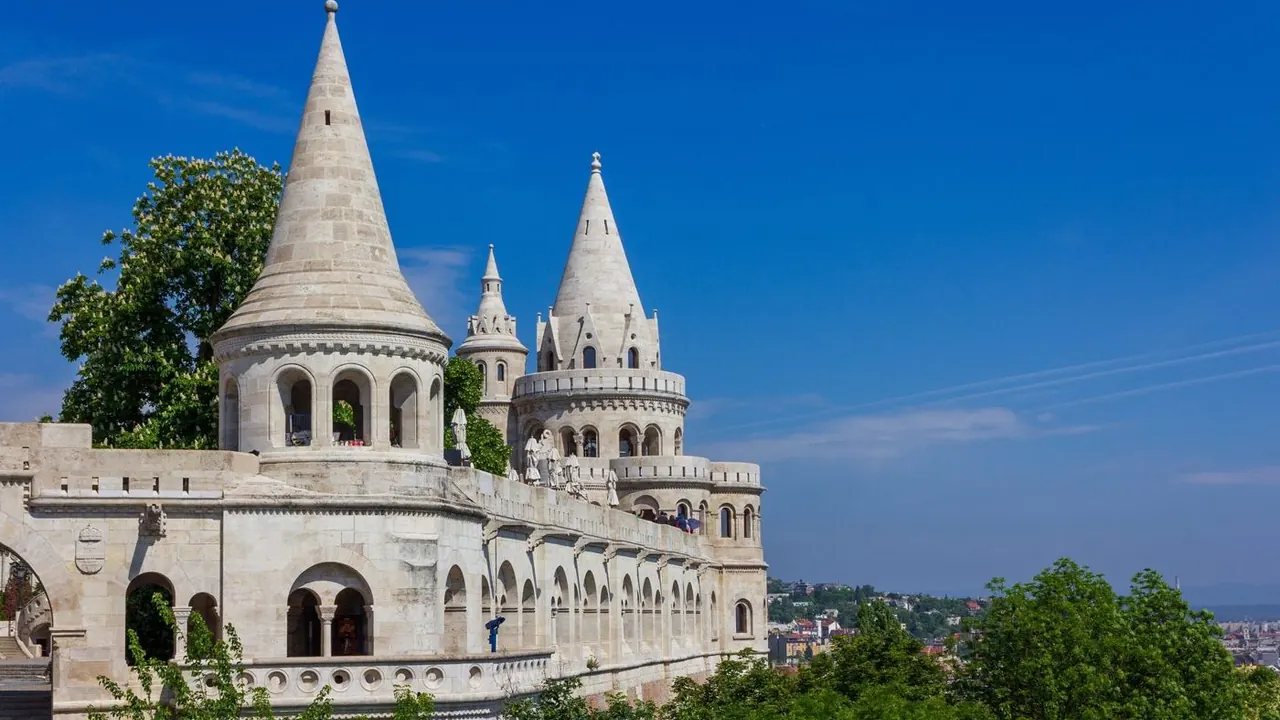
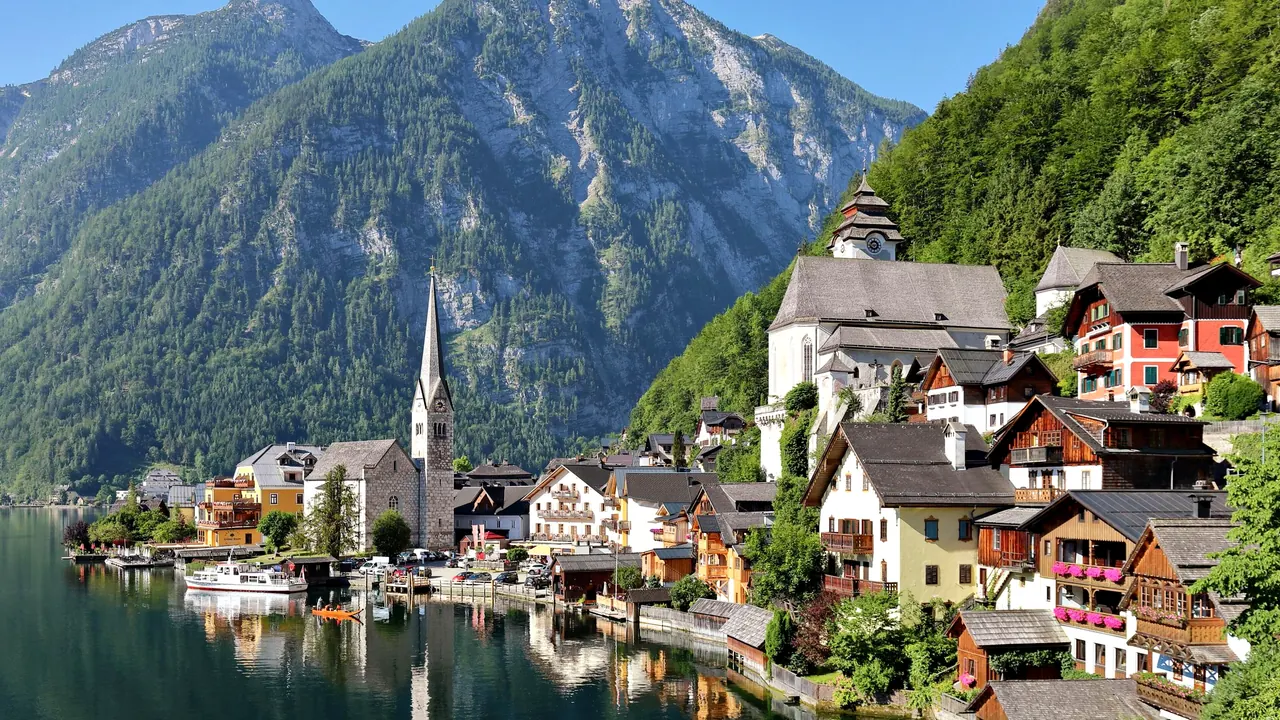
Photos: Budapest by Perituss, CC0; Hallstatt by C.Stadler/Bwag, CC BY-SA 4.0, cropped.
Budapest or Hallstatt?
Our verdict in twelve categories, each scored against the same fixed benchmark cities, and the climate month by month, so you can choose for your trip.
Choose Budapest for
- nightlife
- live music and the arts
- wellness
Budapest suits travellers who want a full city stay. You get grand river views and palaces, serious museums, an evening at the opera or the Liszt Academy, ruin bars until late, and an afternoon in an Ottoman or Art Nouveau thermal bath. It is cheaper and far easier to fill a week in, and it works for nearly every kind of trip except one centred on mountains.
Choose Hallstatt for
- nature and the outdoors
- beaches
Hallstatt is the better pick for people who travel for scenery and walking boots. The Dachstein massif rises behind the village, with ice caves, high plateaus and lakeside paths. It works best as a short, quiet stop of a night or two, ideally with a car to explore the Salzkammergut. Come for the dawn mist on the lake and the hiking, and accept simple food, high room rates and silent evenings.
Scoreboard
Twelve categories on one fixed scale from 0 to 100. The shaded stretch is the gap between the two.
Your match
Pick a travel style or drag the sliders, and both match scores follow your weighting.
Wins on nightlife and live music and the arts with your weighting.
Wins on nature and the outdoors and beaches with your weighting.
What matters to you?
Category by category
What the scores mean for a trip.
Beaches & swimming
Neither place offers a beach vacation, and for swimming they are roughly level, but the water is very different. In Budapest you swim in pools. The big summer lidos such as Palatinus on Margaret Island have lawns, wave pools and a crowd that stays all day. For open water, the warm, shallow Lake Velence is under an hour away by train.
Hallstatt has a real lake but a cold one. Hallstätter See is clear and deep, warms to about 20°C at best, and is reached from a small jetty in the village or the lido at Obertraun. It is better for a bracing dip after a hike than for lazy afternoons.
Food & drink
Budapest is far stronger for eating. It has goulash and lángos, cakes in the old coffee houses, the produce stalls of the Great Market Hall, and wine bars pouring Tokaji and Balaton whites. There is a modern restaurant scene on top of all that, although the range is narrow beyond Central European cooking.
Hallstatt has a few guesthouse dining rooms and lakeside terraces serving schnitzel, dumplings and smoked char or whitefish from the lake. The view does a lot of the work, and kitchens may close early. Food lovers staying there usually drive to Bad Ischl's patisseries.
Culture & sights
Budapest offers days of sightseeing. Parliament faces the Royal Palace and the Fishermen's Bastion across the Danube. Andrássy Avenue leads to Heroes' Square, and the Museum of Fine Arts, the Dohány Street Synagogue and Memento Park are all within reach.
Hallstatt's culture is old and unusual, but you can see it in a day. Seven thousand years of salt mining, the Iron Age finds that named the Hallstatt culture, and the Beinhaus with its painted skulls are well worth the trip. Most of the attraction, though, is the setting of the village itself.
Nightlife
The two could hardly be further apart here. Budapest has one of Central Europe's liveliest nights out. The ruin bars and late clubs of District VII run past 2am, and in summer there are garden bars and party boats on the Danube. Quieter wine bars in District V are an alternative to the stag-party weekends.
In Hallstatt, the day visitors leave and the lane goes silent. Evenings mean dinner, a glass of wine by the water and a walk in the dark.
Nature & outdoors
Hallstatt is a true Alpine base. The Dachstein massif rises straight from the lake. The Krippenstein cable car leads to the Five Fingers platform and the giant ice caves, and in summer there are via ferratas and hut hikes, with ski touring in winter.
Budapest's outdoors is gentler: oak and beech forest in the Buda Hills, a cogwheel railway, jogging loops on Margaret Island and forested ridges around the Danube Bend. It is good for a half day of walking, but there are no mountains.
Day trips
Both make good bases for outings, with a different flavour to each. From Budapest the trips are about towns and history along the Danube Bend: painterly Szentendre, Visegrád's citadel and Esztergom's basilica, with Eger and Hollókő a longer ride. The suburban trains make most of them easy without a car.
From Hallstatt the outings are lake towns and imperial spas: Bad Ischl's Kaiservilla, St Wolfgang's altarpiece and Gmunden's lake castle, with Salzburg about an hour and a half by car. Buses work, but the trips need more planning.
Good for families
Budapest gives children more to do over several days. There is the historic zoo in City Park, the Children's Railway run by schoolchildren, the Palace of Wonders science centre and lidos with slides. Trams make getting around with a pushchair fairly easy.
Hallstatt has a couple of real highlights, the miners' slides in the salt mine and the ice caves for older children. The village itself is a steep, crowded lane, and families usually do better staying in Obertraun.
Getting around
Trams carry you around Budapest, while in Hallstatt you walk and take a lake boat. In Budapest, central Pest is flat, tram 2 runs past Parliament along the river and the boulevard trams run all night. The short metro includes Line 1, with its historic yellow carriages. Nobody needs a car.
You can walk across Hallstatt in minutes, although there are steps. The harder part is getting there and going further: a boat across the lake from the station, thin bus services outside summer, and a car that many visitors find almost essential for the wider region.
Shopping & style
Budapest is a modest but real place to shop. You can buy Herend and Zsolnay porcelain, paprika and Tokaji at the market hall, local design in Districts V and VII, and communist-era finds at Ecseri flea market.
Hallstatt has souvenir shops along its main lane. The one buy worth taking home is salt from the mine above the village, in bags, grinders or bath mixes.
Affordability
Budapest is much the cheaper of the two, and the gap is widest in the two things every visitor pays for, a bed and dinner. A comfortable mid-range room within walking distance of the sights is easy to find, and a tram ride or a glass of Hungarian wine costs little. Money goes further still at weekday lunch menus away from Váci utca and the Basilica. The only places that charge for their setting are the grand cafés and the restaurants of the tourist core.
In Hallstatt, the setting is what you pay for. With so few beds on that narrow ledge and so many people wanting one, a lakeside night costs more than in most of Austria, and far more than in Budapest. Each of the main outings, from the mine to the Krippenstein, also carries its own ticket. The usual answer is to sleep in Bad Ischl or another nearby town and come in by bus or car, a trade-off a Budapest stay never asks of you.
Live music & performing arts
Budapest is one of the great music cities of the region. Opera plays on Andrássy Avenue, there are concerts in the Liszt Academy's Art Nouveau hall and at Müpa, and the city also has operetta, folk dance and church concerts most nights. Tickets are easy to get.
Hallstatt has the village brass band on feast days and the occasional summer church concert. For a proper evening out you would go to Bad Ischl's operetta or Salzburg.
Wellness & relaxation
Budapest is built on hot springs, and soaking is part of daily life there. You can choose Széchenyi's steaming outdoor pools, the mosaics at Gellért or the Ottoman domes of Rudas and Király, then finish with a slow coffee house afternoon.
Hallstatt offers stillness instead: mist on the lake at dawn and quiet evenings once the crowds have gone. Its spa tradition is half an hour away in the salt-brine baths of Bad Ischl.
When should you go?
Pick your month. The climate figures are measured averages, not a forecast.
Budapest in July
Hallstatt in July
Daytime high, °C
Rainfall in the month, mm
Where the figures come from
Hallstatt's temperatures are measured 56 km from the centre, at Salzburg.
Hallstatt has no rain gauge within 25 km of the centre, so its rainfall comes from a gridded climate dataset read at the city rather than from a gauge further away.
Temperature and rainfall are climate normals, averaged over the years shown. Budapest: 1991-2020 (sunshine 1981-2010, rainfall 1981-2010) normals, Budapest Met Center (2.1 km from centre). Hallstatt: 1991-2020 normals, Salzburg (55.5 km from centre).
Both places have cold winters and warm summers, but Budapest is warmer and drier all year, and much sunnier from spring to autumn. August highs of about 28°C suit the lidos and garden bars, though sightseeing at midday can feel hot. May, June and September are the most comfortable months for walking the city. Winters hover near freezing but stay fairly dry, and the steaming outdoor baths make the cold season more appealing than it sounds.
Hallstatt peaks at about 25°C in July and August, which is pleasant for hiking. Summer is also its wettest stretch, though, with about 178mm of rain in July, so expect showers and low cloud in high season. April is one of the drier months, at around 84mm, and October is also much drier than summer. Both are cool but fine for walking. In winter the village turns to snow and ski touring on the Krippenstein, and the days are short and often grey.
Which traveller are you?
For an outdoors trip, Hallstatt is the clear choice. The Krippenstein cable car, the Dachstein ice caves, the Echerntal waterfalls, the Gosausee walk and hut-to-hut routes start almost from the village. The Buda Hills and Danube Bend offer pleasant walking but nothing on this scale.
On a food and nightlife trip, Budapest wins easily. It has paprika-rich Hungarian cooking, the Great Market Hall, Tokaji and Eger wines, then ruin bars and late clubs in District VII. Hallstatt offers lake fish, a terrace dinner and a quiet stroll home.
For a relaxing and wellness trip, Budapest's thermal baths are hard to beat. You can soak under Ottoman domes at Rudas and Király or in Széchenyi's outdoor pools. Hallstatt's calm lives in quiet mornings and evenings, and its proper spas are in Bad Ischl.
Before you go
| Measure | Budapest | Hallstatt |
|---|---|---|
| Official language | Hungarian | German, Austrian Sign Language |
| Currency | Forint (HUF) | Euro (EUR) |
| Sockets | CF230 V, 50 Hz | CF230 V, 50 Hz |
| Driving side | Right | Right |
| Time zone | UTC+1, UTC+2 in summer | UTC+1, UTC+2 in summer |
| Emergency number | 112 | 112 |
| Elevation | 117 m | 511 m |
| Main airport | Budapest Liszt Ferenc International Airport (BUD)18 km from centre157 non-stop destinations | Salzburg Airport (SZG)55 km from centre64 non-stop destinations |
| Public holidays this year | 13 days | 16 days |
By the numbers
| Measure | Budapest | Hallstatt |
|---|---|---|
| City population | 1,675,777 | 741 |
| People per km² | 3,191 | 12 |
| Museums within 10 km | 81 | 3 |
| UNESCO World Heritage sites within 50 km | 1 | 2 |
Where else could you go?
Every comparison below shares a destination with this one, so you can follow Budapest or Hallstatt somewhere new.
- Salzburgvs Hallstatt
- Bledvs Hallstatt
- Grazvs Hallstatt
- Cortina d'Ampezzovs Hallstatt
- Bratislavavs Budapest
- Munichvs Hallstatt