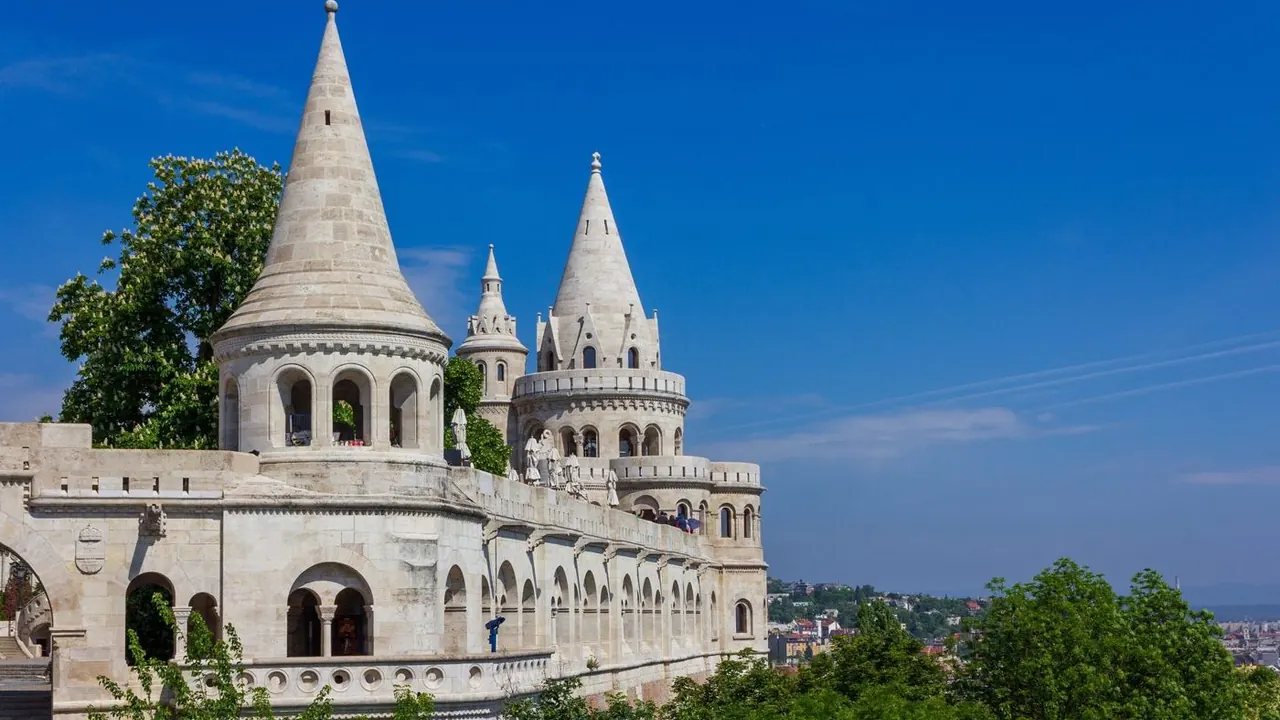
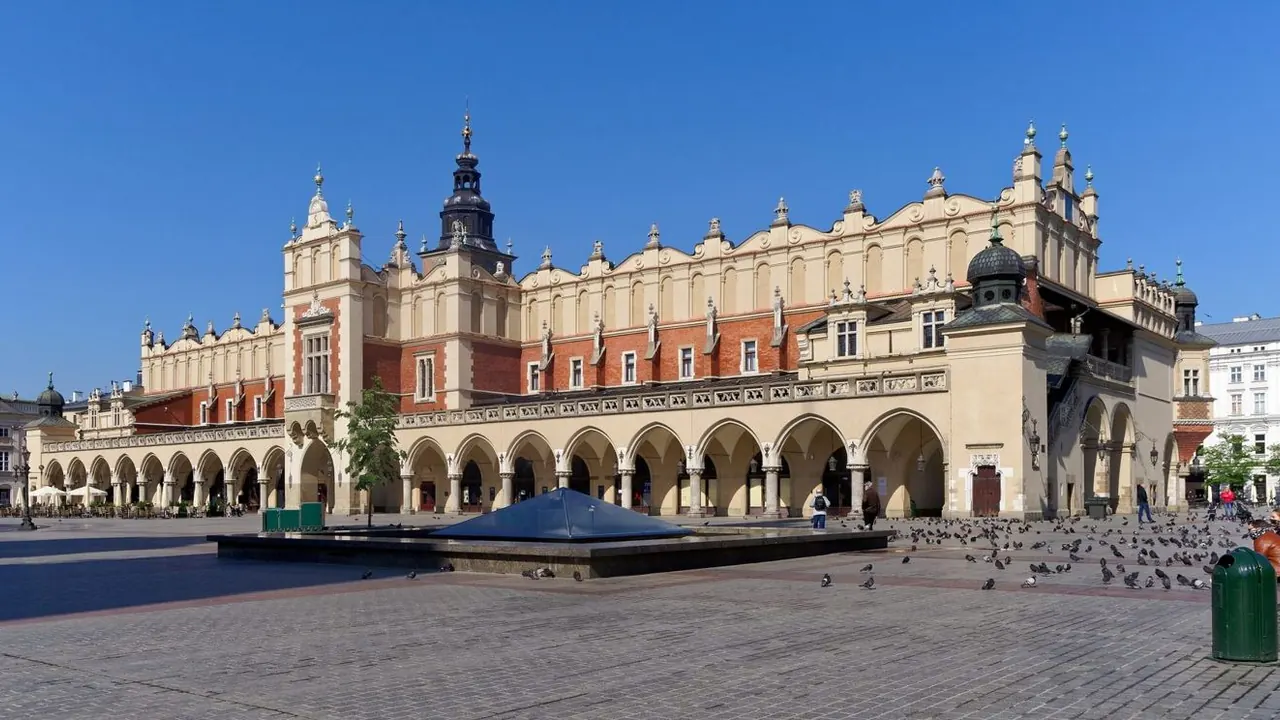
Photos: Budapest by Perituss, CC0; Krakow by Jakub Hałun, CC BY-SA 4.0, cropped.
Budapest or Krakow?
Our verdict in twelve categories, each scored against the same fixed benchmark cities, and the climate month by month, so you can choose for your trip.
Choose Budapest for
- wellness
- live music and the arts
- beaches
Budapest is the better pick for travellers who want a slower, more indulgent stay, built around afternoons in the thermal baths, evenings at the opera or the Liszt Academy, and late nights in the ruin bars of District VII. It is a bigger, grander city, with Hungarian wine to drink and lidos for summer swimming, and its sights need several days rather than a weekend.
Choose Krakow for
- prices
- day trips
- nature and the outdoors
Krakow suits the visitor who wants a compact medieval town and a full programme of outings beyond it. The Old Town, Wawel and Kazimierz can all be walked in two or three days, and Wieliczka, Auschwitz-Birkenau and the Tatras are all within reach. Money also lasts longer here, especially for anyone eating in milk bars and drinking beer in cellar bars.
Scoreboard
Twelve categories on one fixed scale from 0 to 100. The shaded stretch is the gap between the two.
Your match
Pick a travel style or drag the sliders, and both match scores follow your weighting.
Wins on wellness and live music and the arts with your weighting.
Wins on prices and day trips with your weighting.
What matters to you?
Category by category
What the scores mean for a trip.
Beaches & swimming
Neither city has a coast, but Budapest makes more of summer water. Its open-air lidos, with Palatinus on Margaret Island the classic among them, fill a whole day with lawns and pools. Lake Velence, shallow and warm, is under an hour away by train, and Lake Balaton can be reached for a longer outing.
Krakow has far less. Its one standout is the Zakrzowek quarry, with turquoise water and limestone cliffs, but swimming there is limited to fenced areas in summer. Otherwise the choice is the Vistula banks for sitting and the indoor water park for an actual swim.
Food & drink
Budapest has the stronger table, mainly because of its wine and its coffee houses. Tokaji, Eger reds and Balaton whites fill the bars of Districts V and VII. The Austro-Hungarian cafés serve Dobos cake under chandeliers, and there is a serious modern restaurant tier above the paprika-rich home cooking.
Krakow eats more simply and cheaply: pierogi, zurek served in bread, milk bar lunches and a late-night zapiekanka at Plac Nowy. Its drinking leans towards flavoured vodka and craft beer rather than wine, and it has fewer ambitious restaurants to book.
Culture & sights
The two are well matched for sightseeing, but they offer different kinds of city. Budapest is about grand scale. The river panorama runs from Parliament to the Castle District, Andrássy Avenue leads to Heroes' Square, and the Museum of Fine Arts and the Dohány Street Synagogue add depth, with enough to fill several days.
Krakow is a medieval town that survived the war intact. The vast Main Market Square, Wawel's royal cathedral, Kazimierz's synagogues, Leonardo's Lady with an Ermine and the Schindler Factory museum are all packed into a walkable area that can be covered in two or three days.
Nightlife
Budapest's nights are bigger and more varied. The ruin bars of District VII spread through several rooms of crumbling tenements, Kazinczy and Király streets add late clubs, and in summer the scene moves out to garden bars and Danube party boats.
Krakow is also lively, thanks to its students, but it is built around bar-hopping rather than clubbing. Brick-vaulted cellars under the Old Town and courtyard bars in Kazimierz are the main draw, and the clubs are mostly mainstream. Both cities attract stag groups at weekends, and in Krakow the usual escape from them is Podgorze.
Nature & outdoors
The outdoors is roughly level, but the two differ in what is close and what is far. Budapest has forest right on its doorstep. The Buda Hills, with their chairlift, cogwheel railway and thermal caves, start within half an hour of the centre, and the wooded Danube Bend offers hiking and riverside cycling. There are no mountains anywhere near.
Krakow's immediate green space is gentler: the Planty, Blonia and the Kosciuszko Mound. It does have Ojcow's limestone valley half an hour north, and it can reach real alpine hiking in the Tatras or rafting on the Dunajec as a long day out.
Day trips
Krakow has the more compelling outings. The salt chapels of Wieliczka are half an hour away, and the Auschwitz-Birkenau memorial is a full and sobering day. Zakopane and the Tatras, Wadowice and the wooden churches of the countryside add plenty more.
Budapest's classic route is gentler and more scenic. It runs along the Danube Bend through painterly Szentendre, Visegrád's citadel and Esztergom's basilica. At about two hours away, the wine cellars of Eger and the abbey at Pannonhalma are worth the journey, but nothing nearby carries the weight of Krakow's two great sites.
Good for families
Both work about equally well with children, in different ways. Budapest has the Children's Railway, run by uniformed schoolchildren, the hands-on Palace of Wonders, the old zoo and summer lidos with wave pools. Metro stairs and loud weekends in District VII need some planning.
Krakow wins children over with its fire-breathing Wawel dragon, the traffic-free Main Square and an indoor water park that opens in any weather, with Energylandia about an hour away by car. Its cobbles are harder on pushchairs, and several of its main sights deal with subjects too heavy for younger children.
Getting around
Both are easy without a car, but they get there differently. Budapest covers a larger area with a full network of trams, a short metro and river ferries. Tram 2 along the embankment doubles as a sightseeing ride, and the little yellow carriages of Line 1 run under Andrássy Avenue.
Krakow has no metro and hardly needs one, since the Old Town, Wawel, Kazimierz and Podgorze are all within walking distance of one another and much of the centre is closed to traffic. Trams fill the gaps, and trains and buses make the big day trips simple.
Shopping & style
Budapest has a little more to buy. There is a short run of luxury labels on Andrássy Avenue, Herend and Zsolnay porcelain, and Hungarian design boutiques in Districts V and VII. Ecseri flea market is good for communist-era finds.
Krakow's shopping centres on the medieval Cloth Hall, with amber, lace and carved boxes, and blue-patterned Boleslawiec pottery is the thing to take home. Serious fashion is largely missing, and much of what is on sale around the square is aimed at tourists.
Affordability
Krakow is the cheaper of the two. Milk bars and pierogi places keep meals inexpensive, beer and vodka cost little, and city museums and trams are cheap. Prices only climb on the Main Square and on busy summer weekends.
Budapest is still good value next to Western capitals, especially for wine, public transport and bath entry. However, the grand cafés and the restaurants around Váci utca and the Basilica push a stay up faster than anything in Krakow.
Live music & performing arts
Budapest is clearly the stronger music city. It has the neo-Renaissance State Opera House, the Art Nouveau hall of the Liszt Academy, the national concert hall at Müpa and the Budapest Festival Orchestra, with operetta and folk dance on top. There is something worth hearing most nights.
Krakow offers a smaller, more intimate scene. Chopin recitals take place in Old Town churches and palaces, jazz is played in brick cellars, and klezmer in Kazimierz. The Philharmonic and the opera keep regular seasons. In both cities the theatre is in the local language, so visitors are mostly there for the music.
Wellness & relaxation
This is where the two are furthest apart. Budapest sits on more than a hundred hot springs, and bathing is part of daily life there. You can move between the neo-Baroque pools of the Széchenyi, the mosaics of the Gellért and the star-lit Ottoman domes of Rudas and Király.
Krakow has no bathing tradition of its own. Relaxing there means hotel spas, a salt-air session deep in Wieliczka, or a slow walk around the Planty. The nearest natural hot water is in the Podhale pools, two hours south.
When should you go?
Pick your month. The climate figures are measured averages, not a forecast.
Budapest in July
Krakow in July
Daytime high, °C
Rainfall in the month, mm
Temperature and rainfall are climate normals, averaged over the years shown. Budapest: 1991-2020 normals, Budapest Met Center (2.1 km from centre). Krakow: 1991-2020 normals, Krakow (10.1 km from centre).
Both cities have properly cold winters and warm summers, but Budapest is a few degrees warmer and drier through most of the year. Summer peaks at about 28°C in August, with long sunny days from May to August, which is the season for the open-air lidos and for swimming in Lake Velence. Krakow tops out nearer 25°C and gets more rain, with July the wettest month at around 100mm, so a summer visit there is more likely to bring showery afternoons.
For walking the streets, May, June and September are the most comfortable months in both cities. Midsummer in Budapest can feel heavy on the hot paving of Pest. From December to February the highs in both are only just above freezing, slightly colder in Krakow, so winter is for museums, cafés and, in Budapest, the steaming outdoor pools of the thermal baths.
Which traveller are you?
On a relaxing and wellness trip, Budapest wins easily. Soaking under Ottoman domes at Rudas or among the chess players at the Széchenyi is part of everyday life there, while Krakow offers hotel spas, a water park and salt-air sessions at Wieliczka.
For a trip on a tight budget, Krakow is kinder to the wallet. Milk bar lunches, cheap beer and vodka, and inexpensive trams and museums make it easy to stay lean, while Budapest is reasonable value but adds up quickly around its tourist core.
For a short city break, Krakow fits the time better. The Old Town, Wawel and Kazimierz sit within walking distance of one another and can be seen well in two or three days. Budapest spreads across two banks and needs several days to do justice to.
Before you go
| Measure | Budapest | Krakow |
|---|---|---|
| Official language | Hungarian | Polish |
| Currency | Forint (HUF) | Zloty (PLN) |
| Sockets | CF230 V, 50 Hz | CE50 Hz |
| Driving side | Right | Right |
| Time zone | UTC+1, UTC+2 in summer | UTC+1, UTC+2 in summer |
| Emergency number | 112 | 112 |
| Elevation | 117 m | 219 m |
| Main airport | Budapest Liszt Ferenc International Airport (BUD)18 km from centre157 non-stop destinations | Kraków John Paul II International Airport (KRK)11 km from centre132 non-stop destinations |
| Public holidays this year | 13 days | 14 days |
By the numbers
| Measure | Budapest | Krakow |
|---|---|---|
| City population | 1,675,777 | 804,237 |
| People per km² | 3,191 | 2,459 |
| Museums within 10 km | 81 | 113 |
| UNESCO World Heritage sites within 50 km | 1 | 4 |
Where else could you go?
Every comparison below shares a destination with this one, so you can follow Budapest or Krakow somewhere new.